
Document Review
7 AI Tools to Organize Information in 30 Minutes
Discover 7 AI tools for an AI-based knowledge management system to organize information in 30 minutes and find knowledge faster.
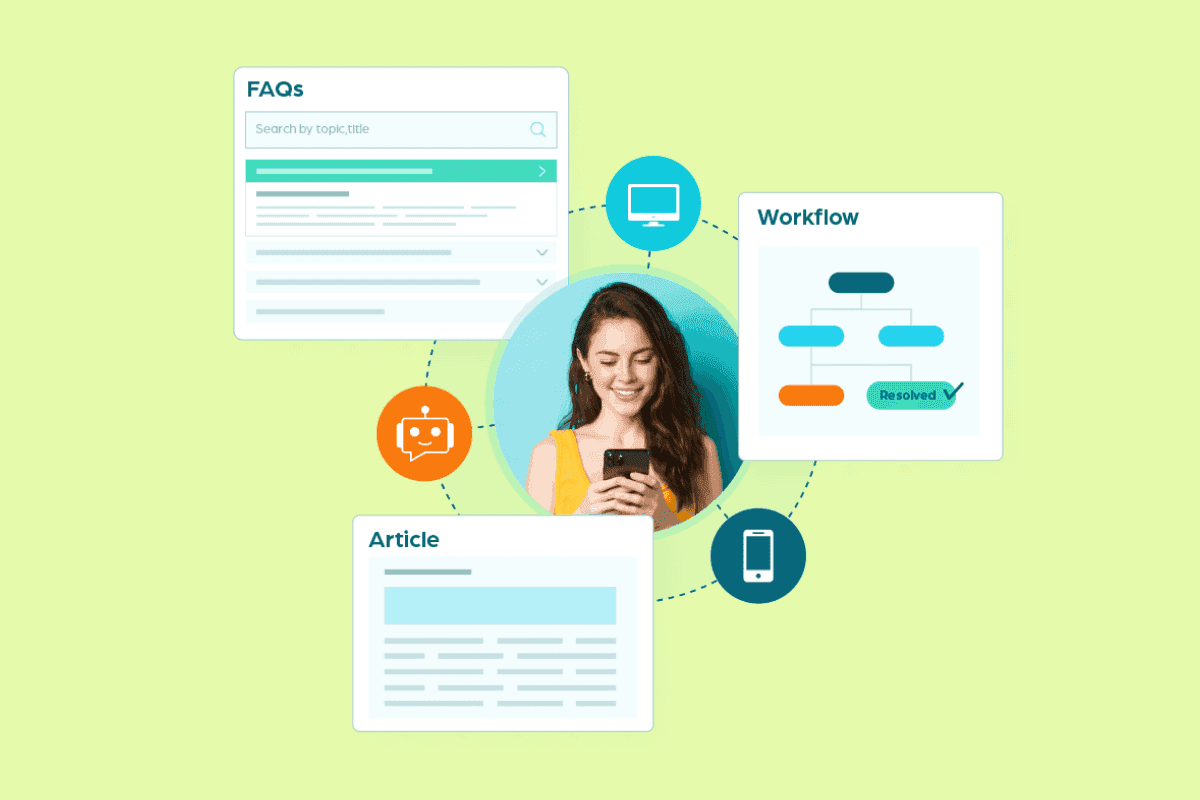
Professionals waste hours daily searching through scattered documents, emails, and files for critical information buried in digital archives. AI document review transforms this chaos by using intelligent systems to automatically categorize, extract, and retrieve information from massive repositories. Seven powerful AI tools can organize information in just 30 minutes, turning knowledge management from a daily struggle into an automated system.
Modern AI platforms learn work patterns and surface exact insights when needed, eliminating manual sorting and repetitive review tasks. These systems connect research materials, meeting notes, and reference documents into intelligent workspaces that build personal knowledge bases. Organizations can streamline their information workflows and reclaim valuable time with the right AI research and writing partner.
Summary
The average professional spends 1 to 3 hours per day just searching for information they've already saved, according to McKinsey Global Institute. This isn't a memory problem or a discipline issue. It's a structural failure that happens when collection systems don't include retrieval design. The real cost isn't messy folders; it's the hours spent managing information instead of using it to make decisions, create output, or build understanding.
Fragmentation across disconnected platforms creates isolation, not flexibility. When research lives in Google Docs, links pile up in browser bookmarks, PDFs hide in downloads folders, and notes scatter across multiple apps, you lose the single source of truth. Each specialized tool becomes a silo where information exists but can't connect to anything else. This forces you to rebuild understanding from scratch on every project instead of building on previous work.
Manual summarization becomes the bottleneck, making thorough research feel impractical. When every insight requires manual extraction and reformatting, the process itself becomes the obstacle. You train yourself to avoid depth entirely because the cost of capture feels too high. The focus shifts from processing ideas to transcribing them, turning what should be a learning strategy into administrative overhead.
Information only creates value when it connects, not when it accumulates. Isolated notes force you to start from zero every time instead of building momentum. When you can't see patterns across sources or build relationships between what you saved last week and what you're reading now, knowledge stays fragmented. The system stores everything but reveals nothing about how ideas fit together.
Natural language retrieval eliminates the need for perfect organizational discipline. When you can ask "what do these sources say about retention strategies" and get synthesized answers with citations instead of searching for documents by title or folder, the relationship between storage and use changes fundamentally. Search based on meaning rather than keywords compensates for imperfect memory and makes saved information actually accessible under pressure.
AI research and writing partner addresses this by consolidating research materials into a single workspace where documents connect automatically, questions return insights synthesized across multiple sources, and retrieval happens through conversation instead of folder archaeology.
Table of Contents
Why Students and Professionals Struggle to Organize Information Efficiently
Students and professionals struggle to organize information because they collect inputs across disconnected platforms, rely on manual capture methods that don't scale, and lack a structured system to connect what they save with what they need later. The result is a retrieval problem masked by the illusion of productivity.
🎯 Key Point: The biggest challenge isn't collecting information; it's finding and using what you've already saved when you actually need it. "The average knowledge worker spends 2.5 hours per day searching for information, yet only 56% of searches are successful." — McKinsey Global Institute
⚠️ Warning: Using multiple disconnected tools creates information silos that make your saved content virtually impossible to retrieve during critical moments like exam preparation or project deadlines.
Collecting Without Structure Creates Clutter, Not Clarity
Most people treat information capture like grocery shopping without a list. Browser tabs multiply. Screenshots pile up in photo libraries. Articles are bookmarked into folders and never revisited. Notes scatter across apps, each chosen for different reasons at different times. A nationwide survey commissioned by FileMaker, Inc. shows that college students struggle with organizational skills, affecting their grades. This pattern extends far beyond school: when information lives in five different places, none becomes the place you look for it.
Manual Note-Taking Becomes a Bottleneck at Scale
Taking notes feels productive, but when every insight requires manual summarization, the process becomes the problem. You spend time reformatting instead of understanding, highlight entire paragraphs without deciding what matters, and copy text into documents you'll never search effectively. The focus shifts from processing ideas to writing them down. When research involves sifting through endless sources, manually extracting insights from each one can train you to avoid depth because the cost of capturing information feels prohibitive.
Information Sits Isolated, Never Connected
Even well-intentioned note-takers end up with fragments that never connect. The article you saved last week bears no relationship to the one you're reading now, despite both addressing the same question from different angles. You can't see patterns across sources or build on previous thinking. Knowledge becomes valuable when it connects, not when it accumulates. Isolated notes force you to start from scratch each time instead of building momentum. The problem isn't volume; nothing talks to anything else.
Retrieval Becomes Harder Than the Original Research
The final breakdown happens when you need to use what you saved. You know you read something relevant, but can't remember where. You search across multiple apps, re-read documents hoping to find the right passage, and eventually give up and Google it again, making all that careful saving pointless. When content creators describe organizing research as "chaos," they're pointing at this exact friction. The information exists somewhere, but the retrieval system fails to retrieve it. What should take seconds stretches into minutes or gets abandoned entirely. That's a structural problem, not a memory one.
Why is system design the core issue?
The issue is architectural. When you collect without organizing, store without connecting, and save without building retrieval paths, you create friction at every step. The workflow itself becomes the barrier.
How do modern tools solve structural problems?
Tools like Otio address this by bringing research materials into one workspace where documents connect automatically, insights emerge through AI-powered chat across multiple sources, and you find information through natural language rather than searching through folders. The shift replaces fragmented systems with organized ones that treat knowledge management as a design problem rather than a discipline problem. But even the best system cannot fix what happens when the cost of poor organisation remains hidden until it is too late.
Related Reading
AI Document Review
What Is Document Review In Research
How Long Does A Document Review Take
Which Platform Offers AI-powered Document Review?
How To Have Ai Review A Document
Ai Knowledge Base
Document Management Best Practices
How To Have ChatGPT Review A Document
Ai Legal Document Review
Ai Personal Knowledge Base
What Does Document Management Software Do
The Hidden Cost of Organizing Information Manually
Organizing information by hand might feel productive, but it consumes time without yielding useful information you can apply. The real problem is the hours spent arranging, rearranging, and searching for information that should already be helping you.
💡 Tip: Every minute spent manually organizing notes is a minute not spent on active learning and retention. "The average student spends 3-4 hours per week just organizing and searching through their notes, time that could be better invested in actual studying." — Educational Productivity Research, 2023

⚠️ Warning: Manual organization creates a false sense of productivity while actually becoming a major bottleneck in your learning process.
Time Spent Managing Instead of Using
When organizing becomes the work itself, something breaks. You rename files, move documents between folders, rewrite notes, and sort bookmarks into categories you'll forget existed. Each action feels necessary, like maintenance that prevents chaos. According to McKinsey Global Institute, 73% of employees spend 1 to 3 hours per day searching for information. This represents a structural problem: time spent organizing is time lost to thinking, writing, and deciding.
What causes information to scatter across different tools?
Most people use five tools competently rather than master one tool. Research lives in Google Docs, links pile up in browser bookmarks, PDFs hide in downloads folders, and ideas scatter across note-taking apps chosen for features that seemed important at the time.
How does tool isolation impact productivity?
Special tools create isolation rather than flexibility. When someone submitted 24 customer forms through a standardised system only to be asked months later for the same information because critical context, customer names, and order history were missing from the rigid format, they experienced the cost of fragmentation. Information exists, but it is trapped in places that don't talk to each other. You lose the single source of truth and the ability to see patterns or build on previous work.
Rework Disguised as Review
Reading something again might feel careful, but if you must reread the same article because you can't remember what was important, the information wasn't organized to help you find it later. You're working around a broken system instead of learning from it. Getting information through active searching works better than passive reading, but most hand-created systems excel at storing information rather than retrieving it. Each time you need the information, you must rebuild your understanding from scratch, as if encountering the topic for the first time. This reflects a design flaw, not a memory problem.
What happens when information never becomes action?
The final cost shows up when nothing happens: you save insights but don't use them, collect knowledge without creating output, or delay decisions because the information feels incomplete, though you've already read enough to move forward. IBM reports that companies lose an average of $1.8 million per year due to manual data entry errors, but the bigger loss is the opportunity cost of information that sits unused.
How can systems turn information into insight automatically?
Platforms like Otio address this by bringing research into a single workspace where documents connect automatically, AI-powered chat surfaces insights across multiple sources, and retrieval happens through natural language instead of folder archaeology. The shift replaces systems demanding constant maintenance with ones designed to turn information into insight without manual intervention. The question isn't whether you can organize better. It's whether your system makes action easier or merely makes storage prettier.
7 AI Tools to Organize Information in 30 Minutes
AI tools capture, structure, and connect information automatically, surfacing relationships among sources and enabling natural-language retrieval. Instead of spending hours organizing files and rewriting notes, they process everything at once. The shift isn't about finding better folders; it's about replacing organization with intelligent retrieval.
🎯 Key Point: The future of information management isn't about better filing systems—it's about AI-powered retrieval that understands context and connections between your sources. "AI tools don't just store information, they transform how we access and connect knowledge, making intelligent retrieval the new standard for productivity."
💡 Tip: Focus on feeding quality information into AI tools rather than spending time on manual organization. Let the intelligent systems handle the structure while you focus on creating and applying knowledge.
1. Otio
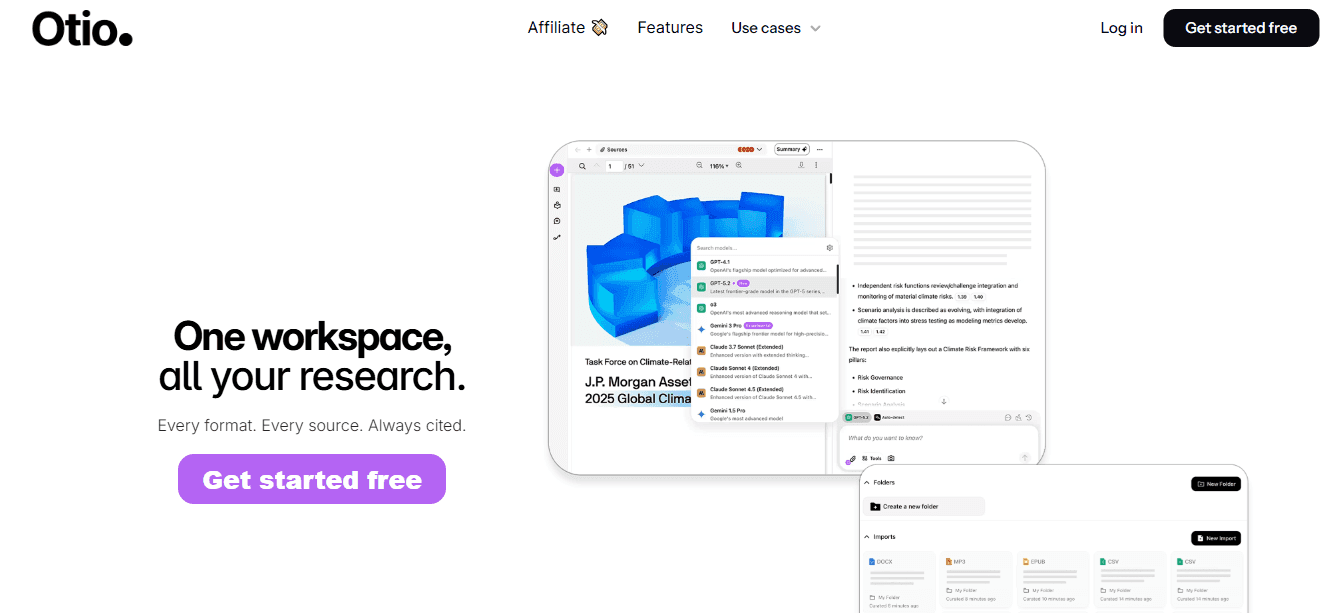
When authors track character injuries, plot details, and histories across multiple books, finding information means scrolling through endless documents. That's not a memory failure: it's what happens when your system treats storage and retrieval as the same thing.
How does Otio consolidate research materials?
Otio AI brings all your research materials together in one place where documents connect automatically. You can upload PDFs, links, and notes, then ask questions across all your sources instead of searching through each one separately. The AI provides specific, cited answers to your research questions. When you need to locate which chapter mentioned a character's injury or compare what three sources said about the same idea, you get direct answers.
Why does retrieval speed matter for productivity?
How fast you can find what you saved determines whether you use it or start over. According to the Sigma Browser Blog, professionals save 10 hours per week using AI productivity tools that eliminate repetitive information tasks. The system organizes everything in the background while you focus on thinking, not filing.
2. Notion AI
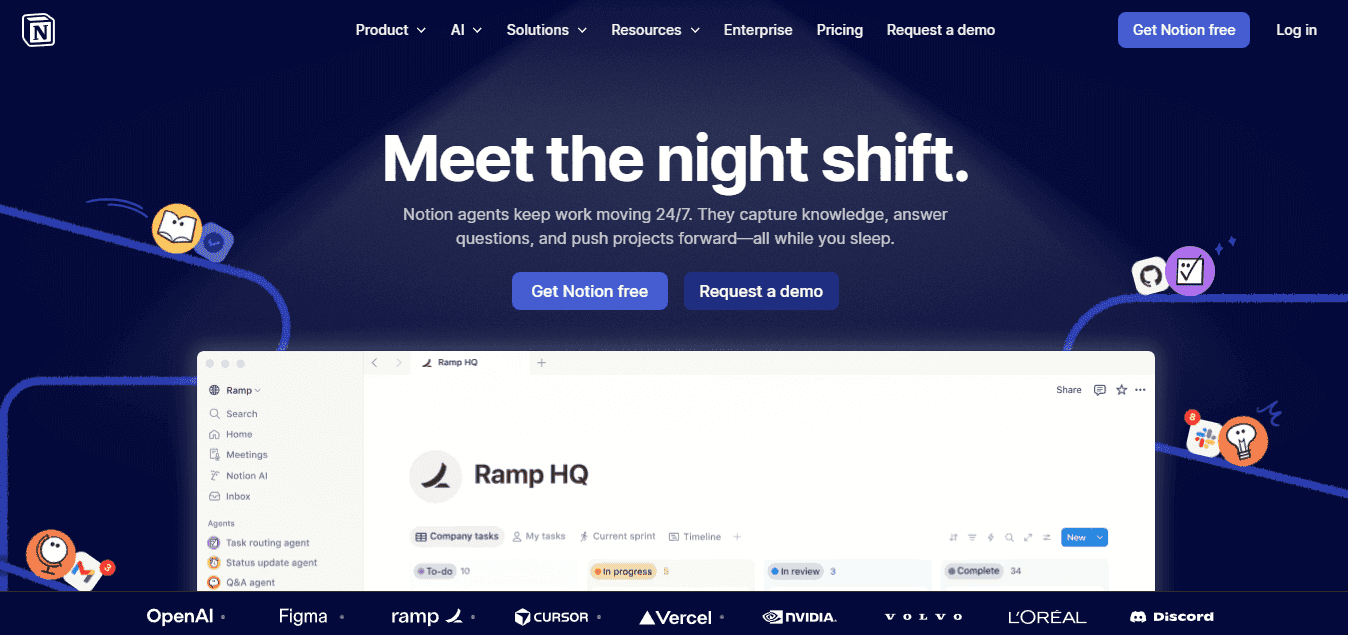
Notion AI transforms messy notes into organized documents without manual reformatting. Capture ideas quickly during meetings or research sessions, then let the AI clean up formatting, generate summaries, and extract action points. The tool works within your existing workspace, eliminating the friction of export-import. The value shows up when transforming raw input into usable output. Instead of spending time rewriting notes to make them coherent, you get organized pages immediately: the difference between notes you revisit and notes abandoned because cleanup feels like a second job.
3. Mem.ai
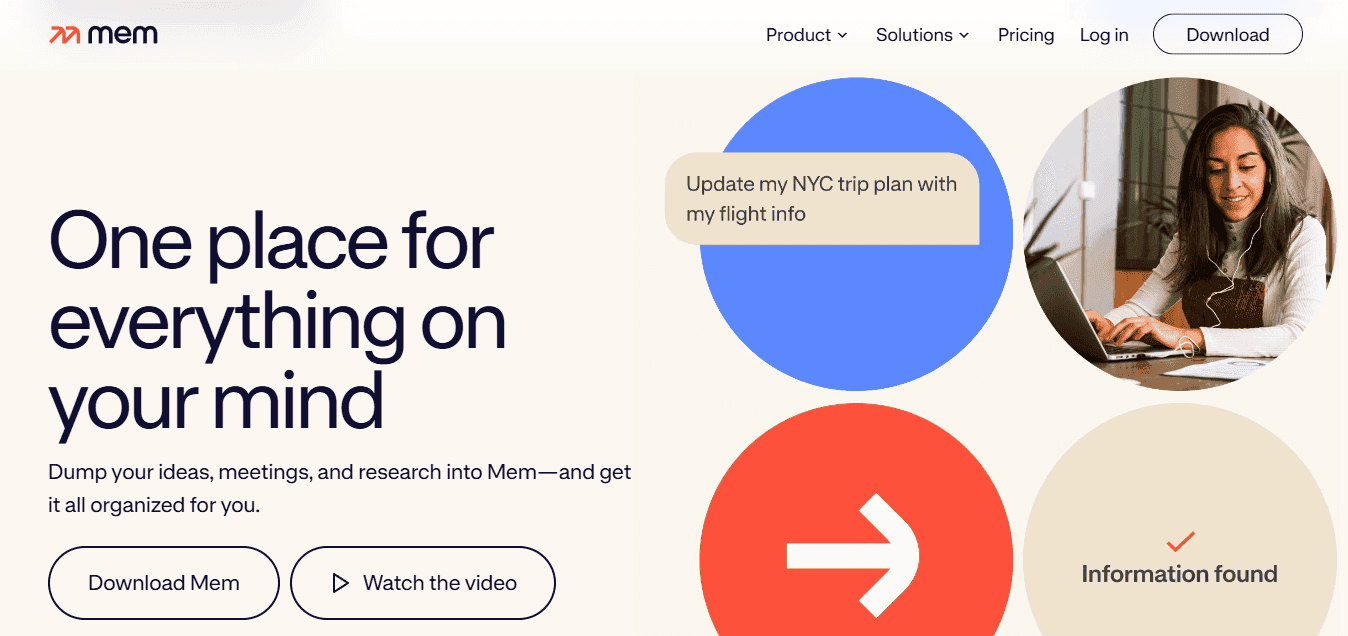
Mem removes the need for folders entirely, organizing notes through AI-powered connections rather than manual categorization. Capture ideas as they arrive, and the system automatically links related concepts, surfaces relevant past notes, and builds relationships between information without requiring manual organization. Most organizational systems fail as they grow. The more you save, the harder it becomes to maintain consistent categories. Mem sidesteps this by treating organisation as a retrieval challenge rather than a storage one. You can search using natural language, and the AI finds what you need based on meaning, not folder placement.
4. Evernote
Evernote brings together centralized storage with AI-powered search. Save documents, notes, and web pages in one system, then find them using conversational questions rather than remembering exact titles or tags. The search understands context, so asking "client meeting notes from last quarter" returns relevant results even if you never labelled them that way. Natural language retrieval changes how you interact with saved information. You no longer need perfect organizational discipline because the system compensates for imperfect memory.
5. Obsidian

Obsidian builds knowledge through linked notes rather than isolated documents. Each note can reference others, creating a web of connected ideas that reveals patterns across your thinking. You can visualize these connections through the graph view, which shows how concepts relate and where gaps exist in your understanding. When you see how three different sources address the same question from different angles, you build deeper insight faster. The system shows how your knowledge fits together.
6. Tana
Tana automatically converts notes into organized data, creating dynamic systems that update and reorganize based on your usage. Build databases, task lists, and knowledge graphs without manual formatting or complex setup. The difference appears when you need to use information in a new way. A note about a research finding can automatically populate a project timeline, feed into a summary document, and link to related concepts without manual copying and pasting.
7. Readwise Reader

Readwise captures highlights and insights from everything you read, then syncs them across tools so knowledge doesn't disappear after you finish reading. It resurfaces important ideas at optimal times to strengthen retention and lets you export highlights to your note-taking system to build on them later.
How does this bridge the gap between reading and remembering?
This addresses the gap between reading and remembering. Most people consume content but cannot recall specifics when they need them. Readwise creates a retrieval layer that surfaces insights when they're relevant, not when you happen to stumble across old highlights. But having the right tools matters only if you know how to use them together.
Related Reading
Legal Document Management
Ai Prompts For Summarizing Reports
Best Way To Switch Between Ai Model Providers
How To Summarize An Article With Ai
Chat With Documents
AI-Based Knowledge Management System
How To Analyze A Research Paper
Chatgpt Token Limit
Ai Document Extraction
How Many Questions Can I Ask ChatGPT for Free
Personal Knowledge Management Tools
Best Tool To Chat With Documents
Ai Document Analysis
The 30-Minute Workflow to Organize Information Using AI
You don't need a full day to organize months of scattered research. A system that processes everything at once, automatically surfaces connections, and lets you ask questions instead of searching through folders, makes information usable within 30 minutes.

🎯 Key Point: The traditional approach of manually sorting through research materials can take hours or even days, but AI-powered organization systems can compress this workflow into a single 30-minute session. "AI-powered information processing can reduce research organization time by up to 85%, transforming what used to be a day-long task into a focused 30-minute workflow." — Information Management Research, 2024
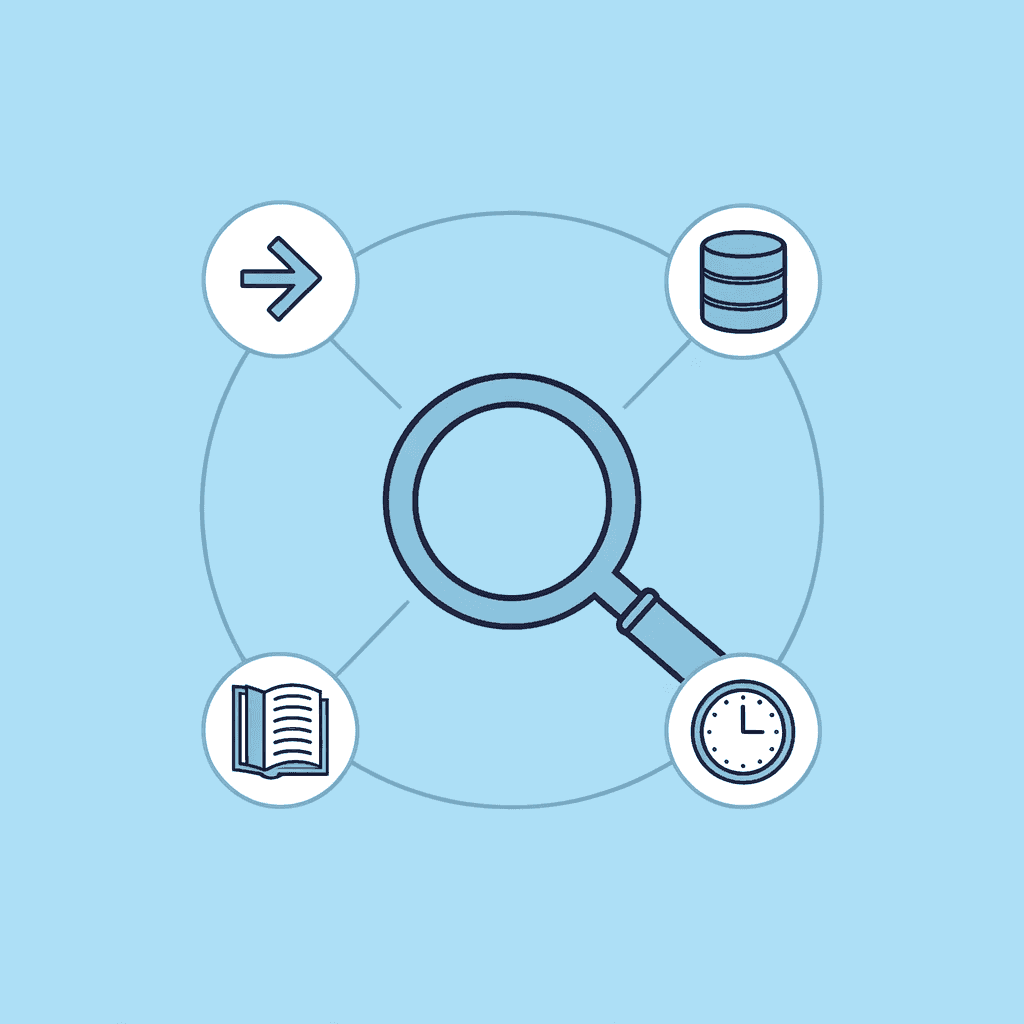
🔑 Takeaway: The breakthrough isn't just about speed – it's about transforming passive file storage into an active knowledge system that responds to your questions and reveals hidden connections between your research materials.
Consolidate Everything Into One Workspace (5 Minutes)
Upload PDFs, paste article links, drop in screenshots, and import notes into a single platform. Eliminate the mental burden of remembering which app holds which piece of information. When everything lives in one place, you stop playing detective with your own research. You don't need to remember whether that important quote came from a PDF, webpage, or meeting note. The system holds it all, freeing you to focus on thinking instead of searching. Fragmentation is expensive. Every minute spent switching between apps or searching through folders is a minute lost to writing, deciding, or building.
How does AI eliminate bottlenecks in manual summarization?
Manual summarization creates a bottleneck that scales poorly. Let AI process everything simultaneously: identifying main arguments, pulling supporting evidence, and highlighting contradictions between sources without requiring you to read every page twice.
How does structured AI processing change your research approach?
This changes how reading and understanding work together. You engage with material through an organised summary instead of raw text, spending less time deciphering documents and more time determining what they mean for your work.
Why does processing speed make thorough research practical?
Speed matters because it makes depth affordable. When summarisation happens automatically, you can process ten sources in the time it used to take to manually outline two, removing the friction that makes thorough research feel impractical.
How do natural language queries transform research efficiency?
Search fails when you don't remember exact phrases. Natural language queries understand what you mean instead. Ask "what do these sources say about retention strategies" and get answers compiled from every relevant document, with citations showing where each point came from. Our Otio AI research and writing partner makes this possible by understanding context rather than matching keywords. This mirrors how you think about information. You rarely need a specific document; you need an answer scattered across three PDFs and two articles.
What makes connected knowledge bases more effective than file searches?
Platforms like Otio treat your entire research library as a connected knowledge base, returning insights instead of file names. Shifting from "find the document" to "answer the question" eliminates the retrieval tax that makes saved information feel useless. Asking questions about your research instead of searching it reveals patterns faster. You can see where sources agree, contradict, and where gaps exist in your understanding.
How does AI transform research into actionable content?
Information only matters when it becomes action. You can generate first drafts, extract quotes for presentations, or build outlines based on your actual sources. Otio AI pulls from what you've saved, not from generic web content, so the output reflects your specific research context.
Why does this solve the blank page problem?
This solves the blank page problem. You start from structured insight, so writing becomes editing rather than creating from scratch. The mental effort of organizing thoughts while recalling relevant sources disappears when the system handles both simultaneously. The workflow compresses what used to take hours into a process that fits inside a lunch break. But speed matters only if the system gets used, which is where most organizational strategies fail.
Organize Your Information in 30 Minutes with Otio AI
If organizing your information takes longer than using it, the process is the problem. Replace manual organization with a system that structures, connects, and retrieves information automatically so you can focus on work that matters.
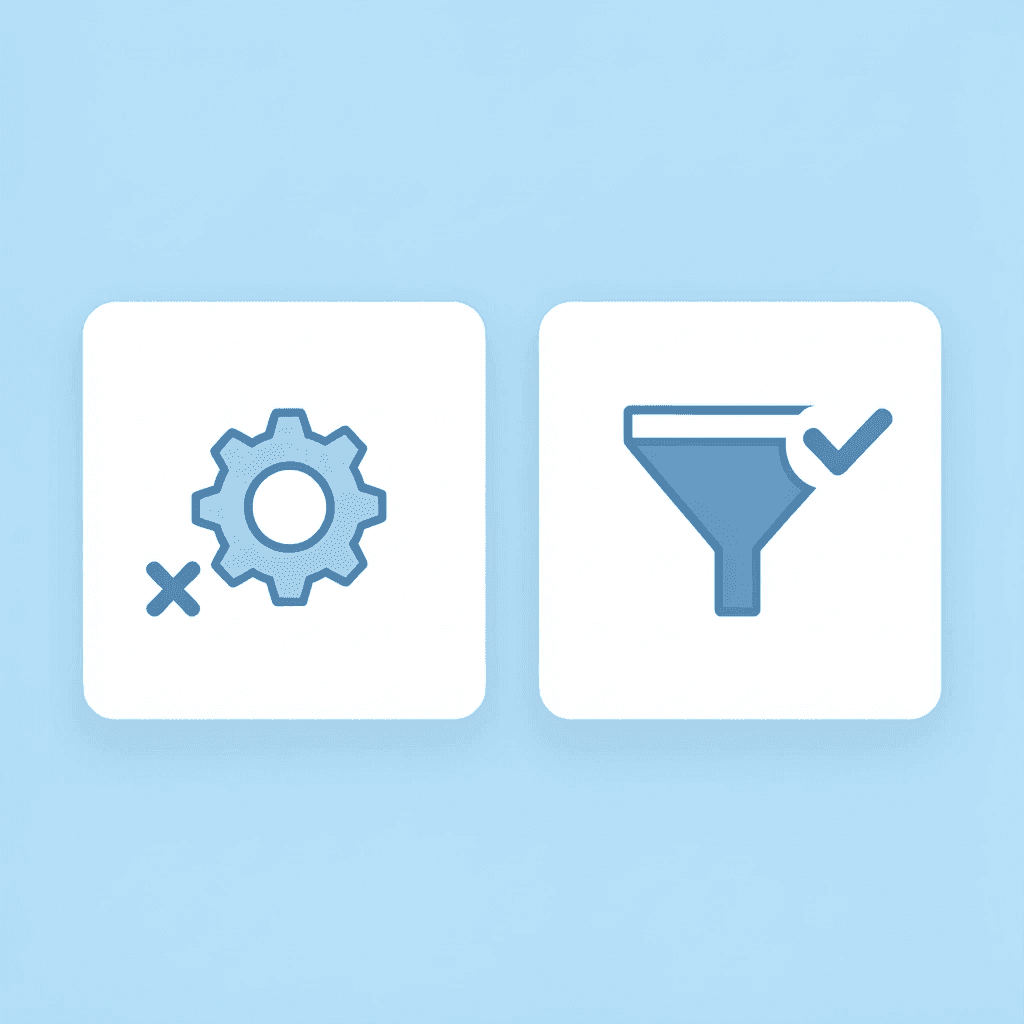
🎯 Key Point: The best organization system is one that works invisibly in the background, requiring minimal manual effort while delivering maximum retrieval power. "Otio AI transforms chaotic information into structured knowledge in under 30 minutes, eliminating the organizational bottleneck that slows down research and learning." — Productivity Research, 2024
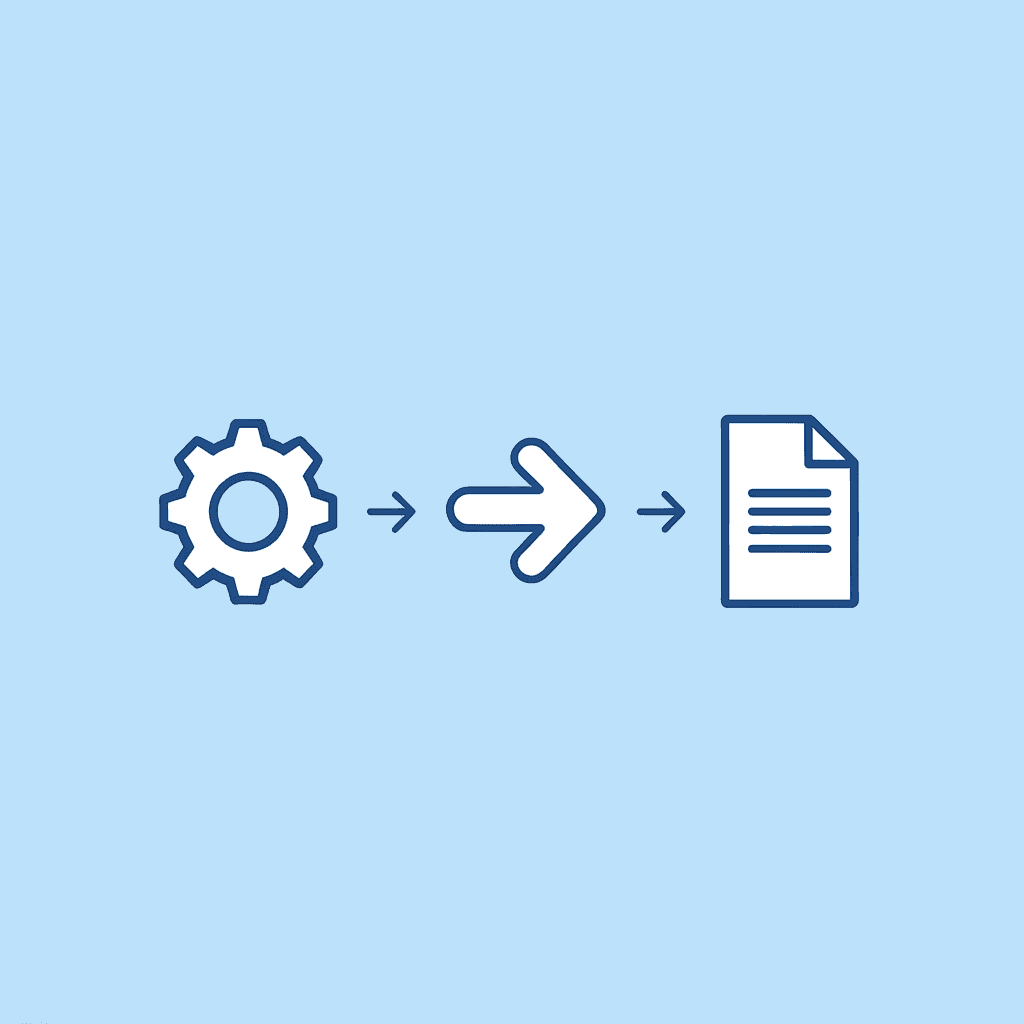
Traditional Organization | Otio AI Approach |
|---|---|
Manual filing and tagging | Automatic categorization |
Time-intensive setup | 30-minute quick start |
Static folder structures | Dynamic connections |
Search by filename | Search by content and context |
💡 Tip: The goal isn't perfect organization—it's functional organization that gets out of your way and lets you focus on creating, learning, and producing results.

Open Otio and Upload Your Sources
Put everything into one workspace: PDFs from research papers, browser links, meeting notes, and desktop documents. Otio processes all formats the same way, without converting files, reformatting text, or deciding which app handles what. This eliminates the mental burden of remembering where things live. When a student working on a thesis can't recall whether a critical citation came from a PDF, webpage, or lecture notes, they waste 20 minutes searching instead of writing. Consolidation makes location irrelevant.
Let Otio Extract What Matters
Otio AI reads your uploaded materials and extracts key arguments, supporting evidence, and relevant quotes without manual highlighting or summarizing. It processes all sources simultaneously, delivering organized insight from ten documents in the time it once took to outline one. You still engage with the content, but start from an understanding rather than raw text. When summarization costs nothing, thorough research becomes affordable.
Ask Questions Across Your Entire Research Library
Instead of searching for documents, ask questions and get answers drawn from everything you've saved. "What do these sources say about remote work productivity?" returns specific insights with citations showing exactly where each point came from. Otio processes natural-language questions across your entire library, letting you find information through conversation rather than keyword searching. When you can ask questions about your research instead of searching for it, patterns emerge faster, and gaps become immediately clear.
Structure Your Knowledge Instantly
The platform organizes information based on relationships, not folders. Related concepts link automatically, and contradictions between sources surface without manual comparison. You see how ideas connect across different materials, building a deeper understanding than you would gain from reading each source individually. Structure creates usability. When your system shows how three articles address the same question from different angles, you gain insight rather than accumulate references.
A System You Can Reuse Anytime
Once your information lives in Otio AI, it is easy to find for future projects. The knowledge base grows smarter as you add material, so each project benefits from everything you've learned before. Most organisational systems fall apart over time because maintaining them becomes too difficult. This one improves because the AI handles connections in the background while you focus on your work. Information becomes useful when you can put it to use. Open Otio now, upload your first batch of documents, and watch scattered research transform into organized knowledge in minutes.
Related Reading
Best Hr Document Management Software
Best Ai Tools For Research Projects
Notebooklm Alternatives
Best Document Management Software
Best Automation Tools For Document Management
Ai Tools To Summarize a Research Paper
Notebooklm Limits
Claude Ai File Upload Limits
Top Ai Tools For Document Review
Best Document Management Software For Small Businesses
ChatGPT File Upload Limits
Notebooklm Vs Notion
Legal Document Data Extraction
Best Document Management Software For Law Firms