
Document Review
What Is Document Review in Research and How to Do It Right in 30 Minutes
Learn what document review in research is, why it matters, and how to conduct an effective document review in research in just 30 minutes.

Document review in research involves the systematic examination and analysis of existing literature, records, and source materials to build a strong foundation for any study. This methodical process helps researchers evaluate credibility, identify patterns, and synthesize key insights from multiple sources. Graduate students, academic researchers, and professionals rely on effective document review to transform scattered information into meaningful conclusions that support their work.
Modern technology has revolutionized how researchers approach this traditionally time-intensive process. Rather than manually sorting through countless papers and struggling to track crucial data points across sources, researchers can now organize, annotate, and extract insights more efficiently. Tools like Otio serve as an AI research and writing partner that helps identify patterns and connect ideas across multiple documents simultaneously.
Summary
Document review fails because researchers read linearly rather than extract strategically. Most people default to consuming entire documents from start to finish, highlighting interesting passages without a clear question in mind. This produces comprehensive notes that lack structure, turning the writing phase into a second research project because nothing is organized around the actual thesis.
The collection problem creates research backlogs that generate guilt instead of progress. A single Google Scholar search returns dozens of PDFs, and without a filtering system, folders grow faster than researchers can process them. According to Integreon, 80% of legal professionals cite document review as one of their top challenges, with volume overwhelming process across all fields.
Most research documents bury their contributions in sections that don't answer specific research questions. A 40-page journal article might contain just two paragraphs of original findings, with the rest devoted to literature review, methodology, and contextual discussion. Researchers waste hours reading sections that don't serve their extraction goals because they lack confidence in identifying what actually matters.
Rereading the same documents consumes more time than the actual writing process. According to Rev's 2026 survey, 34% of legal professionals spend 60+ hours per case reviewing evidence, with much of that time spent re-reviewing documents because their initial pass didn't capture usable information. When notes lack structure, every writing session becomes a search operation through previously read materials.
Weak document review produces literature reviews that read like annotated bibliographies rather than arguments. This happens when researchers treat each document as a standalone artifact instead of organizing sources by themes, patterns, contradictions, or gaps during the review process. The result demonstrates limited synthesis because it reflects exactly what the process was: sequential reading without analytical framing.
The 30-minute document review workflow prioritizes extraction over comprehension by defining specific goals before opening any document. Researchers scan the structure first (abstract, headings, tables, conclusions), extract three to five key evidence points with numbers, capture the methodology in two lines, note one limitation, and link the findings back to their research question. AI Document Review addresses this by consolidating scattered PDFs, notes, and citations into a single workspace where extraction happens automatically while maintaining full citation trails.
Table of Contents
Why Researchers Struggle With Document Review
Document review fails because researchers treat it as reading rather than extraction. Reading is linear; extraction means entering a document with a specific question, finding evidence that answers it, and ignoring everything else. Most people struggle to make this critical shift.
🎯 Key Point: The fundamental problem isn't the documents themselves; it's the mental framework we bring to them.
The confusion stems from unclear terminology. When advisors say "conduct a document review," they don't explain what that means in practice. Researchers default to school-learned reading behavior: consume everything, highlight interesting parts, and hope important pieces stick. This produces unstructured notes that feel complete but lack organization around the thesis question, turning note review into a second research project. "Most researchers spend 60-80% of their document review time re-reading notes they've already taken, essentially doing the work twice." — Research Productivity Studies, 2023
⚠️ Warning: Without a clear extraction strategy, thorough reading becomes inefficient, busy work that delays actual analysis.
How does the collection problem spiral so quickly?
Researchers save documents faster than they can process them. A single Google Scholar search returns dozens of PDFs, and a literature review might require examining 50 to 100 sources. Each gets downloaded with good intentions, but without a filtering system, the folder becomes a backlog that creates guilt instead of progress. According to Integreon, 80% of legal professionals cite document review as one of their top challenges.
Why do researchers struggle with prioritization?
When researchers lack a system for prioritising sources, they either skim documents that warrant careful reading or read them carefully when skimming would suffice. Priority becomes random; the most recently downloaded PDF receives attention, not the most relevant one.
Why do researchers struggle to find key information in documents?
Most research documents hide their main ideas. A 40-page journal article might contain only two paragraphs of original findings, with the rest covering literature review, methodology, and discussion. Researchers spend hours reading sections that don't answer their specific question because they struggle to identify what matters.
How does information overload affect research accuracy?
One researcher read a corporate filing five times before grasping the important detail: the information had been there from the beginning, but the difficult legal language and procedural explanations obscured its significance. The evidence exists, but extracting it requires sustained focus and the ability to distinguish signal from noise, a distinction that becomes harder to maintain after reading ten documents.
Why do research notes become difficult to use over time?
Highlighting sentences and copying quotes into a Google Doc feels productive until you need specific evidence and realize your notes are chronological rather than thematic. You remember reading something relevant, but can't locate which document contained it, forcing you to search through files and re-read sections.
How does a fragmented research workflow impact productivity?
The traditional workflow scatters research across multiple places: PDFs in download folders, notes in separate documents, citations in another tool, and browser tabs with unprocessed sources. Each context switch costs time and mental energy. Platforms like Otio consolidate this fragmented process into a single workspace where AI extracts insights from your sources while maintaining connections to the original documents, eliminating the need to jump between tools or search again for evidence you've already found.
What foundation do effective research practices require?
Even the best tools won't fix the underlying issue without intentional research practices. Document review requires knowing what you're looking for before you start reading and having a system for capturing and organizing findings. Without that foundation, every document feels like starting over.
Related Reading
AI Document Review
What Is Document Review In Law
How Long Does A Document Review Take
How To Have Ai Review A Document
How To Have ChatGPT Review A Document
Document Management Best Practices
Which Platform Offers AI-powered Document Review?
Ai Knowledge Base
Ai Legal Document Review
Ai Personal Knowledge Base
What Does Document Management Software Do
The Hidden Cost of Doing Document Review the Wrong Way
When document review goes wrong, the damage isn't apparent until later. You feel productive reading, highlighting, and taking notes. But the problem emerges when you sit down to write and realize you can't find the evidence you need, can't remember which source said what, and can't build the argument you thought all that reading would support. The work doesn't become something you can use, so you end up doing it all over again.
🚨 Warning: The hidden cost of poor document review isn't wasted time alone—it's the compounding effect of having to re-read, re-analyze, and re-organize the same materials multiple times.
"Ineffective document review creates a false sense of productivity while systematically undermining your ability to synthesize information and build coherent arguments." — Research Productivity Studies, 2023
💡 Key Insight: The difference between busy work and productive review lies in whether your process creates usable outputs or merely gives you the illusion of progress.
Why do researchers miss evidence despite extensive reading?
Reading more documents doesn't automatically lead to better research. Without clear goals for what you want to find, you skim past the exact data points, definitions, and supporting arguments your thesis needs. A student spends six hours reading five articles on maternal mortality, but cannot cite specific statistics during writing because their notes contain only vague highlights, not extracted evidence. The information was there, they read it, but they didn't capture it in a way that writing could use.
How does passive reading differ from active research?
This happens because most researchers conflate reading with research. Reading is passive consumption; research is active extraction. Without a specific question, everything in a document feels equally important, leaving you informed but holding no concrete evidence.
Why does rereading documents waste more time than writing?
When notes lack structure, you cannot find them again. You remember reading something helpful, but can't locate it. Writing becomes a repetitive cycle: search, reread, find a quote, copy, write. According to Rev's 2026 survey, 34% of legal professionals spend 60+ hours per case reviewing evidence, much of it re-reviewing documents they've already seen because their initial pass didn't capture what they needed.
How does poor note-taking create a cycle of inefficiency?
Instead of using notes, researchers keep returning to the original PDFs. Each return costs them focus and momentum. Rereading a document doesn't yield new information; it punishes you for not initially extracting key details.
Literature Reviews Become Summaries Instead of Arguments
Weak document reviews result in literature reviews that read like annotated bibliographies. "Author A said this. Author B said this. Author C said this." There is no synthesis, no argument, no structure, only a list. This happens when researchers fail to organize sources by themes, patterns, contradictions, or gaps, treating each document as a separate object rather than evidence supporting a larger argument. A strong literature review positions your research within an ongoing conversation. A weak one merely proves you read some papers.
Citation Errors Multiply Under Deadline Pressure
A messy document review creates messy citations. You include a statistic in your draft, but cannot trace which article it came from. You cite the wrong paper because two PDFs had similar titles. You mix author names or publication years because your notes lack full references. Platforms like Otio solve this by keeping AI-generated insights directly linked to source documents, so that every extracted claim automatically maintains its citation trail within a single workspace. Fixing citations under deadline pressure forces researchers to either remove unsourced claims or waste hours searching through PDFs to reconstruct reference chains.
Your Research Timeline Expands Without You Noticing
The highest hidden cost is timeline inflation. When document review is inefficient, writing takes longer, revisions take longer, supervisor feedback increases, and submission gets delayed. What should take days becomes weeks. This delay occurs silently because "reading" feels like progress even when it produces no usable output. Knowing the costs doesn't fix the process without understanding what effective document review looks like.
Related Reading
Ai Document Extraction
Legal Document Management
Ai Prompts For Summarizing Reports
Best Way To Switch Between Ai Model Providers
How Many Questions Can I Ask ChatGPT for Free
Chat With Documents
Personal Knowledge Management Tools
How To Analyze A Research Paper
Ai Document Analysis
How To Summarize An Article With Ai
Chatgpt Token Limit
AI-Based Knowledge Management System
Best Tool To Chat With Documents
What Document Review in Research Actually Means
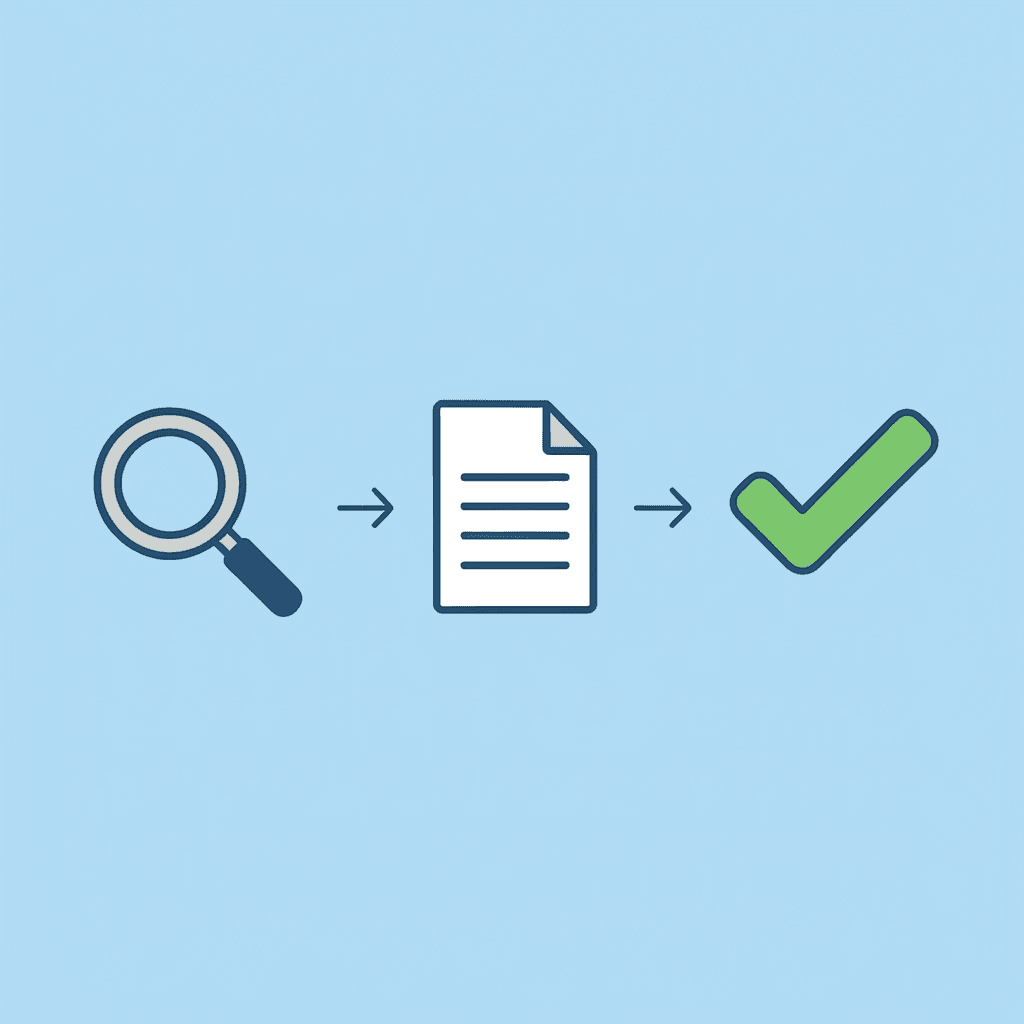
A proper document review is a focused extraction process: enter with a specific question, locate the evidence that answers it, capture what's usable, and move on. This transforms documents into research material instead of reading assignments. The difference between reviewing and reading determines whether your time produces citable notes or vague familiarity.
🎯 Key Point: Document review is not about reading everything; it's about strategic extraction of relevant information that directly answers your research questions.
"The difference between reviewing and reading determines whether your time produces citable notes or vague familiarity."
💡 Tip: Enter each document with a clear question in mind. This transforms passive reading into active research, producing actionable results.
Why do researchers confuse comprehension with extraction?
Most researchers confuse understanding with extracting information. You can understand a journal article without finding evidence for your thesis. Document review means deciding what you're looking for before opening the PDF. Without that decision, every paragraph feels important, so you highlight everything and end up with pages of background information but no specific claims, statistics, or quotes you can use.
How do you create an effective research question?
Write your research question in one sentence before reviewing any document using this format: "This research focuses on [topic] to understand [specific outcome]." That single sentence becomes your filter. Every document you open gets evaluated against it. If a source doesn't help answer that question, you either skim it for background context or skip it entirely. This prevents the common trap where researchers read comprehensively but extract nothing because they never defined what "extraction" means.
How does a research question prevent scope creep?
The research question also stops scope creep. A student studying remote work productivity doesn't need to pull out evidence about office design trends, even if that section appears in the same paper. The question keeps you focused on what advances your argument, not what's merely interesting.
Define What You Need From Each Document
Before reading, decide your purpose: a definition, statistics, a theoretical framework, a methodology, or evidence for or against a claim. Write it down: "I am reviewing this source to extract [goal]." This focuses your search on one specific contribution rather than attempting to understand the author's entire argument. According to the Journal of Educational Evaluation for Health Professions, systematic reviews represent the highest level of evidence because they combine findings from multiple studies using clear, reproducible methods. Defining your needs upfront makes extraction systematic rather than random, transforming notes into evidence rather than impressions.
How does scanning structure save time before linear reading?
Most research documents hide their key contributions in predictable locations. Scan the abstract, headings, conclusion, tables, and figures first. This takes three minutes and reveals whether the document contains what you need and where to find it. Scanning prevents wasting hours on methodology sections when findings appear in a single table on page 12. When you scan first, reading becomes selective. You go directly to sections that answer your extraction goal and skip everything else. The introduction provides unnecessary context, the literature review summarises research you may have already covered, and the discussion interprets findings that might not align with your argument. Scanning separates sections that serve your research from those that served the original author's purpose.
What tools can accelerate the scanning process?
Platforms like Otio eliminate manual scanning and extraction by using AI to pull key insights directly from uploaded documents, keeping everything source-grounded within a single workspace. Instead of jumping between PDFs, note-taking apps, and browser tabs, you work in one environment where the AI identifies relevant evidence based on your research question while maintaining full citation trails. This compresses what used to take hours into minutes without sacrificing rigor. But the core discipline remains the same. You still need to know what you're looking for, evaluate relevance, and organize what you extract around your argument rather than around the documents themselves. Fast extraction of irrelevant evidence produces the same problem as slow, unfocused reading. Knowing the method isn't enough without understanding how to execute it under real research conditions.
The 30-Minute Document Review Workflow
Your goal in 30 minutes is not to finish reading the whole thing. Instead, extract something you can use: the document's purpose in one sentence, three to five key points you can quote, one or two notes about whether the source is trustworthy, one limitation, and how it connects to your research question. This transforms a PDF from passive reading material into an active writing resource.
🎯 Key Point: Transform documents into active writing resources with specific, quotable takeaways.
"The goal is not to finish reading the whole thing in 30 minutes, but to walk away with something you can use: quotable key points and clear connections to your research."
💡 Tip: Focus on extraction over completion. Five solid quotes from one document beat vague memories from three.
Students often read everything the same way, which doesn't work with large volumes of material. When you have ten documents to review before a deadline, spending three hours on each one isn't feasible. You need a system that yields real citations, not a general idea of what the document says.
⚠️ Warning: Reading everything at the same pace is a time management trap that leads to surface-level understanding across all sources.
🔑 Takeaway: Strategic document review prioritizes citation-ready material over comprehensive reading, making your research both faster and more actionable.
Minute 0 to 3: Define Your Review Target
Before opening the document, write your research question in one sentence and specify what you're extracting: a definition, statistics, argument, or methodology. This forces you to enter with a goal in mind. Without it, you'll highlight interesting sentences that don't answer your research question, and your notes will contain context instead of evidence.
Minutes 3 to 8: Scan the Document Structure First
Look at the abstract, headings, conclusion, and tables or figures first. This five-minute scan shows you where the evidence lies before reading the full paper. Most research documents follow predictable patterns: the abstract summarizes the paper's contribution, the conclusion restates the findings, and tables contain the data. Scanning first tells you which sections to read carefully and which to skip, so you can extract citations from the parts that answer your question.
Minutes 8 to 15: Extract the 3 to 5 Key Evidence Points
Read only the highest-value sections: results, findings, discussion, and conclusion. Extract two to three findings with numbers if available, one relevant definition, and one supporting quote. Rewrite these in your own words to force comprehension and make the evidence immediately usable during writing. Proper extraction eliminates the need to return to the PDF later.
Minutes 15 to 20: Capture Method and Credibility in Two Lines
Find out what type of study it was, how many people were involved, where the data came from, and how the researchers analyzed it. Write this down in two lines. This three-minute exercise helps you explain why your source is trustworthy when questioned. You're capturing enough information to show how the authors reached their conclusions without transcribing the entire methodology section. This approach encourages critical thinking rather than passive copying.
Minutes 20 to 25 Note One Limitation or Gap
Find one limitation: small sample, narrow location, outdated data, missing variable, or weak generalizability. Identifying a constraint demonstrates critical reading and helps position your research to address gaps in the literature.
How do you connect sources to your research question?
Write two short lines: "This source supports my research because..." and "This source leaves a gap in..." This step makes your document usable in your literature review. You're explaining how it fits into your bigger argument, not proving you read it. Without this connection, your notes become disconnected facts that don't build toward anything.
What tools can streamline your document review workflow?
Most researchers spread this process across multiple tools: PDFs in one folder, notes in Google Docs, citations in Zotero, and browser tabs holding unprocessed sources. Each tool switch costs time and focus. Platforms like Otio consolidate the entire workflow into a single workspace where AI extracts key insights from uploaded documents while maintaining source connections. Instead of manually scanning, highlighting, and copying evidence across tools, you work in one place where AI finds relevant findings based on your research question and maintains full citation trails automatically. This compresses what once took an hour into minutes without sacrificing the rigour that makes document review trustworthy. But knowing the workflow is only half the equation without the right environment to execute it efficiently.
Run Your 30-Minute Document Review Faster With Otio
Create a workspace in Otio and upload your document (PDF, link, or article). Paste your research question into Otio chat and ask: "Extract 3 to 5 key evidence points I can cite," "Summarize the method and data source in 2 lines," and "List 1 limitation or gap in this study."
Copy the outputs into your document review template and finish by writing the 2-line link back to your research question.
🎯 Key Point: This 3-question framework transforms random reading into targeted evidence extraction that directly supports your research goals. "Upload your document and ask 3 strategic questions to extract key evidence points, method summaries, and study limitations in minutes, not hours."
Traditional Review | Otio-Powered Review |
|---|---|
30 minutes reading + highlighting | 5 minutes uploading + questioning |
Manual evidence hunting | AI-extracted key points |
Scattered notes across tabs | Organized citation-ready outputs |
Generic takeaways | Targeted research-question links |
Instead of hunting for evidence, you spend your 30 minutes producing usable notes you can cite right away. When Otio pulls relevant findings directly from your sources while keeping full citation trails, you stop switching between tabs and start building arguments.
💡 Tip: The time-saver isn't faster reading it's immediate output that flows straight into your research workflow without reformatting.
🔑 Takeaway: Document reviews become evidence production sessions when you let AI handle extraction while you focus on analysis and synthesis.
Related Reading
Best Automation Tools For Document Management
Best Document Management Software For Law Firms
Ai Tools To Summarize a Research Paper
Best Document Management Software For Small Businesses
Best Hr Document Management Software
Legal Document Data Extraction
ChatGPT File Upload Limits
Top Ai Tools For Document Review
Best Ai Tools For Research Projects
Notebooklm Alternatives
Notebook Limits
Notebooklm Vs Notion
Best Document Management Software
Claude Ai File Upload Limits