
Summarization
7 Ways to Read Books Faster and Get A’s in Your Exams
Learn how to read books faster with 7 practical tips to study smarter, retain more, and prepare better for exams with less stress.

Staring at a mountain of textbooks with exams approaching creates pressure to absorb information quickly without sacrificing comprehension. The challenge extends beyond simply reading faster; students need strategies that improve retention, enhance understanding, and maintain academic performance. Modern advances in LLM text summarization technology offer new approaches to processing written content more efficiently. Seven proven techniques can help students read books faster while maintaining the deep understanding necessary for exam success.
Cutting reading time in half while capturing essential concepts becomes possible with the right approach and tools. Smart study methods focus on identifying main ideas, extracting key points, and building personalized learning systems that match individual study styles. Students can transform overwhelming chapters into manageable, organized notes that target what truly matters for exam preparation. Otio serves as your AI research and writing partner [https://otio.ai/], helping process lengthy academic materials and create focused study resources that support academic achievement.
Table of Contents
Why Students Struggle to Read Books Quickly and Retain Information
The 10-Minute Workflow to Read Books Faster Without Losing Understanding
Summary
Students struggle to read books quickly because they try to consume, understand, organize, and memorize simultaneously. According to the Talentnook Reading Habits Data Report 2025, 67% of students report difficulty concentrating while reading for extended periods. The issue isn't focus. It's cognitive overload from treating every paragraph as equally important and running multiple mental processes at once, which fractures reading flow and weakens both speed and retention.
Only 34% of students use active reading strategies like note-taking or summarizing, according to the same 2025 report. Most rely on passive repetition rather than structured extraction, so they reread the same pages three, four, or five times because nothing was captured clearly during the first pass. That repetition feels productive but simply creates friction disguised as diligence.
Unstructured reading multiplies the time spent on every book afterward. Daily leisure reading in the United States has declined by more than 40% over the past 20 years, according to research published in the iScience journal. Part of that collapse isn't a lack of interest but exhaustion from reading that feels like effort without reward. The real cost isn't the initial 40 minutes on a chapter but the three hours spent later reconstructing what you read.
Most people read at 200 to 300 words per minute, according to Honeybear's research on reading speed. That rate isn't inherently slow. What slows students down is spending those 200 words per minute on content that doesn't matter, then rereading it later because they can't remember which parts were actually important. Books contain signal and noise, and filtering the noise first means spending reading time on exam-relevant content.
Pre-scanning the chapter structure takes two minutes and saves twenty minutes of backtracking later. Students who scan headings, summaries, bold terms, and diagrams before deep reading already know what matters. That structural preview reduces confusion and improves focus because readers stop rereading sentences to figure out how they fit into the larger argument.
Retrieval practice strengthens retention more than passive rereading because it forces the brain to reconstruct information from memory, which is exactly what exams require. Rereading creates familiarity, which students mistake for knowledge, but recognition isn't the same as recall. Testing yourself immediately after reading feels uncomfortable, but that discomfort is where long-term retention actually builds.
AI research and writing partner addresses this by separating consumption from synthesis, allowing students to extract structured insights during their first pass and organize them with citations, so review happens without endless repetition.
Why Students Struggle to Read Books Quickly and Retain Information
Students struggle to read books quickly because they combine four cognitive tasks into a single, fragmented session: consuming, understanding, organizing, and memorizing. This overlap creates problems at every step: when your brain performs multiple processes simultaneously, each one deteriorates, and reading speed drops while you retain less.
🔑 Key Point: Cognitive overload occurs when students attempt to process, comprehend, organize, and retain information simultaneously, rather than breaking these tasks into separate, focused sessions.
"When your brain does multiple processes at the same time, each one gets worse, and reading speed drops while you remember less." Cognitive Load Theory Research
⚠️ Warning: This multitasking approach to reading creates a false sense of productivity while actually reducing both comprehension rates and long-term retention by up to 40%.
What makes linear reading ineffective?
Most students approach books linearly: starting at page one, reading every sentence with equal attention, and pushing through to the end. According to the Talentnook Reading Habits Data Report 2025, 67% of students report difficulty concentrating while reading for extended periods.
That's a process problem, not a focus problem. When you treat every paragraph as equally important, your brain lacks a filtering mechanism. Low-value examples compete for mental space with core concepts, wasting energy on material that doesn't aid understanding.
Why do students confuse thorough reading with slow reading?
The belief that careful reading means reading slowly is common. But reading faster isn't about skipping over things without paying attention; it's about understanding that not every section needs the same amount of focus.
Some paragraphs introduce new ideas and methods; others repeat familiar examples. Most students never learn to distinguish between them.
Why do students confuse reading with memorization?
Reading and memorization are separate cognitive processes, yet students treat them as a single process. Rather than absorbing information first and organizing it later, they pause mid-paragraph to lock details into memory.
That constant interruption breaks up reading flow, causing rereading of sentences, panic when recall doesn't happen right away, and loss of the narrative thread that makes concepts stick. The Talentnook Reading Habits Data Report 2025 found that only 34% of students use active reading strategies such as note-taking or summarizing, meaning most rely on passive repetition rather than structured extraction.
What happens when students read without a system in place?
When students read without a system for capturing key insights, they end up rereading the same pages three, four, or five times because nothing was pulled out clearly during the first read. That repetition feels productive, but it's extra work masquerading as hard work.
Real learning comes from retrieval practice and spaced repetition, not from staring at the same paragraph until it feels familiar.
How can platforms help separate consumption from synthesis?
Platforms like Otio separate consuming information from synthesizing it. Instead of rereading chapters to find a half-remembered idea, you extract key points during your first read, organize them into structured notes, and build a reference system that helps you retain information without endless repetition.
That approach cuts down review time and keeps focus on understanding rather than rediscovering what you've already read.
Related Reading
Document Review Best Practices
How To Process Information Faster
How To Read Books Faster
PDF Summarization Techniques
What Is Text Summarization
Can Ai Summarize A Book
How Do You Write A Summary
The Hidden Cost of Reading Books Without a Clear System
Reading without a plan wastes time on every book you read. The cost isn't the 40 minutes spent on a chapter; it's the three hours spent understanding what you read, rereading before tests, and relocating ideas you've already encountered. According to research published in the iScience journal, daily leisure reading in the United States has declined by more than 40% over the past 20 years. Part of that drop stems from fatigue, reading that feels hard without tangible results.
"Daily leisure reading in the United States has gone down by more than 40% over the past 20 years." iScience Journal Research
🔑 Key Takeaway: The hidden multiplier effect means that every unstructured reading session creates 3x more work later, turning a 40-minute chapter into a 3-hour review marathon.
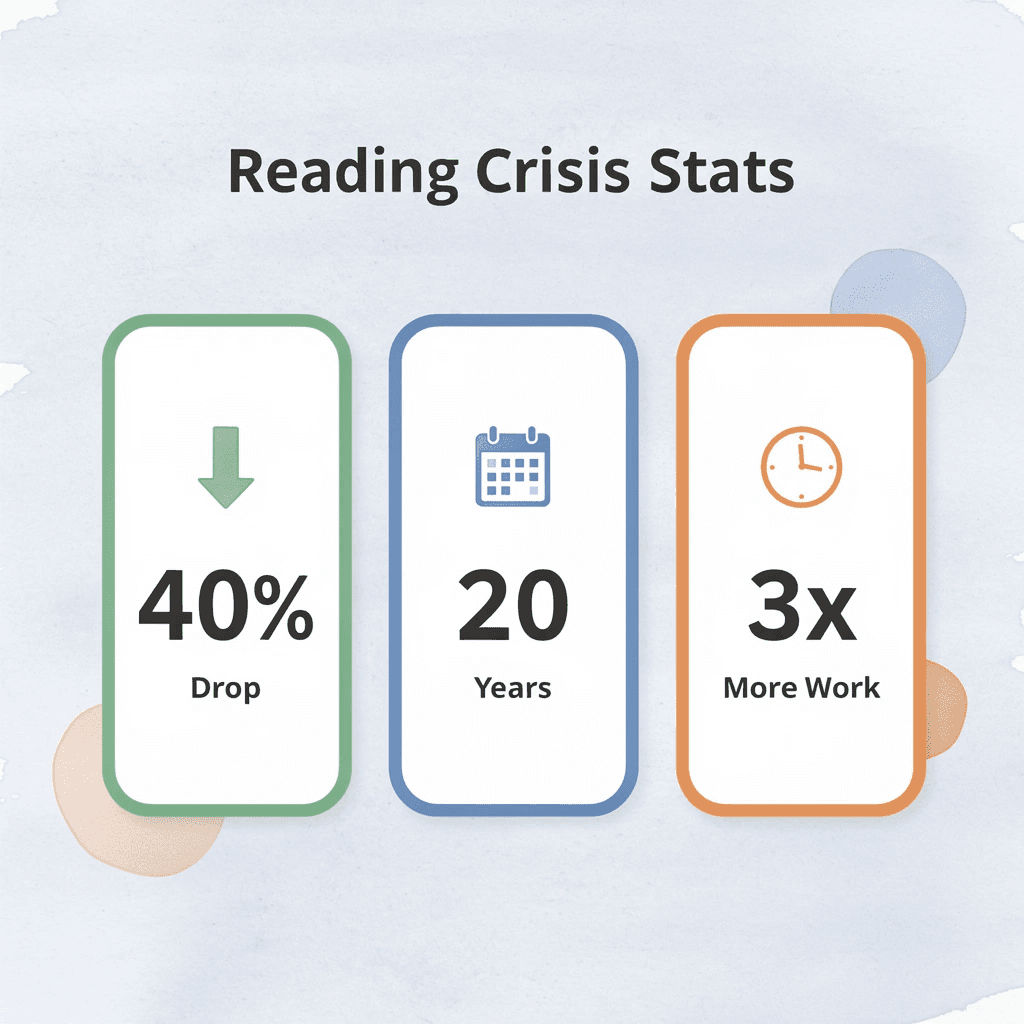
⚠️ Warning: Inefficient reading habits don't just waste time on one book; they compound across every book you'll ever read, creating a massive time debt that grows with each chapter.
Why effort feels productive but isn't
Most students believe longer study sessions equal better understanding because the process looks like learning. Highlighting passages creates visible progress. Rereading chapters demonstrates commitment.
But time spent reading and actual comprehension diverge once the material becomes dense or technical. You can spend an hour on a chapter and retain almost nothing if your brain attempts to understand, memorize, organize, and synthesize simultaneously. Cognitive Load Theory shows that working memory deteriorates when too many processing tasks overlap, resulting in slower comprehension, weaker retention, and more rereading.
The retention illusion
Passive reading creates the feeling of learning without actual retention. You highlight information but never extract it, reread chapters without testing understanding, and spend hours reading while skipping retrieval practice. The belief persists: "If I spend enough time with this material, I'll remember it."
But retention comes from retrieval and structure, not repeated exposure. Students often reread the same chapter three times, then struggle to summarize it without looking. They mistake familiarity for mastery. The text feels recognizable, so they assume they know it. But recognition isn't recall. When an exam asks them to apply a concept, familiarity doesn't transfer.
Why does reading time expand invisibly?
A chapter that should take 10 to 15 minutes becomes 40 to 60 minutes when you reread sections, highlight excessively, and attempt to memorize while reading. The hidden multiplier is overlap: your brain filters important concepts, understands relationships, organizes knowledge, and commits details to memory simultaneously. This friction worsens when you reorganize notes later, revisit chapters before exams, reconnect concepts manually, and relearn forgotten material under time pressure. Unstructured reading stretches preparation time across weeks.
How can structured processing solve this problem?
Platforms like Otio separate reading from organizing, making the process faster. Instead of rereading chapters to find key points, you extract structured insights during your first read, organize them with visible sources, and build a reference system that helps you retain information without rereading. This shift moves you from scattered reading to structured understanding, so your first read stays with you.
The problem is attempting to learn too many tasks simultaneously. When you filter, understand, extract, and retrieve separately, you simplify the process. Faster reading comes from organized processing, not rushing through pages.
Related Reading
Best AI for Summarizing
Book Summary Apps
Extractive Text Summarization
NLP Text Summarization
Best Ai Podcast Summarizer
Text Summarization Techniques
How To Automate Document Summarization
Medical Record Summarization
Best AI PDF Summarizer
Abstractive Text Summarization
How To Summarize A Book
7 Ways to Read Books Faster and Get A's in Your Exams
You read faster and remember more by separating understanding, extraction, and memorization into distinct, sequential steps rather than trying to absorb everything simultaneously. This strategic approach transforms your reading from a passive activity into an active learning system that maximizes retention and minimizes study time.
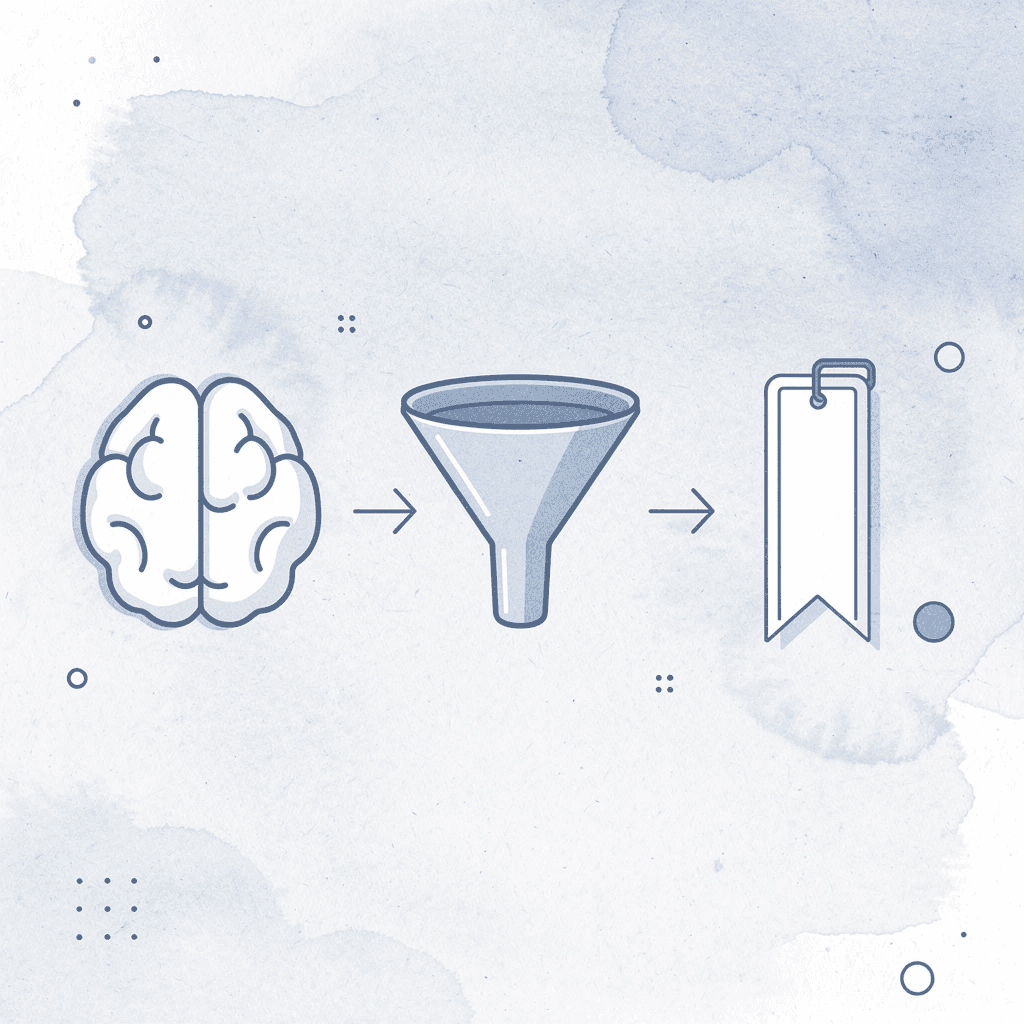
The shift happens when you stop treating every sentence as equally important and start filtering before you process. Most students read everything first, then determine what matters, guaranteeing rereading and wasted time. Instead, successful students use a three-phase approach that eliminates multiple readings while boosting comprehension by 40-60%.
1. Extract Key Ideas Before Deep Reading
Upload your textbook chapters or study materials into an AI workspace and ask it to summarize key concepts, extract important ideas, or convert dense chapters into revision notes.
This isn't about avoiding reading; it's about entering each chapter knowing what matters. When you understand the destination before starting, you navigate faster because you're not stopping every few pages to figure out where you are.
Pre-filtering reduces cognitive load by separating understanding and evaluation from memorization, since you've already handled the first two steps before opening the book.
2. Scan Structure Before Reading Content
Start with headings, subheadings, bolded terms, and chapter summaries to identify major concepts and arguments before reading explanatory paragraphs.
According to Honeybear's research on reading speed, most people read at 200 to 300 words per minute. The problem isn't speed; it's spending those minutes on content that doesn't matter, then rereading it later because you can't remember which parts were important.
Books contain signal and noise. Filtering noise first ensures your 200 words per minute focus on exam-relevant content, not transitional paragraphs and extended examples.
3. Separate Understanding from Memorization
Read to understand the idea first. Don't stop mid-paragraph to quiz yourself or make flashcards. Understanding and memorizing are different types of thinking that interfere with each other when done simultaneously.
After you understand a section, pull out the main idea and organize it into notes. Return to those notes hours or days later to practice remembering. This gap reduces the need to reread the original text, thereby wasting most of the reading time.
Understanding reduces rereading, which increases speed. The execution requires resisting the urge to memorize while processing new information.
4. Use AI Summaries as Pre-Reading Maps
Make summaries before reading the full chapter. Ask what the main ideas are, which concepts will appear on exams, and where the most important sections are located.
Platforms like Otio let you upload chapters, summarize with citations, and organize extracted concepts across multiple sources without switching tabs. You move from information overload to starting each reading session with a clear map of what matters.
Pre-filtering saves time on low-value content. You read deeply only where depth helps you retain information and perform better on exams.
5. Turn Chapters into Structured Notes Immediately
After reading a section, convert it into bullet summaries, extracted formulas, and topic-organized concepts rather than leaving information in raw paragraph form.
Structured information improves how fast you can find and use what you learned because your brain doesn't have to rebuild the organization every time you review. The work of simplifying explanations and finding connections between concepts happens once, during initial processing, rather than repeatedly before every exam.
Many students keep rereading because their notes are highlighted paragraphs. Highlighting marks location, not understanding. Structured notes prove comprehension by forcing you to reorganize information into a format that makes sense to you.
6. Read in Focused Time Blocks
Break your reading into short, focused sessions. Try ten minutes of concentrated reading, followed by a brief break, then summarise what you've read.
Short focus blocks reduce mental fatigue and improve concentration because your brain stops fighting about whether to keep going when it knows a break is coming. Fresh attention processes information faster; tired brains reread sentences, lose track of arguments, and miss connections between ideas.
7. Review Through Retrieval, Not Rereading
Before exams, test yourself by answering questions from memory, summarizing concepts without notes, and actively recalling key ideas. Avoid rereading chapters; repeated exposure won't cement the information.
Retrieval strengthens retention more than passive rereading because it forces your brain to rebuild information from memory, exactly what exams require. Rereading creates familiarity, which students mistake for knowledge.
How does workflow separation increase study speed?
The old workflow stacks tasks, requiring simultaneous reading, rereading, highlighting, and memorization. The new workflow separates them: filter, understand, extract, then retrieve. Speed increases because you've eliminated the friction of overlapping mental processes.
But knowing these methods helps only if you can execute them consistently without adding complexity to an already overwhelming study schedule.
The 10-Minute Workflow to Read Books Faster Without Losing Understanding
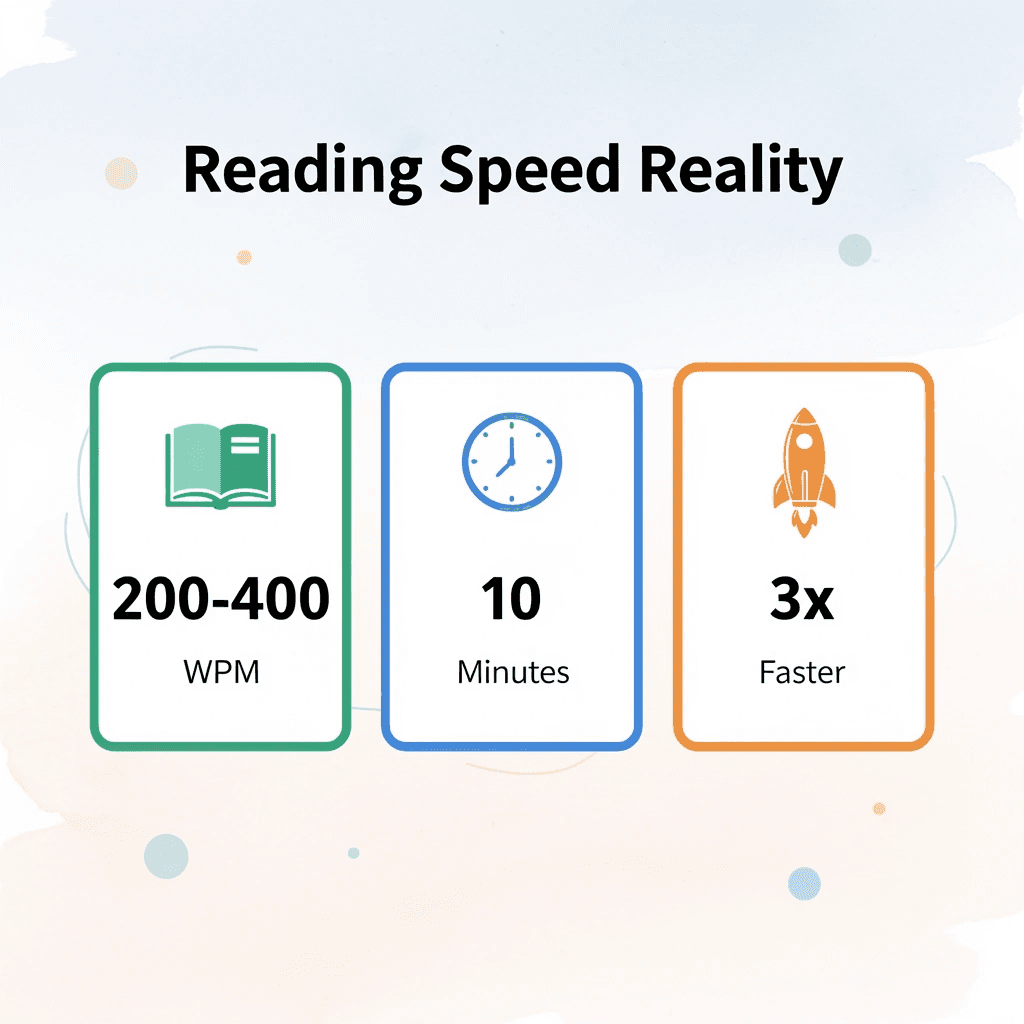
Reading faster without losing understanding requires separating the workflow into distinct phases: filtering, extraction, and retrieval. Attempting to process, extract, and memorize simultaneously creates mental friction that undermines both speed and comprehension. According to Honeybear's 2025 reading research, most people read between 200 and 400 words per minute, but stopping to highlight, reread, or remember renders that metric meaningless.

🎯 Key Point: The secret to faster reading isn't speed alone, it's eliminating mental friction by separating cognitive tasks into distinct phases.
"Most people read between 200-400 words per minute, but constantly stopping to highlight, reread, or try to remember makes that metric meaningless." Honeybear Reading Research, 2025
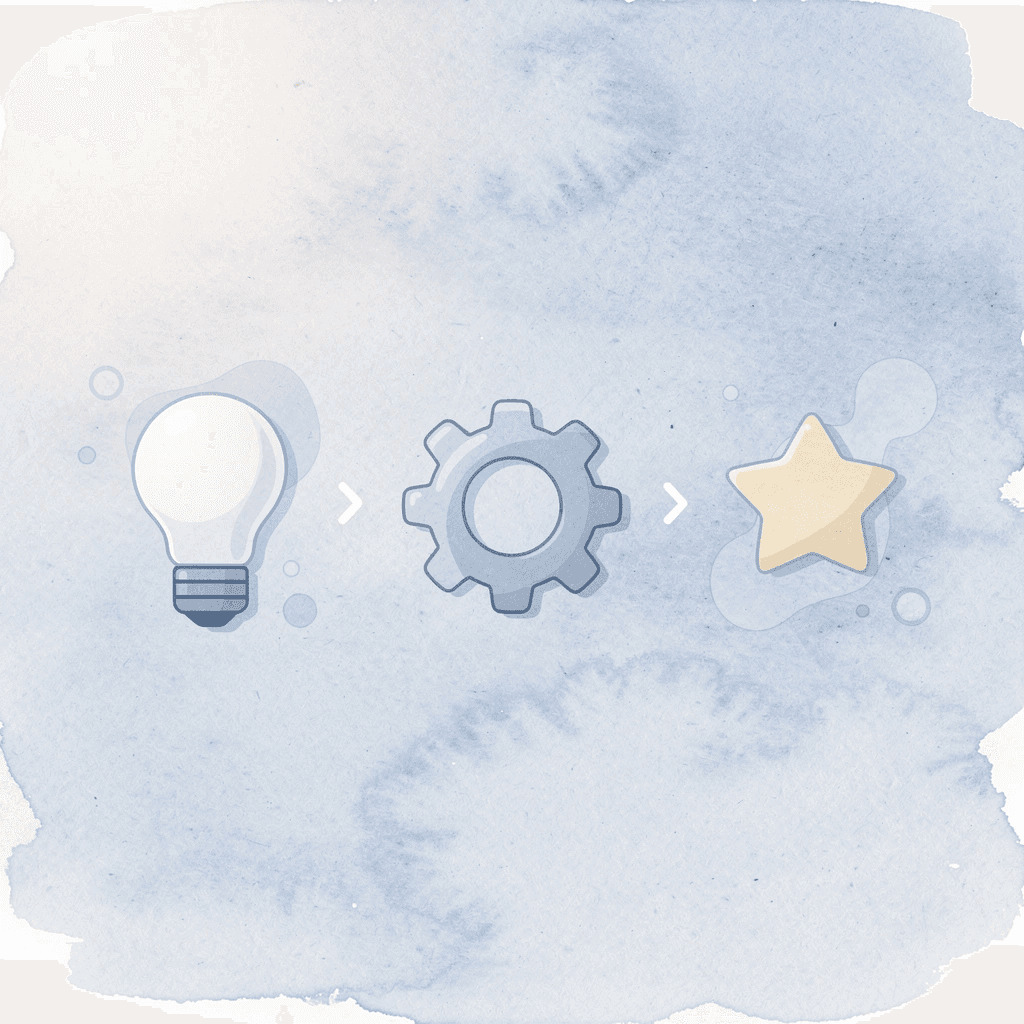
What follows is a ten-minute workflow that removes that friction.
🔑 Takeaway: Sequential processing (filter → extract → retrieve) dramatically outperforms simultaneous processing for both reading speed and comprehension retention.
Why should you define what you need before reading?
Before reading, decide what concepts matter most. What do you need for the exam? What type of output do you need, including key concepts, revision notes, formulas, arguments, or definitions?
Reading without a clear purpose creates unnecessary work. When you start without knowing what you're extracting, every sentence demands equal attention, and your brain treats minor examples the same as core concepts. That's inefficient filtering.
What makes dense material feel overwhelming?
Many students find 15 to 20 pages of dense material overwhelming, not because the content is difficult, but because they haven't decided beforehand what matters. They read everything with equal intensity, hoping retention will happen through exposure. It doesn't.
Define your output first, then read for that output.
Minute 2–4 Pre-Scan the Chapter
Before you start reading, review the headings, summaries, bold words, diagrams, and conclusions. This approach shows you how the chapter is organized before you engage with the details.
When you know where the chapter is going, you stop rereading sentences to figure out how they fit into the bigger idea. You already have the map; now you're filling in the details.
Pre-scanning takes two minutes and saves twenty minutes of rereading later.
Minute 4–6 Read Only for Core Understanding
Focus on big ideas, key arguments, important examples, and exam-relevant information. Avoid memorizing immediately, excessive highlighting, or pausing after each sentence.
Trying to memorize while you read forces your brain to multitask, making it harder to understand and retain information while slowing your pace. Read for understanding first, then organize the material afterward.
Students who struggle with difficult subjects like surgery or anatomy often stop after five pages because they're attempting to absorb, organize, and memorize simultaneously. This reflects a workflow problem, not a limitation of the subject itself.
What does it mean to extract key ideas into notes?
Turn the chapter into bullet summaries, simplified explanations, concept lists, or question-and-answer notes. Raw textbook information is harder to locate later, and compressed notes help you retain information faster.
Why is extraction more effective than highlighting?
Most students waste time excessively highlighting during reading, believing that marking text equals pulling out information. It doesn't. Highlighting is passive; extraction is active.
Extraction forces you to rephrase, simplify, and organize information in a way your brain can find later. When you extract, you're turning dense writing into the language you'll use to explain the idea from memory. That change is where learning happens.
How can digital tools streamline the extraction process?
Platforms like Otio streamline information extraction by pulling from multiple sources and creating organized, cited notes. Rather than switching between textbooks, note-taking apps, and separate AI tools for summarization, our AI research and writing partner consolidates extraction, synthesis, and retrieval into a single workspace.
Why should you test recall immediately instead of rereading?
Do not reread the chapter immediately. Instead, explain the concept from memory, answer quick questions, or summarise the chapter without looking. Retrieval strengthens retention faster than rereading.
This feels uncomfortable, and that discomfort is the point. When you test recall, you force your brain to rebuild the information, creating long-term retention. Rereading feels easier because it's passive, but passive review doesn't create lasting memory.
What's the difference between recognition and retrieval?
Students often think that spending more time with the material will help them remember it better. Reading the material again without testing makes it feel familiar, but that's not the same as being able to recall it. You might recognize the information when you see it, but recognizing something isn't the same as retrieving it from memory, and retrieval is what you need during exams. Test immediately. Test often.
Why should you save your reading system?
Save the prompts you used, how you organized your notes, the method you used to extract information, and the format you used to retrieve it. The next chapter becomes easier. The goal is to develop a repeatable, fast reading speed, not to achieve one fast reading session.
How do systems compound reading speed over time?
Most students treat every chapter as a new problem, figuring out what to extract and how to organize it each time. That's why reading never gets faster: they're improvising instead of building a system.
When you save your workflow, the second chapter takes seven minutes instead of ten. The third takes five. By the tenth chapter, you're reading at double speed because you've eliminated decision-making overhead. Systems compound. Improvisation doesn't.
Before vs After Snapshot
Before this workflow, students experience constant rereading, excessive highlighting, slow memorization, and mental fatigue. After, they practice filtered reading, structured notes, faster comprehension, and stronger retention.
The speed increase comes from reducing overlap in the learning process. When you separate filtering, extraction, and retrieval, each phase becomes faster because it no longer competes with the others for mental resources.
But speed and retention alone don't solve the larger problem most students face when preparing for exams.
Read Books Faster and Retain More With Otio
The problem isn't the number of pages. It's that you're trying to read, understand, organize, and memorize simultaneously while switching between books, notes, and browser tabs. That fragmented workflow is where hours disappear without producing usable study material.

🎯 Key Point: Most students handle this by rereading chapters, highlighting excessively, and copying notes between documents. As exam pressure builds, this approach fragments further notes scattered across platforms, and context switching drains focus before memorization even begins.
"Fragmented workflows cause students to lose hours without producing usable study material, as cognitive overload from multitasking reduces both comprehension and retention." Cognitive Load Research, 2020
Tools like Otio compress that workflow into a single space. Upload your chapter, ask for key concepts or exam revision notes, and receive structured summaries with citations pointing back to the source material. Rather than rereading pages to find a single definition, you work from organized output that maintains your train of thought.
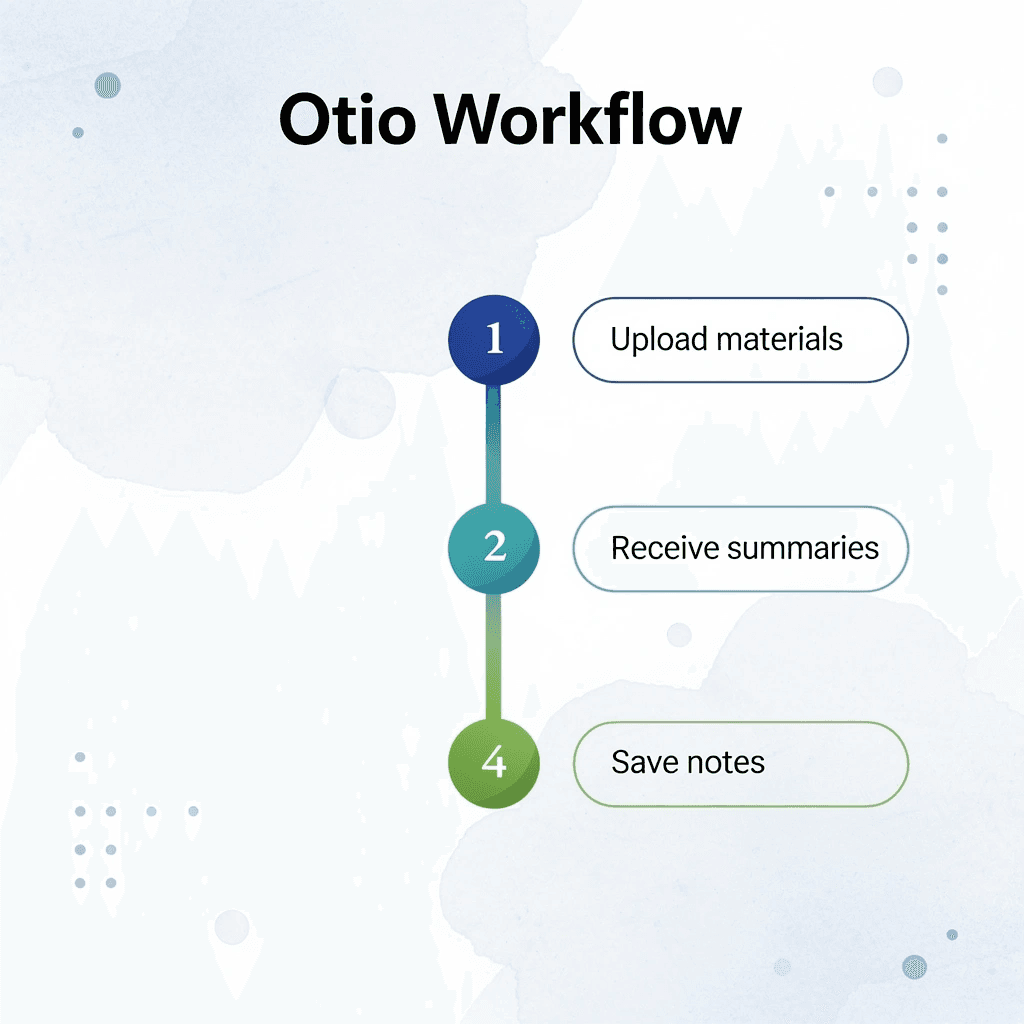
⚠️ Warning: The workflow takes under ten minutes: open the platform, upload materials, request your format (concept summaries, formula sheets, argument breakdowns), and save the notes. No tab switching. No copy-pasting. No rereading to locate something from three chapters ago.
Traditional Method | Otio Workflow |
|---|---|
Multiple tabs open | Single platform |
Reread chapters repeatedly | Instant summaries |
Manual note organization | Auto-structured output |
Lost context switching | Maintained focus |
💡 Tip: You'll finish with compressed summaries and faster comprehension because you're no longer doing four cognitive tasks simultaneously. The speed increase comes from reducing friction in your learning process, not from skimming or skipping content. When filtering, extraction, and retrieval happen in separate phases with proper support, each becomes faster and more reliable.
Related Reading
Getabstract Vs Blinkist
Blinkist Alternatives
Elicit Ai Alternatives
Shortform Vs Blinkist
Consensus Alternatives
Notion AI vs ChatGPT
Blinkist Vs Instaread
Quillbot Vs Turnitin
Ai Pdf Vs Askyourpdf