
Summarization
15 AI Tools That Summarize Books in 10 Minutes
Can AI summarize a book? See 15 AI tools that turn long reads into clear book summaries, key points, and takeaways in minutes.

You've stared at a 400-page business book for weeks, knowing the insights inside could change your approach, but finding the time feels impossible. LLM text summarization has transformed how we consume written content, allowing artificial intelligence to distill entire books into digestible summaries that capture key concepts, main arguments, and actionable takeaways. This article reveals 15 AI tools that can summarize books in just 10 minutes, helping you extract knowledge from lengthy texts without sacrificing comprehension or spending hours reading.
While many summarization tools exist, Otio stands out as an AI research and writing partner that goes beyond simple condensing. Instead of just shortening text, Otio helps you interact with book content, ask specific questions about themes and ideas, and create notes that connect insights across multiple sources. Whether you're a student racing through required reading, a professional keeping up with industry publications, or a curious reader trying to absorb more knowledge, Otio transforms how you engage with books by making summarization feel less like compression and more like conversation.
Table of Contents
Summary
LLM text summarization compresses 400-page books into digestible summaries in roughly 10 minutes by automating extraction, compression, and organization tasks that previously required hours of manual work. The time reduction comes from separating cognitive tasks that students typically perform simultaneously, reading while highlighting, and note-taking while organizing, which creates mental friction that slows comprehension.
Students spend an average of 18 minutes attempting to summarize a single chapter, but much of that time involves rereading rather than synthesizing, according to Talentnook's Reading Habits Data Report 2025. The same report found that 67% of students struggle to identify main ideas when summarizing, a problem that intensifies when they layer note-taking on top of active reading.
Manual summarization creates hidden costs beyond slower reading speed. Students must reorganize notes later, reconnect ideas manually, revisit chapters repeatedly, and relearn forgotten information before exams. Research in Cognitive Load Theory shows that working memory becomes less effective when too many processing tasks happen simultaneously, resulting in slower comprehension, weaker retention, more rereading, and mental fatigue that compounds over time.
The shift from 30-minute to 10-minute book summarization occurs through four structural changes: less rereading because extraction is automatic, reduced cognitive overload because processing and compression no longer occur simultaneously, automated extraction that identifies key concepts without paragraph-by-paragraph scanning, and structured outputs that eliminate the need for later reorganization.
Most students juggle multiple AI tools, switching between ChatGPT for summarization, Claude for long-form analysis, and Perplexity for quick lookups, with each tool forgetting what was uploaded last time. This fragmented approach creates constant context switching, increasing cognitive load and causing students to lose momentum and mental clarity.
Otio addresses this by centralizing the entire research workflow, allowing students to upload book chapters, query across multiple sources simultaneously, and receive answers with citations to specific pages, all within a single workspace that maintains context across study sessions.
Why Students Struggle to Summarize Books Efficiently

Students struggle to summarize books efficiently because they try to perform multiple cognitive tasks at once. Reading, understanding, compressing, and organizing information simultaneously creates mental friction that slows everything down. The delay isn't due to the book's length or difficulty. It's caused by process overlap.
The Cognitive Cost of Simultaneous Processing
When students attempt to summarize while reading, they interrupt their own comprehension. They stop mid-paragraph to rewrite sentences, highlight passages while still processing meaning, and take notes before fully understanding the context.
According to Talentnook's Reading Habits Data Report 2025, 67% of students struggle to identify main ideas when summarizing. That struggle intensifies when they layer note-taking on top of active reading. The brain handles sequential tasks more efficiently than parallel ones, but most students never separate these activities.
The Illusion That Every Page Matters Equally
Without a filtering system, students treat every chapter as equally important. Supporting anecdotes receive the same attention as core arguments. Tangential examples get summarized with the same depth as foundational concepts. This approach creates exhaustion, not understanding.
One student described spending hours on a single chapter because "everything felt necessary," only to realize later that three pages contained the book's entire thesis. The rest was elaboration. When every sentence competes for focus, nothing gets prioritized.
The Repetition Trap
Because key insights aren't extracted clearly on the first pass, students return to the same pages repeatedly. They reread paragraphs trying to capture what they missed, revisit earlier chapters to reconnect ideas, and restart sections after losing focus.
Students spend an average of 18 minutes attempting to summarize a single chapter, but much of that time involves rereading rather than synthesizing. The problem isn't retention. It's extraction. If the first read doesn't produce clear takeaways, every subsequent read feels equally uncertain.
When Collection Replaces Compression
Many students believe longer notes signal better learning. They copy large sections verbatim, create summaries nearly as long as the original text, and accumulate highlights without simplifying them. But summaries become useful through compression, not accumulation.
A 30-page chapter condensed into 28 pages of notes hasn't been summarized. It's been transcribed. The goal isn't to preserve every detail. It's to distill meaning into something retrievable and actionable.
The Hidden Cost of Tool Fragmentation
Most students read in one app, take notes in another, and organize summaries in a third. That constant context switching increases cognitive load. Every time they jump between tools, they lose momentum and mental clarity.
Platforms like Otio address this by consolidating reading, note-taking, and AI-assisted summarization into a single workspace, keeping sources connected to insights. Instead of copying passages into separate documents, students can query content directly, ask specific questions about themes, and generate summaries that cite exact pages without switching tabs. The workflow stays intact, and the friction disappears.
Related Reading
Document Review Best Practices
How To Process Information Faster
How To Read Books Faster
PDF Summarization Techniques
What Is Text Summarization
Can Ai Summarize A Book
How Do You Write A Summary
The Hidden Cost of Summarizing Books Manually

Manual book summarization feels productive, but it silently increases rereading, slows comprehension, and weakens retention. The issue is not summarization itself. It's trying to process too many tasks simultaneously.
Why Effort Feels Like Progress
Most students believe that manually summarizing helps them better understand books. That belief feels valid because rewriting information feels active, long notes feel productive, and effort feels connected to learning. In short or simple books, manual summarization can still work. If the material is easy, familiar, or low-density, you may still retain most of it. But once books become technical, research-heavy, or concept-dense, the cracks appear.
The Cognitive Overload Problem
While summarizing books manually, your brain is trying to understand the information, identify important concepts, compress ideas, organize notes, and retain it all simultaneously. That creates cognitive overload.
Research in Cognitive Load Theory (Sweller) shows that working memory becomes less effective when too many processing tasks happen simultaneously. In practice, that means slower comprehension, weaker retention, more rereading, and mental fatigue. Each reread increases study time, which reduces efficiency.
When Compression Fails
Manual summaries often become too long because students compress poorly. Students may rewrite entire paragraphs, copy excessive information, or create notes nearly as long as the original book. The belief: "If I remove too much information, I'll miss something important." But effective summaries come from selective compression, not maximum retention of details. The hidden multiplier is overlap, not book complexity.
The Real Cost: Slower Exam Preparation
Manual summarization affects more than reading speed. Because students still need to reorganize notes later, reconnect ideas manually, revisit chapters repeatedly, and relearn forgotten information before exams, the cost is not just slower summarization. It has weaker long-term retention afterward. When you read while trying to summarize everything immediately, you multiply effort. Faster summarization comes from structured processing, not longer study sessions.
But knowing the problem exists doesn't solve it, especially when most tools just shift the bottleneck elsewhere.
Related Reading
• NLP Text Summarization
• How To Summarize A Book
• Text Summarization Techniques
• Best AI Podcast Summarizer
• Best AI PDF Summarizer
• Book Summary Apps
• Abstractive Text Summarization
• Best AI for Summarizing
• How To Automate Document Summarization
• Extractive Text Summarization
• Medical Record Summarization
15 AI Tools That Summarize Books in 10 Minutes
You summarize books in 10 minutes by using AI tools that separate extraction, compression, and organization into automated steps. Not by manually rewriting every chapter yourself.
The shift happens when you stop treating summarization as a reading task and start treating it as a workflow problem. Tools that extract key concepts, compress dense sections, and organize insights across chapters remove the bottlenecks that turn a 10-minute job into an hour-long session. The difference isn't speed reading. It's structural efficiency.
1. Otio
Otio is an AI workspace designed to summarize, organize, and extract insights from books, PDFs, and long documents. Upload a chapter and ask: "Summarize the key concepts," "Turn this into revision notes," or "Extract the most important ideas." The platform reduces the need to manually compress information while reading.
The mechanism works by shifting your approach. Instead of reading everything manually, you extract the highest-value concepts first. That reduces cognitive overload immediately. When you're working across multiple books or research sources, Otio remembers what you've uploaded and lets you query across all of them at once, citing every claim back to specific pages. That eliminates the fragmented workflow of copying content into ChatGPT, losing track of sources, and forgetting where insights came from.
Context Centralization and Workflow Compression
Most people juggle multiple AI tools, switching between ChatGPT for summarization, Claude for long-form analysis, and Perplexity for quick lookups. Each tool forgets what you uploaded last time. Platforms like Otio centralize that process, keeping your sources, summaries, and citations in one workspace. That compression of context-switching saves more time than the summarization itself.
2. ChatGPT
ChatGPT is a conversational AI tool for summarizing and simplifying information. Paste book sections and ask: "Summarize this chapter," "Explain this concept simply," or "Extract the main arguments." The tool compresses dense information quickly into readable outputs.
The value is in refinement, not rewriting. You reduce manual rewriting and focus on shaping the output. If the first summary is too long, ask it to be further condensed. If it misses a key point, tell it what to emphasize. The back-and-forth takes seconds, not minutes.
3. Claude
Claude is a long-context AI assistant designed to process large amounts of text. Upload long book sections and ask: "Summarize this by theme," "Extract actionable insights," or "Identify the key conclusions." Claude handles larger context windows effectively, which means you can process entire chapters together instead of manually splitting everything into smaller chunks.
The mechanism reduces fragmentation. When you feed Claude 20 pages at once, it identifies patterns across the full section. That's faster than summarizing five pages, then the next five, then trying to merge the outputs yourself.
4. NotebookLM
NotebookLM is a source-grounded notebook designed to work with uploaded documents and books. Upload multiple chapters and ask: "Generate a study guide," "What themes repeat?" or "Summarize this book's core ideas." NotebookLM connects insights across chapters automatically.
The shift is from isolated summaries to connected understanding. When you summarize one chapter at a time, you miss how concepts build across sections. NotebookLM surfaces those connections without requiring you to manually cross-reference your notes later.
5. Perplexity AI
Perplexity AI is an AI search and summarization tool focused on rapid information retrieval. Ask: "Summarize this chapter in 5 points" or "What are the key takeaways?" Perplexity reduces the need for manual scanning.
The mechanism is direct retrieval. You retrieve direct insights instead of reading line by line, then deciding what matters. That cuts the decision-making overhead that slows manual summarization.
6. Humata AI

Humata AI is a conversational document Q&A tool for PDFs and long texts. Upload a book chapter and ask: "What are the main concepts?" or "Summarize the arguments." Humata turns static text into searchable insight extraction.
The value is in eliminating repeated searches. When you're studying, you often reread sections to find a specific point you remember seeing earlier. Humata stops that. You ask the question once, and it pulls the answer from wherever it appears in the document.
7. Notion AI
Notion AI is an AI-enhanced workspace for organizing summaries and notes. Turn raw summaries into revision notes, study guides, or structured summaries. Notion AI helps structure outputs after extraction.
The mechanism separates summarization from organization. Most people summarize and organize simultaneously, which multiplies cognitive load. Notion AI lets you extract first, then organize later. That separation reduces the mental effort required during the initial pass.
8. QuillBot
QuillBot is an AI tool for paraphrasing and compressing long content. Paste a chapter and generate a shorter summary. QuillBot simplifies complex wording quickly.
The value is in compression speed. When you manually rewrite a paragraph to make it shorter, you're making dozens of micro-decisions about which words to keep. QuillBot makes those decisions instantly, and you adjust only what feels off. That's faster than starting from scratch.
9. Scholarcy

Scholarcy is a summarization tool built for academic papers and dense texts. Generate flashcards and summaries from textbook chapters. Scholarcy extracts key findings automatically.
The mechanism reduces manual extraction work. Academic texts bury conclusions in dense prose. Scholarcy pulls them out without requiring you to read every paragraph to find them.
10. Genei
Genei is an AI research assistant for summarizing long-form content. Upload study materials and extract major ideas. Genei reduces information overload during review.
The value is in focusing on compressed insights first. When you're reviewing for exams, you don't need to reread everything. You need the highest-value concepts. Genei surfaces those immediately.
11. TLDR This
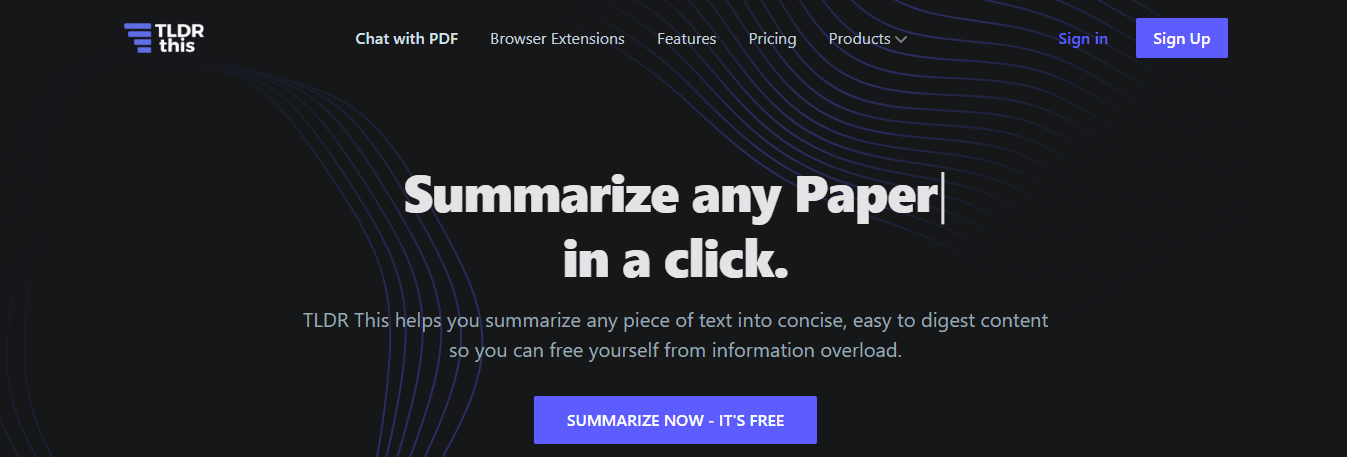
TLDR: This is a tool designed for fast article and text summarization. Summarize chapters into short digestible outputs. TLDR: This removes low-value detail quickly.
The mechanism cuts unnecessary reading time. Not every sentence in a chapter matters equally. TLDR This identifies what's essential and discards the rest, so you're not wasting time on filler.
12. Wordtune
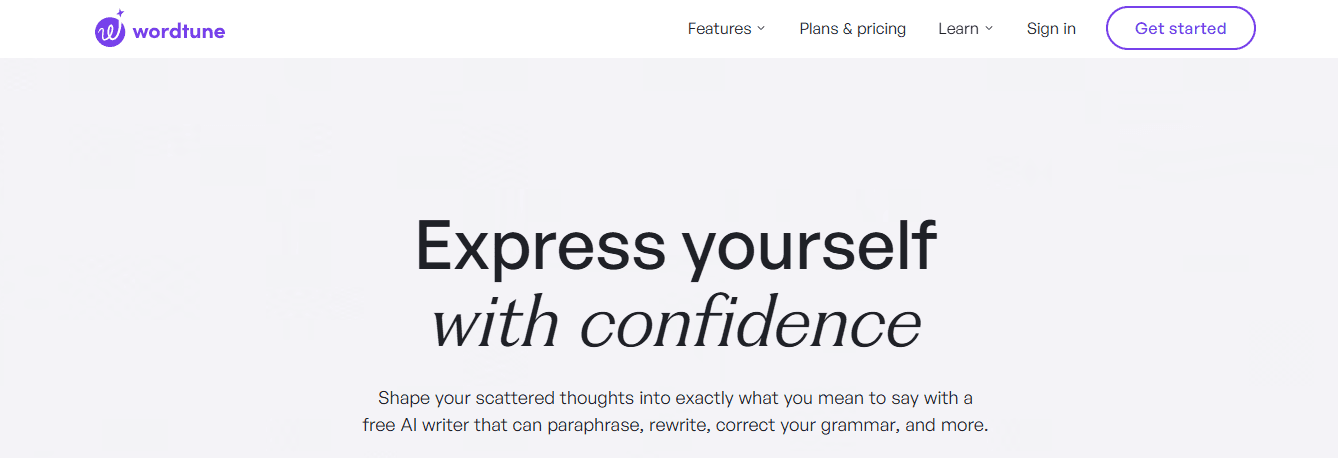
Wordtune is an AI writing and rewriting assistant. Simplify difficult passages into clearer language. Wordtune improves readability during summarization.
The value is in simplification speed. When you encounter a dense paragraph, you can either reread it multiple times until it makes sense or paste it into Wordtune and get a clearer version instantly. The second option is faster.
13. Elicit
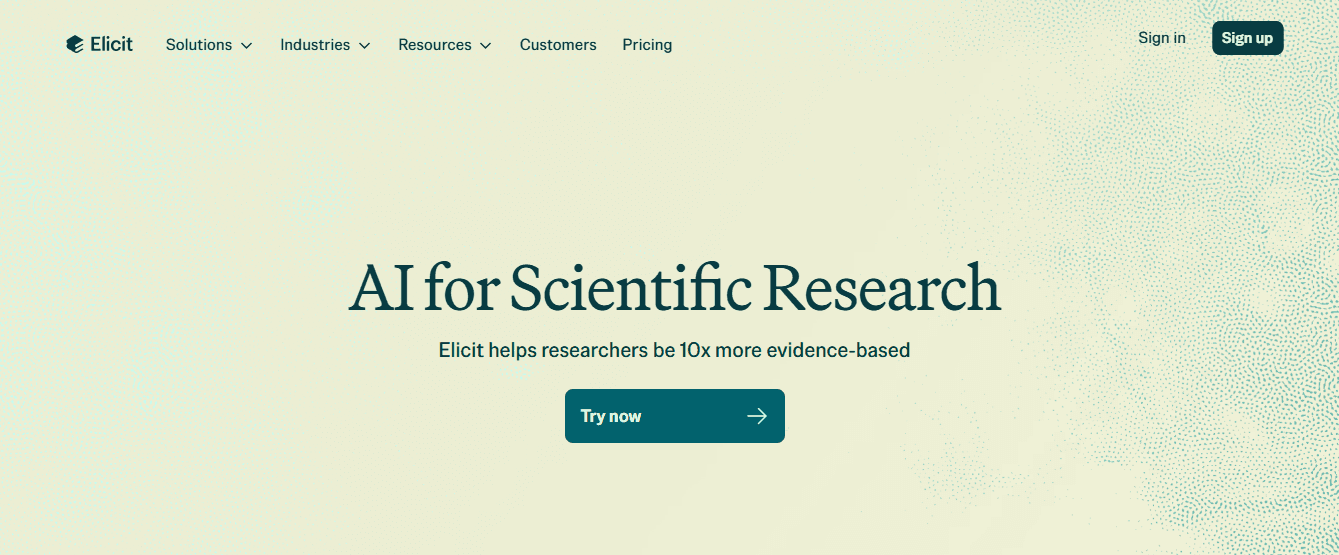
Elicit is an AI research tool designed for extracting findings from documents. Analyze concept-heavy sections and extract insights. Elicit useful information faster.
The mechanism reduces the need for manual searching and filtering. When you're looking for specific information across multiple sources, Elicit pulls relevant sections without requiring you to skim everything yourself.
14. SummarizeBot
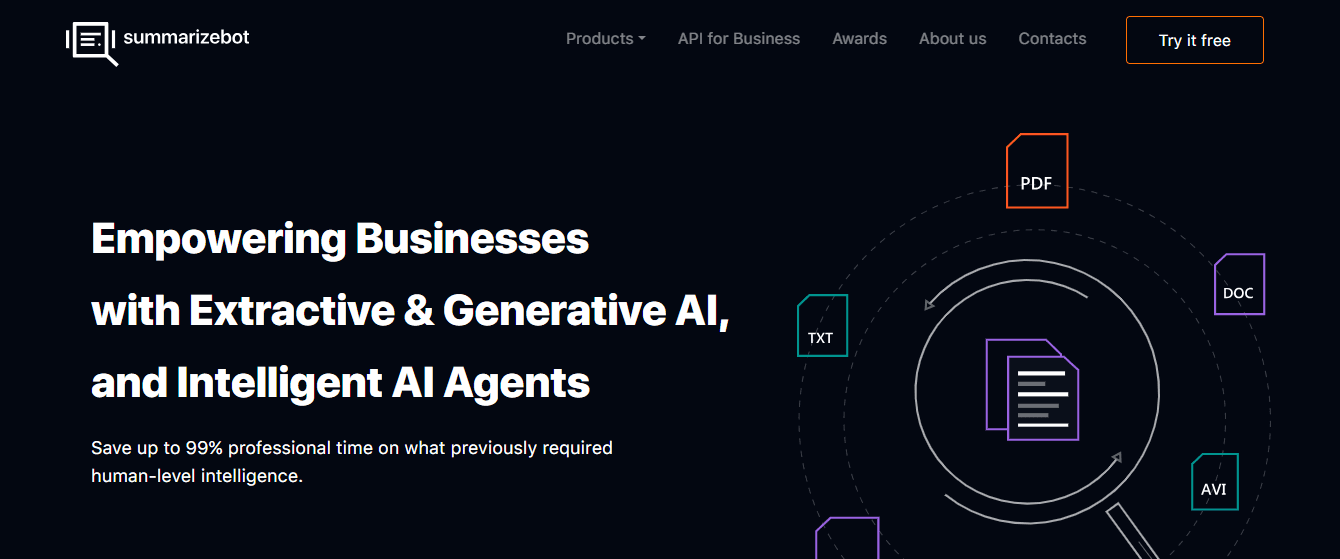
SummarizeBot is an AI summarization platform for documents and text. Compress long sections into short summaries. SummarizeBot reduces reading load quickly.
The value is in shorter outputs. When you're processing multiple chapters, shorter summaries mean less rereading later. That compounds over time.
15. Resoomer
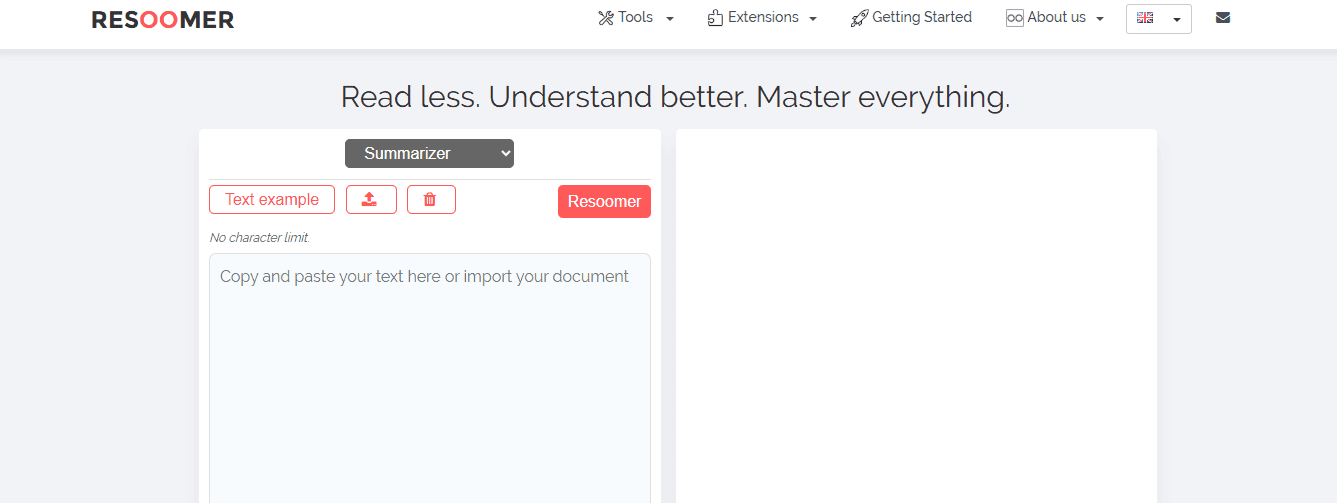
Resoomer is a text summarizer focused on extracting central ideas. Summarize academic chapters into concise points. Resoomer removes unnecessary detail automatically.
The mechanism is selective extraction. It identifies the thesis, key arguments, and conclusions, then discards the supporting examples and elaborations. That reduces overload without losing the core message.
Why These Tools Make 10-Minute Book Summarization Realistic
The old workflow looked like this:
Read
Reread
Highlight
Summarize manually
That took 30 to 60 minutes per chapter. The new workflow is:
Upload
Extract
Compress
Structure
That takes roughly 10 minutes.
Workflow Friction and Automated Extraction
The time reduction comes from four shifts.
Less rereading, because extraction happens automatically.
Reduced cognitive overload, because you're not processing and compressing simultaneously.
Automated extraction, because tools identify key concepts without requiring you to scan every paragraph.
Structured outputs, because the result is already organized into usable notes.
Fast book summarization is not about reading faster. It's about reducing workflow friction. When the bottleneck shifts from manual rewriting to automated extraction, the time required drops dramatically. The tools don't just speed up the process. They remove the steps that made it slow in the first place.
The 10-Minute Workflow to Summarize Books Using AI Tools

The workflow that compresses book summarization into ten minutes is not about reading faster. It's about separating the tasks that usually happen simultaneously.
You do not summarize while reading.
You do not organize while extracting.
You separate filtering, compression, and structuring into distinct steps.
That separation is what compresses summarization time.
Most people approach book summarization as a single continuous task. They read, highlight, take notes, and try to organize simultaneously. The brain cannot process all those operations efficiently at once. When you separate them, each step becomes faster and more precise.
Minute 0–2: Define What You Need From the Book
Before uploading or reading anything, decide what output you actually need. Not what the entire book contains, but what matters for your specific goal.
Are you preparing for an exam?
Building revision notes?
Extracting key concepts for a research paper?
Identifying actionable insights for a project?
The answer changes everything about how you approach the next eight minutes.
Undefined summarization creates unnecessary processing. You extract too much, retain information you'll never use, and spend time organizing content that doesn't matter. According to iWeaver AI, AI tools can process 500-page books in minutes, but that speed only matters if you know what you're looking for before you start.
When the goal is clear, the extraction becomes surgical. When it's vague, you end up with overloaded notes that require another round of processing later.
Minutes 2–4: Generate a High-Level Summary First
Before deep reading, ask AI tools to summarize the chapter or section at a structural level. Not every detail, just the architecture of the argument.
Prompt examples that work:
Summarize this chapter in five main points.
What are the core concepts, and how do they connect?
What sections contain the most important information?
Structure before detail reduces confusion. When you understand the framework first, you know where to focus your extraction effort. You're not reading linearly anymore. You're navigating strategically.
This step takes two minutes because you're not processing content yet. You're building a map. The map tells you where the high-value information lives, so you don't waste time extracting low-priority sections.
Minutes 4–6: Extract Only High-Value Information
Now focus only on core ideas, important arguments, formulas, definitions, and repeated themes.
Do not summarize every paragraph.
Do not collect excessive detail.
Do not copy large sections directly.
The cause-and-effect relationship is simple: too much retained information creates overload. Compressed extraction creates clarity.
Ask yourself before extracting each piece of information: "Will I actually use this?" If the answer is uncertain, leave it out. You can always return to the source if needed. Most people never do.
This is where the workflow breaks down for those still using traditional methods. They extract too much because they fear missing something important. But missing low-priority information is not a failure. It's the entire point.
Minutes 6–8: Convert Insights Into Structured Notes
Raw information is harder to retain later. Turn extracted content into bullet points:
Notes
Study guides
Concept summaries
Question-and-answer formats, depending on your goal, from Minute 0.
Structured outputs improve retrieval speed. When exam preparation arrives weeks later, you don't reread the entire chapter. You review the structured notes that already contain exactly what you need.
Functional Structure and Workflow Continuity
This step is not about creating beautiful notes. It's about creating usable ones. If the format matches how you'll use the information later, the notes work. If it doesn't, you'll end up reprocessing them anyway.
The most common workflow breakdown happens here. People extract well but structure poorly, which means they have to reorganize everything before they can actually use it. That reorganization step destroys the time savings from AI extraction.
Minutes 8–9: Verify Important Sections
Do not reread the entire chapter. Only verify definitions, statistics, formulas, and important claims that you'll reference later or use in assignments.
Selective verification prevents unnecessary rereading. Most extracted information doesn't require verification because it's conceptual, not factual. You're checking for accuracy on the pieces that matter most, not auditing every sentence.
This step exists because AI tools occasionally misinterpret complex arguments or technical content. A quick verification pass catches those errors without requiring a full manual review. One minute is enough when you're only checking high-stakes information.
Minutes 9–10: Save the Summarization System
The goal is not one fast summary. It's repeatable summarization speed across every chapter, every book, every research project.
Save the prompts that worked.
Save the summary structure.
Save the extraction workflow.
Save the note format.
When you start the next chapter, you're not building a new system from scratch. You're running a proven process that already works.
Most people treat each book as a unique challenge requiring a custom approach. That's why summarization stays slow. The workflow should be identical whether you're summarizing psychology textbooks or historical analysis. Only the content changes, not the method.
Unified Research and Context Retention
Teams using an AI research and writing partner find this particularly useful because the platform remembers your sources and automatically maintains citations. Instead of jumping between ChatGPT for summarization, Google Docs for notes, and manual citation tracking, the entire workflow lives in one workspace. The system doesn't just summarize faster—it removes the context-switching that makes traditional methods exhausting.
Before vs After Snapshot
Before: endless rereading, overloaded notes, excessive highlighting, and slower exam preparation.
After: compressed summaries, structured notes, faster comprehension, cleaner study workflow.
The time reduction does not come from rushing through books. It comes from reducing overlap in the learning process. When you separate reading from summarizing, and summarizing from organizing, each task becomes faster because your brain isn't trying to do three things simultaneously.
Structural Extraction and Format Optimization
The workflow works because it treats summarization as a structural problem rather than a reading problem. You're not trying to absorb everything faster. You're deciding what to absorb, extracting it efficiently, and organizing it immediately into the format you'll actually use later.
That distinction is what makes ten minutes possible.
But having a workflow only matters if you're using the right tools to execute it.
Summarize Books Faster With Otio
The right tool matters when the workflow depends on it. If you're still copying chapters into separate tools, switching tabs to organize notes, and losing track of what you've already processed, the ten-minute workflow breaks down. The tool should hold the workflow together, not fragment it further.
Most students handle book summarization by uploading text to one AI tool, copying the output into a notes app, then manually cross-referencing sources later when writing essays or preparing for exams. That approach works for a single chapter. When you're processing multiple books for a research paper or exam period, context disappears. You forget which summary came from which chapter, which claims need citations, and which insights connect across sources.
Integrated Research and Source Traceability
Otio treats summarization as part of a larger research workflow. Upload your book chapters or PDFs directly into the workspace. Ask for summaries, structured notes, or thematic connections across multiple texts. Every answer includes citations back to the specific page or document, so when you're writing later, you're not hunting through files trying to remember where you read something. The AI remembers your sources, queries across them simultaneously, and organizes outputs in one place instead of scattering them across browser tabs and disconnected tools.
The difference shows up when deadlines tighten. You're not rebuilding context from scratch every time you sit down to study. You're continuing from where you stopped, with everything already structured, cited, and ready to query further. That's what makes ten minutes sustainable across twenty books, not just one chapter.
Related Reading
• Elicit AI Alternatives
• Shortform vs Blinkist
• Notion AI vs ChatGPT
• Blinkist Vs Instaread
• Blinkist Alternatives
• Consensus Alternatives
• Ai Pdf vs Askyourpdf
• Quillbot Vs Turnitin
• GetAbstract vs Blinkist