
Academic Collaboration
Why author order matters more than you think—and when it doesn't
Contributing authors and co-authors have different rights and recognition. Learn the legal and ethical distinctions before your next multi-author paper.

You've got a methods section half-written, a PI saying “we’ll acknowledge you,” and a paper moving toward submission faster than the authorship conversation is moving. If your name won’t appear in the byline, you should assume you’re being thanked for help rather than credited as an author unless there’s a written agreement saying otherwise.
The short version: co-authors carry credit, responsibility, and often stronger claims over how the work is represented; acknowledged contributors usually don’t. Author order then decides how that credit is read by hiring committees, grant panels, and future collaborators.
This gets messy because labs use the words loosely. Journals don’t.
The confusion that costs researchers their rights
“Contributing author” sounds official. In many journal workflows, though, it means the opposite of what early-career researchers think it means: someone contributed, but didn’t qualify for authorship.
A co-author appears in the author byline. An acknowledged contributor appears in the acknowledgments or contribution note. Those two positions carry different career signals and different responsibilities, and they can affect whether anyone treats the work as yours later.
The National Academies’ guide On Being a Scientist puts the career issue plainly: authorship signals who contributed to the work, and the peer recognition generated by authorship can be important to a scientific career. It also says the discussion should happen early, not when the manuscript is already circulating for final approval, according to the NCBI Bookshelf chapter on authorship and credit.
The trap is polite vagueness. A PI says, “You’ll be included.” A senior grad student says, “We’ll mention your imaging work.” A collaborator says, “You’re definitely part of the paper.” None of those phrases answers the only question that counts: Will your name be in the author byline, and where?
If the answer is “acknowledgments,” you may still get a line of recognition. That can be honorable. It just won’t read the same as co-authorship on a CV, and it usually won’t give you the same standing in an authorship dispute.
For a broader definitional pass, we’ve covered the baseline difference between co-author and contributing author separately. This piece is about the part that causes damage: timing, author order, and what to do before submission locks the record.
What the ICMJE criteria actually mean for your rights

The International Committee of Medical Journal Editors uses four authorship criteria, not a vibe check. To qualify, a person should make a substantial contribution to the work, draft or critically revise it, approve the final version, and agree to be accountable for the work.
That last word does real work: accountable. The ICMJE recommendations say contributors who meet fewer than all four criteria should be acknowledged rather than listed as authors, and they give examples of activities that don’t qualify on their own, including funding acquisition, general supervision, and data collection, according to the ICMJE recommendations on authors and contributors.
So if you only collected samples, ran a sequencer, maintained a dataset, or answered statistical questions, you may have done valuable work without meeting authorship criteria. Annoying? Yes. Especially when the work took months.
Writing changes the case. If you drafted the methods section, rewrote the analysis description, challenged the interpretation, or revised the discussion in a way that affected the paper’s intellectual argument, you’re closer to authorship than someone who only provided technical assistance.
The biomedical literature has been wrestling with this for decades. A paper on equitable authorship practices notes that ICMJE criteria treat authorship as an intellectual activity involving ideas, analysis, writing or revision, and ownership of the study, based on the PMC review of scientific authorship criteria.
Author order then becomes the shorthand everyone pretends not to over-read. In many fields, first author means the person who did the most day-to-day intellectual and writing labor. Last author often signals senior supervision, funding, lab ownership, or project leadership. Middle author positions can be hard to interpret without a contribution statement.
Field norms vary. In economics and parts of mathematics, alphabetical order may dominate. In biomedical science, author order can carry career consequences that are wildly disproportionate to the number of characters in the byline. If you’re comparing roles, this guide to co-author vs first author is worth reading before you agree to “somewhere in the middle.”
Contribution statements help, but they don’t erase author order. Journals including Nature Portfolio and PLOS-style outlets ask authors to specify who did what. Readers still glance at the byline first.
Science published work on authorship and contribution disclosures noting that, for a long time, observers inferred team members’ contributions by reading author order, while journals increasingly ask for individual contribution disclosures in response to concerns about that practice. The open question, according to the Science Advances article on authorship disclosures, is how readers actually use those disclosures.
Acknowledged contributor | Co-author |
|---|---|
Named outside the byline | Named in the byline |
Recognized for a limited contribution | Shares responsibility for the published work |
Often no role in final approval | Must approve the final manuscript |
Usually weak career signal | CV-visible publication credit |
Little control after submission | Has standing to object before submission |
Copyright adds another layer. In U.S. copyright terms, joint authorship depends on whether contributors intended their work to be merged into inseparable or interdependent parts of a whole, according to the University of California Copyright Office guide to joint works. Journal authorship and copyright ownership don’t always line up cleanly.
Don’t treat “I did work on the paper” as the same as “I own part of the paper.” Institutions, journals, and copyright law may answer that differently.
A real dispute: when 'contributing' became a trap
The dispute usually starts with a sentence nobody challenges: “We’ll include you as a contributor.” A postdoc hears credit. The PI means acknowledgments.
A typical case looks like this. A postdoc spends a year or more cleaning imaging data, running models, and preparing figure panels for a high-profile manuscript. She doesn’t draft the paper because the PI assigns the writing to two senior lab members. When the manuscript goes out, her name appears in acknowledgments.
Then she wants to cite the work in a dissertation chapter, job talk, or fellowship application as evidence of her independent contribution. The PI pushes back. “You weren’t an author,” he says. “You helped with analysis.”
This is where the paperwork, or the lack of it, decides the fight. If there’s no authorship agreement, no email saying “fifth author,” and no contribution statement naming her role, the dispute becomes a credibility contest against the person who controls the lab, the grant, and often the recommendation letter.
I’m deliberately describing this as a pattern rather than pretending one unreported lab story can carry the whole argument. The pattern is common enough that authorship conflict has become a research subject of its own. A 2024 international cross-disciplinary survey in Scientometrics describes authorship conflicts as a byproduct of modern collaboration, where deciding who belongs in the byline and in what order often creates disputes, according to the Springer Nature article on authorship conflicts in academia.
The edge case is the analyst. A biostatistician can make or break a paper’s conclusions while still being treated as “support” if they never shape the research question or manuscript. That breaks the moment their analysis decisions become interpretive decisions.
A contribution statement would help, but only if it’s specific. “J.D. assisted with analysis” is fog. “J.D. designed the imaging analysis pipeline and revised the statistical methods section” gives an ombudsperson something to work with.
The ugly part: after publication, corrections are hard. Journals can amend author lists, but they usually require agreement among authors or institutional findings. Nobody wants to reopen the authorship file because someone finally realized “contributor” wasn’t enough.
How to protect yourself before the paper is submitted
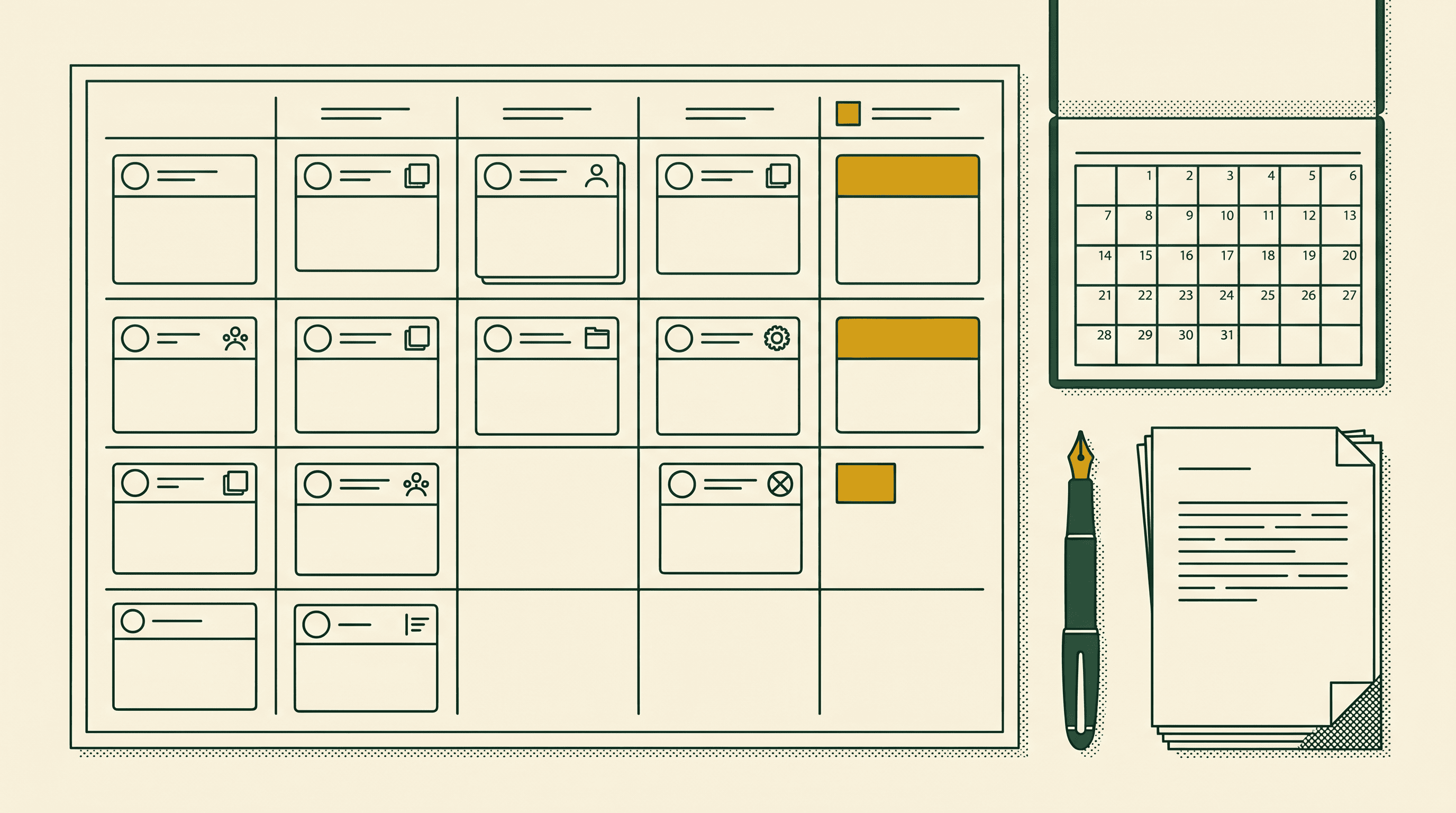
Get the authorship conversation into writing before the work becomes politically expensive. A two-paragraph email can prevent a six-month argument.
Use direct language. Ask: “Am I being included as a co-author in the byline, or acknowledged as a contributor?” If co-author, ask for the expected author order and the criteria that would change it.
This feels awkward once. Silence gets awkward for the rest of the project.
CRediT helps because it separates the type of contribution from the prestige fight. The Contributor Roles Taxonomy includes roles such as conceptualization, methodology, data curation, formal analysis, investigation, writing the original draft, reviewing and editing, supervision, and funding acquisition. Wiley’s author guidance describes CRediT as a way to make contributor roles visible in published work, according to Wiley’s guide to the CRediT taxonomy.
Use a simple authorship note with five fields:
Project title and working manuscript title
Expected author list and order
Each person’s CRediT-style roles
What work would change author order
Date agreed, with everyone copied
Don’t bury the agreement in a lab Slack thread that disappears after graduation. Put it somewhere durable and send a copy by email.
Purdue publishes an authorship agreement template for STEM teams, and the existence of that template says something useful: this doesn’t need to be a legal memo to be useful. It needs to be explicit, dated, and visible to the people who can later deny what they agreed to, as shown in Purdue’s authorship agreement template.
Ask to see the author contribution statement before submission. Not after acceptance. Before submission.
If your name isn’t in the statement and you believe you meet the journal’s criteria, raise it in writing with the corresponding author. Keep the tone boring. “I believe my contributions meet the journal’s authorship criteria because I did X and Y, and I also revised section Z. Can we discuss byline placement before submission?”
A boring email ages well.
This is also where research workflows matter. If the project already lives in a shared workspace, it’s easier to reconstruct who wrote what, who revised which section, and who approved the final draft. For teams using an AI research workspace with shared Spaces, notes, and role-based access, you can keep a “Project Charter” note next to the manuscript PDFs, meeting notes, and chat discussions instead of scattering the authorship record across inboxes.
For the writing side, the same principle applies to AI use. If AI helped draft or revise a section, record that too. Journals increasingly ask for transparency, and our guide to ethical AI use in academic writing covers the disclosure habits that keep collaboration from turning into a second dispute.
When contributing author is the right choice
Sometimes acknowledgment is exactly right. Not everyone who helps a paper deserves the responsibility that comes with authorship.
If you ran a standardized assay, maintained the lab database, provided a reagent, or helped troubleshoot an instrument, acknowledgment may fit. The contribution was real. It just may not rise to intellectual ownership of the manuscript.
Same for someone who reads a near-final draft and catches technical errors. That’s useful editorial feedback. Unless the person shaped the study, interpretation, or manuscript argument, authorship may be too much.
Funding alone usually doesn’t make an author either. Lab space, grant money, or general supervision belongs in acknowledgments unless paired with intellectual contribution and manuscript accountability.
The consultant case is harder. A methods consultant or biostatistician who answers three narrow questions may be an acknowledged contributor. A statistician who designs the analysis plan, rejects a flawed model, rewrites the methods language, and signs off on the conclusions is in a different position.
Authorship has a downside people don’t like to mention. Co-authors can be asked to answer for the paper when something goes wrong. If a figure is questioned, a dataset is unavailable, or a correction is needed, the byline doesn’t protect the middle authors from scrutiny.
So don’t chase co-authorship as a reflex. If you can’t defend the work, don’t accept responsibility for it just because the CV line looks tempting.
There’s a practical career version too. A clean acknowledgment from a famous lab can still help when the contribution was limited. It becomes a problem only when the acknowledgment hides work that should have been authorship.
If you’re still building collaborations, read this alongside effective academic collaboration practices. Authorship fights often begin as collaboration-design failures.
Setting up authorship agreements in shared research workspaces
A good authorship record doesn’t need ceremony. It needs to be findable six months later.
Create one project note at the start. Call it “Project Charter” or “Authorship Agreement.” Put the working title, author list, author order, CRediT-style roles, journal target, corresponding author, and date at the top.
Then keep it alive. If the first author stops drafting and another person takes over, update the note. If a data-only contributor starts revising the discussion, update it again. Authorship is allowed to change when contributions change; pretending it’s fixed forever creates its own unfairness.
In Otio’s shared Spaces and Notion-style notes, a team can keep the charter beside the source PDFs, manuscript drafts, and chat threads. The useful part isn’t fancy: collaborators can see the same note, attach project materials, and keep the authorship conversation near the actual work.
For contentious projects, write the contribution statement before the manuscript is done. It forces the uncomfortable question early: who is taking responsibility for which part of the paper?
A rough structure works:
Conceptualization: who framed the question
Data work: who collected, cleaned, or curated the data
Analysis: who chose methods and interpreted outputs
Writing: who drafted sections
Revision: who made intellectual changes to the manuscript
Accountability: who approves the final version
Don’t let “supervision” swallow everything. Senior authors deserve credit when they shape the study and guide interpretation. They don’t need to be credited for every task done by someone else in the lab.
If the project involves outside collaborators, add one extra rule: no submission until every listed author has seen the final contribution statement. That sounds basic. It gets skipped all the time.
For finding collaborators in the first place, we’ve written about how to find co-authors for research papers. The authorship agreement belongs in the first serious planning conversation, not the last week before journal upload.
What to do if you're already in a dispute
Start by collecting evidence, not arguments. Emails, manuscript drafts, lab notebooks, shared notes, file histories, meeting agendas, and comments on Google Docs all matter.
Timestamps matter more than polished recollections. A rough draft with your tracked changes from March beats a confident memory in November.
Next, compare your work against the journal’s authorship criteria. Don’t argue from effort alone. “I spent 18 months on this” may be emotionally true and still weaker than “I designed the analysis, drafted the methods section, revised the discussion, approved the final manuscript, and can take responsibility for those claims.”
If the paper hasn’t been submitted, ask the corresponding author for a meeting and put your request in writing first. Keep the email short. Attach the evidence or summarize it in bullets.
If the manuscript has been submitted but not published, move faster. Ask for a pause or correction to the author list before acceptance. Journals are more willing to deal with authorship before publication than after the final record is live.
If the paper is published, the path narrows. Write to the corresponding author requesting an author correction or amendment. If they refuse, contact your department chair, ombudsperson, graduate school, or research integrity office.
Don’t launch the dispute on social media first. It may feel satisfying for six hours and cost you for six years.
There’s a hard career judgment here. Sometimes the right move is to accept the acknowledgment, document the lesson, and leave the lab with your relationships intact. Sometimes the authorship credit is worth fighting for because it affects your dissertation, visa, fellowship, or job file.
Ask a neutral institutional person before you choose. The best time to involve an ombudsperson is before everyone has taken a public position.
If the dispute touches journal submission strategy, our guide on how to get an academic paper published gives useful context on the publication steps where authorship can still be corrected.
Make the authorship decision now, not after publication
The publication system rewards early clarity and punishes late correction. Once a paper is published, the author list becomes part of the scholarly record, and changing it requires more evidence, more institutional friction, and more diplomacy than most early-career researchers expect.
So ask the blunt question now. Co-author or acknowledged contributor? First author, co-first, middle author, or last author? What has to happen for that order to change?
Write it down. Use CRediT roles. Review the contribution statement before submission. If the answer stays vague, escalate while the manuscript can still be changed.
Co-authorship brings credit and accountability. Contributing status can be perfectly appropriate when expectations are clear.
For your next multi-author project, keep the authorship record close to the research itself with Otio’s shared research workspace.
FAQ
Q: Can I be a co-author if I only did data analysis?
A: Sometimes, but data analysis alone usually isn’t enough under ICMJE-style criteria. If you also shaped the analysis plan, interpreted results, revised the manuscript, approved the final version, and can take responsibility for the work, the case is stronger.
Q: What happens if I'm listed as a contributing author but want to cite the paper in my dissertation?
A: You can usually cite any published paper, but claiming the work as your own contribution may be disputed if you weren’t a byline author. Check your institution’s dissertation rules and get written permission where needed.
Q: Does author order matter for career advancement?
A: Yes, especially in biomedical and lab sciences. First authorship often signals primary intellectual labor, while last authorship often signals senior leadership; middle authorship may need a contribution statement to be understood.
Q: What's the difference between ICMJE and CRediT authorship?
A: ICMJE helps decide who qualifies as an author. CRediT describes what each contributor did, such as methodology, data curation, analysis, writing, review, supervision, or funding acquisition.
Q: Can I retroactively become a co-author after publication?
A: It can happen, but it’s uncommon and usually requires author agreement, journal approval, or institutional involvement. Prevention is far easier than correction.