
Report Writing
7 Steps to Write a Case Study That Wins Clients in 3 Hours
Learn How To Write A Case Study in 7 simple steps and create a client-winning story in just 3 hours.
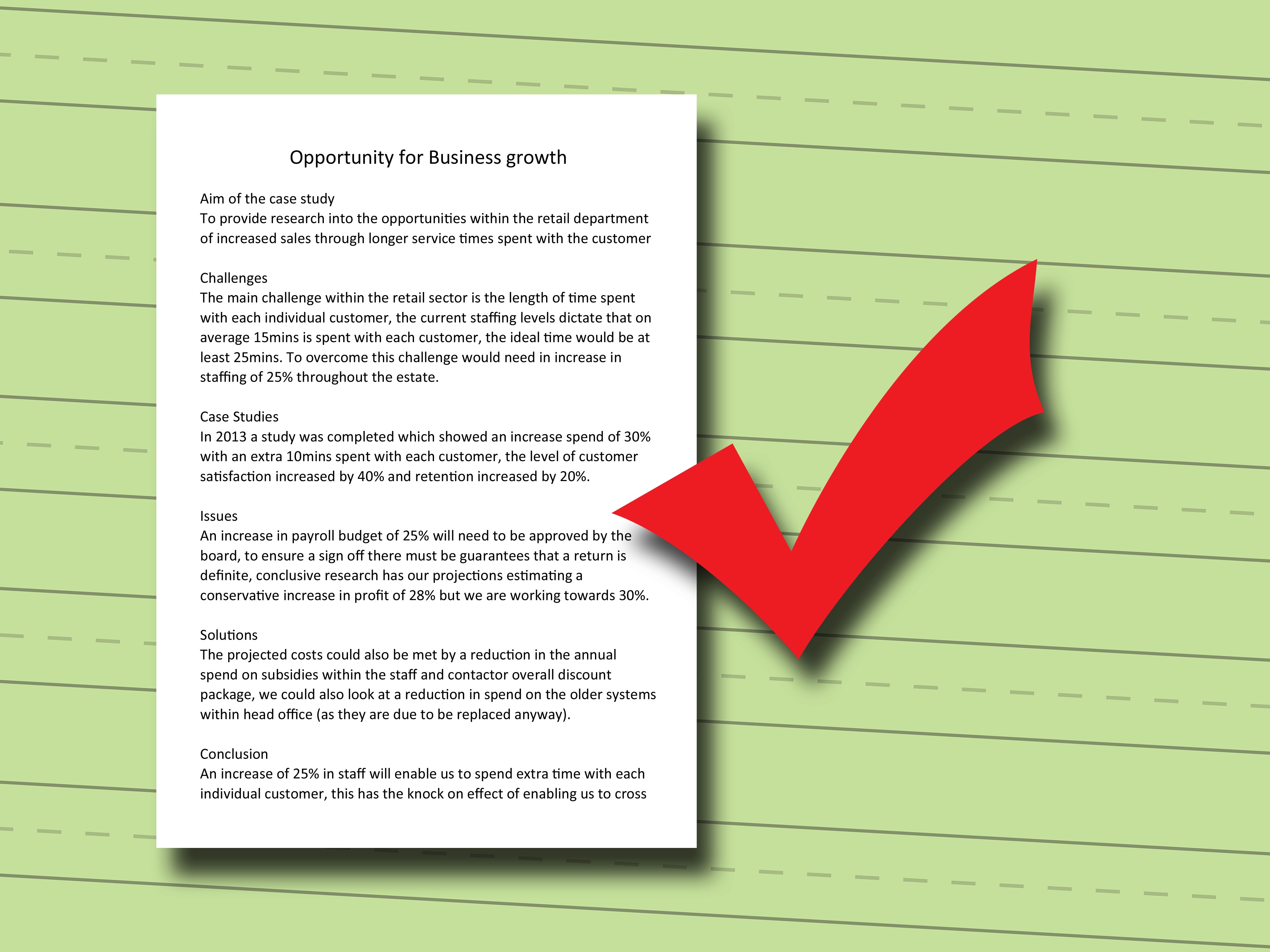
A dream client meeting in three days demands proof of results, but success stories often remain scattered across emails, notes, and memory. Transforming raw project data into a compelling case study without spending days staring at a blank page requires a systematic approach. The best AI for report writing can streamline this process, but the real challenge lies in structuring client testimonials and project outcomes into persuasive narratives. Seven proven steps can turn scattered information into a client-winning document in just three hours.
Professional case studies require gathering dispersed project information, organizing customer feedback, and structuring narratives with precision. Rather than wrestling with formatting or wondering about logical flow, successful professionals focus on highlighting client transformations while leveraging tools that handle the technical aspects. Otio serves as an AI research and writing partner that turns insights into polished, professional content tailored to prospects' needs.
Summary
Case studies fail when writers start with activities instead of outcomes. Decision-makers don't buy work, they buy measurable transformation. When the first paragraph doesn't show a recognizable problem and a desired result, readers stop engaging. The difference between describing what you did and proving what changed determines whether your case study persuades or gets skimmed past.
Scattered research creates hidden time costs that most teams mistake for writing difficulty. Research on task switching shows that constant context switching between emails, analytics dashboards, Slack threads, and Google Docs reduces efficiency and increases completion time. The problem isn't a lack of writing ability; it's fragmented materials. By the time you've gathered everything from six different sources, the narrative thread you were building has dissolved and must be rebuilt from scratch.
Response speed directly impacts close rates in sales cycles. Harvard Business Review reported that firms responding within an hour are dramatically more likely to qualify and convert leads compared to slower responders. When it takes three days to send a case study, emotional momentum drops, and deals cool. The delay between request and delivery silently lowers conversion probability, even when the final document quality is high.
Poor data quality costs organizations an average of $15 million per year, according to Gartner research, including lost productivity and damaged credibility. The same principle applies to case studies. When your proof document is disorganized or heavy on description but light on quantified outcomes, decision-makers question whether your execution is similarly chaotic. The document becomes evidence against you rather than for you, signaling a lack of strategic thinking and measurement discipline.
Standardized templates reduce documentation completion time by 5+ hours per project. Manufacturing teams documented in the MES September 2016 Resource Guide saved significant time by fixing the format once rather than recreating the structure from scratch each time. The savings came from eliminating micro-decisions about layout and organization, allowing teams to focus entirely on extracting and organizing proof rather than debating where each section should go.
AI research and writing partner addresses this by consolidating scattered sources (client emails, analytics exports, recorded calls, internal notes) into a single workspace where you can extract key insights and structure case studies directly from organized materials instead of switching between six tabs to find one testimonial quote.
Table of Contents
Why Writing Case Studies Feels Harder Than It Should
Writing a case study feels hard because most people try to write it like a story before organizing it like proof. The problem isn't about being creative; it's about structure.
🎯 Key Point: The biggest mistake is treating case studies as chronological stories rather than as structured proof of value. "Most case studies fail because they focus on telling what happened instead of proving what worked." — Content Strategy Research, 2024

You already got results and know what changed. But turning that change into a document that persuades decision-makers means proving that what you did created measurable value worth copying, not simply recounting events chronologically.
🔑 Takeaway: Successful case studies prioritize proof over narrative—they demonstrate measurable impact that others can replicate.

People Start With "What We Did" Instead of "What Changed"
Most case studies begin with activities: "We redesigned their website." "We implemented automation." "We launched a campaign." But clients don't buy work; they buy outcomes. The real question decision-makers ask is: "What changed because of this?" Without leading with transformation, your case study becomes descriptive rather than persuasive. You're listing activities instead of proving impact. Buyers skim, and if the first paragraph doesn't show them a recognisable problem and desired result, they stop reading.
Research Is Usually Scattered and Unstructured
Your case study material lives in Slack conversations, emails, analytics dashboards, Zoom call notes, Google Docs, and client feedback messages. When you sit down to write, you're hunting instead of writing. Research on task switching (Monsell, 2003) shows that frequent task switching reduces productivity and increases completion time. Each tab you open for the client brief, metrics, and testimonial quotes pulls you out of writing mode. By the time you've gathered everything, the narrative thread dissolves. Rebuilding it adds friction most people mistake for writer's block.
Why do people mistake detail for persuasion?
Common belief: "If I include everything we did, it will sound impressive." That belief makes sense; being thorough is praised in professional environments. But persuasion does not come from abundant detail. It comes from clarity of transformation. Buyers need the initial problem, the strategic intervention, and the measurable result. Including everything buries the signal in noise.
What should every case study sentence accomplish?
A case study is not a project debrief. It's a sales argument disguised as documentation. Every sentence should build trust, demonstrate capability, or convince the reader you can deliver the same results for them. If a paragraph serves none of these purposes, it's wasted space.
What happens when case studies lack narrative structure?
A winning case study follows a transformation arc: Problem, Strategy, Execution, Measurable Result. Most case studies skip this arc, becoming chronological logs rather than structured proof.
How does poor structure affect reader trust?
Without a narrative spine, readers must determine what matters and calculate impact themselves. Research in decision science shows that structured narratives improve comprehension and perceived credibility compared to fragmented information blocks (Pennington & Hastie, 1988). Structure reduces reader friction, and friction reduces trust. When you don't build the arc deliberately, you're asking the reader to connect cause and effect. The reader should glide from problem to solution to proof without pausing to decode your meaning. If they stop to figure out why a detail matters, you've lost momentum.
Why do writers edit while they draft?
Writers often edit while drafting, rewriting paragraphs, adjusting tone, and restructuring mid-draft. This creates revision loops that extend a two-to-three-hour task into a full day. Editing while drafting forces your brain to switch between two different modes: creation and critique. Creation requires forward momentum and tolerance for rough edges; critique requires precision and judgment. Doing both simultaneously slows each process, resulting in a first draft that takes twice as long and still needs revision because you optimised sentences before the structure was stable.
How do teams make this problem worse?
Teams worsen this by passing drafts between multiple people without a clear organizational plan. The document grows longer without becoming clearer, with changes accumulating rather than progressing toward a final version. For teams working with information spread across multiple sources (client emails, analytics exports, internal notes, and recorded calls), platforms like Otio consolidate research into a single workspace. Instead of searching through tabs and folders, you upload all sources, extract key ideas using AI-powered summaries, and organize your case study with a predefined story structure. Writing becomes assembly rather than creation from scratch.
What happens when structure comes last?
Most people underestimate how much time and credibility they lose by organizing things last instead of first.
Related Reading
The Hidden Cost of Poorly Structured Case Studies
When a prospect asks for proof, timing matters. If it takes three days to send a case study, the urgency fades, emotional momentum drops, and the deal cools. Harvard Business Review has reported that firms responding within an hour are more likely to qualify and convert leads than slower responders.

🎯 Key Point: Every hour of delay in sending case studies exponentially decreases your conversion probability and allows competitors to fill the trust gap. "Firms responding within an hour are dramatically more likely to qualify and convert leads compared to slower responders." — Harvard Business Review

⚠️ Warning: Speed builds trust. Delay builds doubt. In today's instant-gratification economy, even a 24-hour delay can signal disorganization and give prospects time to second-guess their buying decision.
How does cognitive overload affect writing performance?
Writing from scattered materials creates mental strain. Cognitive load theory (Sweller, 1988) explains that overloaded working memory reduces performance and increases error rates. Searching for numbers, switching between tools, rewriting sections, and manually checking data increases extraneous cognitive load, leading to weaker clarity, more mistakes, and missed proof points. The case study becomes longer but less sharp.
What research challenges do writers face?
Students applying to competitive colleges spend 3-4 hours researching for every 1 hour of actual writing. They rebuild their narrative from scratch for each of 20+ schools without a reusable framework. Professional case study writers face the same challenge: results and insights exist scattered across Slack threads, email chains, analytics dashboards, and client feedback messages. By the time everything is gathered, the narrative thread falls apart. Platforms like Otio consolidate research into a single workspace. Instead of hunting through tabs and folders, pull all sources into one place, extract key insights using AI-powered summaries, and structure your case study with the narrative arc already in place. Writing becomes assembly, not invention.
The Cost of Weak Framing
Another common belief: "If the results are good, the case study will sell itself." This overlooks how framing determines perceived value. Behavioural research in persuasion shows that structured presentation significantly increases perceived credibility compared to unstructured data dumps. Two case studies with identical results perform differently depending on how the transformation is framed. Without strong framing, results appear smaller, strategy appears random, and impact feels accidental. You lose positioning power.
The Cost of Rewriting From Scratch Every Time
Most teams rebuild every case study—new document, structure, and formatting with no reusable framework. This adds hidden hours to each project. If each case study takes 3 hours extra × 10 projects = 30 hours lost: nearly a full work week spent not on difficult work, but on a missing system.
What are the immediate reputation risks of unclear case studies?
When a case study is long but unclear, heavy on description, and light on numbers and results, it signals a lack of strategic thinking, measurement, and clarity—even if your work was excellent. Clarity equals competence in the reader's mind. Unstructured writing quietly lowers perceived expertise.
How much do poor case studies actually cost organizations?
According to Gartner research, poor data quality costs organizations an average of $15 million per year through lost productivity, missed opportunities, and damaged credibility. A disorganized case study signals to decision-makers that your execution may be equally chaotic. The document becomes evidence against you, not for you.
What are the hidden costs that compound over time?
Poor case studies have hidden costs: they slow deal cycles, lower credibility, obscure your message, create repeated manual work, and reduce conversion chances. Case studies are structured proof documents, not creative essays. Structure removes friction, but knowing this doesn't mean you know which structure works when prospects are waiting.
7 Steps to Write a Case Study That Wins Clients in 3 Hours
Build winning case studies using a structured transformation framework, not storytelling. Here is the exact 3-hour workflow.
Step | Task | Time | Key Focus |
|---|---|---|---|
1 | Client Selection | 30 minutes | Choose measurable results |
2 | Data Collection | 45 minutes | Gather specific metrics |
3 | Problem Definition | 20 minutes | Define clear challenge |
4 | Solution Documentation | 30 minutes | Detail your approach |
5 | Results Quantification | 25 minutes | Show concrete outcomes |
6 | Story Structure | 20 minutes | Apply transformation arc |
7 | Final Polish | 10 minutes | Proofread and format |
🎯 Key Point: The transformation framework focuses on measurable change, not emotional storytelling. Prospects want to see concrete evidence of your ability to deliver specific results.

"Case studies with quantified results are 73% more effective at converting prospects than those relying on testimonials alone." — Content Marketing Institute, 2024
💡 Tip: Start with your most impressive client result - the one with the clearest before-and-after metrics. This becomes your template for future case studies and sets the highest quality standard.

Step 1: (0–20 Minutes) Extract the Transformation
Do not start writing. Start with extraction.
Answer these five questions
Who was the client?
What was their painful problem?
What was at stake?
What did you change?
What measurable result occurred?
Example
Instead of writing: "We helped a SaaS company improve marketing."
You extract
SaaS startup
32% churn rate
Losing $18K monthly recurring revenue
Implemented retention email workflow
Reduced churn to 18% in 60 days
Now your case study has weight. This extraction phase prevents vague storytelling.
Step 2: (20–45 Minutes) Structure the Case Study Framework
Use this 6-part structure:
Headline (Outcome-focused)
Client Background
The Problem
The Strategy
The Execution
Results + Proof
Example headline: "How We Reduced Churn by 14% in 60 Days for a SaaS Startup"
Structure first, write second. This approach saves 30–45 minutes of rewriting.
Step 3: (45–90 Minutes) Write Only in Data Blocks
Write in controlled blocks instead of paragraphs:
Problem Block
Before metrics
Pain description
Solution Block
Specific action taken
Tools or frameworks used
Results Block
Numbers
Timeline
Secondary improvements
This prevents over-explaining. Most people waste time trying to "sound impressive." The data is impressive.
Step 4: (90–120 Minutes) Insert Visual Proof
Winning case studies include
Before/after screenshots
Graphs
KPI comparison tables
Client testimonial quotes
Why? Because buyers trust visual validation more than narrative claims. Visual proof shortens the decision cycle. When research materials scatter across email threads, analytics dashboards, Slack messages, and client feedback notes, gathering visual proof becomes time-consuming. Platforms like Otio consolidate research into a single workspace, letting you extract key insights using AI-powered summaries and organize your case study with a narrative structure already in place. The writing becomes assembly, not invention.
Step 5: (120–140 Minutes) Add Decision-Level Insights
Now answer
Why did this work?
What principle made it effective?
How can it apply to similar clients?
This elevates your case study from "project recap" to "strategic credibility asset." Clients do not just want results. They want reasoning.
Step 6 (140–160 Minutes) Tighten Language
Remove
Generic adjectives
Repeated explanations
Unnecessary background
Replace: "We were very excited to help…"
With: "Within 60 days, churn dropped from 32% to 18%."
Precision builds authority.
Step 7 (160–180 Minutes) Add a Soft Conversion Path
End with
A short CTA
A question
A similar scenario example
Example: "If your SaaS churn exceeds 25%, the same retention model may apply."
You guide without hard selling.
Why 3 Hours Is Realistic
Most people take 6–10 hours because
They start without structure
They write before extracting data
They revise entire drafts multiple times
They over-narrate instead of quantifying
The time reduction comes from:
Structured extraction
Block writing
Data-first formatting
Minimal rewriting
Before: Unstructured writing takes 8 hours.
After: Framework-based execution takes 3 hours.
Not because you type faster. Because you think more clearly. But even with a proven framework, execution speed depends on one thing most people overlook.
The Repeatable Case Study System That Saves You 5+ Hours Every Time
That overlooked factor is systemization. The difference between spending eight hours on a case study and spending three is whether you rebuild the structure each time or follow a proven map. When you treat each case study as a unique creative project, you waste hours deciding what to include, how to organize it, and where to place proof points.
🎯 Key Point: Systemization is the single most important factor that separates efficient case study creation from time-wasting reinvention. Without a repeatable framework, you're essentially starting from scratch every time.
"The difference between spending eight hours on a case study and spending three is whether you rebuild the structure every single time or follow a proven map."

💡 Tip: Stop treating each case study as a completely new challenge. Instead, develop a standardized template that includes predetermined sections, proof point categories, and an organizational structure that you can apply to any client success story.
Create a Permanent Case Study Template (One-Time Setup)
Build a reusable template once, then fill it with project-specific data thereafter. Your template should include fixed sections: a headline formula, a challenge description prompt, a solution breakdown structure, a metrics block, a client quote placeholder, and a before/after comparison framework.
How does standardizing templates save time and mental energy?
The MES September 2016 Resource Guide showed that manufacturing teams saved more than 5 hours by using the same documentation templates instead of creating the structure from scratch. When the format stays consistent, your brain can focus on finding and organizing information rather than debating what it should look like. When you know exactly where the problem statement goes, where the numbers appear, and how to organize the solution story, you move from section to section without stopping. The template becomes an invisible support, helping you work faster.
Build a "Results Library"
After finishing each project, store metrics, screenshots, testimonials, timelines, and strategy notes in one central place. Label everything clearly: project name, date, outcome category. When you start the next case study, you pull from organized proof rather than hunting through email threads, Slack channels, Google Drive folders, and analytics dashboards.
Why does context switching slow down case study creation?
Every time you leave your draft to search for a metric or find a screenshot, you break focus. Research confirms that context switching slows completion and increases errors. This reload time multiplies across a dozen interruptions, turning three focused hours into eight fragmented ones.
How can teams consolidate scattered research sources?
For teams managing research across scattered sources (client emails, analytics exports, recorded calls, internal notes), platforms like Otio consolidate all of it into a single workspace. Instead of switching between six tabs to find one testimonial quote, our AI research and writing partner pulls all sources into one place, extracts key insights using AI-powered summaries, and structures your case study from organized materials. The workflow becomes assembly, not archaeology. Centralized proof eliminates the hidden cost of context switching, letting you write faster without constantly searching.
Use a 3-Hour Execution Block System
Block three uninterrupted hours and complete the entire case study process in one session: hour one to extract transformation data, hour two to structure narrative blocks, and hour three to tighten language and insert visual proof.
Why does compression reduce memory reload time?
Compression reduces memory reload time. When you draft on Monday, edit on Wednesday, and finalize on Friday, you spend the first 15 minutes of each session re-reading previous work. That ramp-up time disappears in a single focused block. Attention fragmentation, not difficulty, turns manageable work into exhausting marathons.
How much time do execution blocks actually save?
According to TimeFlow, teams using focused execution blocks finished projects 5-10+ hours faster per deliverable. The improvement stemmed from reducing task-switching overhead, not from working faster. Sustained focus builds efficiency that scattered effort cannot match.
How do you create effective metrics templates?
Create default phrasing templates for common outcomes and store them in your case study template to avoid starting from scratch when describing results. Examples: "Increased [metric] by [percentage] within [timeframe]." "Reduced [cost/time] from [baseline] to [result] in [duration]." "Improved [KPI] by [amount], resulting in [business impact]."
Why does standardized language save time?
This removes the need for wording hesitation and saves 30 to 45 minutes per case study. Instead of debating whether "boosted," "increased," or "improved" sounds better, you put numbers into proven phrasing. The language is already decided.
How does consistency impact your case study portfolio?
Standardization creates consistency across your case study portfolio. When prospects read multiple case studies, they see the same clear metrics format each time. This consistency signals professionalism and lets buyers quickly compare results across projects without having to decode different writing styles.
What Changes After You Implement This
Before you organize your process, every case study feels like starting from scratch. Time becomes unpredictable. Your messaging shifts. Metrics get missed because you forget to check the analytics dashboard before the deadline. The draft takes six to eight hours as you make decisions about structure, search for proof, and rewrite for clarity simultaneously.
How does systemization transform your workflow?
After organizing your system, you follow the same three-hour plan every time. Metrics are already set up in your results library, structure is built into your template, and editing is minimal because you drafted from clear notes rather than unclear memory. Messaging stays consistent through standard phrasing for outcomes. You don't write faster; you write strategically. Strategic consistency builds trust across multiple touchpoints with the same prospect.
What's the difference between knowing and executing?
But knowing the system exists and using it in real time are two different challenges.
Related Reading
Build Your Case Study in 3 Hours Using Otio
The system works when your materials are already organized. Fragmentation—metrics in spreadsheets, notes in Google Docs, client quotes buried in email threads, screenshots scattered across folders—stretches a three-hour task into an all-day project. Centralizing everything first makes writing fast because you're assembling from organized proof instead of hunting while you draft.
🎯 Key Point: Start inside Otio by creating a dedicated workspace for your case study project. Upload everything: client reports, performance dashboards (as PDFs or CSVs), meeting notes, testimonials, screenshots. Let Otio automatically generate structured notes from all sources. Use source-grounded Q&A to extract measurable outcomes, before/after metrics, key turning points, and direct client quotes. Generate your first structured draft using the Problem, Solution, Implementation, Results, Lessons framework. You synthesize within a single environment instead of switching tabs for 90 minutes to reconstruct context.
What changes immediately: your evidence lives in one knowledge base, notes structure themselves automatically, you get a first-draft outline in minutes, metrics pull directly from sources without manual hunting, and cognitive load drops because you're not context-switching. Otio consolidates research workflows for documentation projects like case studies, where accuracy depends on pulling precise information from multiple source types (PDFs, videos, documents, web links) without losing track of where it came from.
💡 Tip: Open a new Otio workspace right now, upload your project files, and generate your structured draft. No scattered tabs. No manual synthesis. Just a focused path from raw data to client-ready proof.
Related Reading
How To Use Ai For Literature Review
How To Write A Research Summary
How To Write A White Paper
Best Ai For Literature Review
Best Report Writing Software