
Report Writing
10 AI Tools to Summarize Research Reports in 20 Minutes
AI Tools for Summarizing Research Reports offer clear, structured methods using 10 smart tools. Learn how Otio cuts research time to 20 minutes.

Tackling a dense, multi-page research report under a tight deadline can quickly become overwhelming. Professionals looking to streamline their workload often find that seeking the best AI for report writing helps them extract key insights without getting bogged down by endless data and citations. Advanced tools now enable the condensation of lengthy documents into concise, accurate summaries that highlight critical findings.
Otio offers a practical solution by automatically generating clear, structured summaries from uploaded reports. Designed for researchers, analysts, and busy professionals alike, the system saves valuable time while maintaining the integrity of the original content. Otio is an AI research and writing partner that streamlines the process and supports efficient decision-making. Try it at an AI research and writing partner.
Summary
Research summarization is slow because most people treat it as a manual data transfer. They read everything, highlight everything, copy everything into scattered documents, and then try to rewrite it all from memory. That's not synthesis. That's just transcription with extra steps that creates mental fatigue instead of clarity.
The typical research setup involves chaos across multiple tools. One browser tab holds the PDF; another has Google Docs open for notes; Zotero manages citations in a separate window; and three more articles are open "just in case." Every time you toggle between tools, your brain has to reload context. A recent report found that 53% of marketers say data analysis is slowing them down, not because of the data itself, but because fragmented systems force them to manually stitch insights together.
Generic AI summaries fail because they don't know your research question or assignment focus. You paste a 25-page study into ChatGPT, it returns a clean 400-word summary, but if your paper focuses on methodology limitations and the summary barely covers them, you end up rereading the entire methodology section manually anyway. AI without structure still wastes time because it summarizes everything equally, so it emphasizes nothing that matters to you.
The hidden belief that real research must feel hard creates resistance to efficient tools. Academic culture rewards effort, so long nights feel like proof of seriousness. But difficulty does not equal quality. According to recent data, 87% of companies don't use data effectively, not because they lack access to information, but because they lack systems to process it efficiently. When researchers resist efficient tools because they feel too easy, they're confusing process with rigor.
Execution speed comes from eliminating decision points before you start, not from reading faster. The optimized workflow collapses five distinct phases (research, notes, compare, outline, draft) into a continuous sequence with no stopping points or context switching. Research on cognitive load shows that structured summarization with AI assistance reduces mental fatigue while preserving comprehension when applied correctly. When extraction becomes automatic, analysis can focus more deeply.
Otio is an AI research and writing partner that consolidates the entire workflow into one workspace, allowing you to upload PDFs, paste links, and drop videos to generate structured summaries grounded in your sources without switching between tabs or manually copying.
table of Content
Why Research Summaries Take Too Long

The process slows down because most people treat summarization like transcription. They read everything, highlight everything, copy everything, and then try to rewrite everything from memory. That's not synthesis. It's just manual data transfer with extra steps. One way to speed this up is to understand how long it takes to publish a research paper. The real problem isn't the reading itself; it's the underlying workflow. Our AI research and writing partner can significantly streamline your summarization process.
Open any research PDF and see what happens.
Why do people struggle with summarization?
You start reading, and a paragraph seems important, so you highlight it. Then another, and soon you realize you've highlighted half the page, which means you've highlighted nothing useful.
Instead of changing your approach, you copy important sentences into a blank document, promising yourself you'll organize them later. Sadly, clarity never appears; instead, you end up with a messy document filled with disconnected quotes, half-formed thoughts, and no through-line. Our AI research and writing partner helps streamline the summarization process, making it easier to connect your ideas.
Now you're viewing pieces without summaries. What you have is a pile of raw material and a growing feeling that you're doing this wrong.
What does research show about publication time?
According to research published in Time to Publication for Results of Clinical Trials, the median time from study completion to publication is five years. That delay isn't just about peer review. It's about how long it takes researchers to process, organize, and share their findings when each step requires manual work. Our AI writing partner helps streamline the research process, enabling faster organization and sharing of insights.
The method may seem thorough and academic, but it is also cognitively expensive and structurally inefficient.
The typical research setup resembles chaos disguised as organization, which causes even more delays in publication.
How does tool switching impact summarization?
One browser tab holds the PDF, while another has Google Docs open for notes.
Zotero manages citations in a separate window.
Meanwhile, you have three more articles open 'just in case,' a YouTube lecture paused mid-sentence, and your phone is buzzing with Slack messages.
At this point, you're not summarizing; you're switching between different tools. To streamline your workflow, consider how an AI research and writing partner can optimize your summarization process.
Every time you switch between tools, your brain has to reload what it was doing. This cognitive reload takes seconds with each switch, but those seconds add up over time.
What do marketers say about data analysis?
A recent report from adjust.com found that 53% of marketers say that data analysis is slowing them down. The problem isn’t with the data itself; it’s the different systems that require them to manually connect insights together.
When data sources are spread across six platforms, thinking becomes fragmented as well. This causes marketers to lose track of insights, forget the importance of key quotes, and spend more time managing tools than finding meaningful insights. Our AI research and writing partner helps teams efficiently synthesize insights.
Many researchers believe that a summary made quickly is likely to lack depth.
How does academic training influence summarization?
That assumption makes sense. Academic training rewards patience and thoroughness. Professors emphasize close reading, where speed can seem suspicious, as if one is cutting corners or missing important details.
However, this belief overlooks a crucial point.
Time spent does not always translate into insight; sometimes, collaborative tools like our AI research and writing partner enhance understanding and efficiency.
What truly contributes to deeper understanding?
Spending three hours manually pulling out paragraphs doesn’t necessarily make a better summary. Often, it simply means you’re rewriting rather than thinking. True depth comes from identifying the main point, assessing how the evidence supports it, and understanding what the research doesn't say.
These tasks need focus, not just time. When extraction is separate from analysis, both processes become clearer and more efficient; having an AI research and writing partner like our Otio can significantly enhance your workflow.
The cost isn’t just about hours; it’s also about clarity, consistency, and confidence.
What are the effects of manual summarization?
Manual summarization creates mental fatigue. By the time you finish extracting the information, it's harder to put everything together effectively. Important points often get lost, resulting in an inconsistent structure. The summary appears patchwork, showing exactly how it was made.
As the process becomes tiring, people often avoid it. Procrastination sets in, especially as deadlines tighten, resulting in lower-quality work. This decrease in quality is not due to a lack of skill; rather, the workflow itself is difficult to manage.
For researchers managing multiple sources, this problem worsens. Each new document means starting over with the same ineffective process. Without a system or reusable structure, the result is just repeating the same mistakes. Our AI research and writing partner streamlines the process, making it easier to organize and summarize effectively.
How can Otio improve the summarization process?
Otio changes that by consolidating the entire workflow into a single workspace. Users can upload PDFs, paste links, and drop in videos. The platform generates structured summaries from real sources.
This eliminates the need for tab switching, manual copying, and the struggle to remember which insight came from which document three hours ago. The extraction is automated, allowing users to focus on the parts that require their skills: interpretation and synthesis.
The manual method wasn't designed to fail; it simply wasn't ready for the scale and complexity of today's research. Our platform streamlines this process, allowing for more efficient analysis. Seeing the problems that arise from the process itself, not the content, can help clarify the way forward.
Related Reading
Why Most Summarizing Methods Fail (And What It’s Costing You)

When the manual approach feels too slow, many people assume the solution is obvious: paste the paper into ChatGPT and ask for a summary. While this seems efficient, in practice, it introduces a new problem. The time wasted doesn't go away; it just shifts to another place.
Most people follow a familiar pattern. They copy the abstract or the full paper, then request a 500-word summary. After pasting the result into a document, extensive editing is often required.
The AI generates a surface-level overview. It restates arguments and paraphrases sections. However, it lacks the context of your specific research question or assignment focus.
It can't identify the lens you're analyzing from or the theme you're building across multiple sources. In these instances, having our AI writing partner can help refine your summaries more effectively.
As a result, you end up rewriting the summary anyway.
Why does AI summarization fall short?
A student pastes a 25-page study into a general AI tool, which gives back a clean 400-word summary. However, the student's paper focuses on methodological limitations, and the summary barely addresses them.
As a result, the student must manually reread the entire methodology section. The time saved is not much.
AI summarization without the right structure continues to waste time. The tool summarizes all content the same way, so it does not highlight the key details that matter to you. For more insights, visit the article on AI for college students.
How does tool switching affect productivity?
Many researchers use one tool to summarize, another to store PDFs, a different one to track citations, and yet another to write.
This creates the illusion of productivity.
Frequent tool switching, however, reduces deep focus and increases cognitive fatigue. Every switch requires rebuilding context, and that hidden cost adds up over time.
Consider the time spent: two minutes switching tabs, three minutes reorienting, and five minutes adjusting formatting. Across ten sources, that's nearly an hour wasted. Although it may seem small, it really adds up.
When sources are scattered across six different tools, your thinking becomes fragmented as well. You lose the thread of your argument and forget the importance of certain quotes. As a result, researchers often spend more time managing tools than understanding information; our AI research and writing partner can streamline this process, helping maintain focus and clarity.
What are the limitations of traditional workflows?
Otio brings everything you need into one workspace. Users can upload PDFs, paste links, and add videos; the platform generates structured summaries from real sources. This stops the need to switch tabs or copy things manually. The extraction occurs automatically, allowing users to focus on understanding and creating their work.
Many students and researchers quietly think that if a task seems easy, it probably isn't challenging. This idea comes from academic culture, which values hard work. Long nights often signal dedication, while detailed notes can create a false sense of productivity.
Even so, just because something is hard does not mean it is better.
What drives quality in research work?
The real driver of quality is clear extraction, organized comparison, and structured synthesis, not exhaustion. According to IT TECH BUZ, 87% of companies fail to use data effectively, as noted in a LinkedIn post. The issue is not access to information; it is the lack of systems to process it efficiently.
When researchers resist efficient tools because they seem too easy, they confuse process with rigor. The challenging aspect should be critical thinking, not just data transfer.
Are AI tools hindering research efficiency?
When AI tools are used without structure, users repeatedly generate summaries. They check every line by hand, fix citations, and reorganize notes.
Instead of saving an hour, it may take only ten minutes, leaving users disappointed.
This frustration leads users to question the reliability of AI summaries. This is true because most tools summarize without considering the broader context.
They don't bring together sources, let users ask questions across documents, or connect summaries directly into the draft structure. Our AI research and writing partner helps seamlessly integrate information, enabling a more efficient workflow.
Without these capabilities, users still have to piece everything together manually.
What are the consequences of ineffective summarization?
A LinkedIn post by Mo Chen shows that businesses lose 15% of their revenue when teams mix up summarizing with real analysis.
The same idea applies to research: if you simply summarize without synthesizing ideas, it doesn't advance your work and only creates more content to manage.
The main problem isn't summarizing itself, but the lack of a connected research-to-draft workflow. Problems arise, such as needing more editing time, feeling mentally tired, having inconsistent arguments, and being less confident in drafts.
All these things lead to missed deadlines. Our AI research and writing partner streamlines the process, ensuring summarization produces coherent, comprehensive drafts.
Knowing what doesn’t work is only useful if you also have ideas about what does work.
Related Reading
10 AI Tools to Summarize Research Reports in 20 Minutes
The right tool depends on your specific problem. If you're overwhelmed by individual PDFs, you need faster extraction. If you're managing several sources and can't see the connections, you need cross-document reasoning.
If you're struggling to turn notes into clear drafts, you need workflow integration. Most people pick tools based on features, but it's better to choose based on where your process gets stuck.
1. Otio: Best for Research-to-Draft Workflows
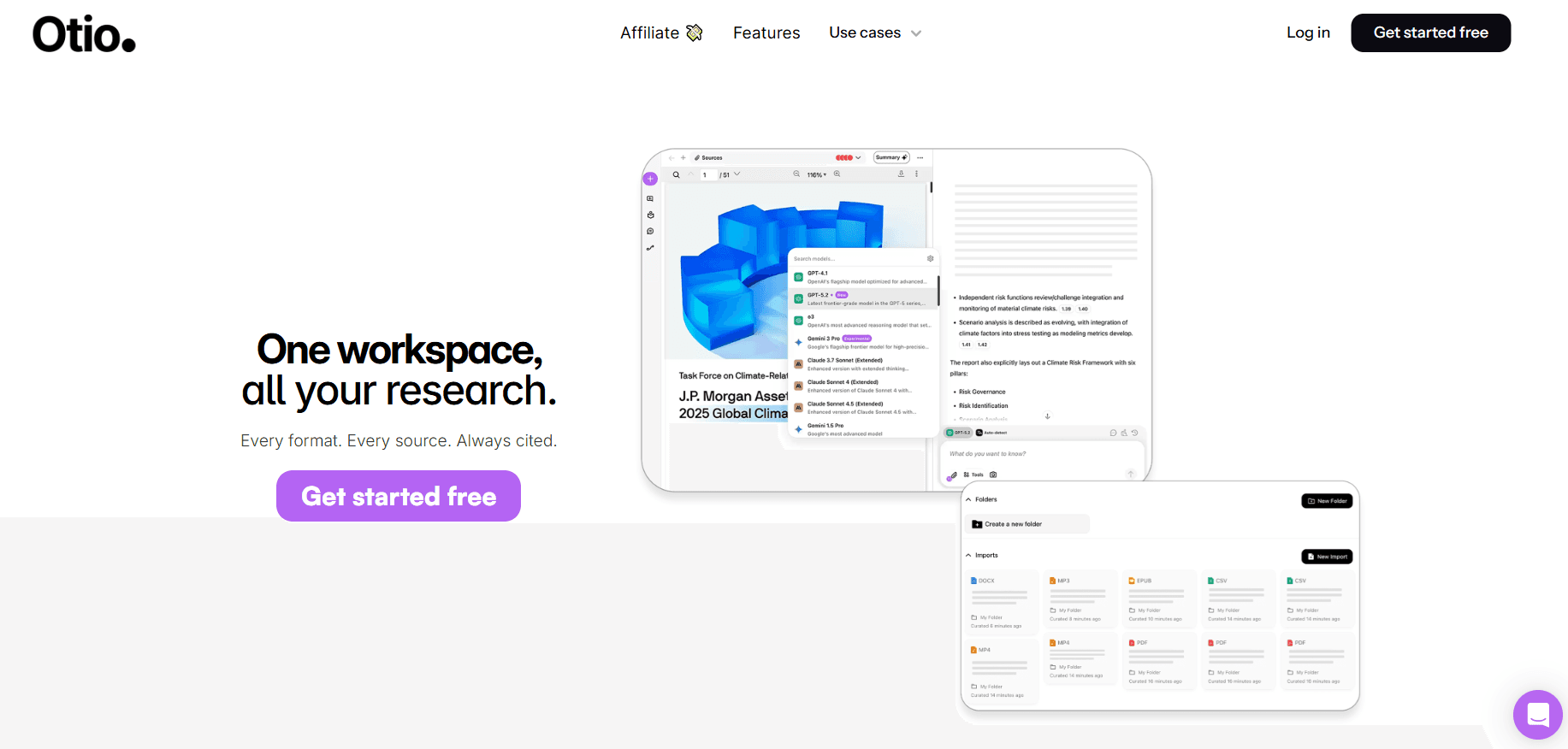
Upload PDFs, articles, and YouTube links to a single workspace. This lets you create AI notes from all sources and chat with your whole knowledge base. Our AI research and writing partner can help you write structured reports from the gathered material.
The difference here isn't about how quickly you can summarize; it's about eliminating fragmentation. Instead of summarizing eight journal articles one by one and copying notes into a Word document, you can upload all eight and ask, "What themes repeat across these studies?"
That synthesis occurs immediately, not after two hours of manual comparison.
A graduate student working on a literature review uploads eight journal articles to a single workspace. Instead of reading each paper individually, highlighting key points, and comparing findings in a separate document, the student asks the system to identify recurring themes.
The answer appears within seconds, allowing the student to move directly to analysis and skip the extraction phase entirely. Our AI research and writing partner streamlines the process further, making it easy to quickly identify key insights.
This tool addresses the problems we discussed earlier. Tab switching becomes a thing of the past, and note-taking is easier. Users can move from scattered sources to a more organized draft faster.
2. ChatGPT: Best for Quick First-Pass Summaries
The tool not only summarizes but also integrates the entire research process, making it easier for users to find suitable AI research and writing partners.
It can be used to summarize short articles, explain complex paragraphs, or rewrite sections for improved clarity.
The limitation is obvious. It only works on what you paste and doesn't keep your research library by default.
Surface summaries provide rapid insights that clarify ideas effectively. However, they often require manual organization afterward. If the goal is to quickly understand a single document, surface summaries can be very helpful.
On the other hand, when creating a report from several sources, such as 10 documents, the time spent managing context may exceed the time spent extracting insights. Having an efficient process can make this easier. With our AI research and writing partner, you can streamline your workflow and improve summarization accuracy.
3. Scholarcy: Best for Academic Paper Breakdown
Scholarcy extracts key findings, highlights methodology, and pulls references. It creates structured summary cards that help you quickly skim journal articles.
Our AI research and writing partner streamlines the process further by enhancing your research workflow.
This makes navigation through dense academic papers easier. However, it still needs manual linking between papers. Scholarcy provides organized extraction, but it does not offer integrated synthesis.
If the problem is understanding individual studies, this tool is useful. To compare findings across studies, users will still need to do the work manually.
4. QuillBot Summarizer: Best for Text Compression
QuillBot effectively shortens long paragraphs, reduces word count, and condenses reports. It's especially useful during the editing phase when you need tighter language.
The result is a faster cleanup of existing summaries. While it is not the best tool for deep research comparison or multi-source reasoning, it does help compress what you have already written.
However, our AI research and writing partner can assist you in generating ideas and overcoming writer's block, helping you figure out what to write in the first place.
5. Notion AI: Best for Organized Research Notes
Notion AI turns bullets into drafts, creates research dashboards, and structures notes effectively. Its strength lies in clean organization; however, source integration still requires manual management.
If a primary issue is not chaos, Notion can provide significant help.
If the challenge is blending information from various sources, users still need to manage that work themselves.
The tool organizes your thinking, but it doesn't do the thinking for you.
Our AI research and writing partner helps streamline these processes.
6. Elicit: Best for Research Question Exploration
Elicit finds relevant papers, compares findings, and explores research gaps. It is designed to discover literature and organize structured research.
The result is a faster identification of what has been studied and where gaps are. After finding the papers, though, another tool is needed to combine them.
Elicit answers to the question "what exists?" rather than exploring "what does it all mean together?" Our AI research and writing partner simplifies the process of synthesizing information effectively.
7. Scite: Best for Citation Context
Scite shows how papers are cited, making it clear which studies support and which contradict others. This feature enhances critical analysis by showing how the academic community has responded to specific claims.
As a result, reporting is more credible. Users can see not only what a paper says, but also how other researchers have used it or challenged it. This context is important for building defensible arguments.
However, Scite does not summarize the papers themselves; it instead shows the relationships between them. If you're looking for a great tool, consider how our AI research and writing partner can assist in your analysis.
8. Humata AI: Best for PDF Q&A
Humata lets you ask direct questions about a long PDF. You can upload a document and ask it questions, as if you're having a conversation. For example, you might ask, "What were the main limitations?" or "How did they measure outcomes?"
The result is faster document navigation with much less manual scanning. However, it works on one document at a time.
This means that if you need to compare findings across multiple PDFs, you will have to ask the same questions repeatedly in different sessions. For more efficient handling of multiple documents, consider integrating with our AI research and writing partner, which helps streamline your document analysis.
9. Genei: Best for Academic Note Extraction
Genei highlights key arguments and creates structured notes from academic papers. It is designed specifically for researchers who need cleaner literature summaries with less rereading. For those looking to elevate their research process, our AI writing partner can help generate insights and draft documents.
The result is organized extraction: users get the main points without manually copying paragraphs. However, like most extraction tools, Genei does not connect insights across sources. Users still need to build the synthesis layer themselves.
10. Perplexity AI: Best for Research Overviews
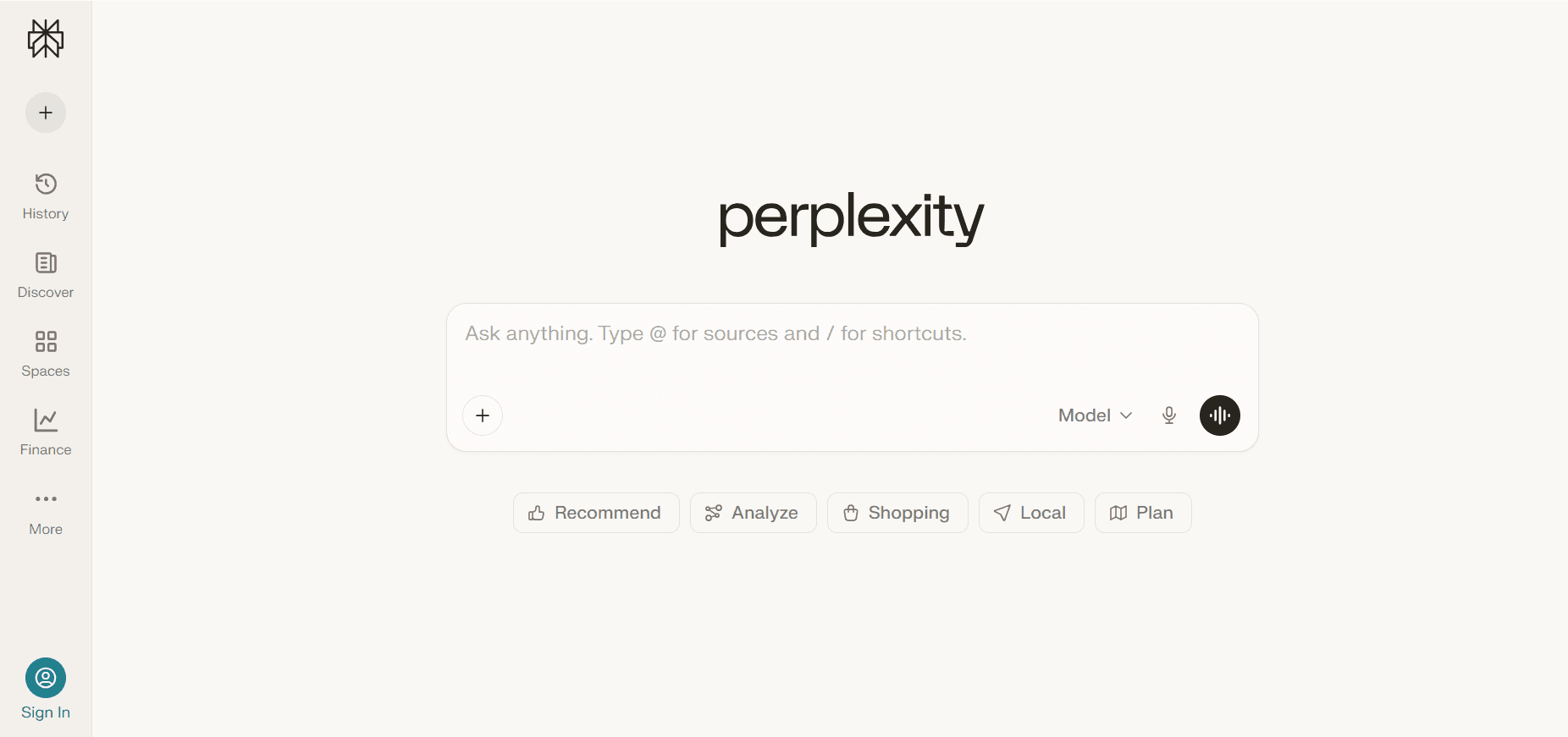
Perplexity provides quick topic overviews, making it helpful for learning about a new field or idea. Our AI research and writing partner streamlines the process of gathering this information, ensuring you’re well-equipped to understand the basics.
This leads to a faster start to research. However, it requires verification and further in-depth analysis. Perplexity summarizes what is generally known but does not examine specific sources or develop custom arguments from individual research materials.
What common issues do AI tools face?
Most AI tools summarize individual documents, but few address the overall workflow problem. This limitation can make it harder to be efficient in tasks that need integration.
Understanding how to tackle different bottlenecks is essential. If the issue is reading speed, summarizers can help. For challenges with focusing on one PDF, Q&A tools are useful. When you need to compare multiple sources and write a structured report, a centralized research workspace is essential.
How do AI tools restructure the research process?
Tools like Otio feel different because they do not just compress text; they restructure your research process. Instead of spending fifteen minutes per source summarizing, ten minutes copying notes, and twenty minutes reorganizing, you can now do all of this in a single, organized place.
According to the PDF Summarizer Blog, the right AI tools save you hundreds of hours by removing repetitive extraction work.
This time savings is real; it shows the difference between spending an afternoon on manual note-taking and using that same time for actual analysis.
What is the key to effective summarization?
This is how twenty-minute summarization becomes possible: not by reading faster, but by removing fragmentation from the process entirely.
Having the right tools is important, but it only helps if you know how to use them effectively in order; that's where our AI research and writing partner can assist you.
20-Minute Research-to-Summary Action Plan

Execution speed comes from cutting out decision points before you start. The plan below eliminates guesswork. Follow it exactly as it is written, and the twenty-minute result will be predictable instead of just a goal.
Minute 0–3: Centralize Everything
Collect every source you are using. This includes PDFs in your downloads folder, articles you saved three weeks ago, YouTube lectures you wanted to watch again, and email attachments from your advisor.
Put all of it in one place.
This step is important because it reduces mental effort. When your brain knows exactly where everything is, it stops asking questions like, "Where did I save that study on methodology limitations?" That mental pause wastes more time than people think.
A researcher writing a grant proposal typically manages 12 to 15 sources across browser tabs, desktop folders, and cloud storage. Before centralizing, they spent an average of eight minutes each session just finding files. After consolidating everything into a single workspace, search time drops to zero, allowing the writing session to begin immediately rather than starting with digital searches.
Platforms like Otio make this step even easier. Users can upload PDFs, paste article URLs, and paste YouTube links directly into a single workspace. There are no folder hierarchies or special file naming rules.
This centralization allows everything to become queryable in the same place where insights are gathered and sections are written. It is a key part of the workflow itself.
Minute 3–8: Generate Structured Notes
Let AI create the framework that would usually take about fifteen minutes to build by hand. This includes the main argument, supporting evidence, methodology, key statistics, and conclusion. This structure is made in seconds, eliminating the need to reread, interpret, and organize information.
Manual note-taking involves a four-step cognitive sequence: read the paragraph, decide what matters, rewrite it in your own words, and organize it under the right heading. Each of these steps introduces friction and contributes to decision fatigue.
AI compresses these four steps into one. You switch from being a note creator to a note editor. Instead of creating content from scratch, you focus on improving what is already organized.
This change in role is faster and leads to higher-quality output, as your attention shifts toward improving clarity rather than building the structure. Our AI research and writing partner helps streamline this process effectively.
A student reading a fifteen-page journal article typically spends twelve minutes writing down six bullet points by hand. With structured extraction, these bullet points can be created in under a minute. This allows the student to use the extra time to verify accuracy and add their own thoughts. The result is quicker and more thoughtful, as the student can focus on analysis rather than merely copying information.
Minute 8–15: Cross-Source Synthesis
This phase separates summaries from synthesis. Most people summarize each paper individually, then compare them in a separate document. This approach treats sources as isolated units rather than as interconnected evidence.
Instead, ask synthesis questions. What themes repeat across these sources? Where do these authors disagree? What gap exists between Study A and Study B?
These questions encourage pattern recognition, moving beyond simply summarizing one after another. If you're looking for support in your research process, consider using Otio as your AI research and writing partner.
When research is stored in separate tools, answering questions often requires opening multiple PDFs and reviewing each one individually. This process requires copying key sections into a comparison table and manually identifying overlaps, which can easily take 40 minutes.
Centralized research platforms enable users to search across all sources simultaneously. Instead of manually comparing five Word summaries, the system automatically highlights connections. You can see which three studies used similar methods, which two reached opposite conclusions, and where gaps in the evidence exist.
This synthesis layer forms as you focus on understanding what those patterns mean. With our AI research and writing partner, you can streamline your workflow and obtain clearer insights effortlessly.
The time savings here are significant. It's the difference between spending an hour on comparison and just seven minutes on interpretation. This change makes the report sound more analytical by relying on synthesis rather than a simple summary.
Minutes 15–20: Draft the Summary Section
Prompt the system to combine the sources into coherent prose by stating: "Create a 500-word research summary combining these sources with clear themes and key findings."
The output you receive is not a final draft; instead, it is a structured first draft that shows your actual research, not just general knowledge. The refinement process involves changing the tone, improving the language, and adjusting the emphasis. This means you're not starting from scratch; you are editing material that already has a good structure and evidence. Additionally, our AI research and writing partner can assist with refining this process.
The manual workflow consists of five distinct phases: Research, Notes, Compare, Outline, and Draft.
Each phase has stopping points that can slow down progress.
The optimized workflow combines those phases into a continuous sequence: centralize, extract, synthesize, and draft. There are no stopping points or switching contexts. The process flows smoothly, with each step connecting directly to the next without requiring manual translation between tools or formats. Our AI research and writing partner significantly streamlines this optimized workflow.
Why is the belief in manual note-taking misleading?
The belief that careful, manual note-taking prevents the omission of important details may seem reasonable; it's understandable. Academic training often rewards thoroughness, which can lead to the perception that speed is suspicious.
Research on cognitive load shows that structured AI summarization helps reduce mental fatigue while maintaining understanding when used correctly.
This method isn't about reading less carefully. It's about separating extraction from interpretation, so each task receives full attention rather than competing for the same cognitive resources.
What mistakes should be avoided when using AI?
The mistake isn't in using AI; it's using AI as a replacement for critical thinking. It should be a tool that helps you avoid repetitive work, giving you more time for thoughtful analysis.
Our AI research and writing partner streamlines the process, allowing you to focus on what truly matters.
When extraction becomes automatic, analysis becomes deeper. This is not just a theory; it's the difference between spending mental energy on copying paragraphs and using that same energy to find the meaning behind those paragraphs as a whole.
What happens when the system is executed?
Understanding the system is important, but it only matters when you are ready to see the results of its operation.
Related Reading
Document Generation Tools
How To Use Ai For Literature Review
How To Write A Research Summary
How To Write A White Paper
Best Ai For Literature Review
Best Report Writing Software
Automate Your Next Research Summary in Under 20 Minutes
You don't need to open ten tabs or switch between note apps while manually reorganizing bullet points. Just create a workspace in Otio, upload your PDFs, articles, or links, and create AI notes. Ask one synthesis question and generate your draft. This process is easy: centralize, extract, synthesize, and draft.
The immediate deliverable includes an organized research library, structured notes, and a clean first draft for refinement. The total time commitment is just twenty minutes, and it's free to start. No fluff is involved. Research moves from slow to organized when the workflow reduces fragmentation rather than adding unnecessary steps.
This is how you can effectively summarize a research summary in twenty minutes.