
Report Writing
10 AI Tools to Summarize Research Papers in 20 Minutes
AI Tools for Research Paper Summary cuts manual work by condensing academic research in minutes. Try Otio to streamline your research workflow today!

Researchers, students, and professionals often face a mountain of academic papers with tight deadlines. Extracting crucial insights from dense texts can be overwhelming. Advanced AI tools successfully condense long documents into their core elements, reducing time spent sifting through complex details. Such solutions make it easier to stay current with evolving research without the usual strain.
Automated summarization tools quickly identify key methodologies, findings, and arguments, allowing for efficient review and analysis. This streamlined approach not only saves time but also enhances productivity, letting users focus on more in-depth work. Otio, serving as an AI research and writing partner, offers practical tools that simplify the research process and help users manage their workload more effectively.
Summary
Manual reading and note-taking methods struggle to keep up with the volume of modern academic research. A single research paper can take 2 to 3 hours to process through traditional workflows that involve line-by-line reading, manual highlighting, scattered note-taking across multiple apps, and repeated re-reading of the same material. For students working on literature reviews that require 10 papers, this translates to 20 hours of work just to produce basic summaries, creating a bottleneck that forces rushed final submissions and weakens arguments.
Task switching among PDF readers, browsers, note apps, and word processors reduces productivity by up to 40%, according to Stanford research from 2023. The mental cost isn't just measured in lost time but in broken concentration cycles. Each app switch forces your brain to reload context, draining cognitive resources that should go toward analysis and synthesis rather than file management and reformatting.
Structured summarization systems can reduce literature processing time by 50-70% while improving retention and synthesis quality. A postgraduate student reviewing 40 papers can cut processing time from 80 hours down to 20 hours by replacing manual extraction with AI-supported workflows. Those 60 saved hours represent the difference between submitting on time and submitting work that reflects deeper analysis and stronger critical thinking.
Employees spend up to 40% of their time on repetitive manual tasks, according to Forbes Business Council research. For researchers and students, this repetition takes the same cognitive steps for every paper: extracting quotes, copying notes, and reformatting information. This mechanical work doesn't require human judgment but consumes the time and mental energy needed for the intellectual work that actually matters.
Active questioning during research improves retention by over 30% compared to passive reading and highlighting. Questions such as "What is the main argument?" and "What are the weaknesses?" drive engagement at the level required for quality writing. Most students confuse highlighting sentences with understanding content, but real comprehension comes from interrogating the material, not marking it.
AI research and writing partner addresses this by consolidating source storage, note generation, in-document questioning, and draft writing into one workspace, eliminating the friction of managing research across five separate tools.
Table of Content
Why Summarizing Research Still Takes Too Long
Summarizing research papers takes too long because most students and researchers still rely on slow, manual reading and note-taking methods that were never meant for today's information volume. In theory, summarizing a paper should be easy: read it, understand it, pick out the main points, and move on. In reality, many people spend hours doing this because academic papers are dense, technical, and filled with references, data tables, and long explanations.
Most people open a PDF and try to read it line by line, from the abstract to the references. They think that proper research means reading everything. Students are taught that skipping sections is risky, which makes many worry that if they don't read every page, they might miss something important.
After 20 to 30 minutes, focus drops, and pages start to blur together. Important ideas become harder to remember. A single paper can take 2 to 3 hours to process, even when only 20% of the content is actually important. The issue isn't with the paper itself; it's with the reading method.
Why do people rely on highlighting?
Highlighting creates the illusion of progress. Seeing yellow marks on a page can make it appear as if learning is happening. As a result, people often highlight sentences, copy paragraphs into Word or Google Docs, and paste quotes into separate files. Using an AI research and writing partner like Otio can enhance this process, ensuring that highlighted information is not only marked but also effectively integrated into your overall work.
What happens to notes when scattered?
When notes are spread out across documents, screenshots, and notebooks, they create a mess. Instead of a clear summary, there is a lot of raw text that still needs to be organized and rewritten.
Although this might seem productive at the time, it simply moves information around without turning it into something usable, as discussed here. Our AI research and writing partner helps streamline this process, turning scattered notes into cohesive content.
How do tool-switching and organization affect research?
No single traditional tool effectively manages reading, summarizing, and writing in a single workflow. People often jump between PDF readers, browsers, note apps, word processors, and citation tools. Each switch disrupts concentration and wastes time on managing these tools rather than learning.
According to Seth Werfel, summarizing 10 years of research might take only 17 minutes to read. However, this only counts the reading time itself. The real-time loss occurs with the following tasks: organizing, connecting, and rewriting.
The mental exhaustion from switching tools makes the whole process feel much harder than it should be. Using an efficient platform as your AI research and writing partner can simplify these tasks and save valuable time.
What issues arise from manual note-taking?
Manual notes can be unclear, incomplete, or poorly organized. As people read today, they might forget by tomorrow. This leads them to re-read the material when writing. This process feels like starting over each time.
A single paper might need to be read two or three times before it can be used.
This isn't a memory issue; it's a workflow issue. When notes do not capture the structure of the argument or the relationships between ideas, people must repeatedly refer to the source material.
Using our AI research and writing partner can streamline this process, making it easier to manage complex information effectively.
Why is summarizing a stressful task?
After reading, people often stare at a blank page and try to summarize in their own words. This process involves recalling complex arguments, data, and citations simultaneously, which can feel overwhelming and stressful. In fact, summaries usually take longer to write than the actual reading.
How does the time add up when handling research?
Combining all these habits usually takes a lot of time: 45 minutes for reading, 30 minutes for highlighting, 25 minutes for copying notes, 40 minutes for rewriting, and 20 minutes for searching for references again. This totals 2 to 3 hours per paper. For students working on literature reviews, theses, or multiple assignments, this process quickly becomes unsustainable.
A final-year student working on a literature review needs to summarize 10 papers. Using manual methods, 2 hours per paper, multiplied by 10, yields 20 hours of work. This is almost three full days just to get basic summaries.
Our AI research and writing partner can significantly streamline the process, making research more efficient and manageable.
What are the consequences of inefficient research methods?
This is why many students fall behind, rush at the last minute, or submit weak work. They are not lazy; instead, the process is inefficient.
The old model of reading, highlighting, and manually putting together information worked when research meant reading just a few papers each semester. However, it falls apart when you have to deal with many papers. Our AI research and writing partner streamlines this process, making it easier to manage your workload.
How can AI-powered tools improve the process?
AI-powered research tools like Otio bring all your research steps into one easy-to-use space. Instead of jumping between PDF readers, note-taking apps, and writing tools, users can capture key arguments, consult multiple sources, and create summaries from their own materials.
The goal is not to skip reading; it's to focus on the insights that matter, rather than getting stuck on managing files and updating notes.
Is there a cost to manual research beyond time?
Even with better tools, manual research incurs costs beyond time. Leveraging an AI research and writing partner like Otio can help streamline your process.
Related Reading
The Hidden Cost of Manual Research Summaries

Manual summarizing doesn't just waste time; it quietly undermines the quality of your work, your confidence, and the opportunities you're pursuing.
Most students and researchers think about the cost in hours. They know it's slow, but they miss what that slowness is really doing: lowering grades, weakening arguments, and pushing deadlines into panic territory. The true cost isn't shown on a clock; it appears in the work itself.
You spend three hours summarizing the first paper, feeling thorough and responsible. The second paper takes another two and a half hours. By the time you get to paper seven, you're tired and behind schedule. The last three papers are skimmed rather than summarized.
Your introduction is written in a hurry, and your discussion section feels thin because you didn’t have time to think. Consider how our AI research and writing partner could streamline your process and enhance the quality of your summaries.
This pattern shows up everywhere. Deep reading early leads to shallow work later. You thought you were being careful, but you were really making a deal you didn't agree to.
What percentage of time is wasted on manual tasks?
According to Forbes Business Council, employees spend up to 40% of their time on repetitive manual tasks. For students and researchers, this repetition often involves summarizing key information. Repeating the same mental steps for every paper can divert focus from deeper analysis. Partnering with an AI research and writing tool can streamline these tasks, allowing you to concentrate on more critical insights.
When time is short, many people tend to use the same five papers in multiple sections. This isn't about being lazy; it's a way to survive. Knowing familiar papers makes summarizing a new one seem risky, especially with a tight deadline of just two days.
How does repetitive work impact your results?
Markers notice differences in submissions. Your literature review may start to feel narrow, and your argument often lacks depth. Consider two students writing on the same topic.
One summarizes five papers in detail, while the other summarizes twenty quickly. The second student's work shows broader knowledge, stronger connections, and better critical thinking. This isn’t because they are smarter; it’s because they had time to cover more ground.
Doing the same work over and over isn’t safe; it’s limiting. It indicates to evaluators that you did not sufficiently explore the field. In this context, partnering with an AI research and writing tool like Otio can help you develop a more in-depth understanding and improve the quality of your submissions.
What are the effects of long reading sessions?
Long reading sessions can feel like hard work, especially when screen time stretches into hours. Your brain must process dense arguments, new terms, and complex data. By the time you finish reading, you are too drained to write anything good.
Cognitive psychology research shows that reading for extended periods without breaks can cause fatigue and impair comprehension. Since your brain isn't made to hold so much information without processing it, the longer you struggle, the worse your thinking becomes.
What challenges arise during the writing process?
You sit down to write and stare at the screen. The ideas feel unclear, and it's hard to remember which paper had which detail. You find yourself rereading parts you already highlighted. This isn't a focus problem; it's a workflow problem.
Manual summarizing focuses on gathering. You’re collecting sentences, copying quotes, and highlighting paragraphs.
Yet research isn’t just about collecting text; it’s about noticing patterns, contradictions, and gaps in the information. Our AI research and writing partner can help you efficiently organize your thoughts and insights.
How can synthesis strengthen your thesis?
A student reads eight papers on climate policy. Without synthesis, they summarize each paper separately. In the synthesis, they note that three papers contradict one another, two share the same flawed methodology, and one introduces a variable that the others ignored. That's the insight that strengthens a thesis.
Most manual workflows never move to the second stage. After summarizing, you might feel relieved rather than analytical. The question, “What does this all mean?” is often answered quickly or not at all. Having a tool like Otio as your AI research and writing partner enhances this process, allowing deeper insights and connections to emerge.
What has changed in research methods over time?
For decades, research was largely conducted manually because few alternatives existed.
Students learned to deal with slow workflows, which led to the idea that "Research just takes time. That's how it is."
Recent advancements in structured summarization systems and AI-supported workflows can reduce literature processing time by 50-70% while improving retention and synthesis.
Faster methods do not lose quality; they often lead to better outcomes.
What is the impact of structured tools on research?
A postgraduate student preparing a thesis chapter needs to review forty papers. Using a manual approach requires two hours per paper, totaling 80 hours. With structured tools, that time drops to 30 minutes per paper, reducing total time to 20 hours.
This results in a sixty-hour savings, allowing more time for better analysis, extra revisions, stronger arguments, and ultimately, higher grades. Our AI research and writing partner helps streamline this process even further.
This is not just a small difference; it significantly affects whether work is submitted on time and at its best.
How can tools like Otio improve research efficiency?
Tools like Otio consolidate the fragmented steps of manual research into a single workspace. Instead of switching between PDF readers, note-taking apps, and browsers, users can extract key arguments, consult multiple sources, and create summaries from their own materials.
The goal isn't to skip reading; instead, it is to focus on important insights rather than the hassle of file management. With our AI research and writing partner, users can further enhance the efficiency of their research process.
Most people know that research can feel tiring. They often miss that this tiredness is optional.
What does a better workflow actually look like in practice?
A better workflow improves efficiency and clarity, streamlines processes, and increases productivity. It usually involves clear communication, defined roles for each team member, and tasks that can be automated.
By using tools that support collaboration, such as our AI research and writing partner, teams can reduce delays and ensure everyone is working towards the same goals.
10 AI Tools That Summarize Research in 20 Minutes
You can now summarize full research papers in under 20 minutes because multiple AI tools are designed to extract key ideas, generate notes, and answer questions from academic sources. Instead of spending time reading 25 pages manually, you can upload, ask, summarize, and write. This workflow changes from hours of manual highlighting to structured extraction that keeps what matters.
Below are ten AI tools for research that researchers and students use today. Each tool supports a different aspect of the summarization process, from quick overviews to citation analysis to constructing literature reviews. Our AI research and writing partner can further streamline your process, making it easier to access the insights you need.
1. Otio (Best for Turning Sources Into Drafts)
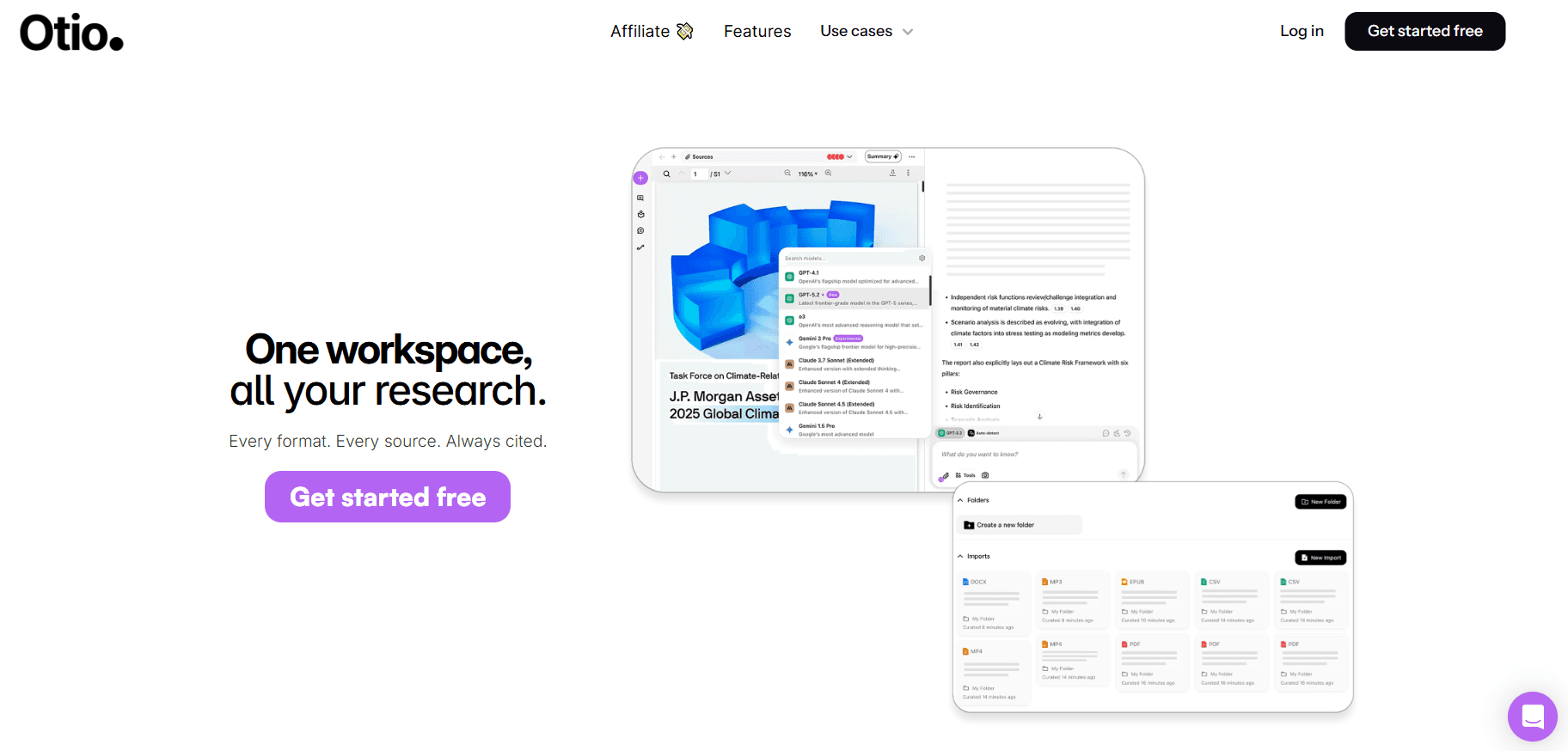
Otio brings the entire research process into a single, easy-to-use workspace. Users can upload PDFs, links, and YouTube videos. It generates AI notes, lets users chat with multiple sources simultaneously, and converts those notes into organized text.
The result is clear: users move from their reading list to a first draft without switching apps. Instead of managing several tools and losing track of where each piece of information came from, they work in one place that keeps everything connected.
According to the PDF Summarizer Blog, tools like this save users hundreds of hours by removing the hassle of reading, organizing, and writing. Our AI research and writing partner streamlines the entire experience, providing support at every step.
2. ChatGPT (Best for Quick Paper Summaries)
With document upload capabilities, ChatGPT offers instant overviews. You can paste or upload a paper and request a summary of its main findings and limitations. This results in a shorter version delivered in seconds.
This feature is especially useful for a quick understanding before you dive into deeper analysis. You're not trying to pull out every detail; instead, you want to see if the paper deserves your full attention or if it is just somewhat related to your argument. Our AI research and writing partner can help you make this decision more effectively.
However, there is a limitation: ChatGPT cannot organize multiple papers simultaneously.
It works on a single document at a time, making it quick for single-paper summaries but requiring a more organized approach to combining information from several sources.
3. Scholarcy (Best for Academic Breakdown)
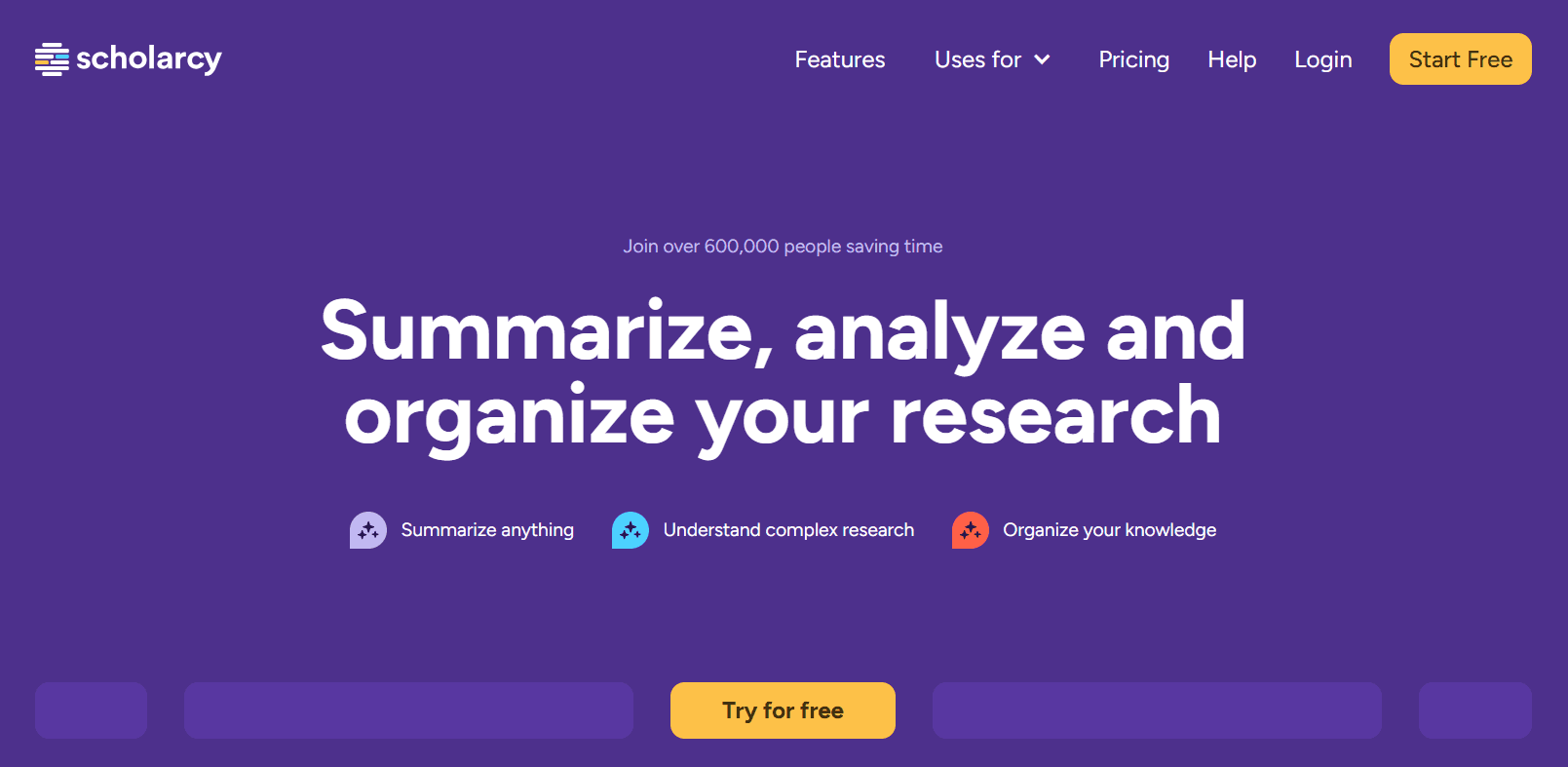
Scholarcy auto-generates summary cards, which allow users to upload a paper. It extracts the purpose, method, results, and references and presents them in a clear format.
This feature provides the key parts without requiring manual entry. You don't need to highlight paragraphs and copy them into a different document. The tool performs this work the same way for every uploaded paper.
The tool is especially helpful for comparing methods across studies. Instead of reading five papers and trying to remember the sample sizes, users can see the data organized side by side. Our AI research and writing partner offers additional support to help you make the most of your findings.
4. Elicit (Best for Literature Reviews)
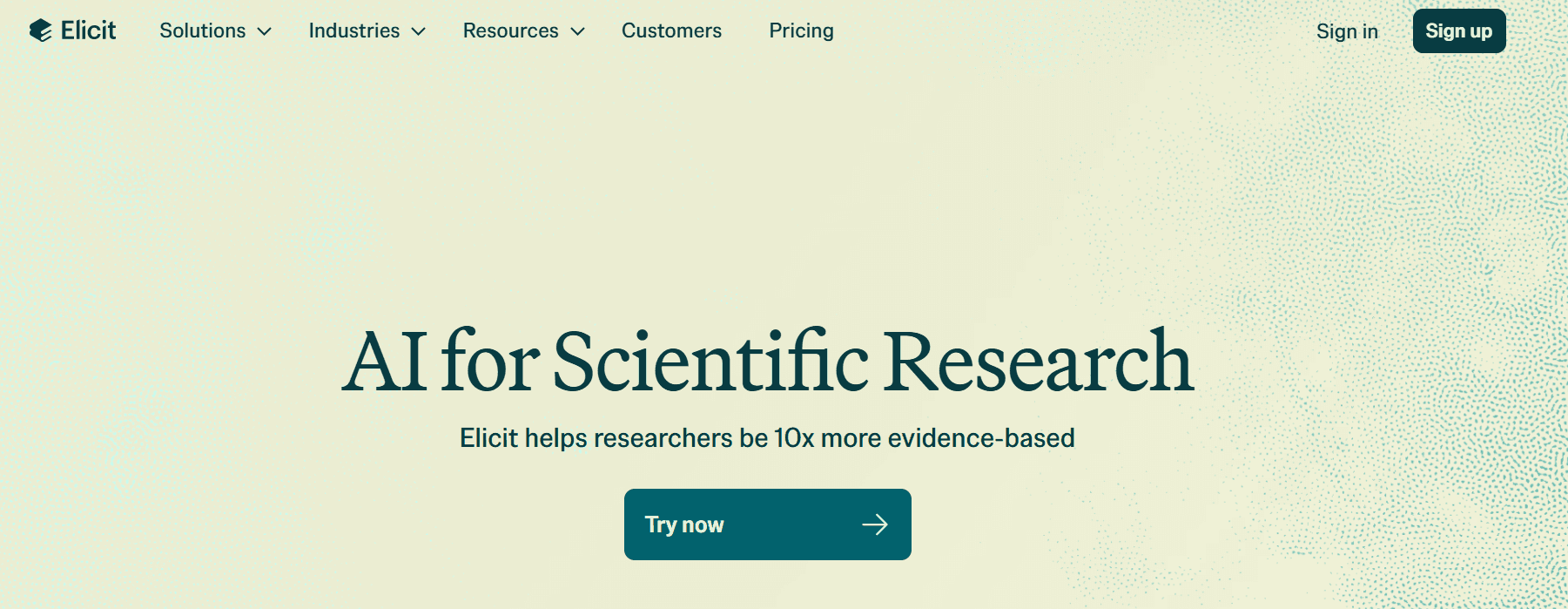
Elicit searches for topics and returns summarized papers. You enter a research question, and it retrieves relevant studies and compares their findings.
The outcome is a faster process for constructing literature reviews. Researchers can avoid endless browsing on Google Scholar, as there's no need to open twenty tabs and forget which paper addressed which variable.
Elicit surface patterns across studies, allowing you to see where consensus exists and where contradictions appear.
This tool addresses a common frustration for researchers. They want to stay efficiently up to date on new papers in their field without being overwhelmed by the volume. Papers should be automatically analyzed and summarized by topic, enabling researchers to focus on the insights that matter, not the logistics of discovery. For this, Otio's AI research and writing partner can help streamline your research process.
5. Scite (Best for Understanding Citations)
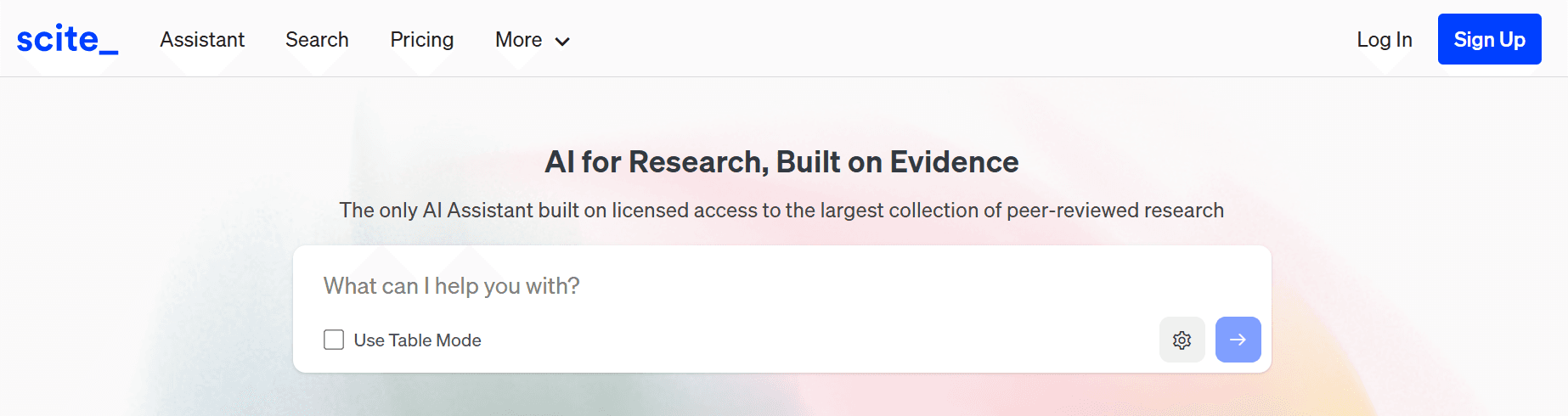
Scite shows how other researchers cited it. By pasting a reference, users can see whether subsequent papers support or contradict its claims.
This approach greatly improves academic accuracy. Researchers do not cite a paper simply because it appears in search results; they cite it because they understand its role in the broader conversation. Users can tell whether a citation is from a key study relied on by everyone or from a debated claim with conflicting follow-up evidence.
For students writing theses, this tool stops weak citations. It helps avoid citing a paper that later research has disproven, which can weaken an argument and signal a lack of deep engagement with the topic.
6. ResearchRabbit (Best for Finding Related Papers)
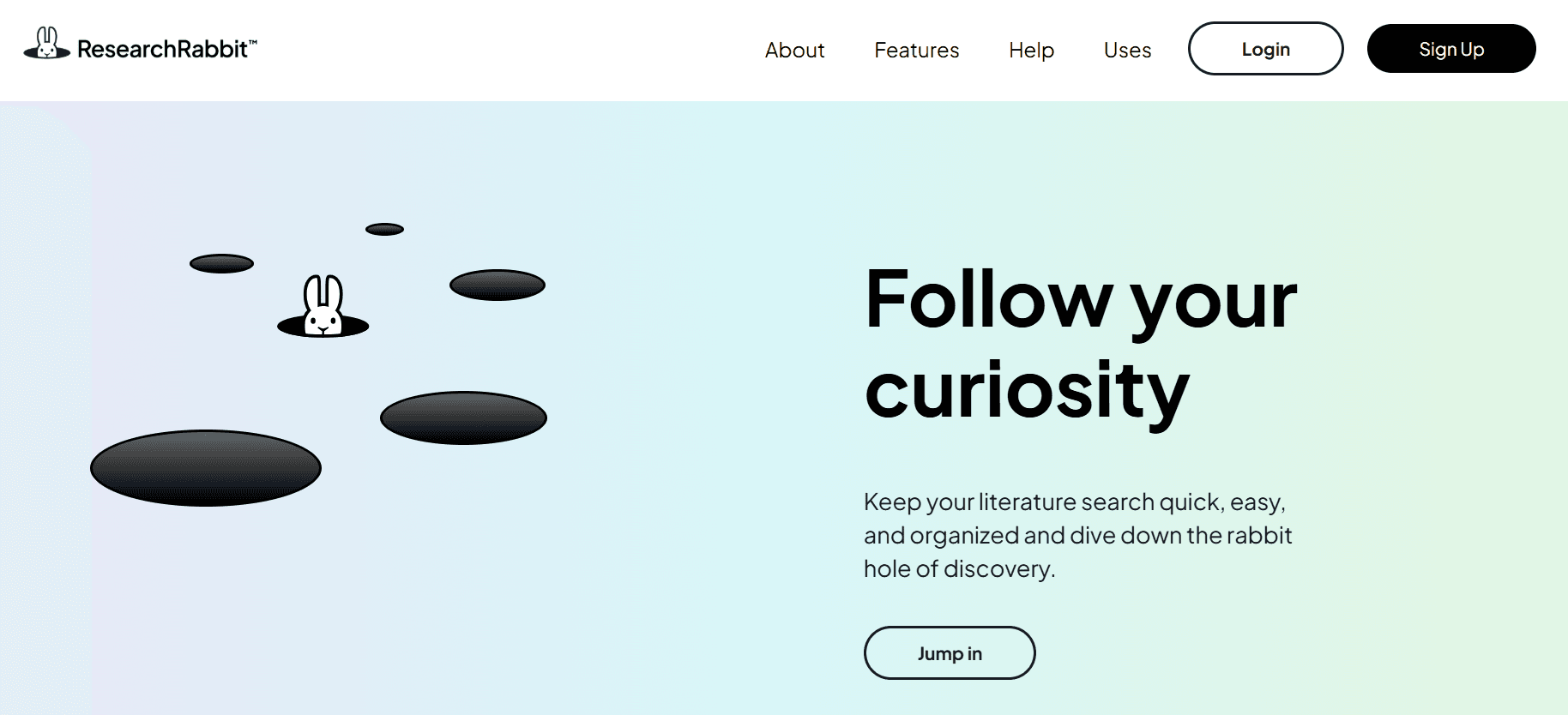
ResearchRabbit helps you find more sources by letting you upload a paper you already know is important. It then identifies similar studies using citation networks and topic overlap.
This way, you can find more sources without searching manually. Instead of typing keywords into databases and hoping to find the right papers, you can start with one good paper and let the tool show you the related research.
This method saves research time and improves coverage. You aren't limited by your keyword choices; you follow the real connections between studies, which often uncover papers you might not have discovered otherwise.
7. Readwise Reader (Best for Highlight Summaries)
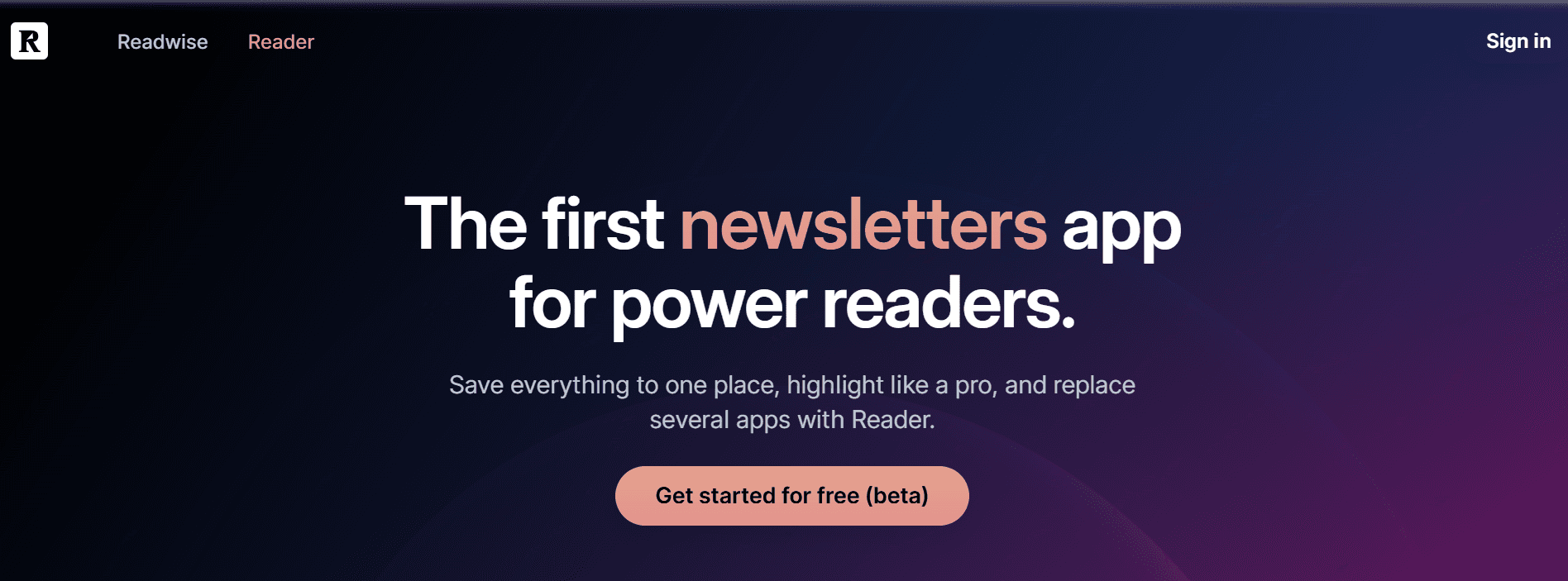
Readwise Reader turns highlights into structured notes. You can upload PDFs and highlight important sections. The AI then summarizes your highlights into cohesive summaries. Our AI research and writing partner streamlines the process, making it easier to focus on key insights.
Your annotations are kept safe, so you won't lose track of important highlights. There's no need to highlight a paper, close it, and forget what you marked. This tool organizes your highlights and turns them into helpful text.
This feature is especially useful when you come back to a paper weeks later. Instead of rereading the whole document to remember what was important, you can look at the summary made from your own highlights. This approach is faster and aligns with your original thinking.
8. Perplexity AI (Best for Evidence-Based Answers)
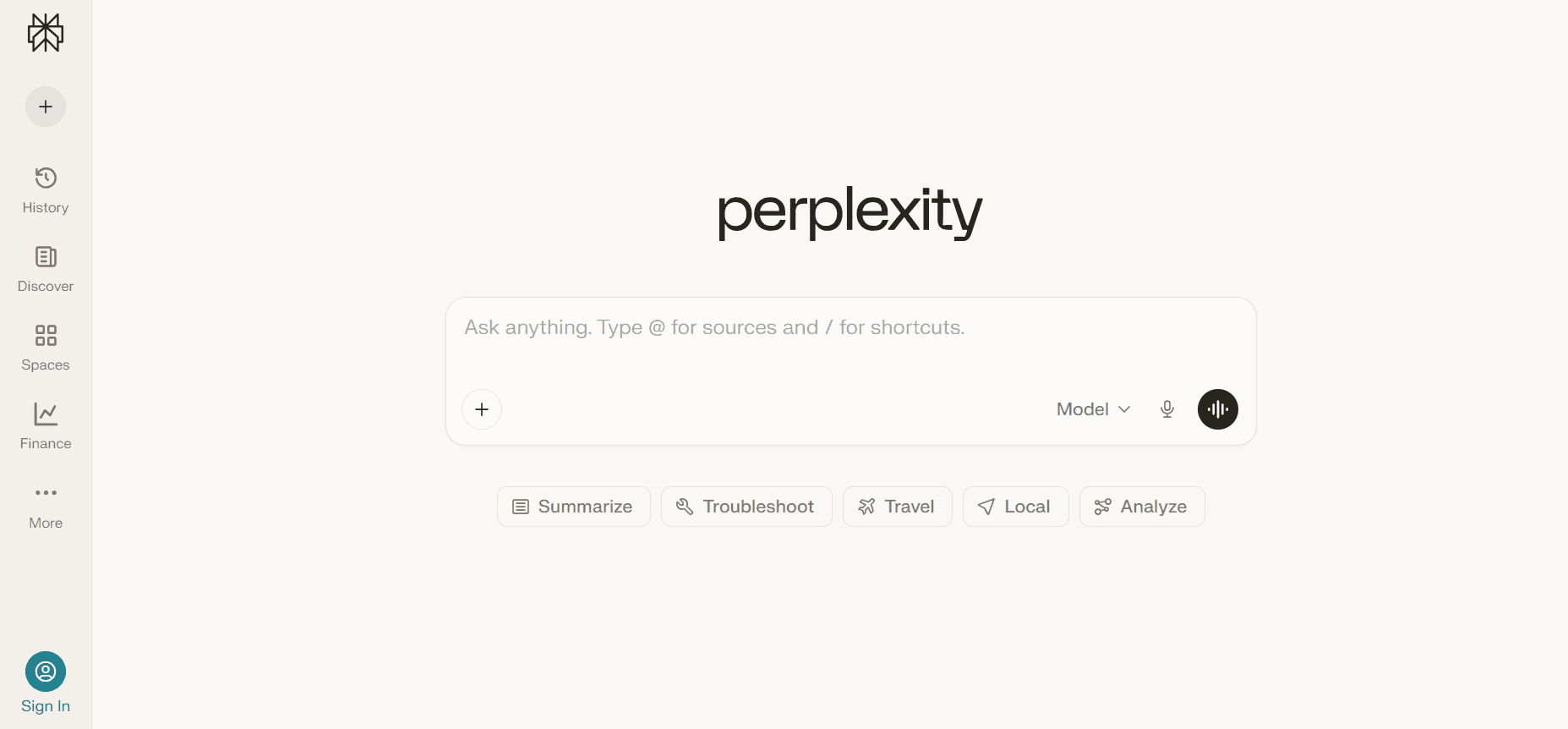
Perplexity answers research questions with cited sources. Users can ask a question and receive a summarized answer with inline citations that link directly to the original papers.
This tool provides evidence-backed answers much faster than random Google searches. Instead of searching through ten blog posts that may or may not cite credible research, users get a direct answer backed by academic sources.
Perplexity works especially well for exploratory research. When users are unsure which papers to read in full, they can ask broad questions to understand the overall topic. This platform surfaces key studies and gives enough context to help users decide where to explore further.
If you're looking for a more tailored approach to your research, consider how our AI writing partner can enhance your experience.
9. Paper Digest (Best for Technical Summaries)
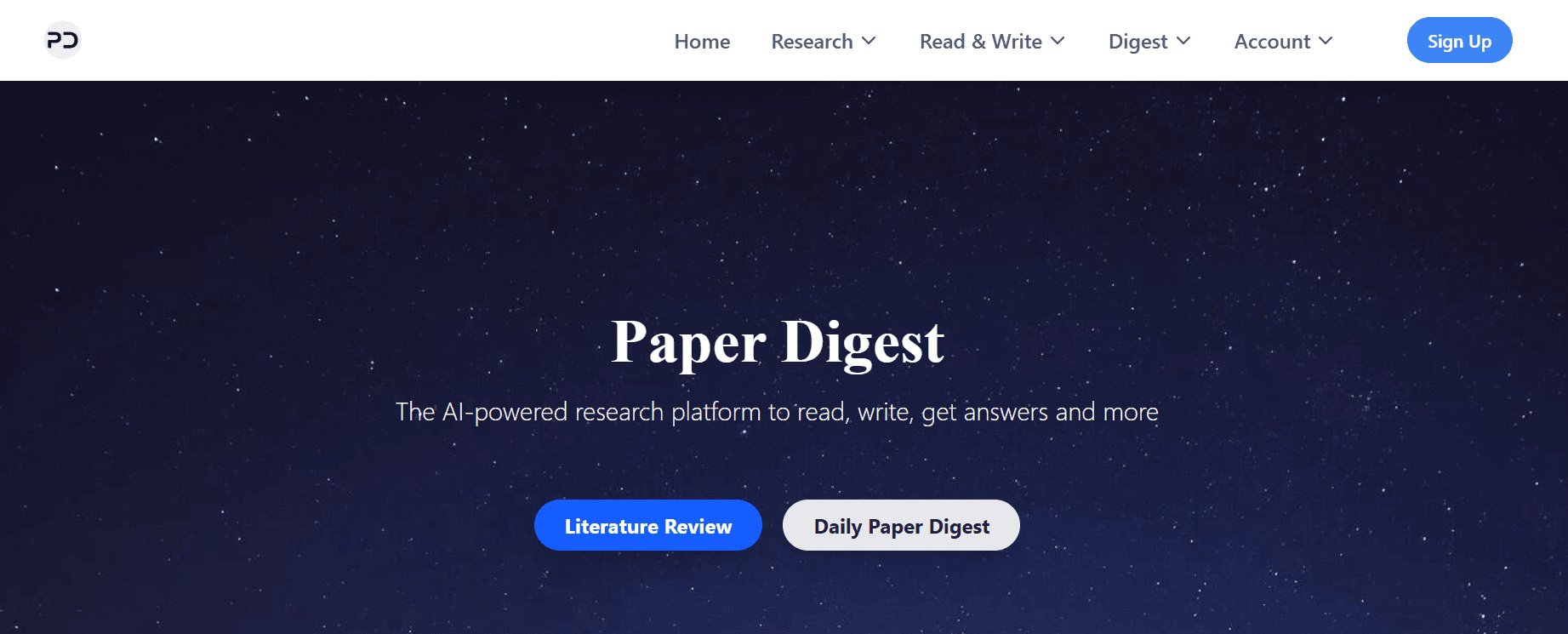
Paper Digest condenses complex research into short summaries. Users can search for a paper and view a shorter version that retains the technical details without reading the full text.
This service helps users understand complex research more quickly. This is especially helpful in STEM fields, where papers often include equations, data tables, and methodology sections that require significant cognitive effort to understand.
Our AI research and writing partner can further assist in synthesizing this information effectively. While the tool doesn't replace reading full papers, it accelerates the initial understanding phase. This helps users decide whether to read the full paper or rely on the summary for the information they need.
10. Scispace Copilot (Best for Explaining Hard Papers)
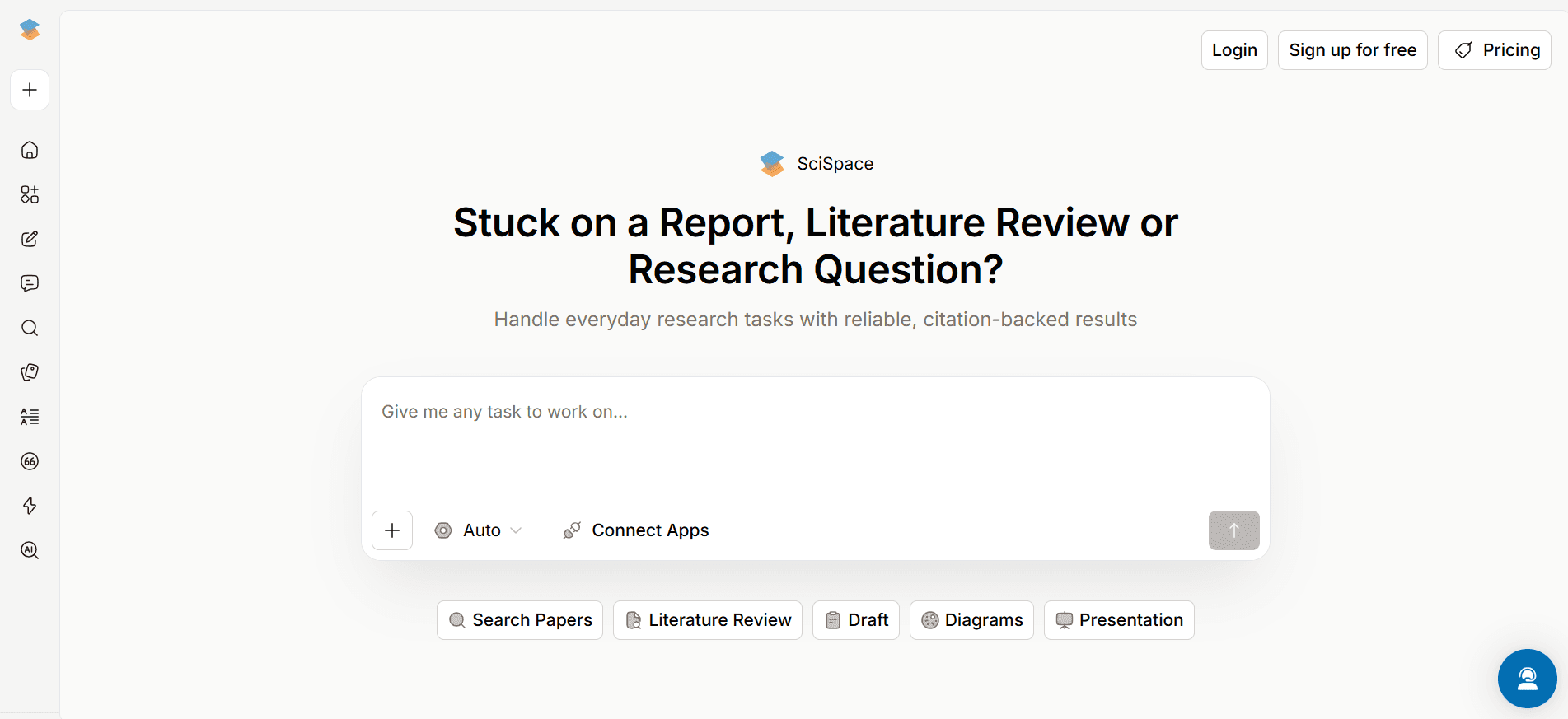
Scispace Copilot allows users to ask questions directly within the document. Users can upload a paper, highlight a confusing section, and request an explanation in simpler terms. This innovative AI research and writing partner enhances comprehension, making it easier to tackle complex texts.
As a result, difficult sections become much more accessible. Users are no longer stuck rereading the same paragraph multiple times to understand it. Instead, they can ask the AI to break down complex ideas and translate technical language into clearer, easier-to-understand content.
This feature is especially useful for beginners or researchers from different fields. When reading outside their main area, the specific terms and ideas can often seem confusing.
Scispace helps users understand these concepts without having to look up unfamiliar terms individually.
What is the overall impact of AI summarization tools?
The shift from manual to AI-supported summarization is not about avoiding reading; it's about redirecting effort. You still need to think critically, put together information from different sources, and build arguments.
Instead of wasting hours on logistics, tool-switching, and repetitive extraction work, you can focus on what matters. Our AI research and writing partner helps streamline the process.
These tools manage structure effectively, allowing you to concentrate on insight. They do not think for you; instead, they clear the path so your thinking can move faster.
Finding out that these tools exist is not enough. You need a process that is designed to maximize their potential.
Turn Your Papers Into Summaries Today (20-Minute Plan)

A simple 20-minute workflow can transform scattered research papers into organized notes and a usable draft in one sitting. Most students struggle not because they lack tools, but because they lack a clear process.
The difference between spending three hours on a paper and just twenty minutes is not about intelligence, but about structure. Put everything in one place before you start reading: PDFs, links, YouTube lectures, articles, all of it. When sources are scattered, it leads to scattered thinking.
Research from Stanford on task-switching (2023) shows it can reduce productivity by up to 40%. Each time you switch tabs or search for a file you already downloaded, you're losing more than just seconds; you're breaking your focus. Your brain has to reload context with every interruption, and that reload costs more than you might think. With our AI research and writing partner, you can streamline this process effectively.
Use one folder and one workspace without making exceptions.
How can AI help in organizing research?
Upload your sources and let AI extract the structure: purpose, methods, findings, and limitations. You get organized summaries without rereading everything.
Instead of scrolling for 30 minutes, hoping something catches your eye, you can access the key ideas in just five minutes. This approach does not mean avoiding the work; it shifts your focus from extraction to synthesis. You're not skipping reading; you're just reducing the mechanical tasks that don't need your judgment.
The result is clarity. You can quickly see what each paper adds before you decide to read it deeply. This helps you identify which sources require your full attention and which only need a quick review.
What role does active questioning play?
Active questioning improves retention by over 30%, according to learning science studies. You stop skimming. You start understanding.
Consider asking questions like: What is the main argument? What evidence supports this? What are the weaknesses? These questions are not passive; they push you to engage with the material in a way that is essential for writing.
Many students highlight sentences, believing they are being productive. However, highlighting alone does not improve understanding; questioning does.
When you create a question, your brain works to find patterns, contradictions, and gaps: this is where insight comes from.
How to effectively translate notes into writing?
Turn notes into cohesive paragraphs, literature review sections, and report summaries. This is where most students usually stop; however, you go further.
You leave with meaningful writing, not just notes. Avoid bullet points that will need rewriting later or highlighted PDFs that you'll have to reopen tomorrow. Instead, create actual sentences that belong in your final document.
That shift matters. When you sit down to write your full draft, you're not starting from zero; you're expanding, refining, and connecting ideas. The hardest part, the blank page, is already behind you.
What are the signs of progress in your workflow?
Having all sources in one place is very important. Notes generated, key findings pulled out, questions answered, and a draft paragraph written show that you are making progress.
If you're collaborating with an AI research and writing partner, our Otio platform streamlines the process.
If you check all five indicators, then you have made real progress today. This shows real progress rather than just appearing to move ahead.
How to streamline your tools for research?
Many students try this workflow using Google Drive, ChatGPT, Word, and Notion. While it can work well, it often proves slow.
A Reddit graduate student shared that managing research across several apps added 2 to 3 extra hours to their weekly workflow. The main reasons are lost files, disconnected notes, and missing context.
Otio helps by keeping sources, generating notes, allowing in-document chat, and supporting drafting, all in one workspace. Instead of copying, pasting, switching, and rewriting, users can just upload, ask, and write. This process is consolidated into fewer steps, reducing the risk of losing your train of thought.
You aren’t just adding another tool to the mix; youare replacing five disconnected tools with one that keeps everything linked.
The workflow is straightforward. However, straightforward doesn't mean easy until you practice it once and see how much time it really saves.
Related Reading
Your Next Step (Do This Now)
If you want to try this today, open Otio. Create a free workspace. Upload one PDF and one article, then generate notes. Ask, "Summarize key findings and limits." Turn the result into one paragraph.
Time required: 10 to 15 minutes; Cost: Free; Deliverable: First draft section.
This process focuses on real output instead of motivation or theory.
The difference between knowing this workflow exists and actually using it is one session. You either try it once and see how much faster it is, or you keep reading about productivity without making any changes. Many people pick the second option and later wonder why research still feels exhausting.
Related Reading
Document Generation Tools
How To Use Ai For Literature Review
How To Write A Research Summary
How To Write A White Paper
Best Ai For Literature Review
Best Report Writing Software