
Report Writing
How Long Should A Literature Review Be (Detailed Guide)
Discover how long a literature review should be for essays, theses, and research papers—plus tips to meet academic expectations.

You're staring at a blank page, wondering if your literature review should span 5 pages or 50. Academic requirements vary wildly across disciplines, institutions, and research projects, leaving students and researchers second-guessing the appropriate length for their scholarly synthesis. Whether you're crafting an undergraduate dissertation, a master's thesis, or a PhD proposal, understanding how word count, scope, and depth interact will save you countless revision hours. This guide breaks down the factors that determine literature review length and shows you how to write and research fast with AI without sacrificing quality.
The right tools transform how you approach academic writing. Otio serves as your AI research and writing partner, helping you organize sources, extract key findings, and draft comprehensive literature reviews in a fraction of the time traditional methods require. When you write and research fast with AI, you're not cutting corners. You're working smarter, allowing technology to handle the heavy lifting while you focus on critical analysis and original thinking.
Summary
Academic literature reviews resist universal length standards because research scope, field maturity, and project complexity vary dramatically across disciplines. PhD dissertations typically allocate 30-40% of the total word count to literature reviews, while master's theses dedicate 20-30%, but these percentages reflect the depth of engagement rather than mechanical formulas. The real problem with fixed-length thinking is that it shifts focus from synthesis to compliance, producing reviews that summarize sources sequentially without revealing patterns, contradictions, or gaps that justify new research.
Synthesis distinguishes advanced academic writing from undergraduate summary work. Writing "Three longitudinal studies demonstrate consistent effects under controlled conditions, but field research reveals contradictory results when contextual variables aren't standardized" requires more initial words than listing findings individually, but eliminates redundancy by building arguments instead of cataloging sources. This approach demands seeing relationships across dozens of sources simultaneously, which becomes nearly impossible when toggling between PDFs, browser tabs, and scattered notes.
Manual literature review workflows create bottlenecks that compound at every research stage. According to the analysis of EFL literature review challenges, 10 students consistently reported that volume overwhelms systematic analysis, forcing them to choose between superficial coverage and an incomplete scope. Processing large volumes becomes overwhelming, not because individual papers are difficult, but because maintaining context across dozens of sources exceeds working memory capacity, turning intellectual work into an organizational nightmare.
Research-specific AI tools now save researchers an average of 96 hours per literature review by eliminating constant context switching that drains mental energy without advancing understanding. Over 200,000 researchers now use AI-enhanced platforms for literature review workflows, consolidating fragmented processes where insights previously lived in disconnected locations across reference managers, writing tools, and note-taking apps that couldn't be searched holistically.
The question of appropriate length dissolves when researchers stop measuring pages and start measuring completeness across four dimensions: theoretical frameworks that guide field interpretation, major empirical findings that establish the current understanding, methodological approaches and their limitations, and unresolved questions that justify new investigation. If any question remains inadequately addressed, the review is too short regardless of page count, whereas answering all four thoroughly adds length that just dilutes focus.
AI research and writing partner addresses this by consolidating sources into unified workspaces where summaries extract key findings automatically, helping researchers see what collective scholarship actually says rather than reconstructing it from scattered notes.
Table of Contents
How Long Should A Literature Review Be
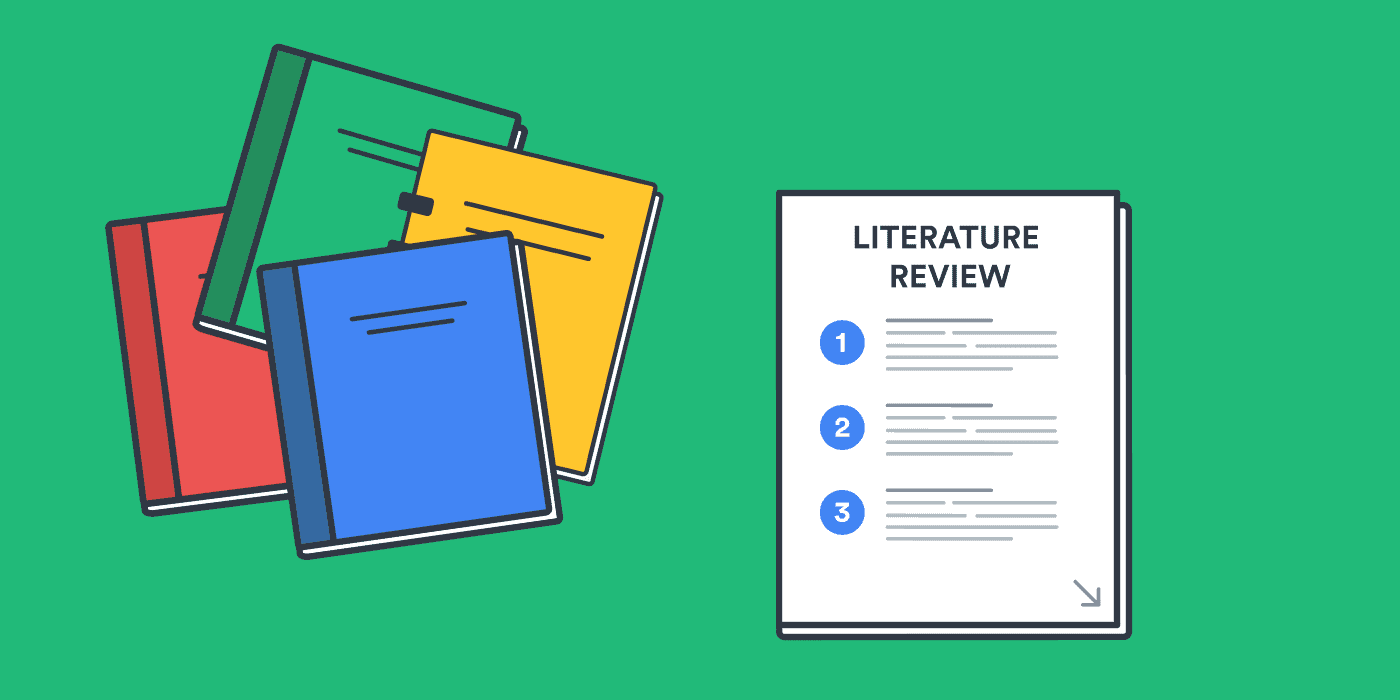
The right length for a literature review is determined by your research scope, academic level, and the depth required to cover all relevant scholarship without padding. There's no universal word count because a comprehensive undergraduate review might need 2,000 words while a doctoral dissertation could require 10,000 words to adequately synthesize decades of research. The question isn't "how many pages?" but "have I covered everything necessary to justify my research?"
Why Fixed Length Guidelines Create More Problems Than They Solve
Academic writing guides often suggest rigid ranges, such as "2-3 pages for undergraduates" or "1,000 words for master's students." These numbers feel safe because they're specific, but they ignore the fundamental purpose of a literature review: mapping the intellectual territory your research occupies. If you're investigating a well-established field with hundreds of relevant studies, 2,000 words won't suffice. If you're exploring an emerging niche with limited prior work, forcing yourself to reach 5,000 words leads to repetitive filler that weakens your argument.
According to the ResearchPal Blog, PhD dissertations typically allocate 30-40% of the total word count to literature reviews, while master's theses allocate 20-30%. These percentages reflect the reality that more advanced research requires deeper engagement with existing scholarship, not that you should mechanically calculate word counts based on degree level.
The real problem with fixed-length thinking is that it shifts your focus from synthesis to compliance. You stop asking "what does this study contribute to my understanding?" and start asking "how do I fill three more pages?" That mindset produces literature reviews that summarize sources sequentially without revealing patterns, contradictions, or gaps that make your research necessary.
What Actually Determines Appropriate Length
Three factors matter more than arbitrary page counts.
First, the maturity of your research field. Established areas like cognitive psychology or molecular biology have extensive literature that demands thorough coverage. Emerging interdisciplinary topics might have fewer foundational studies but require careful explanation of how different fields converge.
Second, your research question's complexity. A narrow empirical study needs a focused review of directly relevant methods and findings. A theoretical dissertation exploring multiple frameworks requires extensive conceptual groundwork.
Third, your academic context. Journal articles impose strict word limits that force concise synthesis. Dissertations are expected to provide comprehensive coverage that demonstrates mastery of the field.
When you're managing dozens of sources across multiple databases, the challenge isn't just length but organization. Most researchers toggle between reference managers, PDF readers, note-taking apps, and writing tools, losing context with every switch.
Platforms like Otio consolidate this fragmented workflow into a unified research workspace where you can extract key findings with AI summaries, automatically organize sources, and draft sections without losing track of citations. This consolidation matters because comprehensive literature reviews become manageable when you can synthesize information efficiently rather than drowning in scattered tabs.
The distinction between summary and synthesis determines whether your review earns its length. Summarizing means describing each study individually: "Smith (2019) found X. Jones (2020) discovered Y." Synthesis means identifying patterns across studies: "Three longitudinal studies (Smith, 2019; Jones, 2020; Lee, 2021) demonstrate consistent effects under controlled conditions, but field research reveals contradictory results when contextual variables aren't standardized." Synthesis takes more words initially but eliminates redundancy because you're building arguments instead of listing sources.
Adjusting Depth Based on Academic Level
Undergraduate literature reviews typically range from 1,500 to 3,000 words because you're demonstrating basic research competency, not exhaustive field knowledge. Your goal is to show you can identify relevant sources, understand their main arguments, and connect them to your research question. Depth matters more than breadth. Better to thoroughly analyze eight highly relevant studies than superficially mention twenty tangentially related papers.
Master's theses demand 3,000 to 6,000 words because you're expected to critically evaluate methodologies, identify theoretical tensions, and articulate how your research addresses specific gaps. You're not just reporting what others found but assessing the strength of their evidence and the logic of their conclusions. This requires more space because critique is more complex than description.
Doctoral dissertations often exceed 10,000 words in literature reviews because you're establishing yourself as an expert who understands not just individual studies but the intellectual evolution of your field. You trace how debates developed, why certain approaches gained traction while others faded, and where unresolved questions create opportunities for contribution. This historical and conceptual depth justifies the extended length, as you're constructing the scholarly foundation on which your entire dissertation rests.
When Longer Actually Means Weaker
Length becomes a liability when it substitutes quantity for insight. If you're repeating similar findings from multiple studies without explaining why the repetition matters, you're padding. If you're including tangentially related research just to demonstrate you found it, you're diluting focus. If you're explaining basic concepts your audience already understands, you're wasting their time and yours.
The test is simple: can you justify every paragraph's presence? If a section doesn't either introduce essential background, reveal a pattern across studies, highlight a contradiction that matters, or identify a gap your research fills, it doesn't belong, regardless of whether removing it drops you below some target word count. Strong literature reviews feel comprehensive without feeling exhausting because every paragraph advances understanding.
But knowing what to include requires seeing patterns across dozens of sources, and that's where traditional scattered workflows break down. You can't synthesize effectively when relevant insights are buried across browser tabs, PDF annotations, and disconnected notes. Research-specific tools that handle long-form content, maintain source context, and support citation tracking make it possible to write literature reviews that are both comprehensive and focused, because you're working from an organized synthesis rather than a chaotic accumulation.
The Real Standard Isn't Length But Coverage
Peer-reviewed journals rarely specify literature review word limits because editors care about comprehensiveness and relevance, not arbitrary counts. They want to see that you've engaged with the most important scholarship in your area, understood the theoretical and methodological debates that shape it, and positioned your research as a logical next step. That might take 2,000 words or 8,000 words, depending on how much prior work exists and how contested the terrain is.
Coverage means you've addressed the major studies that define your field, the methodological approaches that shape how research is conducted, the theoretical frameworks that guide interpretation, and the unresolved questions that justify new investigation. Missing any of these elements weakens your review regardless of length. Including all of them thoroughly creates a strong foundation, even if you exceed conventional page ranges.
The confidence to write a literature review that's exactly as long as it needs to be comes from trusting your synthesis process. When you can efficiently extract insights from sources, organize them thematically rather than chronologically, and track how arguments connect across studies, you naturally write to the depth the material requires rather than to an artificial target. That's the difference between a literature review that feels complete and one that just feels long.
What determines whether those words actually form a coherent argument depends entirely on how you structure them.
Format of Literature Review
Structure determines whether your literature review reads as a coherent argument or a disconnected catalog of sources. The format you choose should organize information thematically around concepts, debates, or methodological approaches rather than chronologically by publication date. A well-formatted review groups studies by the questions they answer, the frameworks they employ, or the contradictions they reveal, creating intellectual momentum that carries readers through your analysis.
Building the Introduction Without Telegraphing Everything
Your opening paragraph establishes what you're investigating and why existing scholarship makes this investigation necessary. State your research question or thesis clearly, then forecast the major themes or theoretical tensions your review will address. This isn't an exhaustive preview but a conceptual roadmap that helps readers understand how the pieces will fit together.
If you're writing a standalone literature review for publication, include a brief methodological note explaining your search strategy and inclusion criteria. Mention which databases you consulted, what date ranges you covered, and what criteria determined whether a source earned space in your analysis.
This transparency matters because it demonstrates systematic rigor rather than cherry-picked convenience. In literature review sections of larger research papers, this methodological detail is usually presented in a separate methods section, allowing your introduction to focus entirely on framing the intellectual territory.
The mistake most writers make is treating the introduction as a summary of everything they'll say later. That creates redundancy and kills momentum. Your introduction should create context and curiosity, not eliminate the need to read further.
Organizing the Body Through Synthesis Rather Than Summary
The body is where the format either clarifies or obscures your argument. Organizing chronologically ("Early studies found X, then researchers discovered Y, recent work shows Z") creates a timeline but rarely reveals patterns. Organizing alphabetically by author is even worse because it fragments related ideas across arbitrary sections. Strong literature reviews structure the body around conceptual categories that emerge from the research itself.
If your field has competing theoretical frameworks, dedicate sections to each approach and evaluate their explanatory power. If methodological differences produce contradictory findings, group studies by method and analyze what those differences reveal about the phenomenon you're investigating. If your topic spans multiple disciplines, organize by disciplinary perspective and show how insights from each field complement or challenge the others.
Within each thematic section, synthesize rather than summarize. Synthesis means identifying what multiple studies collectively demonstrate, where their findings converge or diverge, and what those patterns mean for your research question. Instead of "Smith (2020) found A. Johnson (2021) found B. Lee (2022) found C," write "Three experimental studies (Smith, 2020; Johnson, 2021; Lee, 2022) consistently demonstrate A under controlled conditions, but field research reveals B when contextual variables aren't standardized, suggesting C requires qualification."
This synthesis approach demands seeing relationships across sources simultaneously. When you're toggling between PDFs, browser tabs, and scattered notes, maintaining that holistic view becomes nearly impossible. Platforms like Otio consolidate sources into a unified workspace where AI summaries extract key findings, automatic organization groups related materials, and integrated writing tools let you draft while maintaining citation context. That consolidation matters because comprehensive synthesis requires seeing patterns across dozens of sources without losing track of individual contributions.
Using Transitions to Build Momentum Between Ideas
Well-structured paragraphs need connective tissue that shows readers how ideas relate to one another. Transition sentences at paragraph boundaries signal whether you're extending an argument, contrasting perspectives, or shifting to a different dimension of the problem. Without these explicit connections, even thematically organized sections feel like disconnected observations rather than cumulative insight.
Effective transitions don't just link topics but clarify logical relationships. "Similarly" signals convergent evidence. "However" introduces contradictory findings. "Building on this foundation" shows how one concept enables understanding another. "This methodological limitation explains why" connects critique to consequence. These phrases do intellectual work by making your analytical moves visible.
The rhythm matters too. Short paragraphs create urgency and emphasis. Longer paragraphs allow complex ideas to unfold with necessary nuance. Alternating between these structures prevents monotony and matches form to function. When you're introducing a new theme, a concise paragraph establishes the territory. When you're evaluating competing explanations, a longer paragraph gives you space to weigh evidence fairly.
Evaluating Sources Critically Without Undermining Them
Strong literature reviews don't just report what researchers found but assess the strength of their evidence and the logic of their conclusions. This critical evaluation distinguishes advanced academic writing from an undergraduate summary. You're not attacking studies but examining their scope, limitations, and applicability to your research question.
Methodological critique focuses on whether the study design supports the claims made. Small sample sizes limit generalizability. Self-reported data introduces bias. Correlational findings can't establish causation. These aren't fatal flaws but boundaries that shape how confidently we can apply findings. Acknowledging these limitations demonstrates sophistication, not cynicism.
Theoretical critique examines whether frameworks adequately explain observed patterns. If a model predicts X but studies consistently find Y, that discrepancy matters. If competing theories explain the same phenomenon differently, evaluating their relative explanatory power advances understanding. This kind of critical engagement positions your research as contributing to ongoing scholarly conversations rather than simply adding another data point.
Concluding by Connecting Back to Your Research
The conclusion synthesizes what your review revealed about the current state of knowledge and explicitly connects those insights to your research question. Summarize the key patterns, contradictions, or gaps your analysis identified, but don't introduce new sources or arguments here. The conclusion should feel like a natural endpoint, where the intellectual journey you've guided readers through reaches a clear destination.
Most importantly, the conclusion articulates why your research matters, given what existing scholarship has established. If prior studies focused on X but ignored Y, your work addresses that gap. If conflicting findings suggest moderating variables, your research tests that hypothesis. If established theories struggle to explain emerging phenomena, your investigation extends theoretical frameworks. This explicit connection transforms your literature review from an academic exercise into a justification for the research you're proposing or reporting.
Format isn't decoration. It's the architecture that determines whether readers can follow your reasoning from existing knowledge to your contribution. When structure serves synthesis rather than just organization, your literature review becomes the foundation on which your entire argument stands.
But even a perfect structure can't overcome the inefficiencies that plague the writing process itself.
Related Reading
Problems of Manual Literature Review Writing
Sifting through hundreds of sources manually creates bottlenecks that compound at every stage. You're not just reading papers, you're evaluating credibility, extracting relevant findings, tracking themes across disciplines, and synthesizing contradictory arguments while maintaining objectivity. Each task demands cognitive overhead that multiplies as your source count grows, turning what should be intellectual work into an organizational nightmare.
The Volume Problem Isn't About Reading Speed
Processing large volumes of literature can become overwhelming, not because individual papers are difficult, but because maintaining context across dozens of sources exceeds working memory capacity. You read a methodology critique in one paper, find supporting evidence in another three weeks later, and then can't remember which study introduced the theoretical framework that connects them. By the time you've accumulated fifty sources, you're re-reading papers just to reconstruct relationships you've already identified.
According to Aleph's research on EFL literature review challenges, 10 students consistently reported that volume overwhelms systematic analysis, forcing them to choose between superficial coverage and incomplete scope. This isn't a time management failure. It's a structural problem in which linear reading can't support the multidimensional synthesis required by literature reviews.
The familiar approach is to open PDFs in multiple tabs, highlight passages, and copy quotes into separate documents. As your source collection grows, this fragmentation means critical insights are scattered across disconnected locations. You know you read something about measurement validity, but was it in the PDF annotations, the Google Doc notes, or the citation manager comments?
Platforms like Otio consolidate this scattered workflow into a unified research workspace where AI summaries extract key findings automatically, sources are organized thematically without manual tagging, and writing happens alongside citation tracking. That consolidation matters because comprehensive synthesis requires seeing patterns across sources simultaneously, not reconstructing them from fragmented notes.
Credibility Assessment Takes More Time Than Reading
Verifying source quality requires evaluating author credentials, publication venue reputation, peer-review rigor, citation impact, and methodological soundness. For each paper, you're checking whether the authors have relevant expertise, whether the journal maintains editorial standards, whether the sample size supports the conclusions, and whether the statistical methods match the claims. This assessment can't be automated through simple metrics because citation counts don't measure quality, and journal rankings don't guarantee rigor.
The problem intensifies when sources cite each other in a circular manner. Paper A references Paper B as foundational evidence, but Paper B's claims rest on Paper A's preliminary findings. Without manually tracking citation networks, these circular dependencies go unnoticed until peer reviewers point them out. Researchers often report spending as much time validating sources as reading them, which doubles the work without adding synthesis.
Thematic Organization Collapses Under Complexity
Identifying patterns across sources requires holding multiple organizational schemes simultaneously. You might categorize by theoretical framework, methodological approach, chronological development, and contradictory findings simultaneously. A single paper might contribute to three different themes, but traditional note-taking forces you to either duplicate content or choose one primary category, fragmenting insights that should remain connected.
Most researchers start with clear organizational systems. Color-coded highlights, nested folders, tagged references. These systems work beautifully for the first twenty sources. By source fifty, the taxonomy you designed no longer fits the literature you've discovered. You find papers that bridge categories, challenge your framework, or introduce dimensions you hadn't anticipated. Reorganizing fifty sources to accommodate a new understanding takes hours and risks losing existing connections.
The cognitive load of maintaining these relationships manually explains why synthesis feels harder than it should. You're not struggling to understand individual studies. You're struggling to hold enough context in working memory to see how ten studies collectively reveal a pattern that none state explicitly. That's not a reading comprehension problem. It's an information architecture problem that manual methods can't solve at scale.
Objectivity Erodes Through Confirmation Bias
Maintaining neutrality becomes nearly impossible when you've already formed hypotheses about what the literature should show. You notice studies that support your expectations more readily than those that contradict them. You remember methodological flaws in papers that challenge your assumptions but overlook similar limitations in supportive research. This bias operates unconsciously, which makes it harder to correct through willpower alone.
Consulting peers helps, but only if you've documented your synthesis process transparently enough for others to audit. When your analysis lives across scattered highlights, informal notes, and mental connections, peer review can't reconstruct your reasoning. They see your conclusions but not the interpretive steps that produced them, limiting feedback to surface-level observations rather than systematic bias detection.
Synthesis Demands Simultaneous Comparison
Creating coherent narratives from diverse perspectives requires comparing arguments side by side, not sequentially. You need to see how Smith's 2019 methodology differs from Jones's 2021 approach while considering Lee's 2022 theoretical critique, all in relation to your research question. Reading these papers weeks apart means reconstructing comparisons from memory or notes that capture findings but lose nuance.
The challenge multiplies when synthesizing across disciplines. A psychology paper frames motivation through cognitive models. An organizational behavior study uses economic incentives. A sociology paper emphasizes structural constraints. Each discipline's assumptions shape its methods and conclusions, but recognizing those paradigmatic differences requires holding multiple frameworks in mind simultaneously while reading. Linear note-taking can't preserve this multidimensional context.
Citation Management Creates Formatting Nightmares
Proper referencing demands tracking author names, publication years, page numbers, DOIs, and formatting variations across citation styles. APA requires different punctuation than Chicago. Journal articles cite differently from book chapters. Managing these details manually means either formatting as you write, interrupting synthesis, or facing hours of cleanup later when you can't remember which quote came from which source.
The real nightmare starts when you realize halfway through that you need to switch citation styles. Converting fifty in-text citations and bibliography entries from APA to MLA manually takes hours and introduces errors that undermine credibility. Reference management software helps, but only if you've been diligent about entering complete metadata from the start. Missing DOIs or incorrect page ranges compound into formatting inconsistencies that make your review look careless, regardless of intellectual quality.
Time Pressure Turns Thoroughness Into Triage
Managing deadlines with numerous sources forces impossible choices. Do you read one more potentially relevant paper or start writing with what you have? Do you verify that an ambiguous citation or trust your notes? Do you reorganize your structure to accommodate new insights or preserve momentum? Each decision trades comprehensiveness for completion, but you won't know which tradeoffs weakened your argument until reviewers identify gaps.
The pressure intensifies because the quality of your literature review determines whether your entire research project proceeds. A weak review suggests you haven't done your homework, undermining confidence in your methodology and findings. But the time required for truly comprehensive coverage often exceeds what's available, especially when you're managing coursework, teaching responsibilities, or other research commitments simultaneously.
Keeping Reviews Current in Fast-Moving Fields
In rapidly evolving disciplines, relevant papers are published faster than you can read them. You complete a thorough review, submit your manuscript, and then discover during revision that three new studies directly address your research question. Incorporating these late additions means re-evaluating your entire synthesis, potentially undermining arguments you've already constructed. The alternative, ignoring recent work, risks reviewers questioning whether your contribution remains relevant.
This currency problem has no clean solution in manual workflows. Setting up automated search alerts helps you discover new papers, but evaluating and integrating them into existing synthesis still requires reconstructing the context you've already built. By the time you've updated your review, more papers have published, creating a treadmill that never stops.
But recognizing these problems only matters if better methods actually exist.
9 Best AI Tools for Literature Review

Nine tools stand out for tackling the specific challenges posed by literature reviews: managing source overload, extracting key insights efficiently, and maintaining synthesis quality under deadline pressure. Each addresses different pain points in the research workflow, from initial collection through final citation formatting. Choosing the right tool depends on whether your bottleneck is organization, analysis, writing speed, or citation management.
1. Otio
Research becomes manageable when everything lives in one workspace instead of scattered across browser tabs, PDF readers, and note-taking apps. Otio consolidates PDFs, journal articles, books, web pages, and video lectures into a unified environment where AI-powered summaries automatically extract key findings. You can chat with individual sources or your entire knowledge base to identify patterns, contradictions, and gaps without reconstructing context from fragmented notes.
The platform generates structured notes for every source, cutting hours from manual reading while preserving the depth and comprehensive reviews required. When you're ready to write, AI-assisted drafting pulls directly from your collected sources, maintaining proper citation context throughout. This integration matters because literature reviews fail not from lack of effort but from workflow fragmentation that makes synthesis cognitively impossible at scale.
According to Research Rabbit's 2025 analysis, researchers save an average of 96 hours per literature review by using AI tools that consolidate research workflows. That time savings comes from eliminating the constant context switching that drains mental energy without advancing understanding. Otio's automatic organization means themes emerge naturally from your sources rather than requiring manual tagging systems that break down as complexity grows.
The familiar approach is toggling between reference managers for citations, Google Docs for writing, and ChatGPT for summarization. As your source count exceeds fifty, this fragmentation means critical insights live in disconnected locations you can't search holistically. Platforms like Otio eliminate this scattered workflow by handling long-form content, preserving source context, and supporting citation tracking in a single research-specific environment. That consolidation transforms comprehensive literature reviews from overwhelming to systematically manageable.
2. Jasper
Writing assistance that understands argument structure helps when you're stuck translating research into coherent prose. Jasper identifies core arguments in your draft and generates outlines, titles, introductions, and conclusions that maintain logical flow. The tool works best for auxiliary academic tasks, such as crafting cover letters for journal editors or creating survey questions for primary research.
Basic editing functions, including grammar correction, rephrasing suggestions, and readability adjustment,s sit directly in the writing interface. Over sixty templates address tasks that consume researcher time without advancing core scholarship: writing social media posts to promote publications, generating poll questions for data collection, or drafting Quora answers to establish thought leadership. These templates reduce the friction of context switching between research work and professional communication.
The learning curve requires investment. You guide the tool through each task rather than receiving autonomous output, which means early adoption feels slower than manual writing. Unused monthly credits don't roll over, creating pressure to maximize usage or accept wasted subscription value. For researchers who write frequently across multiple formats, this limitation becomes costly. The tool hasn't matured enough to stand alone for serious academic prose, but it accelerates peripheral writing that otherwise drains focus from literature synthesis.
3. ProWritingAid
Grammar precision matters when peer reviewers judge credibility partly on writing mechanics. ProWritingAid catches contextual spelling errors and sophisticated grammatical issues that basic checkers miss. The rephrasing tool improves sentence clarity in a few clicks, which is useful when you've stared at the same paragraph for too long to see structural problems.
The learning tool provides in-depth analysis that identifies overuse of the passive voice, weak verb choices, and readability issues that make academic writing unnecessarily dense. Analytical language goals help balance precision with accessibility. Power verb suggestions replace generic academic language with stronger alternatives that convey ideas more directly.
Detailed reports show writing patterns across entire documents: sentence length variation, paragraph structure consistency, and transition word usage. These analytics reveal habits you can't see while drafting. Some researchers find these comprehensive reports overwhelming initially. The free version limits functionality enough that serious users need premium access to unlock full analytical capability. For researchers producing publication-ready manuscripts, the detailed feedback justifies the cost by catching issues before peer review.
4. Quillbot
Paraphrasing becomes necessary when you need to reference ideas without directly quoting every source. Quillbot rewrites sentences or entire paragraphs while preserving original meaning, helping avoid plagiarism accusations while maintaining the flow of synthesis. The tool uses machine learning to improve paraphrases over time, understanding context well enough to restructure complex academic language.
Built-in thesaurus functionality helps find precise terminology when multiple options exist. Writing modes adjust output for different purposes: formal academic prose, simplified explanations, or creative alternatives. A Word Flipper shows individual words in multiple synonym options, so you control exactly which terms change. The slider adjusts synonym density, giving you control over how extensively the tool modifies your input.
Free versions limit paraphrasing to 700 characters, forcing frequent copy-paste cycles that interrupt writing flow. Premium accounts increase capacity to 10,000 characters and unlock additional writing modes. The tool integrates with Microsoft Office, Google Docs, and Chrome, reducing friction by working inside existing workflows. Speed increases substantially with premium access. For researchers who synthesize heavily from sources and need paraphrasing support, the absolute price of fifteen dollars monthly might seem steep until you experience how much faster literature reviews progress with reliable rewording assistance.
5. Trinka
Academic writing demands different grammar rules than business communication. Trinka specializes in contextual corrections for technical and scientific writing, catching discipline-specific terminology errors and formatting inconsistencies that general grammar checkers miss. Real-time recommendations improve clarity and conciseness while maintaining the formal tone academic journals expect.
The consistency checker ensures terminology, abbreviations, and formatting remain uniform across long documents. When you define "machine learning" with a hyphen on page three, Trinka flags instances without hyphens on page forty-seven. This consistency matters for publication readiness because inconsistent formatting signals carelessness regardless of intellectual quality.
Publication readiness checking appears even in the free plan, which is unusual generosity for a feature this valuable. The checker evaluates whether your manuscript meets common journal submission requirements before you invest time formatting for specific venues. Credit-based pricing offers flexibility: you receive free monthly credits and purchase additional capacity only when needed. The absence of desktop or mobile apps limits usage to browser-based work. Free versions cap at 10,000 words monthly, which covers shorter literature reviews but constrains longer dissertation chapters.
6. WordTune
Rewriting suggestions based on human language patterns help when your prose feels awkward, but you can't articulate why. WordTune analyzes vast text corpora to identify more natural phrasing alternatives. The tool occasionally changes meaning to reflect more common expressions, which requires careful review but often improves readability.
The onboarding process includes a floating icon that follows you across websites, making the tool feel accessible without requiring platform switching. Browser extension functionality means you can improve writing in email, Google Docs, or any web-based editor. The free version highlights changes so you understand what has improved, creating learning opportunities rather than just accepting black-box edits.
Multiple rewriting options for each sentence let you choose the alternative that best fits your intended meaning and tone. Casual or formal tone adjustments require premium access, as do shorten and expand functions that help meet word count requirements. The tool lacks mobile and tablet functionality, limiting use to desktops. For researchers who draft across devices, this limitation disrupts workflow continuity.
7. Scrivener
Organizing large research volumes requires tools built for complexity. Scrivener helps structure thoughts and sources across interconnected documents, creating chapters with subpages for related research materials. You can add images, text boxes, and annotations that maintain context as you write. The interface allows easy chapter rearrangement, which matters when your understanding of optimal structure evolves during writing.
Mobile app synchronization means research ideas captured on your phone integrate smoothly with desktop drafting. This cross-device continuity helps when insights strike during commutes or conversations. The tool excels at transforming scattered articles and documents into a coherent thesis structure, maintaining relationships between sources as your argument develops.
Free trial access lets students test whether the organizational approach fits their workflow before committing financially. The learning curve can be steep. Document interface conventions differ from those of standard word processors, causing initial confusion. For researchers managing dissertation-length projects with hundreds of interconnected sources, this organizational power justifies the adjustment period. Shorter literature reviews may not require Scrivener's full capability.
8. Reedsy
Publishing infrastructure matters when you're preparing manuscripts for submission. Reedsy connects authors with professional editors, designers, and marketers who understand academic publishing standards. The Book Editor provides manuscript writing and editing functionality, including unlimited revision history, automatic backups, dynamic word counts, and advanced character filtering.
The Track Changes functionality supports collaborative editing with advisors or co-authors. Email notifications for comments keep everyone synchronized without requiring constant platform checking. Export options to .docx and .txt files maintain compatibility with journal submission systems. Multiple collaborators can work simultaneously on the same manuscript, which accelerates revision cycles.
Free educational content helps improve research and writing skills beyond mere tool provision. The platform positions itself for researchers who have achieved some success or have institutional resources, as professional services are priced at a premium. For graduate students preparing dissertations for publication or researchers converting theses into books, Reedsy's comprehensive support justifies the investment. Undergraduate literature reviews rarely require this level of publishing infrastructure.
9. LaTeX
Classic typesetting systems remain relevant because they handle mathematical notation, complex formatting, and citation management better than word processors. LaTeX produces professionally formatted documents that meet rigorous academic standards. The learning curve is real: basic competency takes hours, mastery takes months. For researchers in mathematics, physics, or computer science who use equations frequently, this investment pays dividends throughout their careers.
Creating a bibliography with LaTeX's native functions saves time once you've mastered the syntax. Certain word processing programs, such as Microsoft Word, cannot be used with LaTeX files, requiring format conversion that can sometimes introduce errors. The tool is free, which matters for students on tight budgets who need professional-quality output.
According to Paperguide AI's 2026 research tools analysis, over 200,000 researchers now use AI-enhanced platforms for literature review workflows, but traditional tools like LaTeX retain devoted user bases in technical fields. The platform works best when you haven't started writing yet and have time to learn proper syntax. Starting a literature review in LaTeX mid-project creates more friction than benefit unless you're already proficient.
But knowing which tools exist only matters if you understand how to use them strategically.
Related Reading
Write Literature Reviews That Hit the Right Depth — Without Guessing the Length
The question of length dissolves when you stop measuring pages and start measuring completeness. Many students pad sections to hit arbitrary word counts or cut analysis short because they've reached some considered limit. Both approaches miss the point. Your literature review should cover every major study, debate, and gap relevant to your research question, then stop. That might take 1,800 words or 12,000 words, depending on how much scholarship exists and how contested the terrain is.
Otio removes the guesswork by helping you collect sources from articles, books, and videos into one workspace, then extract key takeaways through AI-powered summaries that highlight patterns, contradictions, and gaps across your literature. When you can see what the collective scholarship actually says rather than reconstructing it from scattered notes, you naturally write to the depth the material requires. The platform's AI-assisted writing tools smoothly integrate sources as you draft, so your review is as comprehensive as it needs to be without padding or premature cutting.
The familiar anxiety about length comes from working without clear visibility into what you've actually covered. You've read 40 papers but can't remember which addressed methodology debates, theoretical frameworks, or empirical findings. That uncertainty makes you either repeat yourself for safety or skip important material because you've lost track of what's missing.
Platforms like Otio solve this by automatically organizing research and generating source-grounded summaries that show exactly which territory you've covered and what still needs synthesis. When you can see the intellectual landscape clearly, the appropriate length becomes obvious rather than arbitrary.
The real standard isn't hitting a target word count but answering four questions completely. Have you explained the theoretical frameworks that guide interpretation in your field? Have you covered the major empirical findings that establish the current understanding? Have you identified methodological approaches and their limitations? Have you articulated unresolved questions that justify your research? If any question remains inadequately addressed, your review is too short regardless of page count. If you've answered all four thoroughly, additional length just dilutes focus.
Go from scattered sources to a polished, properly scoped review by letting Otio handle the collection, extraction, and organization work that usually consumes weeks. Try it free today and discover how comprehensive literature reviews become manageable when you're working from synthesis rather than chaos.
Related Reading
Document Generation Tools
How To Use Ai For Literature Review
How To Write A Research Summary
How To Write A White Paper
Best Ai For Literature Review
Best Report Writing Software