
Report Writing
How Long Does It Take To Write A Literature Review (Detailed Guide)
How Long Does It Take To Write A Literature Review? Get clear timelines and step-by-step guidance to complete your review faster with Otio’s expert tools.

Determining the time required for a literature review involves multiple factors, including the scope of the topic, the volume of material, and experience with academic analysis. How long does it take to write a literature review? Research often demands careful reading, synthesis of diverse sources, and thoughtful organization of insights. Evaluating these elements sets realistic expectations for the entire process.
Digital tools can streamline the gathering, analysis, and organization of scholarly sources by automating tasks that typically consume significant time. These innovations enhance productivity, allowing researchers to focus on critical analysis rather than administrative details. Effective integration of modern methods transforms the review process into a manageable and efficient endeavor. Otio provides an AI research and writing partner that quickly extracts key insights and assists in drafting sections, offering valuable support in academic work.
Summary
Writing a literature review typically takes two days to six months, depending on scope and depth. A short class assignment might require one week of focused work, while a dissertation chapter can stretch across multiple months. For medium-length reviews (3,000 to 8,000 words), researchers should expect 6 to 12 weeks total when accounting for source collection (1 to 3 weeks), deep reading and note-taking (3 to 6 weeks), pattern analysis (1 to 2 weeks), and drafting with revision (2 to 4 weeks). Comprehensive dissertation reviews often take 3 to 6 months or more because they require managing 50 to 200+ sources with extensive synthesis.
The cognitive load of manual literature reviews decreases as volume increases. Researchers must compare arguments across dozens of documents while tracking which authors agree or disagree, organizing themes, and maintaining citation accuracy. According to research published in the LSE Impact Blog, lack of transparency in search strategy and source selection undermines review credibility before writing even begins. Most people resort to color-coded highlights and spreadsheets, but these systems don't eliminate the core problem of manually connecting dots across scattered PDFs and notes.
Citation accuracy becomes a manual audit that compounds errors across long documents. Every claim needs a citation in the correct format (APA, MLA, Chicago, or Vancouver), and researchers must verify that citations match the claims without misattribution. Reference managers automate some formatting, but don't catch everything. When you cite Paper A in Section 2 and reference "the study mentioned earlier" in Section 4, then cut Section 2 during revision, Section 4 now references a nonexistent citation. Tracking these dependencies manually across 30+ pages is tedious and error-prone.
Starting without structure guarantees rewrites and wasted effort. Before reading sources deeply, researchers should map out the review's architecture by defining the core question, identifying organizing themes or debates, and planning how sections will connect. A basic skeleton includes an introduction stating the purpose, body sections grouped by theme or methodology, and a conclusion identifying gaps. Chronological structures show how thinking evolved, thematic structures compare different approaches to the same problem, and methodological structures evaluate how research designs produce different conclusions.
Perfectionism kills momentum during the drafting phase. Once you have structure and notes, start writing even when you don't feel ready, beginning with the sections that feel clearest first, rather than writing linearly from introduction to conclusion. Research published in Nature Ecology & Evolution identifies a lack of a clear review protocol as one of the most common structural failures, leading to extensive revisions. Expect first drafts to feel rough with clunky sentences, missing transitions, and repeated points, because revision is where you tighten arguments and ensure logical flow.
Otio consolidates the fragmented workflow that causes researchers to lose weeks searching for information they've already read, switching between PDFs in folders, notes in separate apps, citations in reference managers, and AI tools in other tabs.
Table of Contents
How Long Does It Take To Write A Literature Review

Writing a literature review usually takes anywhere from two days to six months. This depends on how big and deep the topic is, as well as how familiar you are with it. A short review for a class assignment might need a week of focused work. However, a dissertation chapter can take many months of reading, combining ideas, and making changes. The timeline is not just about how fast you write; it also includes the time needed to find sources, understand complex arguments, spot patterns, and organize your thoughts into a clear structure. To streamline this process, consider using an AI research and writing partner to manage your references and improve your writing efficiency.
A literature review isn't just one task. Instead, it consists of several overlapping activities that all require time and focus. Important activities include searching for sources, reading them carefully, taking notes, finding themes, writing sections, and revising until the argument makes sense. How long this process takes depends on the size of the review, the kind of project, and how well the researcher understands the field.
What impact does the scope of the review have?
The scope of the review is more important than many people think. A narrow topic with a clear area of research allows for faster progress compared to a broad, interdisciplinary question, where you must read across different fields and learn new terms. The number of sources needed also matters a lot. For example, a master's thesis might require 50 to 100 sources, while a PhD dissertation can need 150 or more. Reading and understanding that many sources can take weeks, not just days.
Knowing the topic significantly changes the research process. If someone is new to the field, they will need to spend extra time learning basic ideas and understanding how the main debates fit together. On the other hand, if they already know the literature, they can move forward more quickly by building on what they already know rather than starting from scratch.
How long does the writing process take?
For a brief review, around 1,000 to 1,500 words for a class paper or essay section can sometimes be drafted in just a day or two. This quick turnaround is possible if sources are already gathered and the writer knows what they want to say. However, this only covers the writing step. Prior work, like reading and note-taking, can take another three to five days, depending on how many sources there are and how dense the material is. For a medium-length review, typically 3,000 to 8,000 words for a master's project or extended essay, a realistic timeline looks like this:
How long to search and select sources?
Searching and selecting sources usually takes 1 to 3 weeks. This process includes more than just gathering articles; it involves assessing their relevance, finding complete texts, and determining which materials are worth reading in depth and which can be quickly skimmed for context. Having an AI research and writing partner can streamline this entire process.
How long to read and take notes?
Reading and taking notes usually takes 3 to 6 weeks. This is where most of the time is used. It involves more than just highlighting sections; you need to summarize arguments, note connections between sources, and track how different authors reply to one another.
How long to analyze patterns and themes?
Analyzing patterns and themes usually takes 1 to 2 weeks. After reading a lot of material, it is important to take a moment and notice repeating ideas, discussions, and missing pieces. This process involves putting things together, which is more than just summarizing each paper.
How long to write and revise?
Writing and revising take about 2 to 4 weeks. Drafting needs time to bring together different voices and arguments into a clear story. Revision usually takes longer since it involves making sure everything is clear, makes sense, and that the argument is strong.
Total: roughly 6 to 12 weeks for a complete, well-organized review that isn't rushed. This time includes deep reading, not just skimming, because a good literature review has to synthesize and evaluate information rather than just summarize.
What about longer literature reviews?
For a literature review chapter in a thesis or dissertation, the time required increases a lot. This is because it involves looking at many sources and providing a detailed analysis.
Literature search and collection: 2 to 4 weeks. During this phase, you create a complete bibliography, find hard-to-locate sources, and make sure you haven't missed important debates or foundational texts.
How long to read, annotate, and organize sources?
Reading, annotating, and organizing sources can take 4 to 8+ weeks. This process requires looking over many papers, sometimes even hundreds. During this time, it's important to take detailed notes and sort the materials so that specific arguments can be easily found when writing starts. Using an AI research and writing partner can help streamline this process, making it more efficient and organized.
How long to develop themes and writing structure?
Developing themes and writing structure usually takes 2 to 3 weeks. This part involves identifying the main themes, deciding how the story will be organized, and planning how each section will connect to the one before it. Using an AI research and writing partner can significantly streamline this process.
How long to draft and revise the text?
Drafting and revising the text can take 3 to 6+ weeks. Writing at this level needs many drafts because complex ideas are handled, and every claim must be backed by evidence. To ease this process, consider leveraging an AI research and writing partner to enhance your efficiency. The entire process may take 3 to 6 months or more, especially when adding a literature review to a bigger research project. Some doctoral students spend a year on their literature review while fine-tuning their research questions and methods through their reading. For further insights, see this study on literature review timelines.
How does topic breadth impact time?
A narrow, well-defined topic with a small number of sources will take less time than a broad or multidisciplinary topic. For example, when looking at a specific intervention in one field, you might only need to read 30 to 50 papers. On the other hand, studying a concept that covers many fields, such as psychology, sociology, education, and health sciences, takes much more time. Master's and PhD reviews may require 50 to 200+ articles and books. Reading and putting together this many sources is a long process. Skimming is not an option when doing a dissertation-level review. Every source needs to be fully understood, put in context, and linked to the others.
Does familiarity with the literature change efficiency?
Knowing important theories and terms is crucial in any field. If someone is new, learning from resources like 17 med school study tips might take longer because they need to combine information and understand it. On the other hand, people who already understand the material can move faster, since they don't have to stop to look up definitions or follow the discussion history.
How can the organization improve the process?
Using reference managers, spreadsheets, and clear outlines can greatly speed up the process. Without these tools, time is wasted looking for that one paper read three weeks ago or trying to remember which author made a specific argument. Organization isn't optional at this level; it makes the difference between writing efficiently and getting lost in a sea of notes. The typical approach involves using many tools: PDFs scattered across folders, notes in one app, citations in another, and ChatGPT open in a separate tab for quick summaries.
As the source list grows and deadlines get tighter, this scattered workflow makes things harder. Time is lost switching between tasks, searching for notes taken elsewhere, and manually connecting citations. Platforms like Otio simplify this process by letting users collect sources, extract key insights through AI-powered chat with their documents, and draft sections directly from research, all in one workspace based on actual sources rather than generic AI outputs.
What is the ultimate goal in literature review writing?
Knowing the timeline is only half the picture. The real question is whether someone can write a good literature review quickly without sacrificing quality. An AI research and writing partner can be instrumental in achieving both efficiency and high standards.
Problems With Manual Literature Review Writing
Writing a manual literature review creates challenges at every step. It’s not just about reading and summarizing; it’s also about dealing with a big collection of PDFs. This includes keeping track of which arguments connect to which sources, ensuring citations are correct, and remembering many different viewpoints long enough to combine them into something understandable. The process becomes difficult when the amount of work grows, deadlines get shorter, or you have to deal with new subjects. The first problem comes during the collection phase. What starts with a few relevant papers quickly grows. Looking back at citations helps you find important texts, while checking forward citations reveals new responses. Suddenly, you're managing 50, 80, or even 100+ sources.
Each source is located in a different spot: a PDF folder, a browser tab, a reference manager, or a handwritten note. Finding the specific paper that addresses a particular methodology argument is like a treasure hunt. Consider leveraging an AI research and writing partner to streamline assistance with managing these sources and arguments. According to Neal Haddaway's research on the LSE Impact Blog, the lack of transparency in your search strategy and source selection makes literature reviews less credible before you even start writing. You can’t cite what you can’t find, and you can’t create a reliable argument if you’ve lost track of where your evidence came from.
What complexity does quality control add?
Quality control adds another layer of complexity to the research process. Not every source deserves equal weight; it is essential to evaluate author credentials, publication venue, peer-review status, and recency. This evaluation requires careful judgment calls that can slow down progress. For instance, is this 2018 paper still relevant, or has the field moved on? Does this author's affiliation suggest bias? Should you include this preprint, or wait for peer review? Such decisions multiply across numerous sources.
Why does synthesis stall many writers?
Reading is the easy part; synthesis is where most people get stuck. After reading 40 papers, the challenge is to find common themes, organize the debates, and identify gaps in the research. This means comparing arguments from different sources, noting which authors agree or disagree, and organizing everything into a clear structure for those who haven’t read the material. The mental effort is high. Writers frequently ask: Which papers support this claim? Who disagrees? What evidence do they provide? Where does this fit in my argument?
Most people use color-coded highlights, spreadsheets, or detailed note-taking systems. While these methods can help, they don't solve the main problem. The writer still has to manually connect ideas across many documents. Our AI research and writing partner can facilitate this process, aiding in the synthesis of information.
How do time constraints affect your review?
Patterns come out slowly because it's hard to see everything at once. For example, you read Paper A on Monday and Paper B on Wednesday. By Friday, you might forget the specific point in Paper A that goes against Paper B's method. So, you go back through your notes, look over sections again, and waste time trying to recreate connections you already made. Bias can sneak in when you are tired, running late, or already sure of a specific conclusion. In these moments, you might start to notice sources that support your idea while ignoring those that undermine it. This isn't done on purpose; it's simply a natural result of handling too much information without enough organization.
What role does peer review play in your writing?
Peer review helps, but only if you have organized your work well enough for someone else to follow your reasoning. If your notes are scattered and your citation trail is unclear, feedback will stay at a surface level. Your colleagues cannot find out if you have missed key sources or misrepresented arguments if they cannot trace your logic back to the original texts. For those seeking a supportive tool, consider how an AI research and writing partner can streamline your process effectively.
How does restructuring affect your writing process?
You sit down to write with 80 sources and a rough outline. The outline made sense when you created it, but now you're three paragraphs in, and realize you've grouped papers by topic when they should have been organized by methodology. You might also have structured everything chronologically when a thematic approach would work better. Restructuring at this stage means re-reading sources, re-organizing notes, and rewriting sections. Research published in Nature Ecology & Evolution identifies a lack of a clear review protocol as one of the most common structural failures in literature reviews. This leads to many revisions and wasted effort.
How does fragmentation affect literature review efficiency?
The familiar approach involves keeping everything in separate tools: PDFs in one folder, notes in a Word document or Notion, citations in Zotero or Mendeley, and maybe ChatGPT in another tab for quick summaries. This splitting up costs time every time someone switches contexts. Constantly searching for a note taken three weeks ago or a saved citation can be frustrating. Tools like Otio bring this workflow together by letting users gather sources, get insights through AI-powered chat with their documents, and draft sections directly from their research, all in one workspace that stays focused on real sources instead of creating generic summaries.
What citation challenges do you face?
Every claim needs a citation, and each citation must be correctly formatted. Different styles, such as APA, MLA, Chicago, and Vancouver, have their own rules for punctuation, capitalization, and order. While reference managers can help with some parts, they often overlook important details. It's important to check that the citation matches the claim, ensure arguments are not misattributed, and confirm that page numbers are correct.
How do mistakes compound in long documents?
Mistakes can compound throughout a document. For example, if you cite Paper A in Section 2 and then refer to "the study mentioned earlier" in Section 4, cutting Section 2 during revisions can lead to Section 4 referencing a citation that no longer exists. Tracking these dependencies manually across a 30-page document is both tedious and error-prone. Deadlines often force compromise. Rushed timelines may lead to skipping deep reading in favor of skimming abstracts. As a result, you might cite secondary sources without tracking down the originals. Organizing notes just well enough to complete a section can create future challenges, especially when you can't remember why you flagged a particular paper.
What challenges do fast-moving topics present?
Researchers working on fast-moving topics face an extra challenge. The number of studies keeps increasing while you write. A new meta-analysis comes out that goes against what you believe. A key study is retracted. Keeping up to date means you have to watch for changes constantly. Most people stop doing this once they start writing because they think there's no time. Speed does not have to mean taking shortcuts, especially if the research process itself changes.
Related Reading
How to Write a Literature Review Fast (6 Tips)
Writing a literature review quickly means you need to change how you do things, not just work harder. Getting faster comes from making things easier at each step: collecting sources more effectively, getting insights without rereading whole papers, and organizing your thoughts before you start writing. The six strategies below tackle the problems that take up most of your time.
1. Build a skeleton structure first
Starting without any structure will surely lead to rewrites. Before you read a single source in detail, map out the outline of your review. What’s the core question you’re trying to answer? What themes or debates will you focus on? How will the sections connect to each other? A simple outline includes an introduction that states your purpose, body sections grouped by theme or method, and a conclusion that highlights gaps. This structure doesn’t have to be perfect; you’re just creating a space for your thinking, not setting yourself in a strict plan. As you read, modify the structure as needed. Having that initial outline helps avoid the confusing feeling of not knowing where everything fits.
Chronological structures are good for showing how ideas have changed over time. On the other hand, thematic structures are great for comparing different ways to solve the same problem. Methodological structures work best for examining how different research designs can yield different conclusions. Choose your structure based on what your reader needs to understand, rather than just what seems easiest to write.
2. Study existing reviews in your field
You don’t need to make a structure from nothing. Look at how published literature reviews in your field handle similar topics. Check out your university's dissertation database for recent theses, or search Google Scholar with "review" plus your topic to find systematic reviews and meta-analyses. Pay attention to how these reviews set up their arguments. Think about how they introduce discussions and how they move between sections. Notice the detail they provide when summarizing individual studies. You’re not copying their structure; you’re learning the conventions of your field so that your review feels familiar to readers who know the literature.
This method also helps you find sources you might have missed. For example, if three recent reviews all mention the same important paper and you haven’t read it, that might be a clue to look into it. You don’t need to read everything ever written on your topic; you’re trying to cover the sources that are important to the conversation you’re joining.
3. Draft imperfectly, then refine
Perfectionism kills momentum. Once you have a structure and notes from your sources, writers should begin drafting, even if they don't feel ready. The first draft is meant to get ideas out of your head and onto the page, which helps you see what's missing more clearly. Start with the sections that feel clearest. If the methodological debate is easier to understand than the theoretical background, begin there. Writing does not have to go in a straight line from introduction to conclusion; instead, you can create sections independently and link them together later when you revise.
Writers should expect the first draft to seem rough. Sentences might be awkward, transitions could be missing, and some paragraphs may repeat earlier points. This situation is normal. Revision is the time to tighten arguments, smooth out language, and ensure each section logically builds on the previous one. Trying to write perfectly from the start often results in spending too much time on a single paragraph rather than capturing the full argument.
4. Insert citations as you write, not later
Putting off citations can cause significant gaps. When you are drafting and referencing a study, it's important to add the citation right away. It's not wise to think that you will remember which paper made a certain argument later; you probably won't. Reference management software like Mendeley or Zotero can make formatting a lot easier. These tools automatically keep your bibliography in sync with your in-text citations. When you add a source, it shows up in your reference list, and if you remove a citation while revising, it vanishes from the list. This process eliminates the manual work of checking each reference.
A literature review needs more citations than any other chapter. You're always attributing claims, summarizing findings, and comparing arguments from different sources. If you write without citations, you may spend days going back through papers to find out where you read specific information. That lost time can add up quickly.
5. Get feedback from someone outside your field
Writers are often too close to their material to judge how clear it is. It helps to ask someone who isn't an expert to read your draft and point out any parts that confuse them. While they may not catch technical mistakes, they can spot jargon that needs explaining, arguments that skip steps, and paragraphs that assume too much prior knowledge.
This feedback is very important because literature reviews need to be easy to understand for smart readers who are not specialists. Committee members or examiners often come from related fields. If your writing only connects with those already familiar with the literature, it may indicate a communication problem. Encourage your reader to explain what they've understood in their own words. If their summary leaves out important points or misinterprets your argument, that shows a lack of clarity. You can make your writing better by tightening the logic, adding transitions, or breaking complex ideas into smaller, easier steps.
6. Use AI tools to compress reading and synthesis time
Most of the time spent on a literature review goes into reading, taking notes, and trying to remember which paper said what. You can save weeks from this process by using tools that automatically extract key points and let you ask questions about your sources instead of rereading them. The common method usually involves juggling PDFs in one folder, notes in another app, citations in a reference manager, and maybe using ChatGPT for quick summaries. This fragmentation wastes time every time you switch between tasks. Platforms like Otio bring this process together by letting you collect sources, extract insights through AI-powered chat with your documents, and write sections right from your research.
Instead of rereading a 30-page paper to find one argument, you can just ask your workspace and get the answer along with the citation. While this doesn’t replace deep reading, it eliminates the repetitive work of finding information that often slowsyour writing. The difference between finishing your literature review in three months versus six often comes down to the time lost searching for information you've already read.
Related Reading
9 Best AI Tools for Literature Review
The tools that help with literature reviews can be divided into two groups: those that automate grunt work, like citation formatting and paraphrasing, and those that change how researchers work with their sources. The first group helps save time. The second group improves what researchers can do. Below are nine tools that researchers use to compress timelines, improve synthesis quality, or do both.
1. Otio
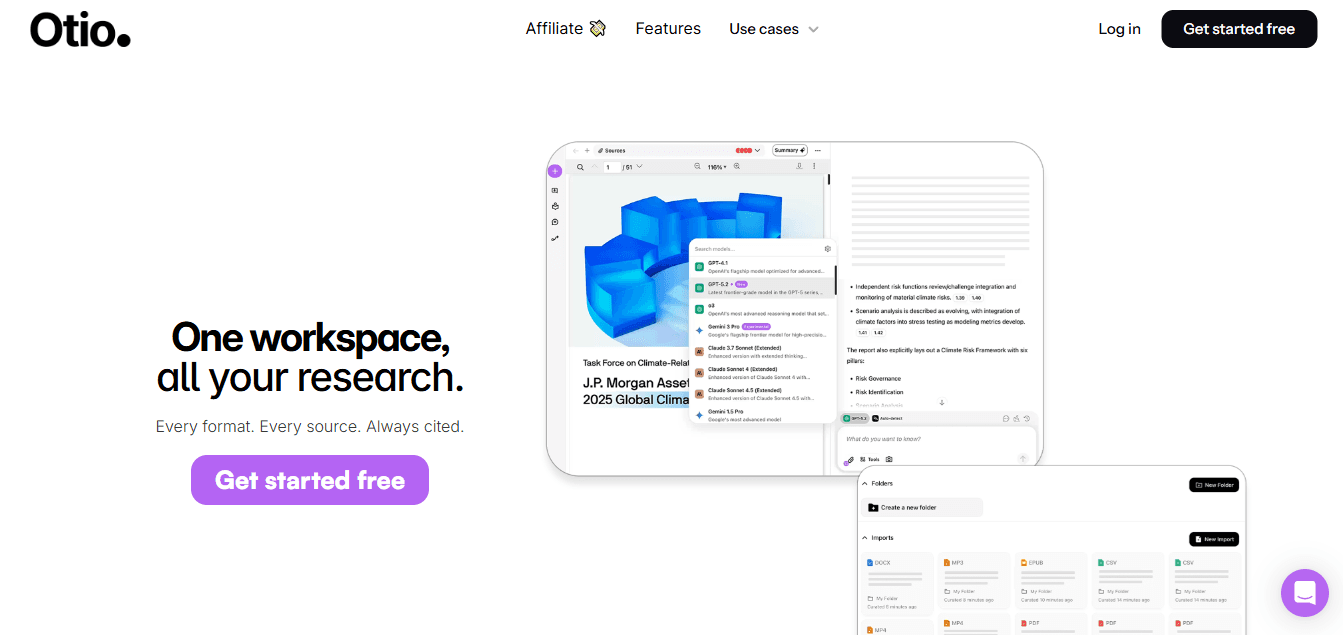
Otio solves the main problems that make literature reviews take months instead of weeks. These problems include scattered sources, hand-taking notes, slow synthesis, and disconnected writing. Otio works as a single workspace where users can gather PDFs, journal articles, books, web pages, and video lectures. Everything is in one spot, so you don’t have to deal with the mess of different folders, browser tabs, and note apps.
The platform automatically creates AI-powered summaries for every source you add. This feature saves hours of manual reading, helping users see which papers require their full attention and which can be quickly reviewed. Users can also discuss individual documents or their entire knowledge collection. This ability speeds up the identification of patterns, contradictions, and gaps across multiple sources, which is important for effective synthesis.
Besides organizing research, Otio offers AI-assisted writing that generates sections directly from the sources you collect. The results are based on actual research rather than general content from a language model's training data. This method helps ensure citations are accurate and reduces the risk of creating text that sounds good but lacks support from sources.
2. Jasper
Jasper is an AI writing assistant that improves the structure and tone of various writing tasks. It can find the main idea in drafts, create outlines, suggest titles, and write introductions or conclusions. Also, it has basic editing features, such as checking grammar, rephrasing, and simplifying complex sentences.
The tone-of-voice feature is especially helpful for writing cover letters to editors or emails that need a more personal touch, rather than strict academic language. Jasper offers about 60 templates for research tasks, including social media promotion, poll creation, and survey question crafting. Although these tools are not the main features of literature reviews, they are helpful for handling additional tasks that can take up valuable time during the publishing process, making Jasper an ideal AI research and writing partner for those looking to streamline their workload.
The learning curve is significant. Jasper requires more help than some other tools, which means users need to stay actively involved in the writing process instead of just getting finished sections automatically. Additionally, any unused credits do not carry over from month to month, creating pressure to use the service regularly even when the workload changes.
3. ProWritingAid
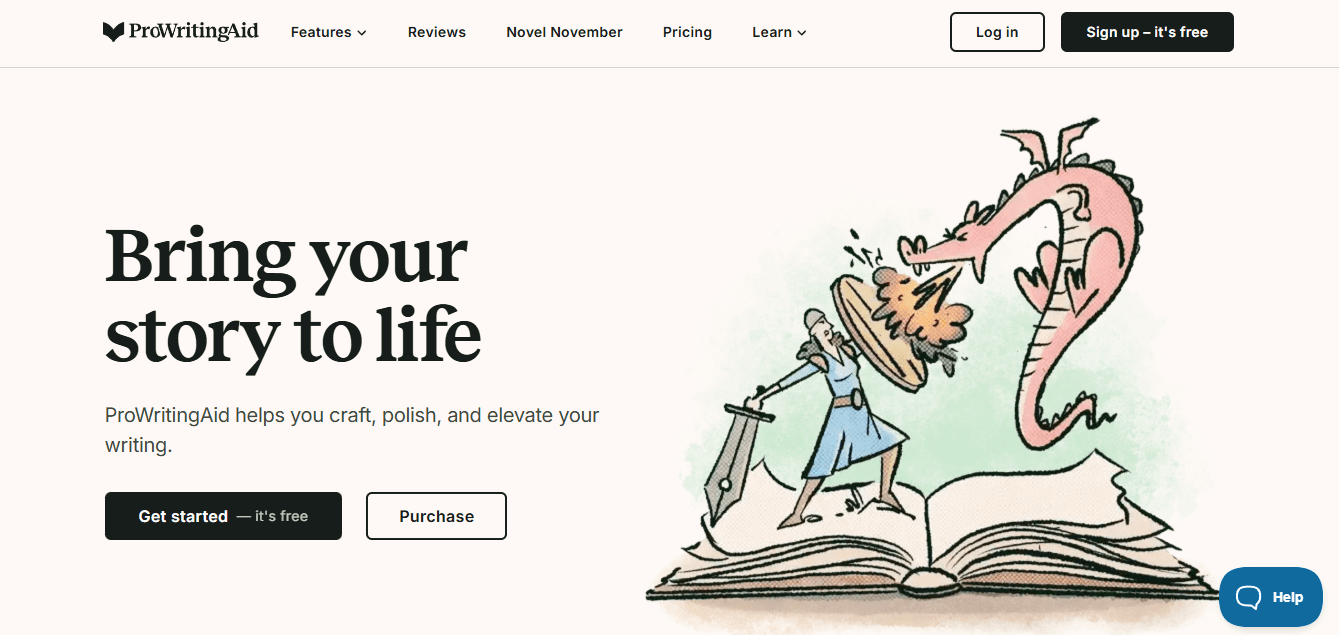
ProWritingAid focuses on improving clarity and finding mistakes that basic grammar checkers often miss. The rephrasing tool lets users improve sentences in just a few clicks. Also, the grammar checker finds contextual errors that simpler tools overlook. This is important for academic writing, as even small mistakes can harm credibility.
The learning tool provides a detailed analysis that helps students and new researchers understand why some sentence structures may weaken their writing. Suggestions for analytical language goals and strong verbs promote clearer, more direct writing without losing precision. Even though the detailed reports can seem overwhelming at first, especially for those used to simpler editing tools, they are very helpful for improvement. The free version has some limits. Users must upgrade to the premium tier to access all features, which adds another subscription cost to their research budget.
4. Quillbot
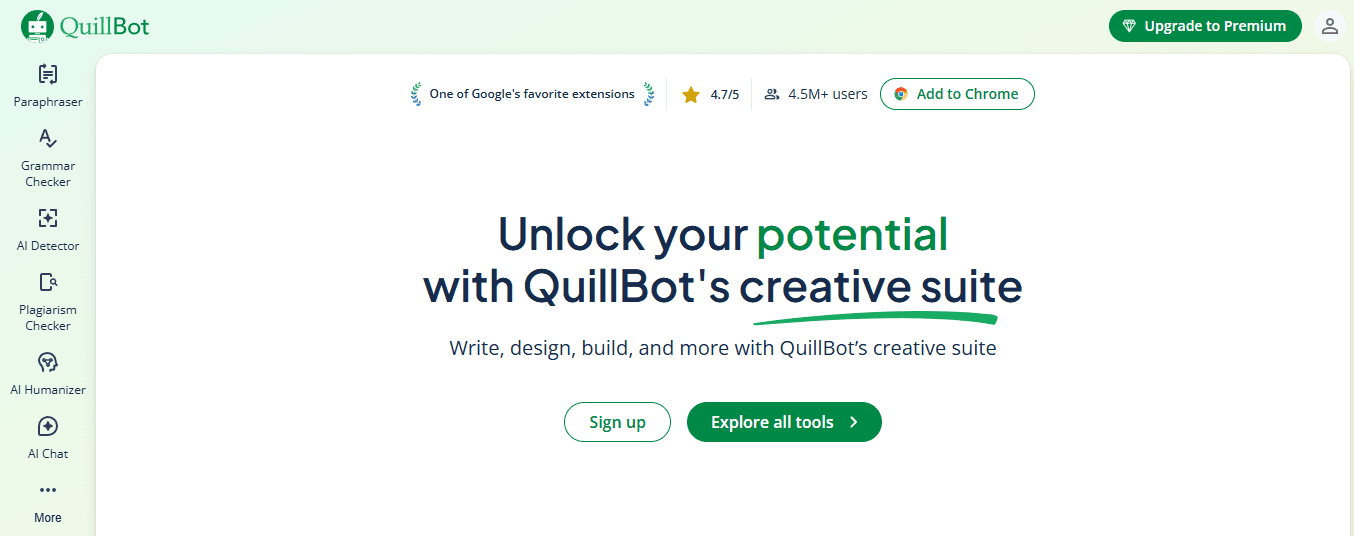
Quillbot focuses on paraphrasing and rewording text while keeping the original meaning. After you enter a sentence or passage, the tool rephrases it using machine learning to understand the context and structure. This feature is helpful when you want to summarize sources and avoid directly copying from the original. The built-in thesaurus helps find the right words. Also, the Word Flipper lets you change particular words without needing to rewrite whole sentences. Different writing modes change clarity, style, and tone.
The free version limits paraphrasing to 700 characters and summarization to 1,200 words. Premium accounts increase the character limit to 10,000, provide more writing modes, and process text faster. The interface clearly shows which words have been changed, not just the final result. This transparency allows users to understand what the tool is doing and decide if the rephrased version is better than the original. Additionally, Quillbot integrates smoothly with Microsoft Office, Google Docs, and Chrome, making it easier to use within those familiar programs.
5. Trinka
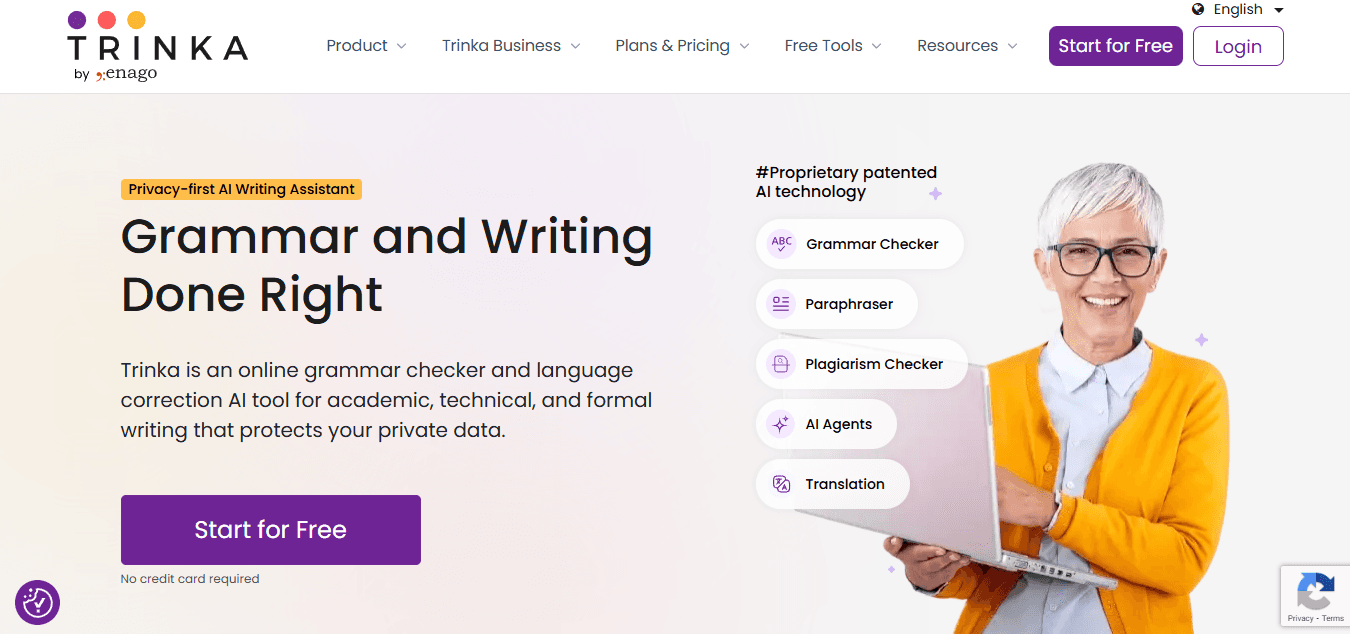
Trinka targets academic and technical writing specifically, allowing it to catch errors and style issues that general grammar checkers miss. It corrects spelling problems in context and complex grammar issues right away. The Consistency Check ensures that terminology and formatting remain consistent throughout long documents, which is particularly important for documents such as manuscripts and dissertations.
The Publication Readiness feature, included with the free plan, identifies issues that could prevent journals or reviewers from accepting the work. If a paper is rejected multiple times, this checker often highlights formatting or style issues that might have been missed. Trinka uses credit-based pricing with free credits available each month, giving users flexibility for their different needs. The free version lets you check up to 10,000 words per month. Right now, there is no desktop or mobile app, so users can only work within a browser.
6. WordTune
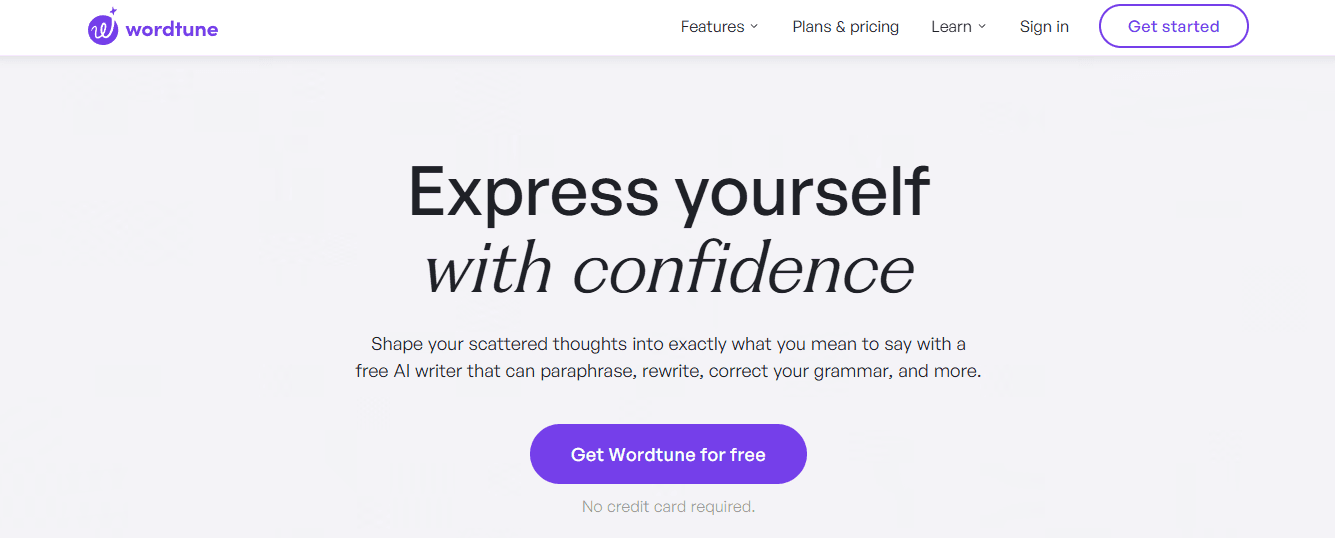
WordTune generates rewrite suggestions by looking at patterns in how people use language. It sometimes changes meanings to present a more common idea or to add information it thinks is understood. While rewriting, the tool tries to keep the original meaning, but it might sometimes suggest things that seem out of context because it has some creative freedom.
The onboarding process is user-friendly. An icon follows the user as they work, making it easy to access suggestions without switching windows. The free version delivers impressive rewording results, with highlighted changes and multiple options, ensuring the revision fits the tone you want. WordTune is a Google Chrome extension that smoothly integrates into your daily workflow and serves as an excellent AI research and writing partner.
7. Scrivener
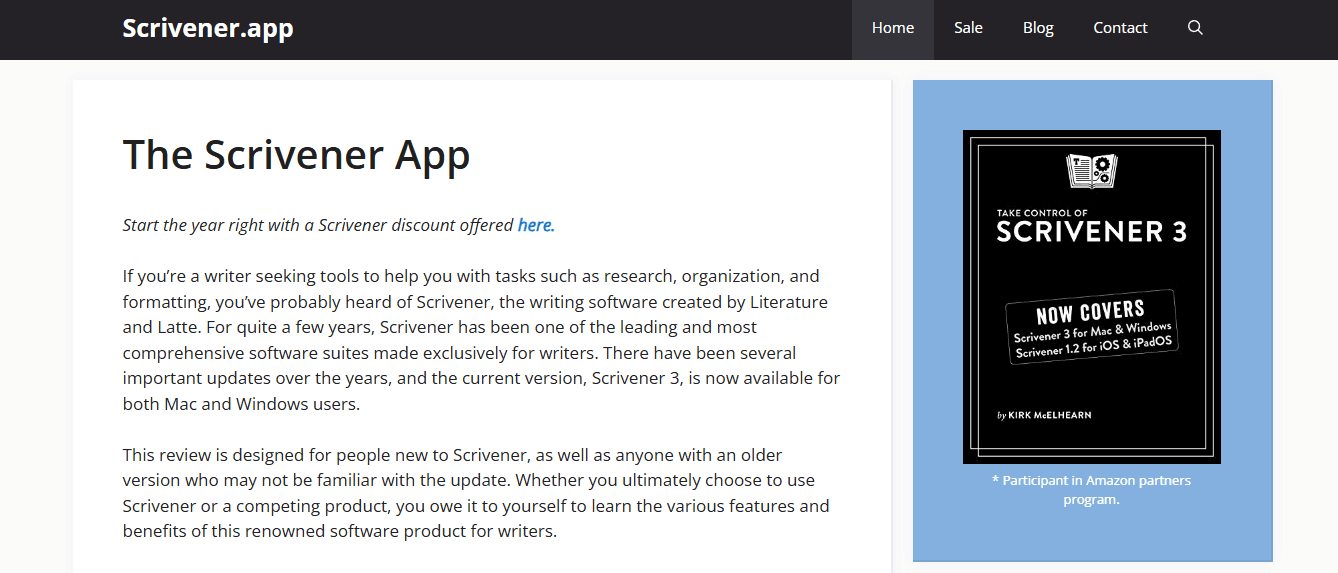
Scrivener efficiently manages large amounts of research by organizing documents, notes, and drafts all in one place. It's designed specifically for long writing projects, such as dissertations or books, where users handle many chapters, hundreds of sources, and thousands of notes. You can create chapters with subpages for related research, add images or text boxes, and rearrange sections without changing your organizational structure.
The mobile app syncs easily with your desktop version, letting you write or review notes on your phone. This flexibility is really helpful when inspiration comes while you're away from your desk. However, Scrivener's interface takes time to learn, especially for those used to simpler word processors. The document view might seem confusing at first. The tool requires an upfront cost, but many researchers think it's worth it because it can grow as your project's complexity increases. There's a free trial available that lets you see if the organizational structure fits your workflow.
8. Reedsy

Reedsy started as a publishing platform that connects authors with editors, designers, and marketers. The Reedsy Book Editor is a digital tool for writing and editing manuscripts, including academic papers and journal articles. It has features such as unlimited revision history with email notifications, automatic backups, dynamic word count, advanced character filtering, and track changes. The editor supports collaboration, allowing multiple users to work on the same manuscript simultaneously. This feature is especially useful when writing papers together or getting feedback from advisors. Users can export their work to .docx or .txt files, making it compatible with other tools.
Reedsy also offers free educational content on writing and research skills, adding value beyond the software alone. However, the platform is somewhat costly compared to other options and is better for researchers who have seen some success or have institutional funding. For students on a tight budget, the cost may not be worth the features.
9. LaTeX
LaTeX is a typesetting system widely used for academic writing, especially in subjects such as math, physics, computer science, and engineering. It can handle complex formatting, equations, and bibliographies with a level of precision that word processors find hard to achieve. You write in plain text using markup commands, and LaTeX changes it into a formatted document. One big advantage is its bibliography management system, which helps save time by automatically creating and updating citations. This feature eliminates the need to manually format references and maintains consistency throughout the document. Plus, LaTeX is free, which is great for students and researchers who might not have much money.
However, learning LaTeX can be challenging. If you are new to it, you should be ready to spend hours, or even months, learning to use it well. Some basic programming knowledge is helpful; luckily, tutorials and templates can make this learning process easier. Also, some word processing programs, like Microsoft Word, can't open LaTeX files directly, which can cause problems when working with people who don’t use LaTeX. Having a reliable AI research and writing partner can streamline the writing process and enhance your LaTeX experience.
How does Otio enhance research workflows?
Most researchers juggle tools across separate tabs and apps, switching between citation managers, note-taking software, and AI assistants. Platforms like Otio streamline this workflow by bringing together source collection, AI-powered summarization, document chat, and writing assistance into a single workspace. Instead of searching through notes to find which paper made a specific argument, users can just ask their workspace and get the answer along with the citation. This method doesn't replace critical thinking or deep reading; it makes the repetitive work of retrieval easier, which can slow down synthesis and drafting.
What should researchers consider about tool usage?
Understanding which tools are available is only the first step. Knowing how to use them effectively is crucial for maintaining quality. Leveraging an AI research and writing partner can greatly enhance your research process.
Cut Literature Review Time in Half, Without Cutting Corners
If your literature review is taking weeks longer than planned, the issue isn't your writing skills. It's the time wasted looking for sources you've already read, the stress of remembering which author said what, and the effort of connecting ideas across 60 scattered PDFs. You can speed things up by eliminating these challenges, not by reading faster or by reducing the depth of your work. Otio fixes this by consolidating your entire research process into one workspace. You can gather papers, videos, web pages, and books all in one place. AI-generated summaries help you figure out which sources need closer reading, saving you the time of going over each paper in detail.
When you want to find a specific argument or method, you can ask your workspace instead of rereading documents. The answer comes with a citation, based on your actual sources rather than random AI guesses. This method doesn't undermine critical thinking; it just eliminates repetitive work that extends a three-month timeline to six months. Let Otio be your AI research and writing partner. Try Otio for free today and reduce the time needed to write your literature review without losing depth or quality.
Related Reading
Document Generation Tools
How To Use Ai For Literature Review
How To Write A Research Summary
How To Write A White Paper
Best Ai For Literature Review
Best Report Writing Software