
Report Writing
What Is A Systematic Literature Review + How to Format it?
What Is A Systematic Literature Review? offers clear steps for planning, structuring, and conducting robust reviews. Learn how Otio streamlines your research process today!
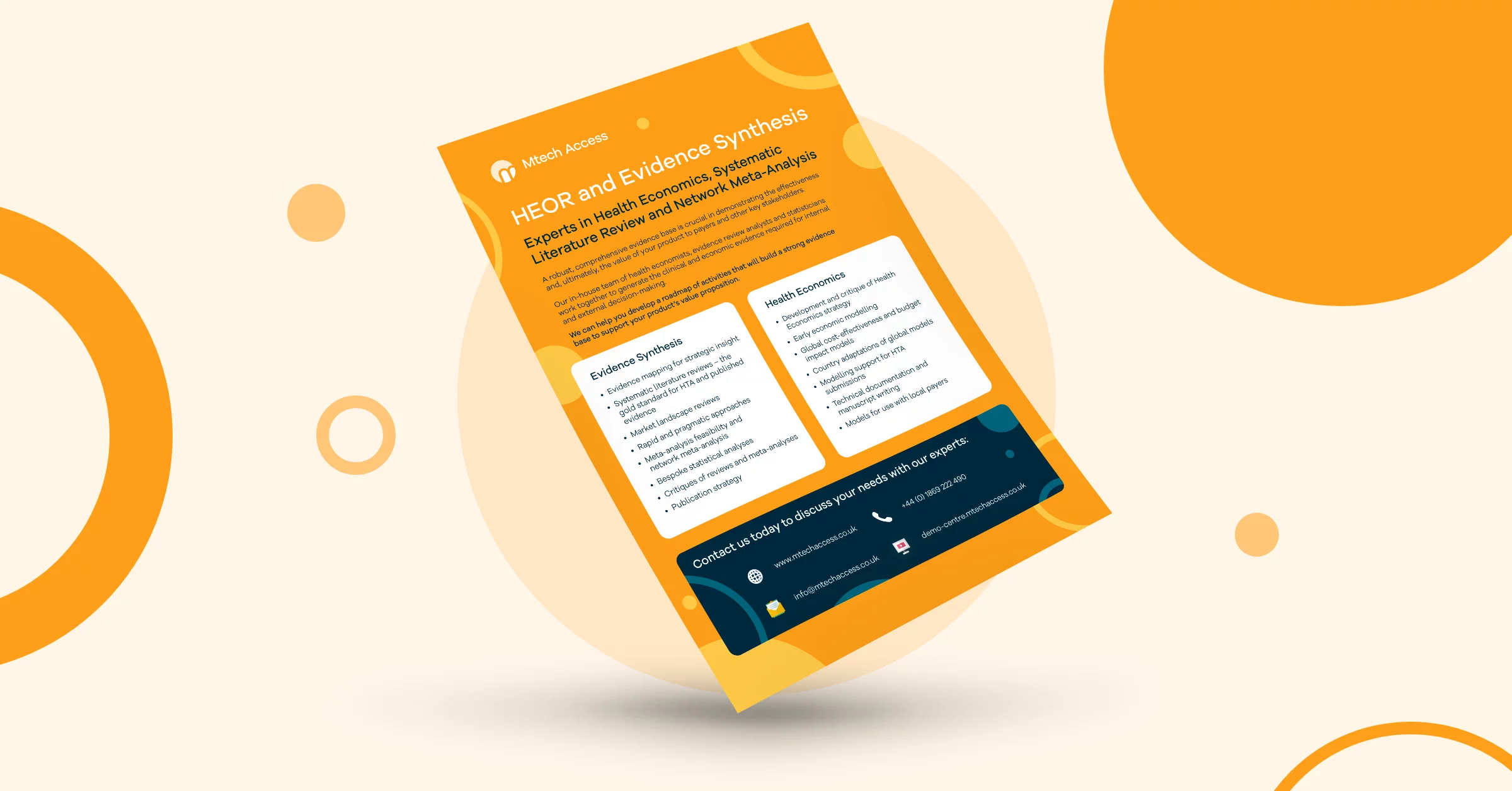
Synthesizing extensive research can be challenging, and systematic literature reviews provide a structured approach to address this. Experts use rigorous criteria to identify, evaluate, and merge relevant studies, reducing bias and highlighting key insights. Researchers often ask, "What is a systematic literature review?" as they work to uncover patterns in complex data.
Manual sorting through extensive databases is both time-consuming and error-prone. Streamlined analysis supported by advanced tools not only saves valuable time but also enhances the consistency of findings. Otio transforms source management and report drafting, serving as an AI research and writing partner that simplifies the creation of comprehensive reviews.
Summary
Systematic literature reviews typically take 67 to 100 weeks to complete, according to BMC Medical Research Methodology (2019). Researchers often screen 1,000 to 5,000 initial search results before selecting 20 to 100 studies that meet inclusion criteria. This timeline reflects the methodical screening, quality assessment, and documentation requirements that separate systematic reviews from traditional literature summaries.
Most systematic review projects fail not from lack of rigor but from administrative overhead when managing thousands of screening decisions across fragmented tools. Teams typically split sources across separate folders, spreadsheets, and reference managers, creating version-control issues and inconsistent screening decisions as the source count climbs past 100 studies. Coordination burden is the primary obstacle to completion.
AI-assisted screening saves teams an average of 96 hours per literature review, according to Research Rabbit's 2025 analysis. Machine learning systems that predict study relevance after reviewing several hundred manual screening decisions let researchers focus their time on borderline cases rather than obviously irrelevant abstracts, though the automation requires substantial training data before predictions are reliable enough to trust.
PRISMA's 27-item checklist and flow diagram transformed systematic review standards by enforcing transparency in how studies get identified, screened, and excluded at each stage. The framework prevents outcome reporting bias by locking methodology decisions into a registered protocol before screening begins, making it impossible to quietly adjust inclusion criteria after seeing initial search results.
Selection bias arises when inclusion criteria are interpreted inconsistently across reviewers or subtly shift as teams learn more about their topic. Dual independent screening is designed to catch this problem, but only works when criteria are operationalized clearly enough that two people applying them separately reach the same conclusion most of the time, which breaks down with vague definitions such as "high-quality studies" or "relevant populations."
Publication bias systematically excludes negative results and grey literature that never reach peer-reviewed journals, creating incomplete evidence bases. Researchers from developing countries face particular barriers accessing full-text articles behind paywalls, according to BERA research from 2019, introducing geographic gaps in who can conduct truly comprehensive reviews that include conference proceedings, dissertations, and unpublished trials.
AI research and writing partner addresses this by consolidating scattered sources, screening notes, and synthesis work into a single workspace, where teams can query entire collections while maintaining automatic citation links back to the original documents.
Table of Contents
What Is A Systematic Literature Review
A systematic literature review is a structured, protocol-driven research process that identifies, evaluates, and synthesizes all relevant studies on a specific question using predefined criteria and transparent methods. Unlike a traditional literature review that might pick convenient sources, this approach follows strict rules for including and excluding studies. It often screens thousands of studies to find a final set that meets high-quality standards. The process is designed to be repeatable, meaning another researcher using the same protocol should reach similar conclusions.
Our AI research and writing partner helps streamline this rigorous process by providing tools that enhance the quality and efficiency of your literature review. This isn't just about reading more papers. The systematic approach changes how you handle evidence. You start with a research question, create a search strategy across multiple databases, keep a record of every choice about which studies to include or leave out, evaluate the quality of each selected study, and combine findings in a way that shows patterns across the whole body of evidence. The result is a complete answer to your research process question that considers the full range of existing knowledge, not just the studies that happened to come your way.
How do you narrow down initial search results?
When starting a systematic literature review, researchers often see 1,000 to 5,000 initial search results. This large number is reduced through several screening stages. First, results are filtered by title and abstract. Then, a full-text review is done. Ultimately, researchers identify 20 to 100 studies that meet their criteria. Each exclusion must be documented, and each inclusion requires justification. According to research published in BMC Medical Research Methodology (2019), the median time to complete a systematic review ranges from 67 weeks for reviews with fewer than 10 included studies to over 100 weeks for larger reviews. This timeline shows the careful nature of the work, where thoroughness is more important than speed.
The frameworks that guide this process are not just suggestions. The PRISMA (Preferred Reporting Items for Systematic Reviews and Meta-Analyses) gives a 27-item checklist and flow diagram. This framework helps make sure that reviews meet international standards for transparency and completeness.
What are the benefits of systematic reviews?
Systematic reviews play an important role in evidence-based practice. When a healthcare administrator needs to decide whether a new intervention should be used across 50 facilities, they can't rely on a few promising studies. They need to understand what all the evidence shows, including negative results and studies that found no effect. Likewise, when a policymaker reviews new environmental rules, they need a summary that accounts for diverse findings and study contexts. The systematic review provides that comprehensive view.
This method is especially useful for finding research gaps. By checking all existing studies against specific inclusion criteria, one can clearly see where evidence is lacking or missing. Grant applications become much stronger when they reference a systematic review showing that, despite 40 studies on the topic, none examined a specific population or used a specific method.
How does a narrative literature review differ?
A narrative literature review allows the author to select which studies to discuss and assess their importance. While this flexibility can be useful for specific purposes, it can also lead to bias. The author may unintentionally favor studies that support their position, ignore opposing evidence from less prominent journals, or overlook entire areas of research due to differing terminology. On the other hand, a systematic approach takes away this choice. The protocol defines the search terms, databases, date ranges, and quality standards before reviewing any results.
What challenges arise in the literature review process?
Most teams handle literature reviews by splitting searches across researchers, saving PDFs to shared folders, and compiling notes in separate documents. As the source count climbs past 100, this scattered workflow creates big problems. Important studies can be overlooked, hidden in someone else's folder. Screening decisions become inconsistent because there is no central system that tracks who reviewed what and the reasons for exclusions. As a result, citation management becomes a nightmare of duplicate entries and missing metadata. For a more structured approach, consider Otio as your AI research and writing partner.
How can platforms help streamline the review process?
Platforms like Otio bring together a scattered review process into a single workspace. Users can import sources in many formats, like PDFs, web links, and videos. With AI-powered summaries, key findings are highlighted while keeping source citations. Screening decisions are centralized in one place rather than spread across multiple tools. The AI chat feature lets users ask questions about their whole source collection, showing relevant passages and automatically linking back to the original documents. This feature is important for checking claims or pulling exact quotes for a summary.
What elements are included in a systematic review protocol?
The systematic review protocol serves as the blueprint guiding all subsequent decisions. It outlines the research question using frameworks like PICO (Population, Intervention, Comparison, Outcome). The protocol also defines the search strategy, including specific Boolean operators and selected databases. It also sets the inclusion and exclusion criteria that reviewers can use consistently. Furthermore, it describes a quality assessment approach. This protocol is registered before screening starts, creating a public record of the planned methods, and having an AI research and writing partner can streamline this entire process.
Why is transparency important in the review process?
Transparency is important because it stops outcome reporting bias. You cannot quietly adjust criteria after seeing which studies were found during the initial search. Also, decisions made during the review, such as determining that certain quality issues are not important, can lead to the exclusion of studies. This might leave too few results for a solid conclusion. A clearly defined protocol locks in your methodology, and any changes to this plan need clear documentation and justification in the final report. Although this might seem limiting, it actually makes your conclusions more trustworthy. In this context, having an effective AI research and writing partner can enhance the transparency and reliability of your processes.
How do you assess the quality of studies?
Not all published studies deserve equal weight in your synthesis. Quality assessment tools, such as the Cochrane Risk of Bias instrument or the Newcastle-Ottawa Scale, help evaluate each study you include against key criteria, including selection bias, measurement validity, and the completeness of outcome data. A study may meet your inclusion criteria, but a low quality score can significantly reduce confidence in its findings during synthesis.
What limitations might your evidence base reveal?
This evaluation phase often reveals uncomfortable truths about your evidence base. You might discover that many studies on your topic used small sample sizes, lacked control groups, or measured outcomes inconsistently. These limitations don’t disqualify the review, but they shape your conclusions and recommendations for future research. The systematic approach makes these patterns clear in a way that selective reading never could.
What is the biggest challenge in executing systematic reviews?
Understanding the structure of systematic reviews is one thing; executing them successfully without becoming overwhelmed by administrative overhead is another challenge altogether.
Related Reading
How to Format a Systematic Literature Review

A systematic literature review typically comprises six parts that align with the research process: abstract, introduction, methods, results, discussion, and conclusion. Each part plays a specific role in documenting your plan, presenting your findings, and explaining your conclusions. This structure is important because it provides a clear record that helps readers understand your methodology, replicate your search, and assess whether your conclusions are supported by the evidence you gathered. To facilitate this process, consider partnering with an AI research and writing partner to enhance your literature review. This structure turns a large research project into a readable story. It does more than just list studies; it shows readers how you searched, what you found, and why those findings matter for practice and future research.
1. Abstract: The Complete Overview in Miniature
Your abstract should condense the entire review into 250 to 300 words. It clearly states your research question, summarizes your search plan and inclusion criteria, reports the number of studies included, highlights important findings, and shows your main conclusions. Someone reading just your abstract should understand what you asked, how you looked for answers, what you found, and what it means. Write this section last, even though it appears first. You can't summarize findings you haven't put together yet. The abstract serves as a standalone document that researchers use to determine whether your full review is relevant to their work. According to a 2021 study in Systematic Reviews, abstracts that clearly state the number of included studies and main outcomes get 40% more citations than those that are unclear about their scope and findings. You can find more detailed insights on this in the writing center guidelines here.
2. Introduction: Framing the Question and Its Importance
The introduction establishes why your review matters. It presents the research question using a PICO framework (Population, Intervention, Comparison, Outcome). It provides background on the problem or intervention being examined. It also explains why it's important to combine existing evidence right now. This is not just a general overview of literature; it is a focused argument for why this specific question needs careful investigation.
Strong introductions connect the research question to real decisions. For example, if you are reviewing methods for helping teens deal with anxiety, you should point out that doctors have 15 different suggested approaches with mixed evidence about how effective they are. Or, when preparing studies on how remote work affects productivity, highlight that companies are making long-term policy decisions based on incomplete evidence. The introduction demonstrates that your review addresses a significant knowledge gap and goes beyond an academic task.
3. Methods: Documenting Every Decision
The methods section is where systematic reviews gain their credibility. It is important to describe your search strategy, including the databases you searched (e.g., PubMed, Web of Science, and the Cochrane Library). Be sure to include the date ranges you covered and the exact search strings you used, especially with Boolean operators. Specify your inclusion and exclusion criteria in sufficient detail that another researcher could apply them consistently. Additionally, explain how many reviewers checked the studies, how you resolved any disagreements, and which quality assessment tools you used.
This section also documents your data extraction process. Clarify what information you took from each study, who was responsible for the extraction, and how you handled missing data or unclear reporting. Include the PRISMA flow diagram here, showing the number of records you identified, screened, and ultimately included, along with the reasons for exclusion at each stage. A methods section should be clear enough that skeptical readers can see exactly where different choices might have been made.
Most researchers gather methods documentation using spreadsheets, reference managers, and word processors, which can create version-control issues when multiple people are screening simultaneously. When tracking screening decisions for 2,000 abstracts, maintaining consistency among reviewers is critical. Platforms like Otio centralize this workflow by letting you bring all candidate studies into one workspace. You can use AI-powered summaries to quickly check relevance against your inclusion criteria and keep a searchable record of screening decisions with linked source documents. The AI chat feature helps you verify whether specific studies meet nuanced criteria by querying your entire collection, surfacing relevant methodology details while keeping citations linked to the original papers.
4. Results: Presenting What You Found
The results section shares findings without interpretation. It describes the characteristics of the included studies, like publication years, geographic locations, sample sizes, and study designs. Quality assessment scores are shown, and outcome data are put together. If a meta-analysis was done, pooled effect sizes with confidence intervals and heterogeneity statistics should be reported. For narrative synthesis, findings can be organized by outcome, intervention type, or population.
Tables and figures convey much of the communication in this section. A characteristics table gives a quick overview of the key features of each included study. Forest plots show effect sizes and confidence intervals for meta-analyses. Summary of findings tables present quality-of-evidence ratings for each outcome. These visual elements are not just for decoration; they help readers quickly assess the evidence base that supports your conclusions. It's also beneficial to consider an AI research and writing partner to streamline your workflow and enhance your analysis.
5. Discussion: Interpreting the Evidence
The discussion section presents the interpretation. Here, the main findings are summarized and compared to existing reviews or guidelines. It's important to acknowledge limitations in both the included studies and the review process. Also, the implications of the results for practice and policy are explained. This section should address the so what question. Strong discussions do not overstate conclusions. If the included studies were mostly small, short-term trials with a high risk of bias, this should be stated clearly.
When findings are inconsistent across populations or settings, it is essential to explore possible explanations instead of forcing a unified conclusion. According to guidance from the Cochrane Collaboration, the discussion should help readers understand not just what was found, but also how confident they should be in those findings, given the available evidence. Research gaps should also be identified in this section. For example, there may be a lack of studies examining the intervention in children, or all included studies might have measured outcomes only at six months, leaving long-term effects unknown. These gaps lay the groundwork for recommendations for future research.
6. Conclusion: Translating Evidence into Action
The conclusion summarizes the findings and provides clear recommendations for practice, policy, and research. These are not vague suggestions; they are specific statements about what the evidence supports, what it does not, and what still needs investigation. If the evidence strongly supports an intervention, state it clearly. When the findings are unclear, it is important to explain what additional research could help resolve the uncertainty.
Conclusions also clearly acknowledge uncertainty. Phrases such as "based on moderate-quality evidence" or "findings from three small trials suggest" indicate the strength of the evidence. This openness builds trust with readers, who need to know whether strong findings come from 50 well-designed trials or just tentative patterns from a few early studies. Following this structure exactly does not guarantee that the review will be completed on time or that the results will be the same across all team reviewers.
Challenges of Writing Systematic Literature Reviews
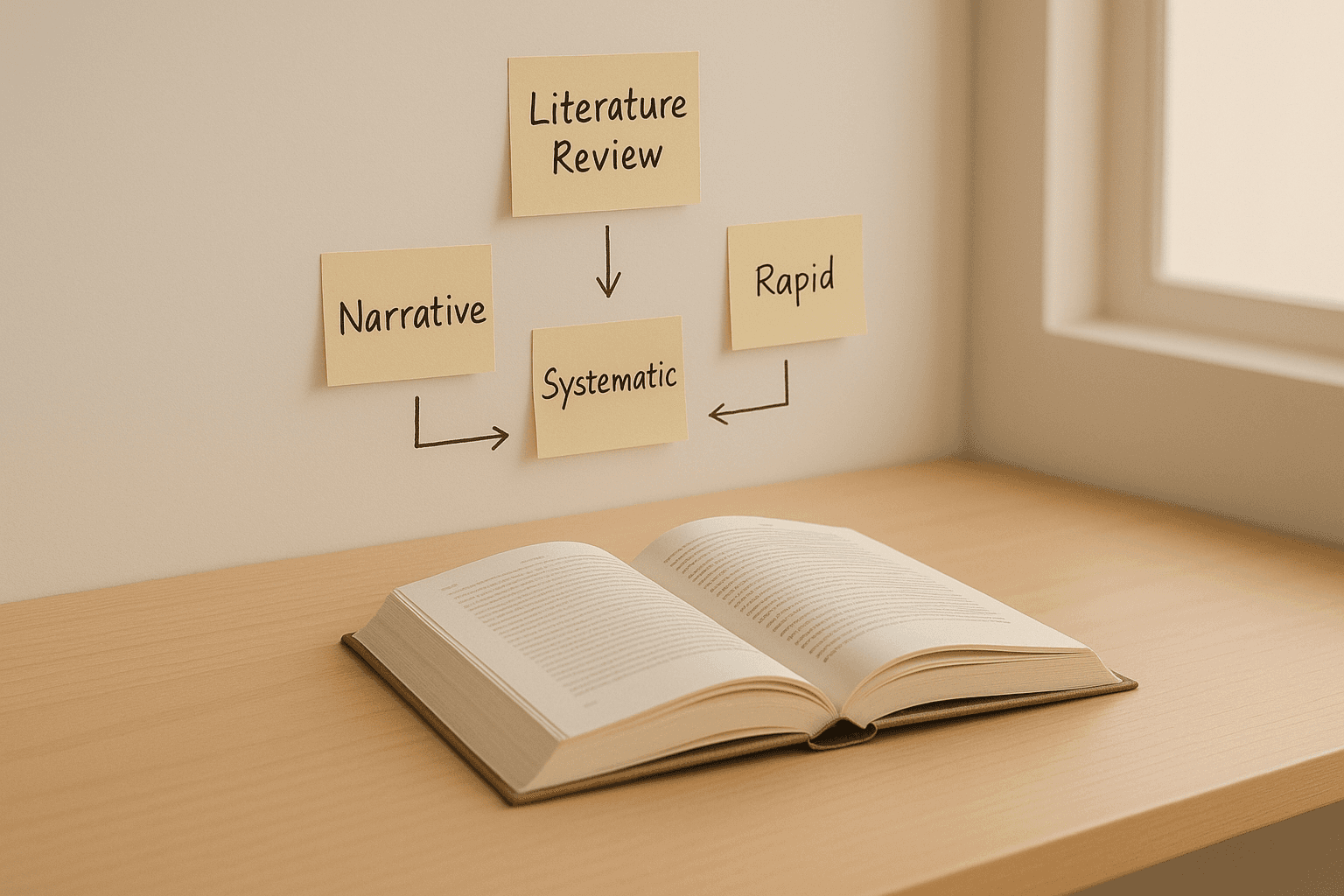
Systematic literature reviews often face challenges not because researchers lack rigor, but because the workflow involves managing thousands of decisions across multiple tools while maintaining consistent standards. Researchers must screen approximately 3,000 abstracts, extract data from approximately 80 full-text articles, track quality assessments, document reasons for exclusions, and compile their findings. All this must be done while making sure that two independent reviewers reach the same conclusions. This added workload becomes part of the project.
1. Identifying Relevant Studies Across Scattered Sources
The search process must identify all relevant studies without overwhelming researchers with irrelevant results. Finding a balance between sensitivity and specificity is vital; it decides if one spends six weeks screening 8,000 irrelevant papers or misses three key studies that could change their conclusions. Researchers do not limit their searches to PubMed; they also consult Web of Science, Scopus, CINAHL, PsycINFO, and other specialized databases, each with its own search rules and indexing methods. However, incorporating an AI research and writing partner can streamline the process, making it easier to analyze the data effectively.
Grey literature adds another layer. Conference proceedings, dissertations, government reports, and unpublished trials often contain findings that never appear in peer-reviewed journals. According to research published by BERA in 2019, researchers from developing countries face particular barriers accessing full-text articles behind paywalls. This creates systematic gaps in who can conduct comprehensive reviews. Missing these sources doesn't just create incomplete evidence, it introduces publication bias because negative results rarely get published in traditional journals.
The terminology issue exacerbates many challenges. Different fields use different words for the same idea. For example, medical researchers might look for 'myocardial infarction', while public health studies use the term 'heart attack.' Your search needs synonym mapping, truncation, and Boolean operators that are complex enough to capture variations without returning 15,000 irrelevant results. If you miss just one synonym, you could overlook important studies.
2. Managing Data Across Disconnected Systems
Most teams start with good intentions about being organized. One person makes a shared spreadsheet for screening decisions, another keeps a reference manager library, and a third takes notes in a document. But within two weeks, duplicate entries, conflicting screening decisions, and no clear record of who reviewed what show up, making coordination harder. The volume of work exacerbates these problems. When tracking screening decisions for 2,500 abstracts, it becomes crucial to maintain version control among three reviewers. Did reviewer two see the updated inclusion criteria? Which version of the data extraction form is current? Where did that study go that the reviewer one pointed out for discussion?
Many professionals experience physical stress from gathering extensive research across multiple databases within short timeframes, especially as the need for verification and cross-referencing grows with the evidence base. Having an AI research and writing partner can streamline this process, helping teams manage their data efficiently. Teams often address fragmentation by organizing sources into separate folders. Each person keeps their own notes and screening logs. As things get more complicated and the number of sources exceeds several hundred, this method can create gaps. Important studies might be missed because they are saved in another team member's system. Screening can become inconsistent without central tracking of decisions.
Platforms like Otio solve this problem by bringing together sources, screening notes, and AI-powered summaries into one workspace. Multiple reviewers can search the entire collection while retaining automatic citation links to the original documents. This solution reduces the need to switch between reference managers, note apps, and separate chat tools.
3. Building Search Strategies That Actually Work
A search that's too sensitive returns 12,000 results, 95% of which are irrelevant. You'll spend months going through abstracts that were never going to meet your criteria. A search that's too specific misses important studies because you didn't expect how other researchers described the concept. Finding that middle ground requires iterative testing, pilot searches, and assistance from librarians who understand the specific search rules of databases.
Your search string isn't fixed; it changes through pilot searches. After looking at the first 100 results, you find studies you want to include and others that you want to ignore. This helps you improve your Boolean logic. You might discover that adding truncation helps to include plural forms. Also, a term you thought was specific might mean different things in different situations. Each time you revise it, your sensitivity-specificity balance changes. The challenge becomes more difficult when a topic spans multiple fields. For example, educational actions focused on changing health behaviors require you to search both education and medical databases, which have different controlled vocabularies.
Your MEDLINE search uses MeSH terms, while your ERIC search needs education-specific descriptors. Successfully translating your search plan across different databases without sacrificing accuracy requires skills most research teams lack, and having the right AI research and writing partner can make a significant difference.
4. Preventing Selection Bias Through Consistent Criteria
Selection bias occurs when reviewers interpret inclusion criteria differently, or when the criteria change slightly as more is learned about the topic. At first, one might believe that "interventions delivered in primary care" is a clear standard. However, studies in urgent care clinics, community health centers, and retail clinics could also be included. Do those count as fitting the criteria? If decisions are made one by one without explaining the reasons, bias is introduced. For a reliable approach to understanding these nuances, consider an AI research and writing partner.
Dual independent screening is used to identify inconsistencies. Two reviewers independently assess the criteria and then compare their decisions. If they disagree, a third reviewer or a discussion can help resolve the issue. This process works only if the criteria are clear enough for both reviewers to use them independently and reach the same conclusion most of the time. If the criteria are vague, like "high-quality studies" or "relevant populations", it will lead to inconsistency.
The pressure to find enough studies can significantly impact the selection criteria. When the initial screening results in only eight included studies, the temptation to slightly relax the criteria becomes clear. Researchers may think about expanding the date range, broadening the population definition, or deciding that a methodological limitation is not a deal-breaker. Each adjustment requires clear documentation and justification, rather than silent changes to the protocol.
5. Synthesizing Studies That Don't Measure the Same Things
After screening 4,000 abstracts and extracting data from 60 studies, the next step is to synthesize the findings. Half of the studies measured outcomes at three months, and the other half at six months. Some studies used validated instruments, while others created their own measures. Sample sizes varied a lot, ranging from 30 to 3,000 participants. Study designs included randomized trials, cohort studies, and cross-sectional surveys. How can someone synthesize this diverse information into meaningful conclusions, especially with the help of an AI research and writing partner?
Statistical meta-analysis is appropriate only when studies are sufficiently similar to combine. When heterogeneity is high due to differences across groups, treatments, or outcomes, you cannot simply average effect sizes and assume that is sufficient. Subgroup analyses are important to see if effects differ by population or setting. It might also help to conduct sensitivity analyses by excluding lower-quality studies to assess whether the conclusions change. Sometimes, the best approach may be a narrative synthesis, which explains patterns across studies without relying on statistical pooling.
Methodological quality variation matters more than many people think. Including poorly designed studies doesn't just create noise; it can also change conclusions if those studies show different effects than well-designed ones. Your quality assessment is critical to determining whether studies are excluded, included but given less weight in meta-analysis, or included with warnings in discussions of trust in the findings.
6. Keeping Reviews Current as New Evidence Emerges
After spending 18 months doing a systematic review and submitting it for publication, you may find that three new relevant studies come out just six months later. This scenario is not just a guess. In rapidly evolving areas, such as technology interventions or emerging diseases, evidence can change faster than the review process can keep up. This can render conclusions outdated before publication. Living systematic reviews address this by building in regular update cycles. Instead of treating the review as a one-time project, teams commit to re-running searches quarterly or annually, screening new studies, and updating the synthesis.
This approach requires infrastructure that most teams lack. Key questions arise: Who is responsible for maintaining the search alerts? Who screens new studies as they emerge? How does one manage version control for a review that is continuously evolving? The alternative is accepting that systematic reviews have a shelf life. It is important to clearly document the date of your search and to note that studies published after that date are excluded.
Recommend update intervals based on the rate of change in the field. Readers need to understand whether they are seeing a comprehensive synthesis of all evidence up to December 2023, or a snapshot that may omit new developments. Identifying these challenges is important, but it does not show which tools can help manage them. It is crucial to identify resources that make the process easier rather than complicate an already tough situation.
Related Reading
7 Best Tools for Systematic Literature Reviews
Seven specialized platforms support various aspects of the systematic review process, from initial screening to final synthesis. Each tool is designed to address specific issues that arise when managing thousands of sources, working with many reviewers, and maintaining documentation standards that meet journal requirements. Choosing the right platform depends on whether the main issue is screening efficiency, data extraction consistency, or synthesis across heterogeneous studies.
1. Otio
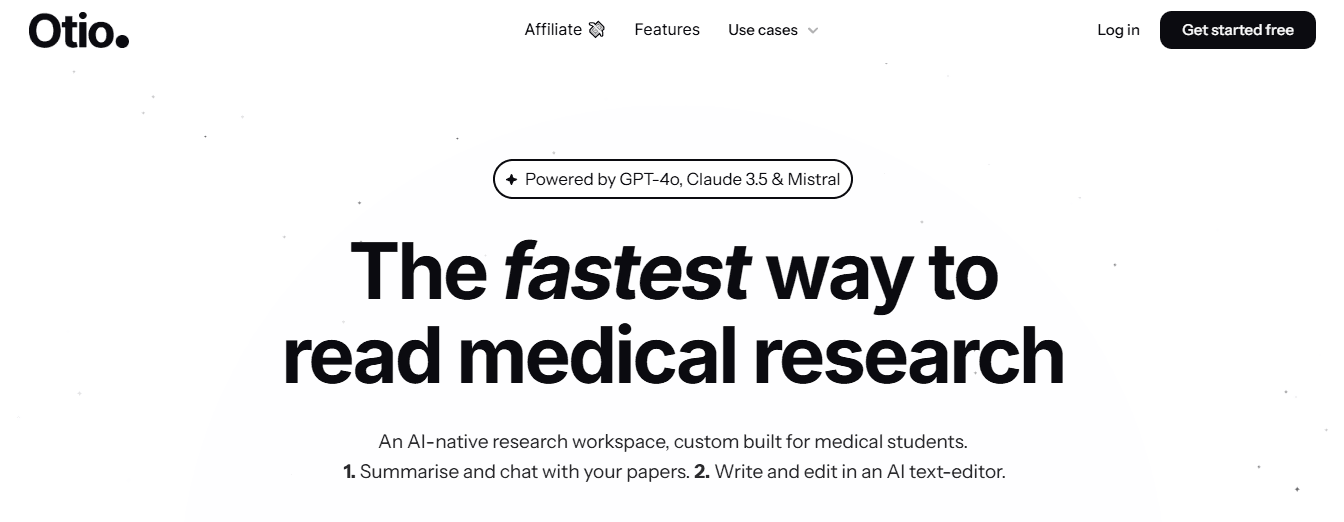
Otio consolidates all scattered research into a single AI-powered workspace. Users can bring in sources in various formats, such as PDFs, web links, videos, and books. The platform lets users create AI-generated notes that keep the sources they came from. They can also ask questions about their entire collection via a chat interface that highlights key sections and links back to the original documents. This combined approach helps address the challenges posed by multiple reference managers, note apps, and standalone AI tools, which often complicate systematic review workflows.
What makes it effective: The AI chat feature lets users check inclusion criteria across hundreds of abstracts without having to read each one again. When users need to confirm whether studies examined outcomes at specific times or used specific methods, they can ask the collection and receive answers with automatic citations. This feature is critical during screening, especially when handling 2,000 abstracts and maintaining consistency without reading every full text.
The trade-off: Teams used to separate tools for each step of the workflow may find it takes some time to adapt to this all-in-one environment. Additionally, the subscription model requires budget planning, which can be challenging for some academic teams.
2. EPPI-Reviewer 4
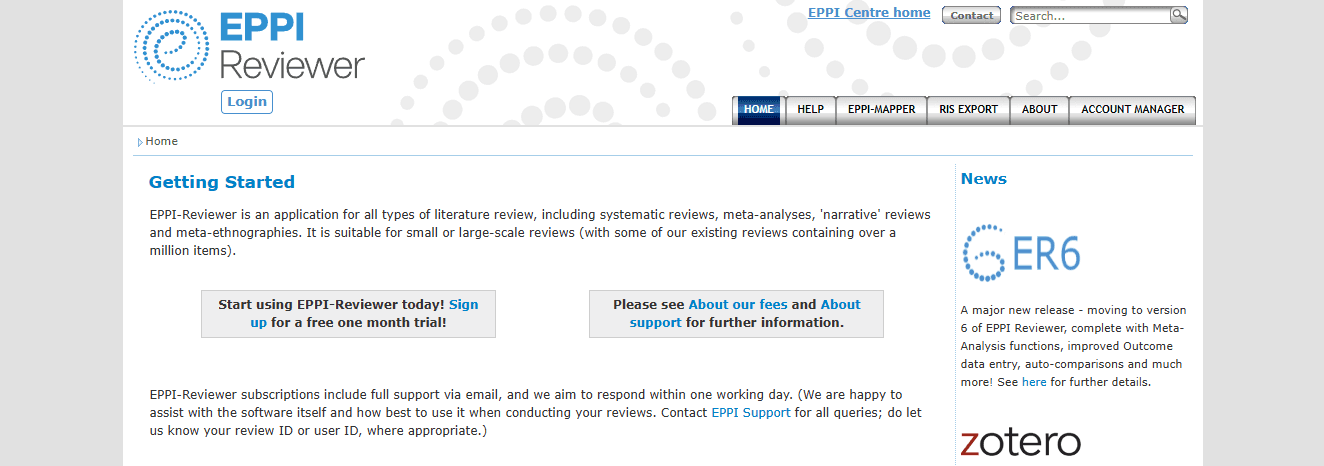
This web-based platform specializes in coding and qualitative synthesis. Users can create custom coding frameworks, assign codes to text segments across studies, and track inter-rater reliability as multiple reviewers use the same codes. The system supports both quantitative meta-analysis and narrative synthesis in a single platform.
What makes it effective: Coding flexibility supports complex systematic reviews that involve multiple data types. For example, when reviewing educational interventions, users can code for factors such as pedagogy type, student population, outcome measures, and implementation barriers simultaneously. EPPI-Reviewer manages this complexity without forcing everything into strict templates.
The tradeoff: The interface's complexity means new users often spend weeks learning the system before they can be productive. Also, paid subscriptions create access barriers for projects that lack funding.
3. Covidence
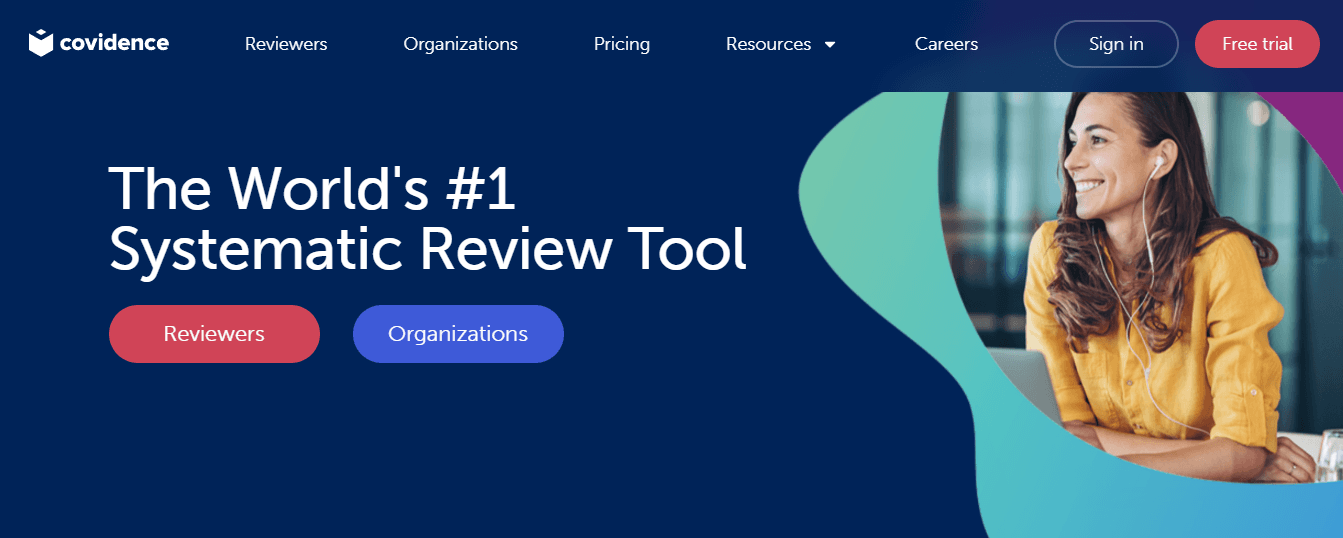
Covidence streamlines screening and data extraction with a fast, intuitive interface. Studies undergo title and abstract screening, full-text review, and data extraction in a clear process, with built-in conflict resolution when reviewers have differing opinions. The platform automatically creates PRISMA flow diagrams as users work.
What makes it effective: Collaboration features let teams work together simultaneously without coordination overhead. For instance, when three reviewers are processing 1,500 abstracts, Covidence stops duplicate screening and tracks who reviewed each item, eliminating the need for manual spreadsheet management.
The tradeoff: The platform has limited customization compared to EPPI-Reviewer. Teams with complex coding needs or non-standard workflows may find the structured approach to be too limiting. Also, switching to paid subscriptions takes away the free access that made it popular among graduate students.
4. DistillerSR
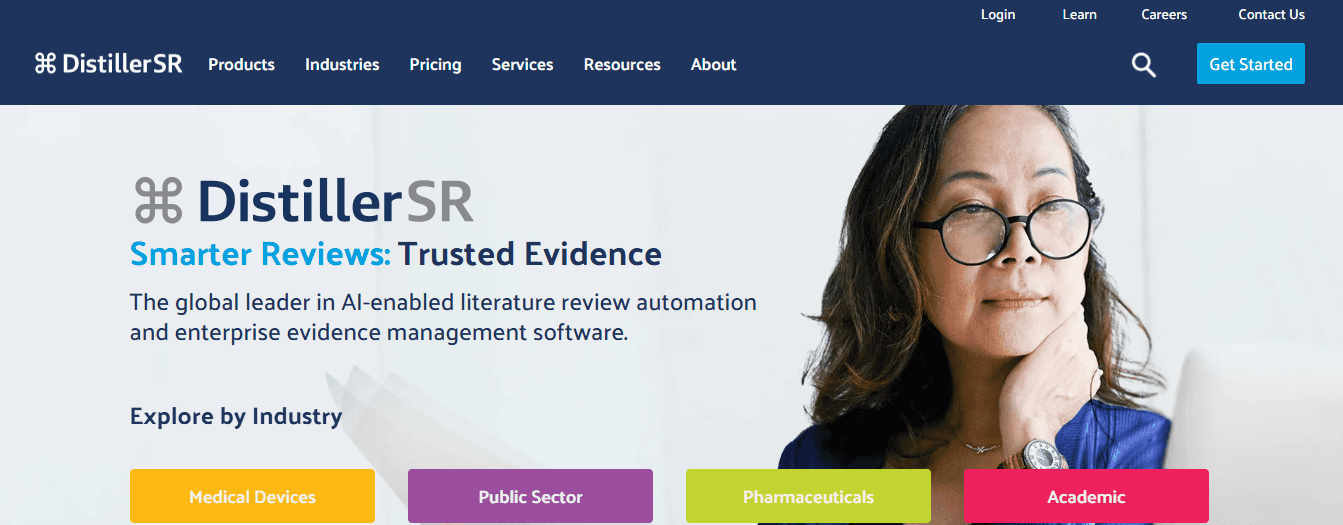
DistillerSR automates repetitive screening tasks using machine learning that learns from decisions about which items to include. After manually reviewing several hundred abstracts, the system predicts the relevance of the remaining records. This helps users spend more of their review time on cases that are not clear-cut. Also, the data extraction forms support complex multi-level categories.
What makes it effective: The automation is especially useful when an initial search returns 8,000 results, with 95% not meeting the inclusion criteria. According to Research Rabbit's 2025 analysis, teams using AI-assisted screening save an average of 96 hours per literature review by reducing time spent on clearly irrelevant abstracts, as reported in this study.
The trade-off: Machine learning requires substantial training data before its predictions are reliable. Small reviews with 200 initial results may not benefit from automation, as the system typically requires 500+ screening decisions to learn effective patterns.
5. SUMARI (System for the Unified Management, Assessment and Review of Information)

SUMARI supports different ways to combine evidence, all in one place. Users can conduct quantitative meta-analysis, qualitative synthesis, economic evaluation, and mixed-methods reviews, with dedicated modules for each method. The system adheres to the Joanna Briggs Institute standards, which are critical for healthcare reviews that require specific quality assessment methods, as noted in this article.
What makes it effective: SUMARI's broad range enables research groups to conduct various types of reviews. When a team does both reviews on how well interventions work and qualitative evidence syntheses, SUMARI saves time by not requiring them to learn separate systems for each method.
The trade-off: The module-based design has a steep learning curve. New users need to figure out which modules they need before they fully understand how everything fits together. Even though the $30 annual subscription is low, the time required to become proficient with it is significant.
6. Rayyan QCRI

Rayyan provides free web-based screening with AI suggestions for including articles. The system reviews initial screening decisions and identifies potentially relevant articles that have not yet been reviewed. Collaboration features enable multiple reviewers to work together in real time, with real-time conflict tracking.
What makes it effective: The no-cost option removes the access barrier that often stops academic teams from using specialized tools. Also, the interface prioritizes speed, enabling experienced reviewers to quickly process abstracts without navigating complex menus.
The tradeoff: The platform is mainly focused on screening. Data extraction and synthesis must occur elsewhere, which means users still have to manage a multi-tool workflow. Large reviews with thousands of records may strain the system's performance.
7. SysRev
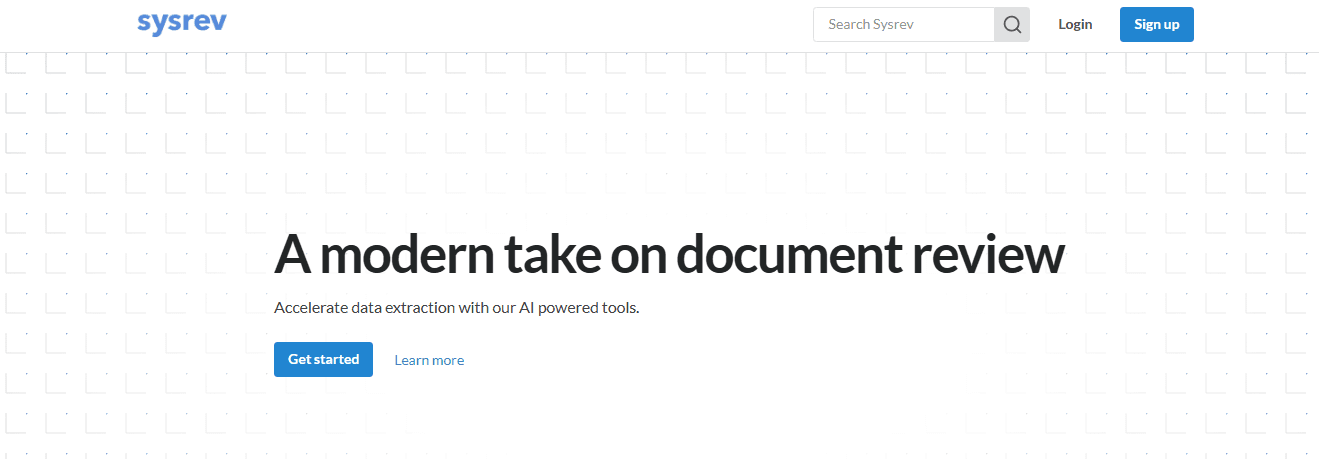
SysRev emphasizes structured data extraction through customizable forms that ensure reviewers remain consistent. The cloud-based platform helps teams collaborate with granular permission controls and audit trails that show who accessed what data and when. Export options link to statistical software for meta-analysis.
What makes it effective: This structured approach prevents data quality issues that arise when reviewers use inconsistent extraction methods. When gathering effect sizes, sample characteristics, and methodological details from 60 studies, the enforced structure ensures that the same information is extracted from each study.
The tradeoff: The same structure that ensures consistency also limits flexibility. Reviews that need adaptive extraction, which changes as more is learned about included studies, may find the strict forms limiting. Additionally, advanced features that require paid plans can make it hard for unfunded projects.
How should teams approach tool selection?
Most teams select tools by downloading trials and testing workflows on a small portion of their review. The real test isn't just about the features; it's whether the platform lessens coordination overhead without causing new problems. When teams are six months into a review with 40 included studies and growing synthesis complexity, changing tools isn't realistic. However, having the right platform does not solve the human challenge of actually completing what was started.
Struggling to Complete Your Systematic Literature Review? Otio Can Help
Managing hundreds of sources, screening studies, and synthesizing findings for a systematic literature review can extend your timeline by months. Juggling bookmarks, scattered PDFs, disconnected notes, and multiple AI tools creates confusion, leading to gaps that can miss important studies. Screening decisions can become inconsistent, and synthesis work often takes longer than needed.
You need a workspace that brings everything together without requiring you to learn another complex platform. Otio solves this problem by bringing together collection, extraction, and creation in a single AI-powered platform. You can collect papers, books, PDFs, and web sources in a single, organized workspace where everything stays automatically organized. The AI generates notes linked to sources to ensure consistent data extraction across all studies, preserving citations that connect insights to the original documents. When you're ready to write, curated insights can be turned directly into draft-ready content without needing to switch between reference managers, note apps, and separate chat tools.
The real value shows up when you're six months into a review with 200 screened sources and increasing synthesis demands. Instead of manually re-reading studies to check specific methods or outcome measures, you can ask your entire collection with conversational AI. This technology finds relevant passages while keeping citations automatic. What used to take hours of manual searching can now be done in seconds with targeted queries, changing how quickly you can move from evidence to conclusions. Stop wasting weeks trying to rebuild context every time you need to check a claim or pull exact quotes for your synthesis. Try Otio for free today, and turn your hundreds of sources into a structured, ready-to-write systematic literature review in record time.
Related Reading
Document Generation Tools
How To Use Ai For Literature Review
How To Write A Research Summary
How To Write A White Paper
Best Ai For Literature Review
Best Report Writing Software