
Graduate Exam Prep
18 Best GRE Study Resources for Verbal, Quant, and Analytical Writing
Build a focused GRE prep stack with 18 resources organized by Verbal Reasoning, Quantitative Reasoning, and Analytical Writing, including official ETS materials, practice tests, books, and targeted tools.

The best GRE resource stack depends on your weakest section
Start with ETS materials for the real test format and official question style. Then add one targeted resource for the section that is dragging your score down: Verbal Reasoning, Quantitative Reasoning, or Analytical Writing.
Do not try to study from all 18 resources at once. A sane GRE stack is: one official foundation, one primary course or book, one practice-test source, and one review system for mistakes.
The GRE has three major sections: Verbal Reasoning, Quantitative Reasoning, and Analytical Writing; Penn State Smeal’s career office summarizes the current GRE as taking about two hours total, but candidates should still confirm the current test structure, registration rules, accommodations, and available practice products on the official ETS website before building a plan.

Use these criteria to choose:
Criterion | What it means in practice |
|---|---|
Official alignment | Does it match ETS wording, structure, and difficulty? |
Practice quality | Are questions realistic enough to train test judgment? |
Diagnostic value | Can it show which topics or question types are costing points? |
Explanation depth | Does it explain why wrong answers are wrong? |
Writing feedback | Does it help revise essays against the GRE rubric? |
Cost and access | Is it affordable for the full prep window? |
Skill level fit | Is it better for beginners, rebuilders, or high scorers? |
A good plan is not “more GRE prep.” It is less, used better: diagnose, study one weak skill, do untimed practice, review every error, repeat under time pressure, and save at least one official practice set for a late readiness check.
Best GRE resources for Verbal Reasoning
Verbal prep fails when it turns into word-list memorization. The GRE verbal section rewards vocabulary, yes, but also sentence logic, passage structure, and the ability to reject attractive wrong answers.
Use official ETS material as the calibration layer. Use a third-party resource when you need more repetition, clearer explanations, or a schedule.
1. The Official Guide to the GRE General Test
Best for: understanding the exam before you buy anything else.
The Official Guide is the foundation because it shows the actual section instructions, official examples, scoring context, and GRE question formats. Use it first, even if you plan to study with Magoosh, GregMat, Manhattan Prep, Kaplan, or another course.
Its limitation is volume. The Official Guide is not enough for weeks of intensive drilling, especially if Verbal is your weak section. Treat it as the source of truth, not the whole prep program.
How to use it:
Read the Verbal, Quant, and Analytical Writing descriptions before doing timed work.
Complete a small official set untimed and annotate why each wrong answer is wrong.
Revisit official explanations after using third-party strategies to make sure those strategies still fit ETS logic.
2. Official GRE Verbal Reasoning Practice Questions
Best for: calibrating Text Completion, Sentence Equivalence, and Reading Comprehension.
This is the most important Verbal-specific ETS resource. It helps train the exact kind of language the GRE uses: subtle contrast words, incomplete sentence logic, inference-heavy reading questions, and answer choices that are technically plausible but unsupported.
The main constraint is scarcity. Do not burn through all official verbal questions in a weekend. Use them in small batches after studying a specific skill, then review them deeply.
A useful pattern:
Study one question type.
Do five to ten official questions untimed.
Write down the clue you missed or misread.
Redo similar questions under time pressure later.
3. ETS GRE vocabulary and Text Completion practice
Best for: learning vocabulary in context rather than as isolated flashcards.
Vocabulary matters most when it helps you understand sentence logic. Use ETS Text Completion and Sentence Equivalence examples to build your own vocabulary list from missed questions, not from abstract “top 1,000 GRE words” lists alone.
For each missed vocabulary question, record:
The unknown word.
The clue in the sentence.
The relationship: contrast, support, cause, concession, or continuation.
Why the tempting wrong answer failed.
Memorizing definitions can raise recognition. It will not, by itself, teach you to solve a two-blank sentence where the second blank reverses the first.
4. Manhattan Prep 5 lb. Book of GRE Practice Problems
Best for: high-volume verbal drilling after you understand the official style.
The Manhattan Prep 5 lb. book is useful because it gives you many more practice problems than official ETS books. For Verbal, that volume helps with timed sets, repeated exposure to question types, and stamina.
Use it carefully. Third-party questions can differ in tone and difficulty from ETS questions, so compare your Manhattan misses against official examples. If a tactic helps on Manhattan but breaks on ETS, drop the tactic.
Best use cases:
Ten-question Text Completion drills.
Reading Comprehension sets by passage length.
Timed mixed verbal practice once your accuracy is stable.
Error-log review when you need to see repeated patterns.
5. Magoosh GRE Verbal lessons and practice
Best for: learners who want video explanations, guided practice, and vocabulary support.
Magoosh is a fit if you study better with short lessons and structured explanations rather than a giant book. Its GRE Verbal material covers reading, vocabulary, and question strategy, and Magoosh also publishes free GRE verbal review material and practice resources.
Check the current subscription, question access, score guarantee terms, and plan limits before buying. Prep companies update packaging often, and the best choice depends on whether you need full-course structure or just verbal instruction.
Use Magoosh when:
You need someone to explain the question type before you drill.
You are rebuilding vocabulary and reading habits.
You want a dashboard-style practice routine.
6. GregMat verbal study plans and strategy lessons
Best for: students who want a low-cost, schedule-driven verbal plan.
GregMat is popular because it gives structure: what to study, in what order, and how to think through GRE verbal questions. It is especially useful if you keep “studying” without actually finishing a plan.
The tradeoff is that you still need official ETS practice for calibration. Strategy videos can teach the move; official questions test whether the move works on real GRE wording.
Use GregMat if:
You need a weekly plan more than another question bank.
You struggle with Text Completion and Sentence Equivalence logic.
You want verbal strategy without paying for a larger commercial course.
If you are comparing exam prep ecosystems across standardized tests, Otio’s guide to MCAT and USMLE study resources uses a similar “core source plus targeted add-ons” approach.
Best GRE resources for Quantitative Reasoning
Quant prep is not just relearning math. It is relearning middle- and high-school math under GRE constraints: fast arithmetic, question-type recognition, estimation, data interpretation, and knowing when not to solve algebraically.
Start with the ETS topic outline, then separate your mistakes into two groups: content gaps and test-strategy gaps. Those require different resources.
7. GRE Math Review from ETS
Best for: checking the exact math content the GRE expects.
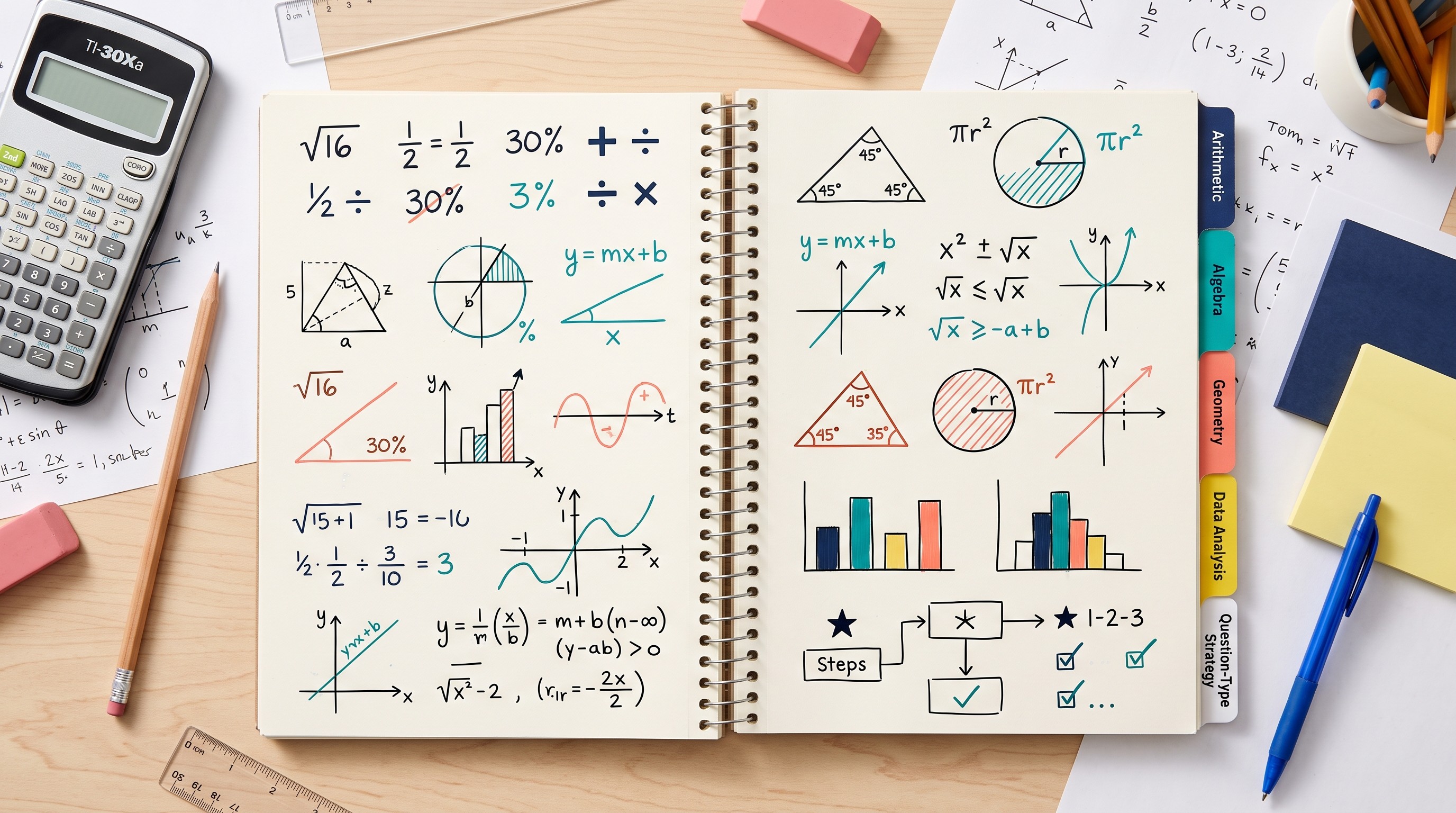
The GRE Math Review from ETS is the first Quant resource to read if it has been years since algebra, geometry, or statistics. It helps identify tested topics, formulas, terminology, and foundational gaps.
It is not a complete practice program. Think of it as a syllabus and refresher. If you discover that ratios, exponents, coordinate geometry, or standard deviation are weak, move from review into targeted drills.
Use it to build a checklist:
Arithmetic: fractions, percentages, ratios, number properties.
Algebra: equations, inequalities, functions, exponents.
Geometry: triangles, circles, coordinate geometry, area, volume.
Data analysis: mean, median, probability, counting, charts.
8. Official GRE Quantitative Reasoning Practice Questions
Best for: learning official Quant difficulty and question style.
Official Quant questions should anchor your practice because they show how ETS phrases traps. Many GRE Quant misses are not from advanced math. They come from misreading comparisons, assuming a diagram is drawn to scale, or solving when estimation would be faster.
Because the official inventory is limited, use it deliberately:
Do not use official questions as warmups.
Pair each official set with a topic goal.
Mark whether each miss was math, reading, setup, arithmetic, or timing.
Redo missed questions after a delay.
9. POWERPREP Online Practice Tests
Best for: baseline scoring and computer-based test rehearsal.
POWERPREP should be part of almost every GRE plan because it gives the closest experience to the real computer-based test environment. Use one early to establish a baseline, then keep later official practice for readiness checks.
Before scheduling your prep calendar, check which POWERPREP tests, features, accommodations, and score-report details are currently available on ETS. Availability and product names can change.
A practical schedule:
Early: one diagnostic under realistic conditions.
Middle: targeted official section practice.
Late: one full official practice test after your main content work.
Final week: light review, not a desperate question binge.
10. Manhattan Prep 5 lb. Book of GRE Practice Problems
Best for: Quant topic drills and endurance.
The same Manhattan 5 lb. book appears again because it is especially useful for Quant volume. If your diagnostic shows weak algebra or geometry, the book’s large topic-based sets can help you isolate the problem.
But quantity is not the goal. Fifty rushed algebra questions without review are worse than fifteen carefully reviewed misses.
Use an error log after every set:
Error type | What to write down |
|---|---|
Content gap | Formula, rule, or concept you did not know |
Setup error | Equation, diagram, or comparison was framed incorrectly |
Arithmetic error | Computation slipped despite correct reasoning |
Trap answer | You picked a choice matching a common shortcut mistake |
Timing issue | You knew the method but spent too long |
Manhattan Review also offers free GRE practice questions with detailed solutions, which can be useful if you want a small sample before committing to a paid resource.
11. Magoosh GRE Quantitative lessons and practice
Best for: rebuilding math fundamentals with step-by-step explanations.
Magoosh Quant is a good fit if you need instruction before drills. The value is not just more questions; it is guided explanation, especially for students who have forgotten algebra, geometry, probability, or data interpretation.
Check the current subscription structure before buying. If you use Magoosh, reserve official ETS questions for final calibration because third-party Quant can sometimes feel harder, wordier, or more topic-heavy than the real thing.
Use Magoosh for:
Relearning Quant fundamentals.
Watching explanations for multiple solution paths.
Building consistency before moving into official timed sets.
12. Kaplan GRE prep books and Quant practice
Best for: students who want an all-in-one printed review.
Kaplan’s GRE books and study resources are a reasonable fit if you prefer a traditional prep-book format: content review, strategy chapters, practice sets, and full-test preparation. Kaplan also maintains a GRE prep resource hub with free study tips and resources.
The key is validation. Do not let any third-party book become your only picture of the GRE. Compare its explanations, strategy claims, and practice-question style against ETS material.
Kaplan works best when:
You want a single printed resource rather than several subscriptions.
You need both Verbal and Quant review.
You prefer chapter-by-chapter study over video lessons.
[[OTIO_INLINE_PROMO:%7B%22title%22%3A%22Ready%20to%20turn%20verbal%20misses%20into%20a%20review%20plan%3F%22%2C%22description%22%3A%22Add%20your%20ETS%20verbal%20materials%2C%20prep%20notes%2C%20and%20error%20log%20to%20Otio%2C%20then%20ask%20it%20to%20summarize%20repeated%20Text%20Completion%20or%20Reading%20Comprehension%20mistakes.%22%7D]]
Best GRE resources for Analytical Writing and full-test preparation
Analytical Writing is often neglected because it feels less “studyable” than Quant or Verbal. That is a mistake. The section rewards a predictable set of skills: clear claims, logical organization, relevant support, precise language, and disciplined time management.
Do not memorize essays. Memorized templates often collapse when the prompt shifts. Learn the task, practice timed outlines, write full essays, and revise against the rubric.
13. ETS Analytical Writing Argument and Issue Task materials
Best for: understanding what the GRE writing rubric rewards.
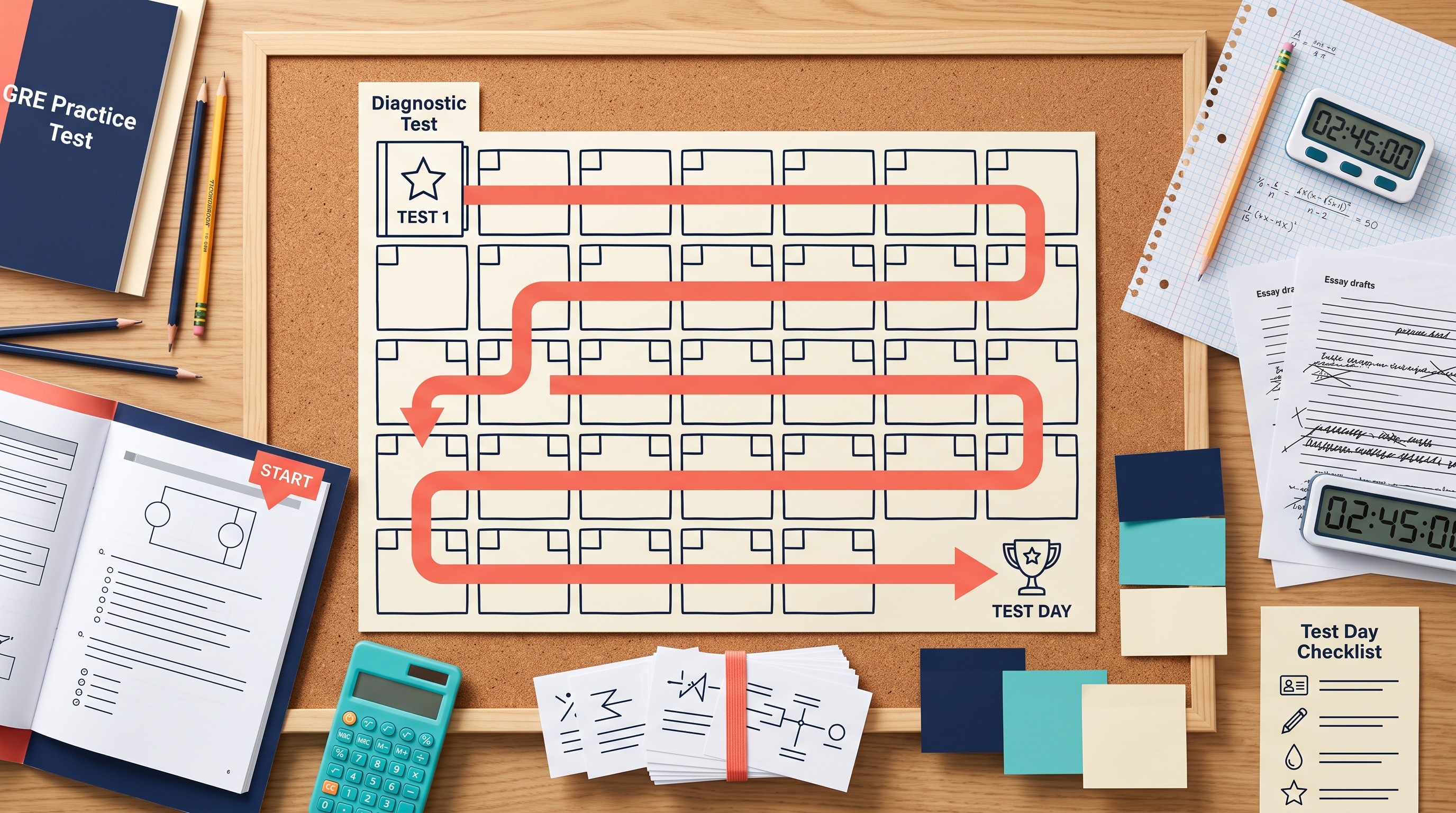
Use ETS Analytical Writing materials before reading third-party essay advice. The official task descriptions, scoring guidance, sample responses, and prompt information show what the test is actually asking for.
The goal is not to sound literary. The goal is to make an argument that is easy to follow under time pressure.
Focus on:
A clear thesis or position.
Paragraphs with one job each.
Examples that support the claim rather than decorate it.
Direct engagement with assumptions, implications, or tradeoffs.
Clean enough grammar that the argument is not obscured.
For broader writing improvement outside the GRE, Otio’s guide to academic writing skills is useful, but GRE essays require timed exam discipline, not just polished prose.
14. ETS GRE Issue and Argument topic pools
Best for: timed outlining and essay rehearsal.
Published prompt pools are useful because they remove mystery. You can practice recognizing prompt types, building outlines quickly, and avoiding the blank-page panic that ruins otherwise capable writing.
Do not only practice familiar prompts. If every essay is on a topic you already like, your score estimate will be inflated.
A good writing routine:
Choose an unfamiliar prompt.
Spend 5 minutes outlining.
Write under the real time limit.
Score yourself against the rubric.
Revise one paragraph for clarity and logic.
15. ETS ScoreItNow! Online Writing Practice
Best for: automated writing feedback in an official GRE-related environment.
ScoreItNow! can be useful if you want automated feedback on GRE-style writing. Treat that feedback as one signal, not a human expert review.
Automated scoring can help flag surface issues and provide a rough sense of performance. It cannot fully replace a skilled reader who can explain whether your reasoning is thin, your example is irrelevant, or your structure is hard to follow.
Before purchasing, verify current availability, pricing, access period, and what type of feedback is included.
16. POWERPREP Plus Practice Tests
Best for: realistic paid full-test rehearsal where available.
POWERPREP Plus tests, where available, are best used late in preparation. Paid official practice is most valuable after you have fixed obvious content gaps and need realistic score estimation, timing practice, and full-test stamina.
Check the current number of tests, access period, scoring features, and purchase terms before buying. Do not waste paid official tests as casual diagnostics if free or lower-stakes options can serve that purpose first.
Use paid official practice when:
Your test date is approaching.
You have already done targeted section work.
You need a realistic full-length rehearsal.
You are deciding whether to reschedule.
17. The Princeton Review GRE Prep Book
Best for: a general course-in-a-book approach.
The Princeton Review GRE prep book is a broad option for students who want strategy guidance, content review, and practice-test coverage in one place. It can be useful if you do not want to assemble separate Verbal, Quant, and Writing resources.
The limitation is the same as with Kaplan or Manhattan: third-party materials should be checked against ETS. Use official questions to validate whether the book’s strategies fit the real test.
Choose it if:
You want a single study spine.
You prefer printed explanations.
You need broad review rather than a specialized Quant or Verbal resource.
18. Otio for organizing a GRE study library
Best for: keeping GRE materials, notes, videos, and error logs searchable in one place.
A GRE prep stack gets messy fast: ETS PDFs, prep-book notes, vocabulary lists, video lessons, writing drafts, screenshots, and error logs. Otio’s AI PDF reader can serve as the organization and comprehension layer for that material: upload PDFs, save web links, keep notes, summarize dense documents, and ask questions about material in your library.
Use it for review, not as a source of official GRE questions. Otio is not a substitute for ETS practice, timed sections, or writing under exam conditions.
Useful GRE workflows in Otio:
Save ETS PDFs, prep notes, and study schedules into one library.
Summarize long strategy documents before turning them into checklists.
Keep an error-log note with tags such as “algebra,” “sentence equivalence,” or “essay structure.”
Add YouTube lessons or web resources and review the transcript or summary.
Use the note editor to revise Analytical Writing practice essays while preserving your own reasoning.
For writing practice, AI tools can help with clarity and revision, but do not outsource the thinking. Otio’s post on using AI in academic writing gives guardrails that also apply to GRE essay prep: use AI for feedback and organization, not for replacing your own argument.
A practical GRE resource stack
If you want the shortest workable answer, use this:
Need | Resource choice |
|---|---|
Official foundation | The Official Guide to the GRE General Test |
Verbal calibration | Official GRE Verbal Reasoning Practice Questions |
Quant calibration | GRE Math Review + Official GRE Quantitative Reasoning Practice Questions |
Weak-section instruction | Magoosh, GregMat, Kaplan, Princeton Review, or Manhattan Prep |
Writing prep | ETS Analytical Writing materials + Issue and Argument topic pools |
Full-test rehearsal | POWERPREP and POWERPREP Plus where available |
Review system | Error log, study notes, and a searchable library |
The workflow matters more than the brand:
Diagnose with an official or realistic practice test.
Pick one weak skill: Text Completion, geometry, data analysis, essay structure, or timing.
Study the rule or strategy from one primary resource.
Practice untimed until the method is clear.
Review every error and classify it.
Repeat under time limits.
Reserve official practice for final calibration.
If you are using more than four active GRE resources in the same week, you are probably managing materials instead of improving.
FAQ
Q: What is the best GRE study resource for beginners?
A: Start with The Official Guide to the GRE General Test and an ETS diagnostic or practice test so you understand the exam before choosing targeted instruction. Then add one structured course or book for your weakest section.
Q: Are official ETS GRE materials better than third-party prep books?
A: ETS materials are best for official format, wording, and question style. Third-party resources are useful for explanations, strategy, and practice volume.
Q: How should I study for GRE Analytical Writing?
A: Read the official task and scoring guidance, practice with published prompt pools, and write timed responses. Review each essay for clear claims, logical organization, relevant support, and precise language.
Q: How many GRE resources should I use at once?
A: Use a small stack: one official foundation, one primary weak-section resource, an error-review system, and full-length practice tests. Add another resource only when it solves a specific problem.
[[OTIO_FOOTER_PROMO:%7B%22title%22%3A%22Want%20to%20apply%20this%20stack%20to%20your%20own%20materials%3F%22%2C%22description%22%3A%22Add%20your%20ETS%20PDFs%2C%20prep%20books%2C%20video%20lessons%2C%20and%20writing%20drafts%20to%20Otio%20to%20organize%20review%20notes%20and%20compare%20what%20each%20resource%20says.%22%7D]]