Immunology Resources
20 Best Immunology Textbooks for Medical Trainees and Board Prep
Compare 20 immunology textbooks and review resources by depth, clinical relevance, readability, and board-prep value. Find a practical core book, rapid-review option, or clinical reference for your training stage.

If you are trying to learn immunology for medical training, do not start by buying five books. Pick one comprehensive core text such as Cellular and Molecular Immunology or Janeway’s Immunobiology, then add one concise review source such as Basic Immunology, How the Immune System Works, or BRS Microbiology and Immunology when exams get close.
No single immunology book is equally good for mechanisms, clinical disease, and rapid board prep. The right choice depends on whether the current problem is understanding antigen presentation, remembering complement deficiencies, or applying immune mechanisms to patients.
The best immunology book depends on your study goal
A good immunology stack has roles, not duplicates:
Core textbook: for mechanisms, cell interactions, tolerance, cytokines, complement, and immune-mediated disease.
Concise review book: for a first pass, rapid consolidation, or board-style recall.
Clinical reference: for immunodeficiency, allergy, autoimmunity, transplantation, and immune-mediated disease in patient care.
Case or applied resource: for turning mechanisms into differential diagnosis and exam reasoning.
That distinction matters because immunology is easy to fake until questions get specific. You may “know” hypersensitivity until you need to distinguish type II antibody-mediated injury from immune-complex disease. You may memorize complement pathways without recognizing why C5–C9 deficiency points toward recurrent Neisseria infection.
Medical school libraries treat immunology as both a basic-science and clinical subject. Mayo Clinic’s medical-student immunology guide lists official and recommended immunology textbooks for first-year students, while NYU Langone’s medical student bookshelf points students to core immunology books and online resources for coursework (Mayo Clinic Libraries, NYU Health Sciences Library).
Before buying, verify the current edition, your school’s required text, digital access through your library, and the exam blueprint you are studying against. Board-prep value changes faster than core mechanisms.
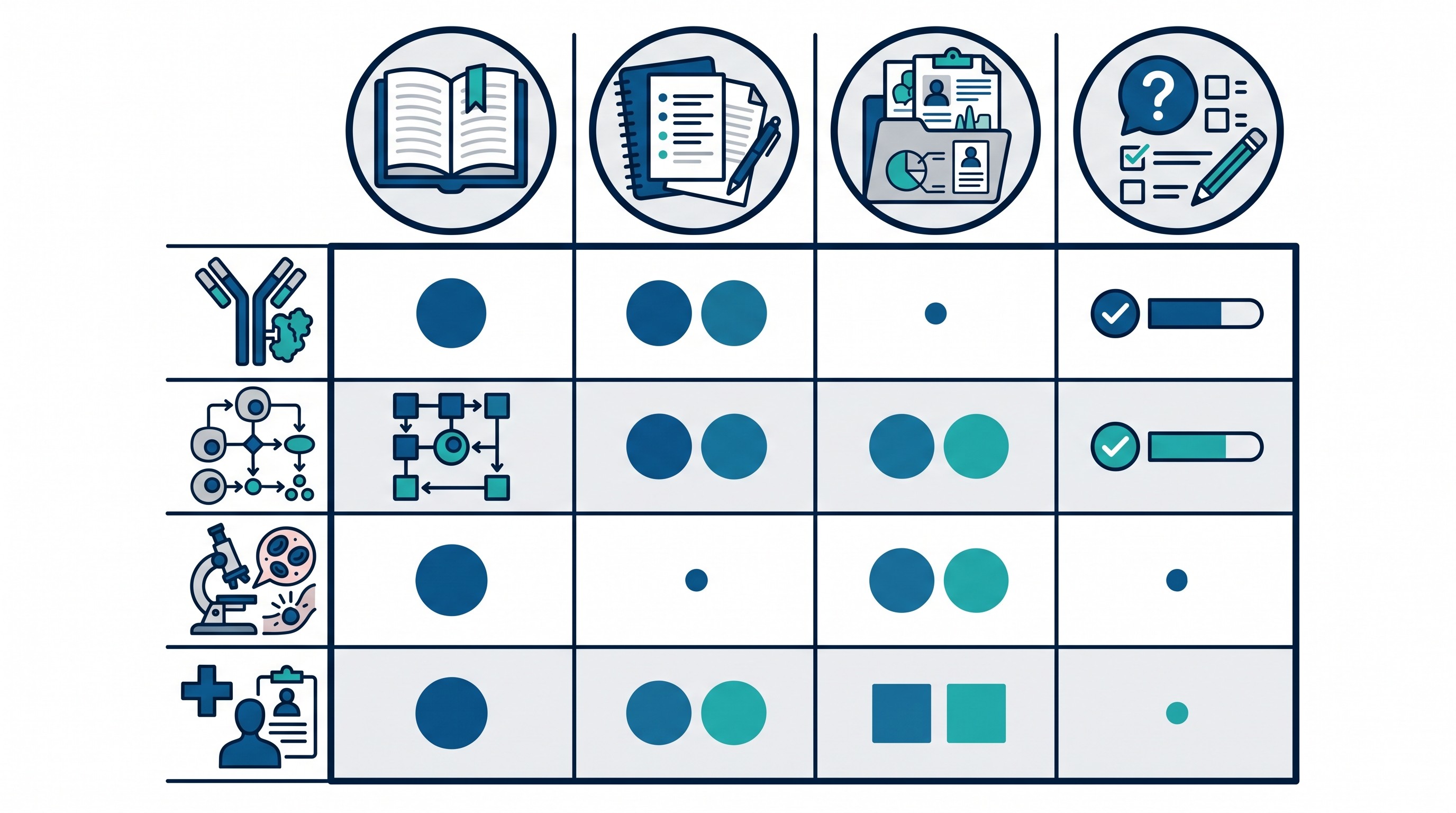
Quick comparison: which immunology textbook is right for you?
Use this table as a decision filter, not a ranking. The “best” book is the one that fixes the study problem you actually have.
Resource | Best audience | Depth | Clinical integration | Visual explanation | Board-prep usefulness | Main limitation |
|---|---|---|---|---|---|---|
Janeway’s Immunobiology | Advanced medical students, graduate learners | High | Moderate | Strong | Moderate | Too detailed for rapid review |
Cellular and Molecular Immunology | Medical trainees who want mechanisms tied to disease | High | Strong | Strong | Moderate-high | Longer than many exam schedules allow |
Kuby Immunology | Students learning immunology systematically | High | Moderate | Strong | Moderate | May feel less clinically targeted |
Roitt’s Essential Immunology | Learners wanting readable fundamentals | Medium-high | Moderate | Good | Moderate | Not a dedicated board-review book |
Fundamental Immunology | Advanced trainees, researchers | Very high | Variable | Variable | Low-moderate | Not efficient as a first text |
Basic Immunology | Medical students needing a concise core | Medium | Strong | Good | High | Less depth than full texts |
How the Immune System Works | Students who need conceptual clarity | Low-medium | Moderate | Good | Moderate | Needs a fuller source for exams |
Immunology at a Glance | Rapid review, visual learners | Low-medium | Moderate | Very strong | Moderate-high | Diagrams compress hard concepts |
Immunology: A Short Course | First-pass learners | Medium | Moderate | Good | Moderate | Organization may not match every course |
BRS Microbiology and Immunology | Near-exam review | Low-medium | Board-oriented | Moderate | High | Not a full immunology textbook |
Clinical Immunology: Principles and Practice | Residents, fellows, clinical specialists | Very high | Very strong | Good | Low-moderate | Too deep for most preclinical students |
Oxford Handbook of Clinical Immunology and Allergy | Rotations, quick clinical reference | Medium | Strong | Limited | Moderate | Compressed handbook format |
Medical Immunology | Clinically oriented immunology courses | Medium-high | Strong | Good | Moderate | Fit depends on curriculum |
Clinical Immunology Made Ridiculously Simple | Quick refresher, intimidated learners | Low-medium | Moderate | Simple | Moderate | Simplification can obscure nuance |
Robbins and Cotran Pathologic Basis of Disease | Pathology integration | High for pathology | Very strong | Strong | High as supplement | Not a complete immunology text |
Case Studies in Immunology | Applied learners after fundamentals | Medium | Very strong | Case-based | Moderate-high | Weak as a first exposure |
Immunology: An Illustrated Outline | Visual refresher | Low-medium | Limited-moderate | Strong | Moderate | Outline format leaves gaps |
Tizard’s Immunology: An Introduction | Broad introductory learners | Medium | Variable | Good | Low-moderate | May not track human clinical curricula |
Pathophysiology of Disease | Clinical reasoning bridge | Medium | Strong | Good | Moderate | General pathophysiology, not immunology-only |
Clinical Immunology Review: Mastering the Basics | Clinical pattern review | Low-medium | Strong | Moderate | Moderate-high | Should not replace a primary text |
A practical stack is usually enough:
One core book: Cellular and Molecular Immunology or Janeway’s Immunobiology.
One concise review: Basic Immunology, How the Immune System Works, Immunology at a Glance, or BRS.
One question source or course supplement: your school’s objectives, board-style questions, lecture notes, or spaced-repetition deck.
Collecting three comprehensive textbooks rarely improves performance. It usually creates an avoidance ritual: comparing explanations instead of doing questions.
Best comprehensive immunology textbooks for building a strong foundation
1. Janeway’s Immunobiology
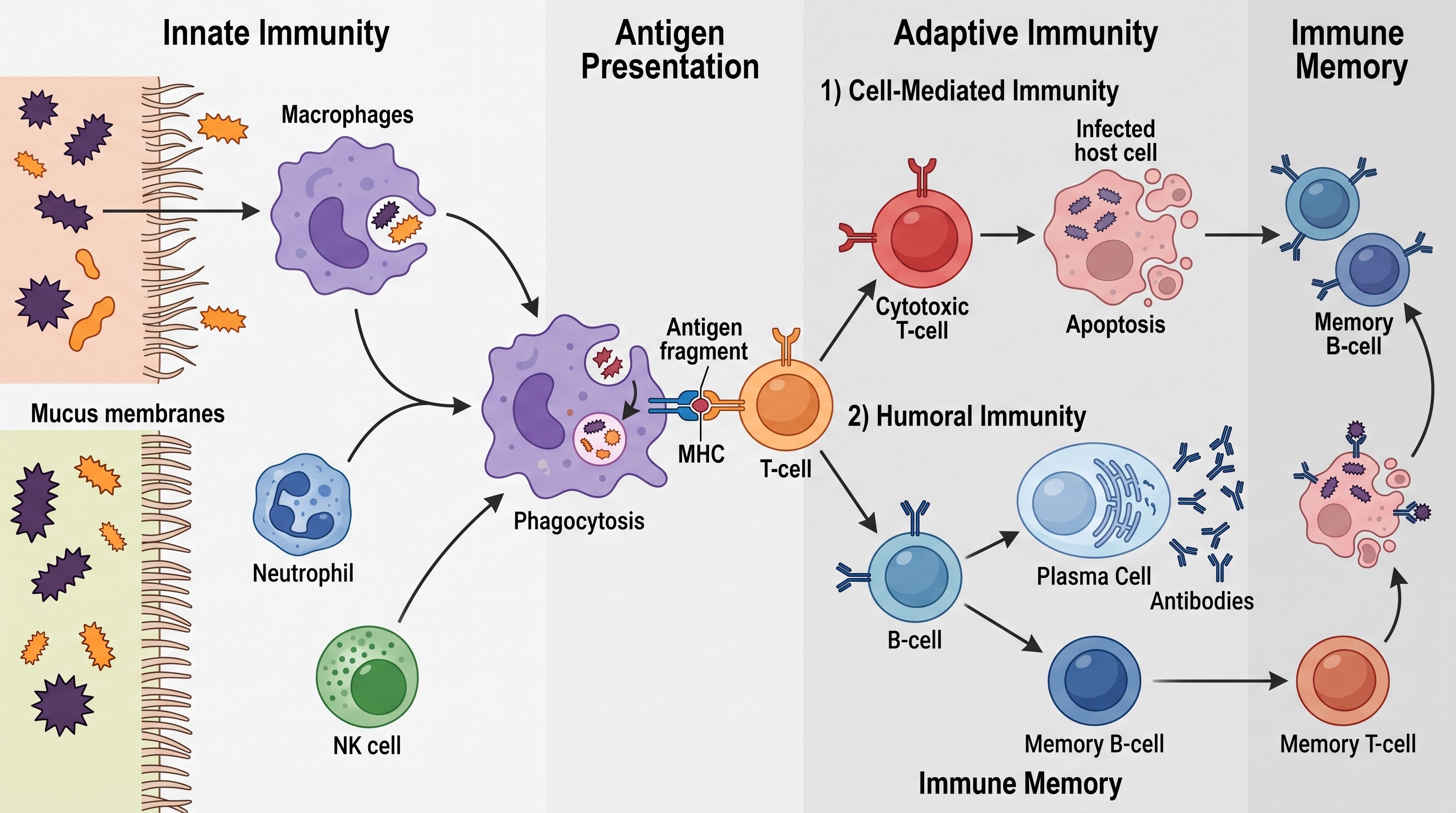
Janeway’s Immunobiology is the classic choice when the goal is to understand immunology as an integrated system rather than a list of disorders. It is strong on immune-cell interactions, innate and adaptive immunity, antigen presentation, lymphocyte development, tolerance, signaling, and immune memory.
The older NCBI Bookshelf version describes Immunobiology as an introductory text for medical students, advanced undergraduates, graduate students, and scientists outside the field, which captures its broad teaching role even though current editions should be checked separately (NCBI Bookshelf). It is especially useful when lecture slides feel fragmented.
The tradeoff is size. If the exam is in ten days, Janeway is usually not the fastest path to points. Use it to fix mechanisms, then switch to questions and review material.
2. Cellular and Molecular Immunology by Abul K. Abbas and colleagues
Cellular and Molecular Immunology is often the best default for medical trainees who want mechanisms connected to disease. Abbas writes immunology in a structured way: what the system does, which cells and molecules do it, and what happens when the system fails.
It is particularly good for topics that medical students repeatedly miss: antigen presentation, T-cell activation, B-cell responses, tolerance, cytokines, autoimmunity, hypersensitivity, immunodeficiency, and transplantation.
Choose this if you want a rigorous core text but prefer a clinically oriented organization. If you only need high-yield facts for a near-term board exam, it may be more book than you need.
3. Kuby Immunology
Kuby Immunology is an approachable, systematic textbook with strong diagrams and broad coverage. It works well for learners who want to build from first principles and are comfortable spending time with the biology behind immune responses.
Its strength is pedagogy. Concepts are often introduced in a way that helps students who find immunology abstract: receptors, signaling, clonal selection, effector functions, and regulation become easier to place.
The main question is fit. Some medical curricula prioritize clinical immunology earlier and more aggressively than a general immunology course. Compare the table of contents against your syllabus before making it your only source.
4. Roitt’s Essential Immunology
Roitt’s Essential Immunology sits between a full comprehensive text and a short review book. It is readable, concept-driven, and often useful when a learner needs a first complete pass without the density of the largest texts.
Its clinical examples help connect immune mechanisms to disease without turning the book into a specialist reference. That makes it a reasonable option for medical students who want clarity but still need more than bullet points.
Its limitation is exam efficiency. For board prep, pair it with a review book or question bank so that mechanism learning becomes recall practice.
5. Fundamental Immunology
Fundamental Immunology is the heavyweight reference in this group. It is best for advanced learners who need molecular and cellular detail beyond the medical-school core: PhD students, physician-scientists, immunology fellows, and trainees doing deeper scholarly work.
It is not the most efficient first immunology book for most medical students. The danger is not that it is “too good”; it is that it answers questions you may not yet need to ask.
Use it selectively. If a research project, journal club, or specialist elective demands deeper detail, it can be valuable. For Step-style review, choose a leaner source.
Best concise immunology books for medical students and board review
6. Basic Immunology: Functions and Disorders of the Immune System by Abbas and Lichtman
Basic Immunology is the concise Abbas option. It keeps the core logic of immune function and dysfunction while stripping away much of the detail found in larger texts.
The National Library of Medicine catalog identifies the book as Basic Immunology: Functions and Disorders of the Immune System by Abul K. Abbas and Andrew H. Lichtman (NLM Catalog). Elsevier describes the seventh edition as a concise text written for medical students and connected to the more comprehensive Cellular and Molecular Immunology (Elsevier Educate).
This is one of the strongest choices for a medical student who needs immunology to be clear, clinical, and manageable. Advanced learners may want more mechanistic depth.
7. How the Immune System Works by Lauren Sompayrac
How the Immune System Works is the book to read when immunology feels like vocabulary without structure. It explains the system in plain language and helps students build a mental model before returning to denser material.
Its value is conceptual. It can make T-cell education, MHC restriction, antibodies, complement, and immune regulation less opaque.
Do not treat it as a complete board-prep source. It is best used early, or as a rescue text when a traditional textbook is not landing.
8. Immunology at a Glance
Immunology at a Glance is a visual rapid-review resource. It is useful for refreshing pathways, cell types, cytokines, and terminology when the exam is approaching and the goal is fast orientation.
The format works well for learners who remember diagrams better than prose. It is also useful after a dense textbook chapter: read the chapter, then use the visual summary to reconstruct the mechanism from memory.
The limitation is obvious but important. A diagram can remind you of antigen presentation; it may not explain why a subtle experimental or clinical finding changes the answer.
9. Immunology: A Short Course by Richard Coico and Geoffrey Sunshine
Immunology: A Short Course is a compact overview for learners who need a manageable first pass. It covers the major architecture of immune function without demanding the commitment of a large reference text.
It can work well for accelerated courses, allied health programs, or medical students who want a structured overview before tackling a bigger book.
Before relying on it alone, compare its chapter order with your course objectives. Immunology courses vary widely: some start with innate immunity and pattern recognition; others move quickly into disease.
10. BRS Microbiology and Immunology
BRS Microbiology and Immunology is not a textbook replacement. It is a high-yield review book for recall, practice questions, and exam conditioning.
Its role is late-stage consolidation. Use it when you already know the mechanisms well enough to answer why a fact is true, but you need to improve speed and pattern recognition.
It is especially helpful where immunology overlaps with microbiology: immunodeficiencies, vaccines, host defense, and infection patterns. Check the current edition and your board blueprint before depending on it for coverage.
For more exam-resource planning, see Otio’s guide to board-prep resources beyond Khan Academy and the separate guide to flashcard apps for medical students and USMLE prep.
Best clinical immunology and allergy references
11. Clinical Immunology: Principles and Practice
Clinical Immunology: Principles and Practice is a specialist-level reference. It is the kind of book to use for immunodeficiency, autoimmunity, hypersensitivity, transplantation, immune therapeutics, and complex immune-mediated disease.
UTMB’s allergy and immunology guide lists Basic Immunology and Clinical Immunology among recommended e-books for allergy and immunology, reflecting the split between concise foundations and clinical reference use (UTMB Library Guides).
Most medical students do not need to read this cover to cover. Use it when a patient, elective, presentation, or research question requires clinical depth.
12. Oxford Handbook of Clinical Immunology and Allergy
The Oxford Handbook of Clinical Immunology and Allergy is a portable clinical reference. It is useful on rotations or during specialty exposure when the question is practical: What are the common presentations? What tests matter? What differential should be considered?
Handbooks are efficient because they compress. That is also their weakness.
Use it at the bedside or while preparing for clinical discussions. Do not expect it to teach foundational immunology from first principles.
13. Medical Immunology by Gabriel Virella
Medical Immunology emphasizes clinically relevant immune responses and disease. It is a good fit for students who want immune mechanisms taught with human disease in view.
It can be useful in courses where immunology is integrated with pathology, microbiology, or organ systems rather than taught as a standalone basic-science block.
As with many mid-depth texts, fit matters. Compare its organization with your school’s objectives and the level of detail your exams require.
14. Clinical Immunology Made Ridiculously Simple
Clinical Immunology Made Ridiculously Simple is a low-barrier refresher. It is most useful for learners who feel overwhelmed and need a simplified map of core concepts before returning to a standard source.
Its strength is accessibility. It can reduce the intimidation factor around topics like hypersensitivity, autoimmune disease, and immunodeficiency.
Its risk is over-simplification. For nuanced topics such as immune tolerance, monoclonal antibody therapies, or complement regulation, verify the simplified explanation against a primary textbook or lecture source.
15. Robbins and Cotran Pathologic Basis of Disease
Robbins and Cotran Pathologic Basis of Disease is a pathology textbook, not an immunology textbook. Its immunopathology chapters are still highly valuable for medical trainees.
Use Robbins to connect immune mechanisms to tissue injury: acute and chronic inflammation, hypersensitivity, autoimmunity, immune deficiency, transplant rejection, and neoplasia. This is where immunology becomes visible under the microscope and in clinical pathology.
It should supplement, not replace, a dedicated immunology text. If the question is “how does class switching work?” use immunology. If the question is “what does immune injury do to tissue?” Robbins is often the better companion.
If you are building a broader medical-school shelf, Otio also has guides to microbiology textbooks for medical students, physiology textbooks for medical students and USMLE prep, and biochemistry textbooks for med students.
Best case-based, applied, and advanced immunology resources
16. Case Studies in Immunology: A Clinical Companion
Case Studies in Immunology is best after you have learned the relevant fundamentals. Patient cases force you to connect mechanism, presentation, labs, diagnosis, and management.
That makes it useful for immunodeficiency, hypersensitivity, autoimmunity, and immune-mediated infection risk. It can also expose a common weakness: knowing a defect by name but not recognizing its clinical pattern.
Do not start here if terms like MHC, class switching, negative selection, and complement activation are still unstable. Cases work best when they activate knowledge, not when they replace it.
17. Immunology: An Illustrated Outline
Immunology: An Illustrated Outline is a visual refresher for cells, pathways, receptors, and terminology. It is useful when the main problem is organizing what you already studied.
The outline format helps with quick review before small-group sessions, quizzes, and exam blocks. It can also work as a companion while building one-page maps of immune pathways.
It is less useful for resolving conceptual confusion. If the problem is “I cannot explain central tolerance,” use a full explanation first and the outline second.
18. Tizard’s Immunology: An Introduction
Tizard’s Immunology: An Introduction is a broad introductory immunology book. It is useful for readers who want biological context and a clear progression through immune-system principles.
Depending on edition and curriculum, it may be more general than a strictly human-clinical medical course requires. That is not a flaw, but it affects efficiency.
Choose it if your goal is broader immunology literacy. For medical boards, pair it with clinically targeted material.
19. Pathophysiology of Disease: An Introduction to Clinical Medicine
Pathophysiology of Disease is not a dedicated immunology text. Its value is as a bridge between mechanisms and clinical reasoning.
Use selected immune-disorder chapters to see how immune dysfunction appears as disease. This helps students who understand the pathway in isolation but struggle when immunology is embedded in organ-system questions.
It is best as a supplement. For dedicated immunology mechanisms, use a primary immunology book.
20. Clinical Immunology Review: Mastering the Basics
Clinical Immunology Review: Mastering the Basics is a consolidation resource for clinical patterns, terminology, and assessment preparation. It is most useful after a first pass through a core text or lecture block.
Its role is to help organize: which diseases cluster together, which labs distinguish them, and which immune defects explain the presentation.
Use it alongside a primary textbook when detailed mechanisms matter. Review books can make knowledge easier to recall, but they are weaker at building the model in the first place.
How to use an immunology textbook for board preparation
Start with the board-relevant framework. Nearly every exam question falls into one of these buckets:
Innate versus adaptive immunity
Antigen presentation and MHC
T-cell and B-cell activation
Immunoglobulin structure and class switching
Complement pathways and deficiencies
Hypersensitivity reactions
Autoimmune disease
Primary and secondary immunodeficiency
Transplantation and rejection
Vaccines and immune memory
Immunotherapy and monoclonal antibodies, when included in your course or exam outline
Do not reread entire chapters as the default. Read a targeted section, answer questions, then return to the text only for missed concepts. Immunology improves fastest when retrieval exposes the exact weak link.
Build comparison tables for diseases that look similar. For immunodeficiency, compare immune defect, inheritance, infection pattern, key labs, and treatment implication. For hypersensitivity, compare mechanism, timing, examples, and pathology.
A simple table often beats another pass through prose:
Topic | Compare by | Example distinction |
|---|---|---|
Complement deficiencies | Missing component, infection risk, autoimmune association | Early classical pathway defects versus terminal complement defects |
Hypersensitivity | Immune mediator, timing, pathology | IgE-mediated allergy versus immune-complex disease |
Primary immunodeficiency | Cell lineage, inheritance, infections, labs | T-cell defects versus B-cell defects |
Transplant rejection | Timing, mechanism, histology | Hyperacute versus acute cellular rejection |
Autoimmunity | Autoantibody, target tissue, clinical pattern | Systemic disease versus organ-specific disease |
Use diagrams, but make them active. After looking at a pathway, close the book and redraw it from memory. Then explain each step aloud: what activates it, what cells or molecules participate, and what clinical failure would look like.
A 2025 review of immunology education in medical students found that newer teaching methods performed better than traditional dialectic and board lectures, which supports a practical point: passive listening is rarely enough for immunology (PMC). The subject needs active reconstruction, case application, and repeated testing.

A workable weekly cycle looks like this:
Preview the lecture objectives. Identify the immune process or disease category.
Read the matching textbook section. Keep it targeted.
Create a one-page mechanism map. Cells, molecules, sequence, failure states.
Do questions early. Do not wait until the chapter feels perfect.
Write an error log. Missed fact, missed mechanism, or missed clinical clue.
Convert only durable errors into spaced repetition. Avoid turning every sentence into a card.
Revisit the textbook only for patterns of errors. One missed cytokine does not justify rereading the cytokine chapter.
This is the same principle used in other dense medical subjects: core understanding first, retrieval next, narrow repair after that.
[[OTIO_INLINE_PROMO:%7B%22title%22%3A%22Turn%20your%20immunology%20chapters%20into%20a%20review%20plan%22%2C%22description%22%3A%22Upload%20a%20legally%20obtained%20PDF%20or%20EPUB%2C%20ask%20about%20complement%20or%20hypersensitivity%2C%20and%20check%20Otio%E2%80%99s%20cited%20answer%20against%20the%20original%20chapter.%22%7D]]
How to choose one book without creating a resource pile
Choose based on the defect in your studying:
Weak conceptual understanding: choose Cellular and Molecular Immunology, Janeway’s Immunobiology, Kuby, or Roitt.
Poor retention: choose Basic Immunology, Immunology at a Glance, or BRS.
Clinical application gaps: choose Case Studies in Immunology, Clinical Immunology: Principles and Practice, or a pathology/pathophysiology supplement.
Intimidation or confusion: start with How the Immune System Works, then move to a standard text.
Specialty-level need: use Clinical Immunology: Principles and Practice or Fundamental Immunology selectively.
Before buying, compare:
Page count and density
Chapter organization
Quality of illustrations
Clinical cases and disease coverage
End-of-chapter questions or online resources
Digital availability through your library
Edition date
Fit with your course objectives
Fit with the current board blueprint
Avoid two books that do the same job. Janeway plus Cellular and Molecular Immunology may be useful for an advanced learner, but most medical students are better served by one of them plus a concise review source.
A clean annotation workflow helps:
Save the table of contents, syllabus, and exam objectives.
Mark only mechanisms that explain multiple diseases or question types.
Keep disease comparison tables outside the textbook.
Maintain a separate error log from practice questions.
Update that error log after every question block.
Recheck high-stakes summaries against the original text.
If your chapters are legally obtained PDFs or EPUBs, Otio’s AI textbook summarizer can help organize long readings into searchable summaries, and its AI PDF reader lets you ask questions inside uploaded PDFs. Use that for navigation and review, not as a substitute for the book. Generated summaries should be checked against the source before they become notes or flashcards.
The main rule is simple: buy for the next bottleneck. If you cannot explain mechanisms, get a real textbook. If you understand but forget, get a review source and do questions. If you miss clinical applications, add cases.
FAQ
Q: What is the best immunology textbook for medical students?
A: Cellular and Molecular Immunology and Janeway’s Immunobiology are strong foundation choices. Basic Immunology may be more efficient for a shorter course or exam-focused schedule.
Q: Can one immunology textbook be enough for board prep?
A: Usually not by itself. Use a core text to repair conceptual gaps, then combine it with current board-focused review material and practice questions.
Q: Should I study immunology from a textbook or review book first?
A: Start with a textbook when you do not understand the mechanisms. Start with a review book when you already know the basics and need rapid consolidation.
Q: How important is the textbook edition for immunology?
A: Edition differences can affect terminology, clinical examples, references, and supplemental resources. Check publication details and compare the contents with your course objectives and current board guidance before relying on an older edition.
[[OTIO_FOOTER_PROMO:%7B%22title%22%3A%22Build%20a%20board-prep%20set%20from%20your%20own%20sources%22%2C%22description%22%3A%22Add%20your%20syllabus%2C%20textbook%20chapters%2C%20lecture%20notes%2C%20and%20question-review%20notes%20to%20Otio%20so%20you%20can%20compare%20explanations%20and%20maintain%20an%20immunology%20error%20log.%22%7D]]