
Study Guides
18 Best Neurology Textbooks & Resources for Med Students (M3/M4 & Shelf Exam)
Curated neurology textbooks ranked by M3/M4 rotation stage and shelf exam prep. Covers anatomy-focused atlases, clinical case reviews, and board-style Q&A.

You’re on consults, the resident asks where the lesion is, and your shelf exam is close enough to ruin your weekend. For most M3/M4 students, the winning stack is one localization resource, one case book, and one question source: Blumenfeld or Gray/Netter, Case Files: Neurology, then UWorld plus an NBME practice form.
Don’t build a neurology library like you’re starting residency. Build it like you’re trying to survive four weeks of stroke codes, vague weakness, headache workups, and shelf-style vignettes without sounding lost on rounds.
If you already have 20 PDFs from your school library, put them somewhere searchable early. A tool like Otio’s AI research workspace helps when you need to ask one question across lecture slides, textbook chapters, and practice-test explanations instead of hunting through files at midnight.
Who this list is for
This list is for M3/M4 medical students on an active neurology rotation who need material that helps at bedside. If a book can’t help you localize weakness, triage headache, explain seizure workup, or answer a shelf question, it doesn’t earn space here.
It’s also for students taking the NBME neurology shelf exam, usually at the end of the clerkship. The shelf rewards pattern recognition more than textbook completeness. That means you need cases and questions, not a heroic plan to read 1,200 pages.
The broader reason to take neurology seriously is simple: most doctors will see neurologic complaints, even if they never become neurologists. The core curriculum guidelines for required clinical neurology experiences argue that every graduating medical student needs basic skills for common neurologic symptoms and emergencies because postgraduate neurology exposure varies widely.
Residents, fellows, and sub-interns can use this too, but the ranking changes. A student needs fast localization and shelf prep. A sub-I on stroke service may need Caplan open in the background. Different job.
A quick map:
If your problem is… | Start with… |
|---|---|
You can’t localize lesions | Blumenfeld or Gray’s neuro chapters |
You freeze on differentials | Patten or Case Files |
Shelf is in two weeks | UWorld + NBME practice form |
Rounds move too fast | Pocket Neurology |
You’re on stroke or epilepsy | Caplan or Engel & Pedley |
For broader clerkship planning, pair this with Otio’s shelf exam resource guide and the more exam-focused neurology shelf exam prep guide.
How we picked these 18 resources

We ranked these by rotation utility, not prestige. A giant reference text can be excellent and still be the wrong book for a student who has 25 minutes before pre-rounds.
The picks fall into four buckets: anatomy and localization, clinical cases, board-style review, then subspecialty references. We looked at common recommendations from medical student and neurology communities, but treated forums as signal rather than evidence. Reddit is useful for seeing what students actually reach for; it’s a poor source for deciding what’s authoritative.
We also cross-checked the shape of the list against what students tend to store in research workspaces: PDFs from institutional libraries, lecture decks, pocket references, and question explanations. The pattern is predictable. People collect too much anatomy early, then panic-buy question resources late.
The better split is boring: one primary book per job. If you’re still choosing general medical school references, the same logic applies across clerkships; see the broader list of resources for medical students and the anatomy-specific ranking of medical student anatomy textbooks.
We excluded purely theoretical neuroscience texts unless they had a direct clinical use. Kandel belongs on the shelf for depth. It doesn’t belong in your backpack during week three of clerkship.
Best for foundational anatomy & localization
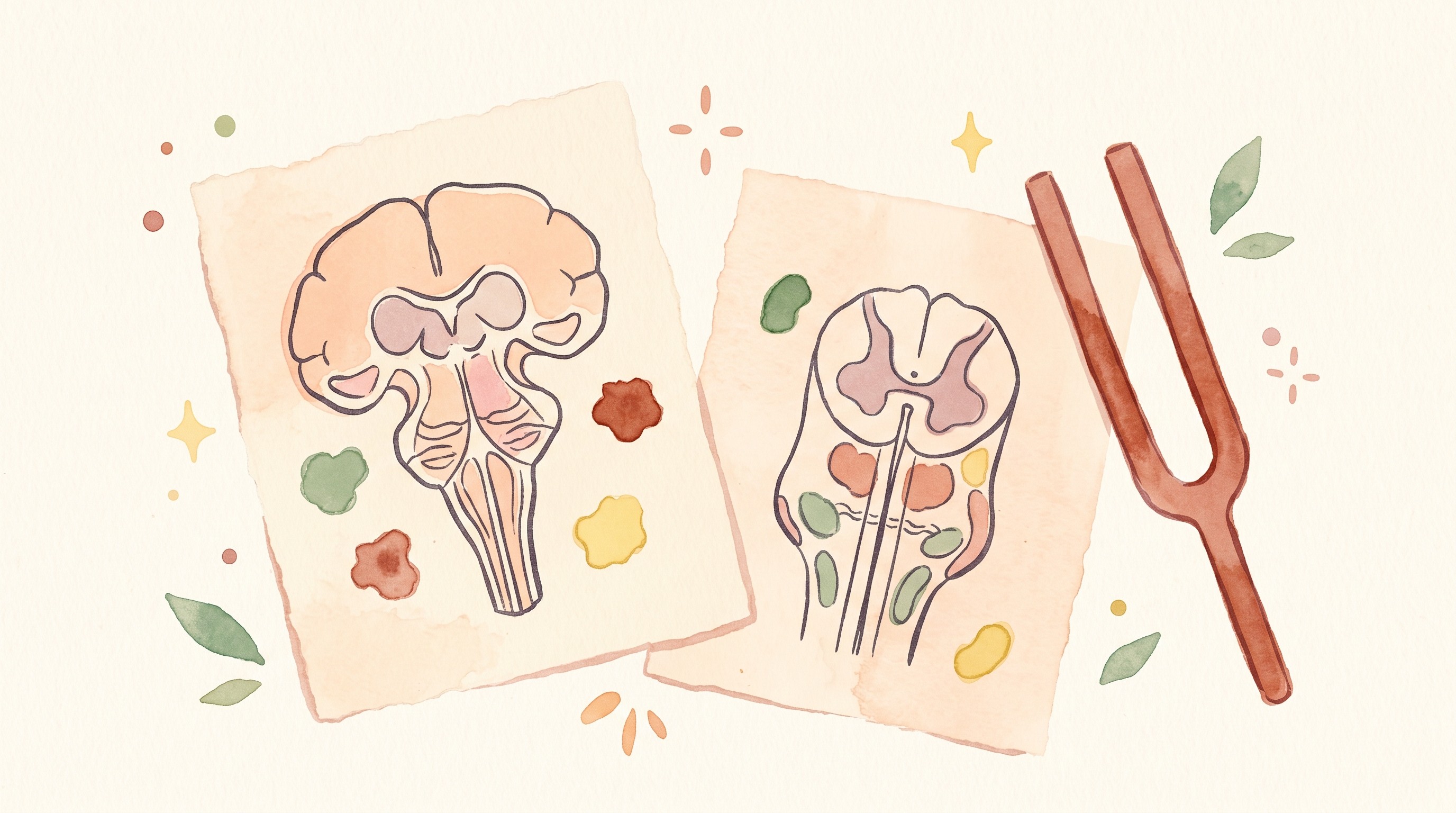
Neurology feels impossible when anatomy floats around as trivia. The move is to learn anatomy through localization: where is the lesion, what tract explains the finding, and what pattern would make that answer wrong?
The tell is week two. A student can recite the corticospinal tract but can’t decide whether a foot drop is peripheral nerve, root, plexus, or motor cortex. That’s when the wrong textbook choice starts to cost you.
1. Neuroanatomy Through Clinical Cases — Hal Blumenfeld
Best for: learning localization through patient stories.
Blumenfeld is the best first serious neuroanatomy book for most med students because it forces anatomy to do clinical work. Instead of memorizing nuclei in isolation, you meet a patient, map the exam, and reason backward to the lesion.
Use it in week one and early week two. Don’t try to master every detail. Read the chapters tied to what you’re seeing: stroke, spinal cord, cranial nerves, movement, seizure.
If neuroanatomy has always felt like a pile of disconnected diagrams, this is the book that starts to weld the pieces together.
2. Netter’s Atlas of Neuroscience
Best for: visual learners who need clean diagrams of tracts and vascular territories.
Netter is the book you open when you need to see the anatomy. The Elsevier description of Netter’s Atlas of Neuroscience frames it as a highly visual, clinically oriented resource covering nervous system structure and function, which is exactly why it works for students.
Use Netter for spatial questions: internal capsule, brainstem, spinal cord levels, circle of Willis. Pair it with cases. Otherwise you’ll admire the drawings and remember less than you think.
For students building an anatomy foundation before clerkships, compare it with the broader anatomy books for medical students.
3. Gray’s Anatomy for Students — neurology chapters
Best for: students who want anatomy with clinical correlations in the margins.
Gray’s is cleaner than a full anatomy atlas and less intimidating than a graduate neuroscience text. The neurology chapters give enough structure to understand lesions without drowning you in histology.
It’s especially good if your school already used Gray’s during preclinical anatomy. Familiar layout matters when you’re tired. You don’t want to learn a new book’s logic while trying to remember whether a medial medullary lesion hits the hypoglossal nerve.
4. Medical Neuroanatomy for the Boards and the Clinic: Finding the Lesion
Best for: board-oriented localization practice.
This Springer text is built around exactly the thing students struggle with: signs, symptoms, tracts, and lesion location. The Springer page for Medical Neuroanatomy for the Boards and the Clinic notes its cross-section images, lesion test questions, and board-focused key phrases.
That format helps because shelf neurology rarely asks, “What is the spinothalamic tract?” It asks about a patient with a sensory level, weakness, pain changes, and a lesion that must be inferred.
Use this if Blumenfeld feels too long or if you want targeted board-style localization drills.
5. Kandel & Schwartz Principles of Neural Science — selected neurology sections
Best for: depth, not day-to-day shelf prep.
Kandel is authoritative and heavy. Use it as a reference when a concept keeps bothering you: basal ganglia loops, synaptic physiology, demyelination, memory circuits.
Don’t read it cover to cover during clerkship. That’s a trap. If you’re interested in neuroscience beyond the shelf, pair it with a more general list of neuroscience textbooks for understanding the brain.
A smaller atlas can also help if you’re spending time in speech, swallow, or neuro-oncology clinics. Tulane’s library guide on brain atlases for neuroscience points students toward atlas-style resources for regional and functional neuroanatomy, which is often the missing layer when cranial nerve pathways blur together.
Best for clinical cases & pattern recognition

The shelf loves patient presentations. So do attendings. A case book earns its keep when it trains you to hear “subacute ascending weakness” and start thinking Guillain-Barré before the lab values arrive.
Clinical neurology is also full of near-misses. Migraine with aura can sound scary. A sentinel bleed can sound like “worst headache” until someone asks the right timing question. Books that organize by chief complaint help more than disease encyclopedias.
6. Case Files: Neurology — Eugene C. Toy / Ericka Simpson / Ron Tintner
Best for: M3 shelf prep and clinical pattern recognition.
Case Files is the default recommendation for a reason. It’s short enough to finish during a rotation, organized around common presentations, and built in the style students actually get tested on.
Read two or three cases a day. Then do questions tied to the same topic. This rhythm beats reading 40 pages of textbook and calling it progress.
If you only buy one case book, buy this one.
7. Neurological Differential Diagnosis — John Patten
Best for: learning how to answer “what’s on your differential?”
Patten teaches neurology the way it gets used: symptom first, disease later. Weakness. Tremor. Dizziness. Visual loss.
That sounds basic until you’re on rounds and someone asks for a differential before the MRI is back. Disease-organized books often hide that step. Patten makes you practice it.
Use it selectively. Read the section for the complaint you saw that day, then write down three diagnoses you’d keep and one you’d kill.
8. Clinical Neurology Cases — Aminoff and Greenberg
Best for: students who want more realistic case flow with imaging.
Aminoff and Greenberg’s case material works well after Case Files because it feels a little closer to the clinic. The vignettes are messier. Imaging appears earlier. The “obvious” answer sometimes takes longer to surface.
That’s useful. Shelf questions are polished, but patients aren’t.
Use it when you’re scoring fine on basic questions but still feel shaky when a presentation changes slightly.
9. Pocket Neurology — Greenberg and Aminoff
Best for: rounds, quick checks, and pre-patient review.
Pocket Neurology belongs in your coat, bag, or phone. It’s not a teaching text. It’s the thing you open before seeing first seizure, acute vertigo, myasthenia gravis, or altered mental status.
The value is speed. A good pocket reference gives enough structure to avoid blanking when someone asks for next steps.
Don’t let it become your only source. Pocket books compress judgment; they don’t build it.
10. Neurology: A Clinician’s Approach
Best for: practical explanations of common neurologic disease.
This book is useful when you want a clinician’s explanation without turning to a two-volume reference. The Springer description of Neurology: A Clinician’s Approach describes a problem-based approach aimed at residents and medical students, with emphasis on common disorders.
That problem-based format is the right mental model for rotation. You start with a complaint, not a chapter title.
If you already own Case Files and Patten, this is optional. If you dislike Case Files’ format, it can be a better fit.
Best for rapid board review & Q&A drilling

Questions are where neurology study gets honest. Reading can make you feel fluent right up until a vignette asks whether the lesion is in the lateral medulla, cavernous sinus, neuromuscular junction, or spinal cord.
Start questions earlier than feels comfortable. Painful, yes. Better than discovering in the final week that you “understand stroke” but miss every vascular territory question.
11. UWorld Neurology Qbank
Best for: daily shelf drilling.
UWorld is the main question bank for most students because the explanations teach as much as the questions test. Use it in tutor mode early, then timed blocks late.
The mistake is saving all questions for the final week. Don’t. Do a small block most days and tag misses by topic: seizure, stroke, headache, weakness, movement disorders.
Review wrong answers the same day. If you wait, the error pattern goes cold.
12. NBME Neurology Shelf practice form
Best for: calibration before the real shelf.
Take an NBME practice form about a week before the exam. Earlier if your rotation is short.
The purpose isn’t ego management. It tells you whether your question-bank score is lying to you. It also exposes NBME phrasing, which has its own flavor: sparse, clinically loaded, and less hand-holding than many third-party questions.
If the score is weak, don’t “review everything.” Sort misses by category and repair the top two.
13. Neurology Board Review: Questions and Answers — Aminoff
Best for: extra board-style practice when UWorld isn’t enough.
Aminoff’s Q&A format is useful in the final two weeks, especially if you’ve finished the standard shelf questions and need another pass through core topics.
It’s more board-review flavored than clerkship-flavored. That can be good if your weak spots are factual: seizure meds, movement disorder drug effects, neuromuscular diagnoses.
Use it as a supplement, not your primary teacher.
14. Neurology Self-Assessment
Best for: comprehensive review across core and subspecialty topics.
Elsevier describes Neurology Self-Assessment as a board-prep resource covering core and subspecialty topics. That breadth helps if you’re beyond shelf basics or doing a longer neurology elective.
For a standard M3 rotation, it may be more than you need. Mostly. If your school’s shelf is unusually subspecialty-heavy, the extra exposure can help.
15. Boards & Beyond Neurology
Best for: quick video repair of weak topics.
Boards & Beyond works when you need a concise pass through stroke localization, seizure types, headache syndromes, or neuromuscular junction disease. The videos are short enough to fit into rotation downtime.
Use video for repair, not as a replacement for questions. Watching feels productive; answering a hard vignette proves whether anything stuck.
If you’re also sorting resources across multiple clerkships, the broader guide to medical school study resources can keep your shelf prep from turning into a subscription pile-up.
Best for subspecialty deep-dives (if your rotation includes them)
Most M3s don’t need a subspecialty textbook. But if your rotation parks you on stroke, epilepsy, movement disorders, or neuro-oncology, a targeted reference can save you from shallow answers.
Use these as lookup tools. A shelf exam doesn’t reward reading a subspecialty tome cover to cover. A resident might, briefly, when you can explain the management question behind the consult.
16. Stroke: Pathophysiology, Diagnosis, and Management — Caplan
Best for: stroke service, vascular neurology elective, or stroke-heavy clerkship.
Caplan is dense, but stroke is the one neurology area where depth pays fast. You’ll see localization, acute management, secondary prevention, imaging, and risk stratification every day.
Use it for specific questions: posterior circulation syndromes, lacunar mechanisms, TIA evaluation, hemorrhage workup. Don’t start at page one.
17. Epilepsy: A Comprehensive Textbook — Engel and Pedley
Best for: epilepsy elective or EEG-heavy exposure.
This is overkill for the shelf. It’s exactly right if you’re sitting in epilepsy clinic, hearing semiology descriptions, and trying to connect them to EEG and medication choices.
Focus on seizure classification, status epilepticus, anti-seizure drug selection, and surgical evaluation. Skip the deep bench unless you’re aiming for neurology.
18. Parkinson’s Disease and Movement Disorders — Jankovic
Best for: movement disorders clinic.
Movement disorders are hard to learn from static text because the diagnosis often lives in timing, amplitude, rhythm, and context. Still, Jankovic gives structure to what you’re seeing: tremor versus myoclonus, dystonia versus chorea, parkinsonism versus essential tremor.
If the book includes video-linked material through your institution, use it. A two-minute clip can beat five pages of description.
Bonus: Neurology: A Queen Square Textbook
Best for: a serious clinical reference when your institution provides access.
The Wiley page for Neurology: A Queen Square Textbook, 3rd Edition lists it as a 1,280-page 2024 clinical neurosciences reference. That’s too large for routine shelf prep, but useful when you need a high-level explanation from a modern neurology text.
Treat Queen Square the way you’d treat Harrison’s in internal medicine. Open it when the question deserves depth.
Merritt’s Neurology plays a similar role. Wolters Kluwer’s description of Merritt’s Neurology emphasizes protocols, treatment guidelines, clinical pathways, and imaging, which makes it more appropriate for deeper clinical lookup than for first-pass studying.
Best reference tools to load into Otio for quick lookups

By week three, your problem usually isn’t access. It’s retrieval. The meningitis lecture is in one PDF, the seizure algorithm is in a slide deck, and the stroke contraindication you need is buried in an institutional handout.
That’s where a searchable library beats a folder called “Neuro final final.” Load only the materials you’ll actually query. Garbage in, irritating answer out.
Use Otio’s library and cited AI chat for this kind of clerkship setup: upload PDFs, lecture slides, review sheets, and journal articles, then ask focused clinical questions with answers tied back to your sources.
Best materials to load:
UpToDate neurology chapters: Good for drug doses, contraindications, and current management questions if your institution provides access.
Merck Manual neurology pages: Free, concise, and useful for quick disease summaries.
Harrison’s neurology chapters: Better for internal-medicine-style reasoning around systemic disease, seizure, stroke, and infection.
Institutional lecture slides: Often the highest-yield source for your school’s exam style.
Guidelines or landmark papers from PubMed Central: Useful when a resident asks why a protocol exists, not merely what it says.
The practical workflow is simple. Upload the chapter or slide deck after you read it, tag it by topic, then ask one narrow question: red flags for bacterial meningitis, workup for first seizure, differential for bilateral leg weakness, or contraindications to thrombolysis.
Don’t ask for “everything about stroke.” You’ll get mush. Ask for a table comparing ischemic stroke mimics seen on shelf exams, with source citations from the documents you uploaded.
If you already use AI tools for school, keep the boundary clean: AI can organize and retrieve; it can also hallucinate if you give it vague prompts or uncited source material. For a broader tool comparison, see academic AI tools for students.
How to use this list during your rotation
Week one is for the map. Spend 30 minutes a day on localization using Blumenfeld, Gray’s, or Netter. Tie every anatomy session to a clinical question: why does lateral medullary syndrome spare corticospinal strength, why does CN III palsy raise aneurysm concern, why does a sensory level point to cord?
Week two is for cases. Read Case Files alongside the patients you’re seeing. If you saw vertigo, read vertigo. If you saw altered mental status, read altered mental status. Pretty obvious, and still commonly ignored.
Weeks three and four belong to questions. Do UWorld regularly, then take an NBME form about seven days before the shelf. Repair the topics that keep bleeding points. Usually that means vascular territories, seizure management, headache red flags, spinal cord syndromes, and neuromuscular localization.
If your rotation is only two weeks, cut harder. Use Case Files plus Pocket Neurology, start questions on day two, and skip comprehensive subspecialty reading unless your service forces it.
The final week should feel narrow. First Aid-style review, tagged wrong answers, high-yield mnemonics, and one last pass through your weakest localization patterns. No new giant textbook. No heroic Kandel plan.
A good clerkship setup looks like this:
Rotation stage | Main resource | Daily move |
|---|---|---|
Week 1 | Blumenfeld / Gray’s / Netter | 30 minutes of localization |
Week 2 | Case Files + Pocket Neurology | Match cases to patients |
Week 3–4 | UWorld | Review wrong answers same day |
Final week | NBME + concise review | Repair top weak topics |
If you keep everything in one place from day one, the last week gets calmer. Try Otio for your neurology rotation before the PDF pile gets feral.
FAQ
Q: Do I need to buy all 18 books?
A: No. Start with one anatomy/localization source, one case book, and one question source. For most students, that means Blumenfeld or Netter/Gray’s, Case Files, and UWorld or an NBME practice form.
Q: What’s the difference between the neurology shelf exam and Step 2 CK?
A: The shelf exam is shorter and rotation-specific, with heavy emphasis on clinical recognition. Step 2 CK is broader, so shelf prep should focus on neurology patterns first rather than general board review.
Q: Should I read textbooks cover-to-cover or use them as references?
A: Read short case books close to cover-to-cover if time allows. Use atlases and comprehensive textbooks to answer specific questions from rounds or missed practice problems.
Q: Can I use Otio to organize my neurology study materials?
A: Yes. Upload textbook PDFs, lecture slides, and practice-test notes, then ask focused clinical questions that can be answered from your uploaded materials.
Q: What if my rotation is only 2 weeks instead of 4?
A: Prioritize Case Files, Pocket Neurology, and questions from the start. Skip deep anatomy unless it fixes a repeated localization miss.