
Multilingual Writing
25 Academic Paraphrasing Examples for ESL Writers
See 25 annotated academic paraphrasing examples for ESL writers, including weak, acceptable, and citation-safe revisions with explanations of grammar, vocabulary, structure, and meaning.

A good academic paraphrase does three things at once: it keeps the source’s meaning, rewrites both wording and sentence structure substantially, and cites the source when the idea is not yours. If you only replace “important” with “significant” and leave the sentence skeleton intact, the result is usually patchwriting, not a safe paraphrase.
The 25 examples below show common ESL paraphrasing problems: copied structure, false synonyms, overstrong verbs, missing limits, and unclear citations. Treat the “source” sentences as practice material, not real published sources.
How to use these academic paraphrasing examples
Each example uses the same format:
Illustrative source sentence: a sentence like one you might find in an article.
Weak or unacceptable attempt: a paraphrase that has a common ESL problem.
Improved paraphrase: a safer academic version.
Revision lesson: what changed and why it matters.
Do not check paraphrasing in only one pass. Meaning, grammar, academic tone, originality, and citation placement are separate problems. A sentence can be grammatically correct and still be too close to the source; it can also be original but inaccurate.
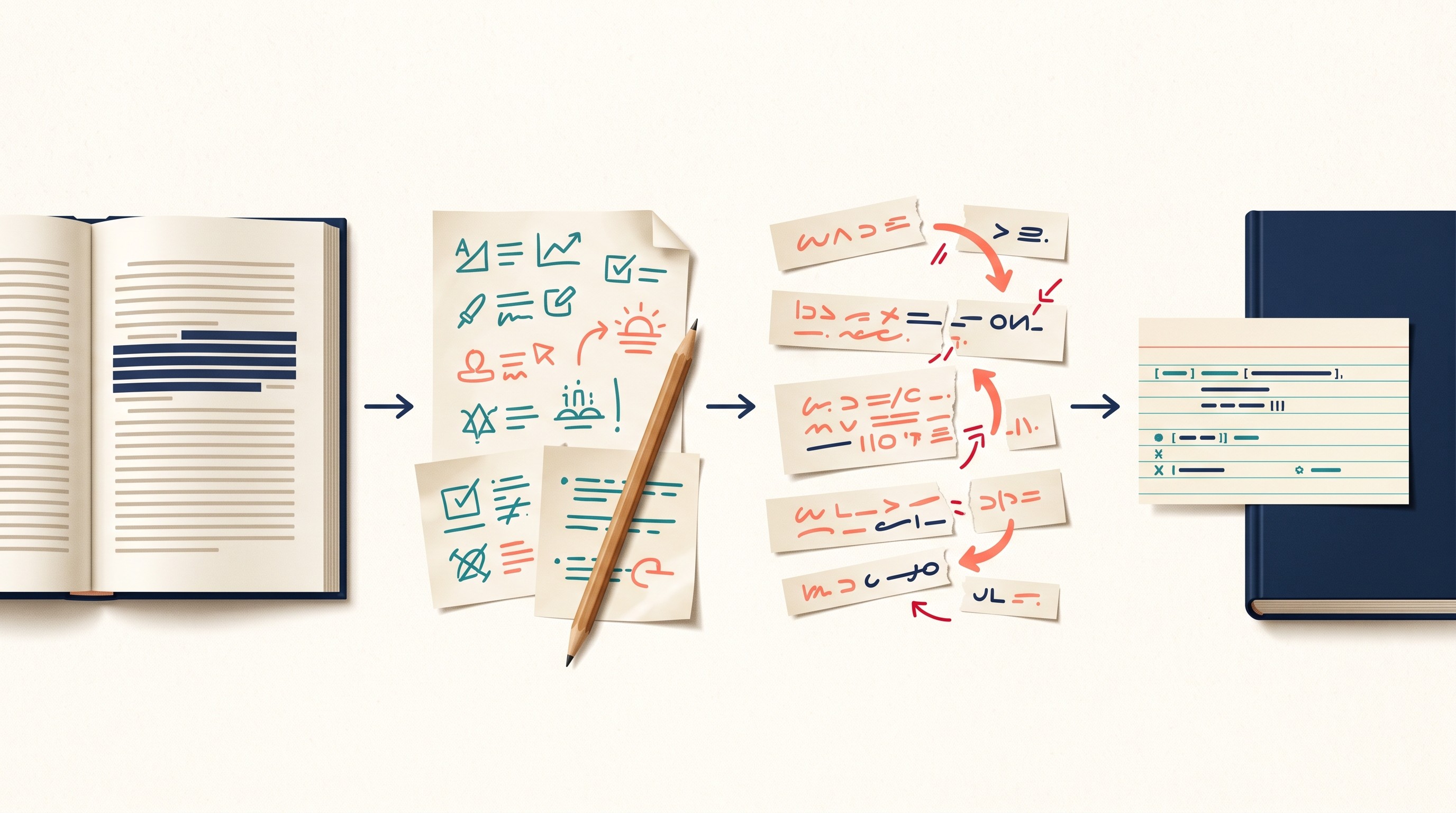
Use this five-step method before writing:
Understand the source. Identify the main claim, evidence, population, and limitation.
Look away from the sentence. Do not paraphrase word by word with the source open.
Draft from memory. Explain the idea as if teaching it to a classmate.
Compare for accuracy. Check numbers, hedging words, comparisons, and scope.
Add the citation. If the idea, finding, or interpretation came from the source, cite it.
If you use AI while revising, keep the same rules. An AI text editor such as Otio can help you shorten, simplify, translate, or improve wording, but you still need to verify meaning, originality, and citation requirements. For broader integrity issues, see Otio’s guide to the ethical use of AI in academic writing.
Examples 1–5: Fixing word-for-word paraphrases
Example 1: Sleep and memory
Illustrative source sentence:
Adequate sleep improves memory consolidation by allowing the brain to strengthen newly learned information.
Weak attempt:
Enough sleep enhances memory consolidation by permitting the brain to reinforce recently learned information.
Improved paraphrase:
When people sleep enough, the brain can stabilize new information more effectively, which supports memory formation.
Revision lesson:
The weak version changes only a few synonyms: “adequate” to “enough,” “improves” to “enhances,” and “strengthen” to “reinforce.” The improved version changes the clause order and explains the relationship in a new structure.
Example 2: Urban trees and heat
Illustrative source sentence:
Urban trees reduce neighborhood temperatures by providing shade and releasing moisture into the air.
Weak attempt:
City trees decrease neighborhood temperatures by giving shade and releasing moisture into the air.
Improved paraphrase:
Shade and moisture from trees can make urban neighborhoods cooler, especially in areas with limited built shade.
Revision lesson:
Replacing “reduce” with “decrease” does not solve the copying problem because the structure remains the same. The improved version changes the subject from “trees” to “shade and moisture” and uses a different cause-and-effect pattern.
Example 3: Feedback and student performance
Illustrative source sentence:
Timely feedback plays an important role in improving student performance because it helps learners identify errors before final assessment.
Weak attempt:
Fast feedback plays a significant role in improving student performance since it helps students find mistakes before final assessment.
Improved paraphrase:
Students often perform better when they receive feedback early enough to correct misunderstandings before they are formally assessed.
Revision lesson:
“Plays an important role” is a copied academic cliché. The improved version states the mechanism more precisely: early feedback gives students time to revise misunderstandings.
Example 4: Migration and labor markets
Illustrative source sentence:
Migration can expand labor markets, increase cultural diversity, and create new demands for public services.
Weak attempt:
Migration may enlarge labor markets, raise cultural diversity, and produce new needs for public services.
Improved paraphrase:
One economic effect of migration is a larger labor supply, although population movement can also affect cultural life and pressure public services.
Revision lesson:
The weak attempt follows the source’s exact sequence: labor markets, diversity, services. The improved version reorganizes the information around the economic effect and preserves the other two points.
Example 5: Social media and political participation
Illustrative source sentence:
Social media may encourage political participation among young adults, but its effects depend on platform design and users’ existing interests.
Weak attempt:
Social networking sites might promote political involvement among youth, but their impacts rely on platform structure and users’ prior interests.
Improved paraphrase:
Although social media can support political engagement among young adults, this influence varies according to how platforms are designed and how interested users already are in politics.
Revision lesson:
The improved paraphrase keeps the qualification. It does not claim that social media always increases participation; it preserves “may” and “depend on.”
Examples 6–10: Improving vocabulary without changing the meaning
Example 6: Air pollution and respiratory illness
Illustrative source sentence:
Long-term exposure to air pollution is linked to higher rates of respiratory illness.
Weak attempt:
Air pollution causes many people to get lung sickness.
Improved paraphrase:
Extended exposure to polluted air is associated with increased respiratory illness.
Revision lesson:
The weak version is too informal and too strong. “Causes” is stronger than “is linked to,” and “lung sickness” is not standard academic vocabulary. “Associated with” keeps the evidence cautious.
Example 7: “A lot of evidence”
Illustrative source sentence:
A large body of evidence suggests that early childhood reading supports later literacy development.
Weak attempt:
A lot of evidence says that reading in early childhood helps later literacy.
Improved paraphrase:
Substantial evidence indicates that reading during early childhood contributes to later literacy development.
Revision lesson:
“A lot of evidence” is conversational. “Substantial evidence” is more academic, but use it only when the source truly describes a strong evidence base.
Example 8: Technology adoption verbs
Illustrative source sentence:
Access to reliable internet can contribute to the adoption of digital learning tools in rural schools.
Weak attempt:
Reliable internet causes rural schools to adopt digital learning tools.
Improved paraphrase:
Reliable internet access can make it easier for rural schools to use digital learning tools.
Revision lesson:
“Cause,” “contribute to,” “associate with,” and “enable” make different claims. The source says internet access is one supporting factor, not the only cause.
Example 9: False friends and collocations
Illustrative source sentence:
The researchers conducted an analysis of economic growth in small manufacturing firms.
Weak attempt:
The researchers made an analysis about economic growth in small manufacturing firms.
Improved paraphrase:
The study analyzed economic growth among small manufacturing firms.
Revision lesson:
Many ESL errors come from direct translation. In academic English, researchers usually conduct an analysis or analyze data; they do not “make an analysis about” something.
Example 10: Technical terms you should not replace
Illustrative source sentence:
Working memory allows individuals to hold and manipulate information for short periods.
Weak attempt:
The brain’s temporary thinking box lets people keep and change information briefly.
Improved paraphrase:
Working memory helps people briefly store information and use it while completing mental tasks.
Revision lesson:
Some technical terms should remain unchanged. Replacing “working memory” with an invented phrase makes the sentence less accurate. Keep the term and rewrite the surrounding language.

For more help with register, see Otio’s guide to improving academic tone and its broader guide to academic writing examples.
Examples 11–15: Changing sentence structure for clearer academic writing
Example 11: Active to passive voice
Illustrative source sentence:
The researchers measured soil quality at three points during the growing season.
Weak attempt:
Soil quality measured the researchers at three points during the growing season.
Improved paraphrase:
Soil quality was measured at three stages of the growing season.
Revision lesson:
Passive voice is useful when the method or result matters more than the researchers. The weak attempt breaks the grammar because “soil quality” cannot measure people.
Example 12: Passive to active voice
Illustrative source sentence:
The policy was implemented in three districts after the pilot program ended.
Weak attempt:
Three districts implemented the policy after the pilot program ended.
Improved paraphrase:
After the pilot program ended, officials implemented the policy in three districts.
Revision lesson:
The weak version may invent responsibility: districts themselves do not necessarily implement policy. If the source does not name the institution, use a general but plausible subject such as “officials,” or keep the passive voice.
Example 13: Combining two short ideas
Illustrative source sentences:
Language learners benefit from frequent speaking practice. Many learners avoid speaking because they fear making mistakes.
Weak attempt:
Language learners benefit from frequent speaking practice, and many learners avoid speaking because they fear making mistakes.
Improved paraphrase:
Although frequent speaking practice supports language learning, many learners avoid it because they are afraid of making errors.
Revision lesson:
The improved version uses a concessive clause with “although” to show contrast. It keeps the original relationship: speaking is useful, but anxiety can prevent it.
Example 14: Breaking a long sentence
Illustrative source sentence:
Vaccine access improved in several regions after mobile clinics were introduced, although remote communities continued to face transportation barriers that limited appointment attendance.
Weak attempt:
Vaccine access improved because mobile clinics were introduced and remote communities had transportation barriers.
Improved paraphrase:
Mobile clinics improved vaccine access in several regions. Even so, transportation problems continued to limit appointment attendance in remote communities.
Revision lesson:
Long source sentences do not always need long paraphrases. The improved version uses two sentences but preserves the limitation about remote communities.
Example 15: Moving a contrast phrase
Illustrative source sentence:
During the first semester, remote learning increased flexibility for some students but reduced peer interaction for others.
Weak attempt:
Remote learning increased flexibility for some students but reduced peer interaction for others during the first semester.
Improved paraphrase:
Remote learning had mixed effects during the first semester: some students gained flexibility, while others had fewer opportunities to interact with peers.
Revision lesson:
Moving time phrases can change meaning if done carelessly. Here, “during the first semester” still qualifies both effects, not only peer interaction.
Examples 16–20: Preserving evidence, numbers, and qualifications
Example 16: “Increased by” vs. “increased to”
Illustrative source sentence:
Participation increased by 15% after the mentoring program was introduced.
Weak attempt:
Participation increased to 15% after the mentoring program was introduced.
Improved paraphrase:
After the mentoring program began, participation was 15% higher.
Revision lesson:
“Increased by 15%” means the amount rose 15% relative to the earlier level. “Increased to 15%” means the final level was 15%. Those are different claims.
Example 17: Hedging with “may” and “might”
Illustrative source sentence:
Regular exercise may improve concentration in adolescents.
Weak attempt:
Regular exercise proves that adolescents concentrate better.
Improved paraphrase:
Regular physical activity might support better concentration among adolescents.
Revision lesson:
Do not turn cautious language into certainty. “May” and “might” signal limited or probabilistic evidence; “proves” overstates the claim.
Example 18: Association is not causation
Illustrative source sentence:
The study found an association between higher screen time and lower sleep quality.
Weak attempt:
The study showed that screen time causes poor sleep quality.
Improved paraphrase:
The study reported that people with more screen time tended to have lower sleep quality.
Revision lesson:
An association means two things occur together in the data. It does not automatically mean one causes the other.
Example 19: Population limits
Illustrative source sentence:
Among first-year university students, financial stress was related to lower academic confidence.
Weak attempt:
Financial stress lowers academic confidence in students.
Improved paraphrase:
For first-year university students, financial stress was linked to lower academic confidence.
Revision lesson:
Removing the population makes the claim too broad. If the research was about first-year students, do not rewrite it as a statement about all students.
Example 20: Comparison direction
Illustrative source sentence:
Students who attended review sessions were more likely to submit the final assignment on time than students who did not attend.
Weak attempt:
Students who did not attend review sessions were more likely to submit the final assignment on time.
Improved paraphrase:
Compared with non-attendees, students who went to review sessions had a higher likelihood of submitting the final assignment by the deadline.
Revision lesson:
Comparisons are easy to reverse. Always check who is “more likely,” who is “less likely,” and what condition is being compared.
[[OTIO_INLINE_PROMO:%7B%22title%22%3A%22Is%20your%20paraphrase%20preserving%20the%20source's%20limits%3F%22%2C%22description%22%3A%22Add%20the%20source%20passage%20and%20your%20draft%20to%20an%20Otio%20chat%20to%20check%20numbers%2C%20hedging%2C%20and%20scope%20before%20adding%20the%20citation.%22%7D]]
Examples 21–25: Producing citation-safe paraphrases in a paragraph
Example 21: APA-style parenthetical citation
Illustrative source sentence:
Bilingual education can support academic achievement when students develop literacy in both their home language and the school language.
Weak attempt:
Bilingual education supports academic achievement when students develop literacy in their home language and school language.
Improved paraphrase:
Students in bilingual programs may benefit academically when instruction helps them build literacy across both the home and school languages (Garcia, 2026).
Revision lesson:
The wording and structure are original, but the idea still belongs to the source. The parenthetical citation credits the source. “Garcia, 2026” is an illustrative APA-style citation, not a real reference.
Example 22: Narrative citation
Illustrative source sentence:
The study examined 120 secondary students and found that guided note-taking improved recall during science lessons.
Weak attempt:
Lee (2026) examined 120 secondary students and found that guided note-taking improved recall during science lessons.
Improved paraphrase:
Lee (2026) found that guided note-taking helped secondary students remember science content more effectively.
Revision lesson:
A narrative citation places the author in the sentence. The paraphrase does not need to repeat every introductory detail unless the sample size matters to your argument.
Example 23: Fixing a patchwritten paragraph
Illustrative source paragraph:
Coastal cities are developing climate adaptation plans, but uncertainty about future sea-level rise makes long-term planning difficult. Flexible infrastructure strategies may help cities adjust as environmental conditions change.
Weak attempt:
Coastal cities are making climate adaptation plans, but uncertainty about future sea-level rise makes planning for the long term hard. Flexible infrastructure strategies might help cities adapt as environmental conditions change.
Improved paraphrase:
Because future sea-level rise remains uncertain, coastal adaptation plans need room for revision. One possible response is flexible infrastructure that can be adjusted as environmental conditions shift (Rahman, 2026).
Revision lesson:
The weak version follows the original sentence order and keeps too many phrases. The improved version changes the order, combines ideas, and preserves uncertainty with “possible.”
Example 24: Paraphrasing two sources in one sentence
Illustrative source A:
Autonomy can increase student motivation when learners have meaningful choices.
Illustrative source B:
Instructor feedback supports motivation when it helps students understand how to improve.
Weak attempt:
Autonomy and feedback increase student motivation (Nguyen, 2026; Patel, 2026).
Improved paraphrase:
Student motivation may be supported by meaningful choices in learning tasks (Nguyen, 2026) and by feedback that explains how students can improve (Patel, 2026).
Revision lesson:
Do not make two sources sound as if they made the same claim. The improved sentence keeps each idea attached to its own citation.
Example 25: Quoting a distinctive phrase inside a paraphrase
Illustrative notes from a source:
Online learning gives students more control over time and place.
The author uses the phrase “structured flexibility.”
Too much flexibility can reduce progress if deadlines are unclear.
Weak attempt:
Online learning provides structured flexibility because students control time and place, but too much flexibility reduces progress when deadlines are unclear.
Improved paraphrase:
Online learning can give students more control over when and where they study, but this “structured flexibility” works best when courses include clear deadlines (Morris, 2026).
Revision lesson:
If a phrase is distinctive and useful, quote it. Paraphrase the surrounding idea and cite both the quoted phrase and the borrowed argument.
If citation placement is the part you struggle with most, Otio’s guide to citation checking tools for academic writers covers tools that help catch missing, inconsistent, or malformed references.
A final checklist for ESL writers
Use this checklist after every paraphrase.
1. Check meaning first.
Ask whether the paraphrase preserves the original claim, scope, evidence strength, numbers, conditions, and limitations. Look especially for changed verbs: “causes,” “proves,” “suggests,” “is associated with,” and “may” are not interchangeable.
2. Check language second.
Replace literal translations and unnatural collocations with clear academic English. Do not force complex vocabulary. A simple accurate sentence is better than an impressive sentence that changes the claim.
3. Check originality third.
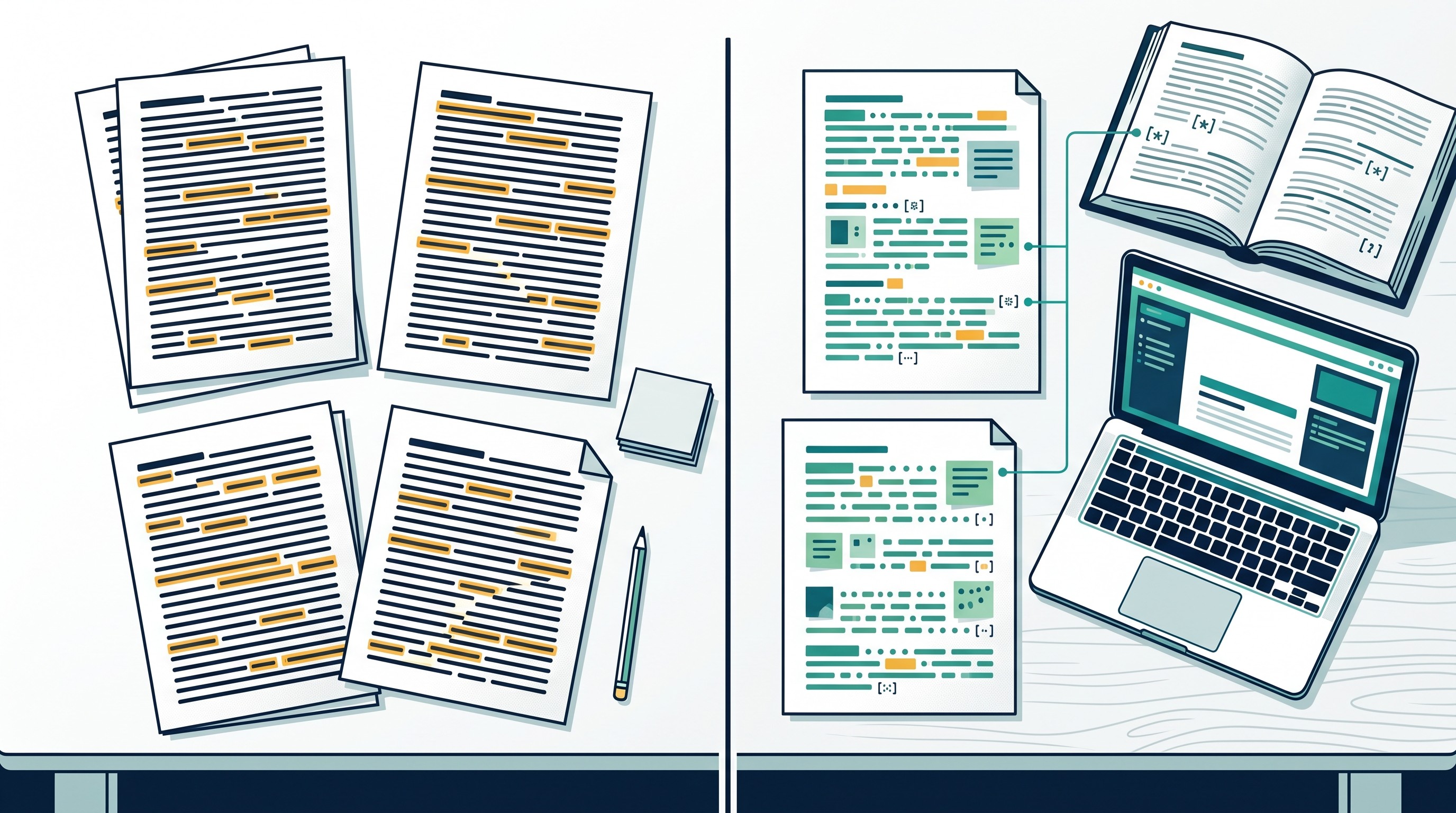
Compare your draft with the source. Look for copied phrases, matching sentence order, and distinctive wording. Rewrite common patchwriting patterns, and use quotation marks if a phrase must stay exactly the same.
4. Check attribution last.
Add the required in-text citation and make sure the reference entry matches the style guide for your course, department, or journal. APA, MLA, Chicago, Vancouver, and discipline-specific styles handle citation details differently.
5. Use help carefully.
Highlight borrowed ideas, draft without looking at the source, and use spelling or grammar suggestions only after checking meaning. Translation tools can help you understand a sentence, but they can also produce copied structure, false friends, or overconfident wording.
When meaning is unclear, ask a writing center tutor, instructor, supervisor, or fluent academic reader to review the paraphrase against the source. The safest paraphrase is not the one with the most changed words; it is the one that is accurate, original in expression, and properly cited.
FAQ
Q: How different must a paraphrase be from the original?
A: The wording and sentence structure should be substantially your own, while the meaning stays accurate. Changing a few synonyms but keeping the source’s grammar and order is patchwriting.
Q: Do I need to cite a paraphrase?
A: Yes. A paraphrase still uses someone else’s idea, evidence, or interpretation, so it normally needs an in-text citation and a matching reference entry.
Q: Can I use a translation tool to paraphrase an academic source?
A: A translation tool can help with comprehension, but do not submit its output without checking meaning, originality, terminology, and your institution’s AI policy. You remain responsible for citing the original source.
Q: What should I do if I cannot paraphrase a technical phrase?
A: Keep essential technical terms when replacing them would reduce accuracy, but rewrite the surrounding sentence. If a distinctive phrase must remain unchanged, use quotation marks and cite the source.
[[OTIO_FOOTER_PROMO:%7B%22title%22%3A%22Review%20your%20own%20sources%20for%20patchwriting%22%2C%22description%22%3A%22Add%20your%20PDFs%2C%20web%20pages%2C%20or%20notes%20to%20Otio%2C%20then%20ask%20it%20to%20review%20a%20paraphrase%20for%20copied%20structure%2C%20changed%20meaning%2C%20and%20missing%20attribution.%22%7D]]