
Writing Workflow
20 Academic Report Writing Templates for Students and Researchers
Use 20 adaptable academic report writing templates for lab reports, literature reviews, case studies, analytical reports, and research summaries. Each template includes the sections, prompts, and adaptation notes needed to start drafting.

If the assignment brief is vague, do not start with a blank document. Pick the template by purpose: experiments need methods and results; literature work needs search and synthesis; analytical reports need criteria and judgment; executive formats need a decision, evidence, risks, and next steps.
The subject matters less than the evidence. A psychology lab report and a chemistry lab report share more structure than a chemistry literature review and a chemistry experiment. Use the 20 templates below as starting frames, then change the headings to match the rubric, discipline, word limit, and citation style.
How to choose the right academic report template
Choose the template by answering four questions:
If your report mainly... | Use this template family | Evidence type |
|---|---|---|
Reports collected data | Lab, experimental, quantitative, data analysis | Measurements, surveys, datasets, observations |
Synthesizes published work | Literature review, systematic review, annotated literature, theoretical framework | Books, journal articles, policy papers |
Explains a case or field setting | Qualitative, case study, fieldwork, interview-based | Interviews, notes, documents, artifacts |
Makes a judgment or recommendation | Analytical, policy, technical, executive summary | Mixed evidence, criteria, tradeoffs |
Fulfills a broad course assignment | General, short research, problem-solution, comparative | Depends on prompt |

Every template needs customization. At minimum, replace the generic fields with:
Research question or problem: the exact question your report answers.
Audience: instructor, lab supervisor, policy reader, peer researcher, client, or committee.
Evidence: data, sources, observations, cases, or documents.
Method: how evidence was collected, selected, cleaned, coded, or analyzed.
Limitations: what the report cannot prove, measure, or generalize.
Citation style: APA, MLA, Chicago, Harvard, IEEE, Vancouver, or the institution’s own guide.
Rubric language: use the assignment’s required terms when they are reasonable and accurate.
A good template is scaffolding, not decoration. If a section does not help answer the question, prove the claim, document the method, or satisfy the rubric, remove it.
For a fuller end-to-end process, see Otio’s guide on how to write a research report.
Templates for standard academic and course reports
1. General academic report template
Use this when the assignment says “write a report” but does not specify a specialized format.
Sections
Title page
Abstract or executive summary
Introduction
Background or literature context
Methodology
Findings
Discussion
Conclusion
References
Appendices
Prompts to fill
What question, problem, or task does the report address?
What context does the reader need before seeing the evidence?
What method was used to gather or assess evidence?
What are the most important findings?
What do the findings mean?
What should the reader understand, decide, or do next?
Adaptation notes
Omit the title page if your course uses inline headings. Omit methodology if the report is purely analytical and no formal method was required, but still explain how evidence was chosen. Use appendices for raw survey questions, long tables, interview guides, calculations, or supplementary documents.

2. Short student research report template
Use this for 1,000–2,500 word assignments, short empirical reports, or early undergraduate projects.
Sections
Research question
Brief literature context
Method or source selection
Key findings
Interpretation
Limitations
Next steps or conclusion
References
Prompts to fill
What is the narrow question?
Which two to five sources or data points matter most?
What pattern appears in the evidence?
What is the safest interpretation?
What would a larger version of this project need?
Adaptation notes
Do not compress a full thesis structure into a short paper. Use fewer headings and make each paragraph do visible work. One strong table or figure is often better than several under-explained visuals.
3. Problem-solution report template
Use this when the task asks you to define a problem and recommend a response.
Sections
Problem definition
Scope and affected groups
Causes or contributing factors
Evidence of severity
Evaluation criteria
Proposed solution
Implementation considerations
Risks and limitations
Conclusion
Prompts to fill
What exactly is the problem, and what is outside scope?
Who is affected?
What evidence shows the problem is real?
What criteria will define a good solution?
Why is your proposed solution better than alternatives?
What could prevent implementation?
Adaptation notes
Keep the problem and solution separate. Many weak reports jump to a recommendation before proving the problem or stating the criteria for success.
4. Comparative report template
Use this to compare theories, policies, texts, tools, case studies, or interventions.
Sections
Purpose of comparison
Comparison criteria
Subject A overview
Subject B overview
Similarities
Differences
Evaluation against criteria
Final judgment
References
Prompts to fill
Why are these items being compared?
Which criteria matter: cost, validity, ethics, accuracy, feasibility, explanatory power, outcomes?
What evidence supports each comparison?
Which option, theory, or case is stronger for the stated purpose?
Adaptation notes
Do not organize the whole report as “all about A, then all about B” unless the assignment requires it. A criteria-by-criteria structure usually produces clearer analysis.
Templates for experiments, labs, and quantitative research
5. Lab report template
Use this for science labs, practical sessions, and controlled classroom experiments.
Sections
Objective
Hypothesis
Materials
Procedure
Results
Calculations
Error analysis
Discussion
Conclusion
References, if required
Prompts to fill
What was the lab designed to test or demonstrate?
What result was expected and why?
What was actually observed?
Which calculations transform raw observations into usable results?
What errors, uncertainties, or uncontrolled variables affected results?
Did the results support the hypothesis?
Adaptation notes
Separate observed results from interpretation. Put measurements, tables, graphs, and calculations in results. Explain causes, meaning, and error in discussion.
6. Experimental research report template
Use this for original studies with variables, controls, samples, and statistical analysis.
Sections
Research question
Hypotheses
Variables
Participants, subjects, or samples
Research design
Controls
Procedure
Statistical analysis
Results
Limitations
Implications
Prompts to fill
What independent and dependent variables are used?
How were participants or samples selected?
What controls reduce alternative explanations?
Which statistical test matches the design?
What do the results show without overclaiming?
What can and cannot be generalized?
Adaptation notes
Define variables operationally. “Stress” or “performance” is not enough; state how each was measured.
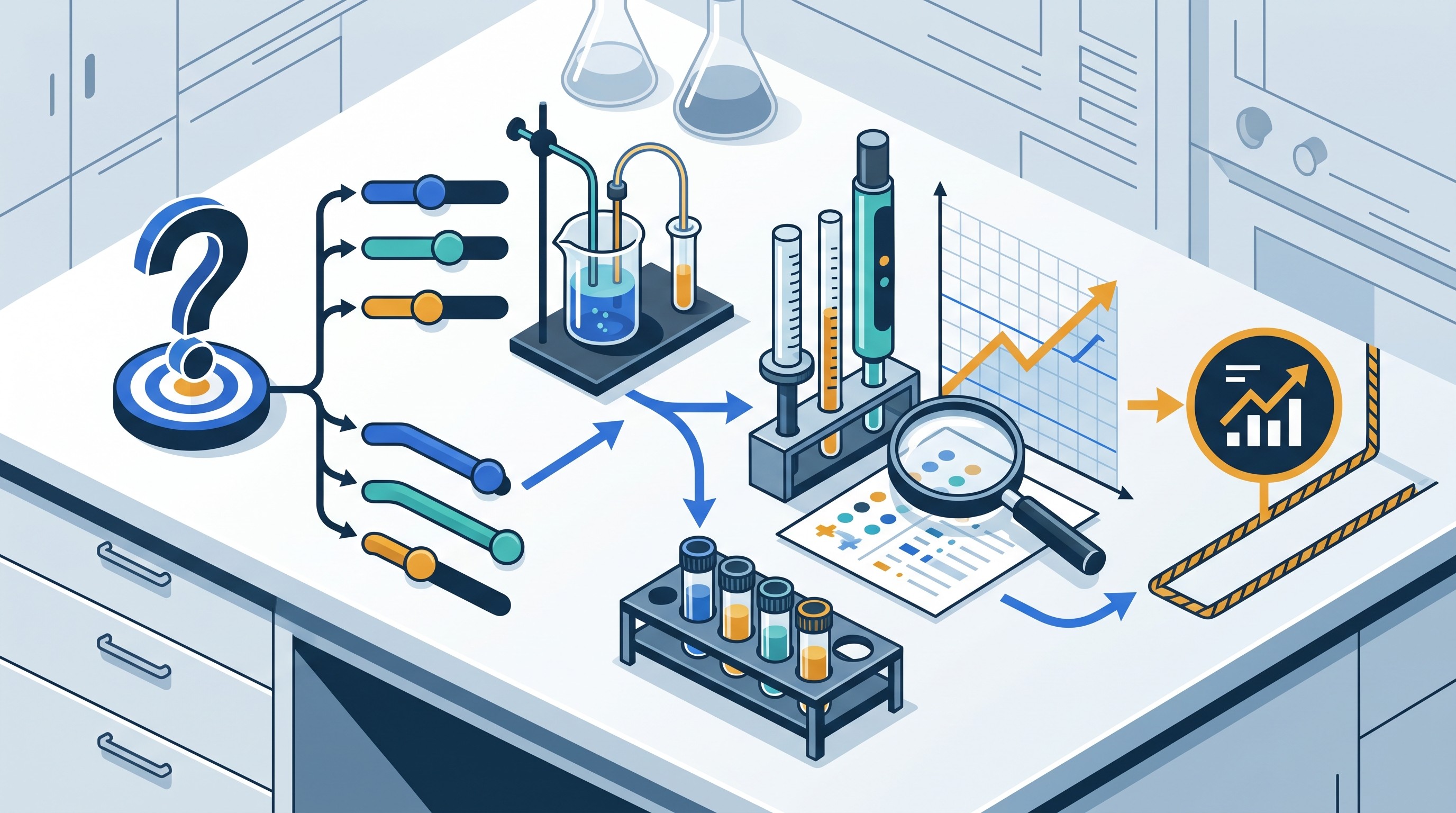
7. Quantitative research report template
Use this for survey studies, correlational studies, quasi-experimental designs, and thesis chapters with numerical analysis.
Sections
Problem statement
Research questions or hypotheses
Operational definitions
Population and sampling
Measures or instruments
Data collection
Data analysis plan
Tables and figures
Findings
Validity and reliability concerns
Conclusion
Prompts to fill
What numerical relationship, difference, or trend is being examined?
What population does the sample represent?
How were constructs measured?
What cleaning or exclusion rules were applied?
What results answer each question?
What validity threats remain?
Adaptation notes
Align every table with a research question. If a table does not answer a question or support a claim, cut it or move it to an appendix.
8. Data analysis report template
Use this for reports built around an existing dataset, spreadsheet, database export, or statistical file.
Sections
Dataset and provenance
Analytical question
Data cleaning decisions
Variables used
Method or model
Visualizations
Results
Uncertainty
Limitations
Actionable interpretation
Prompts to fill
Where did the dataset come from?
What rows, fields, or time periods are included?
What cleaning decisions changed the data?
Which method was used, and why?
What pattern appears?
How confident should the reader be?
Adaptation notes
Document cleaning decisions. Missing values, outliers, merged fields, and recoded variables can change the answer. For spreadsheet-heavy projects, Otio’s AI data analysis workspace can help inspect CSVs, summarize patterns, and generate charts, but final interpretation still needs human checking.
Templates for literature-based research and evidence synthesis
9. Literature review report template
Use this when the main task is to synthesize published scholarship around a question or theme.
Sections
Review scope
Search approach
Inclusion and exclusion criteria
Thematic organization
Areas of agreement
Areas of disagreement
Gaps in the literature
Limitations of the review
Research implications
References
Prompts to fill
What topic, time period, discipline, or population is included?
Where did you search?
Which sources were included or excluded, and why?
What themes recur across sources?
Where do scholars disagree?
What remains unanswered?
Adaptation notes
A literature review is not an annotated bibliography in paragraph form. Organize by theme, method, theory, chronology, or debate. For more structure, see these literature review writing tips.
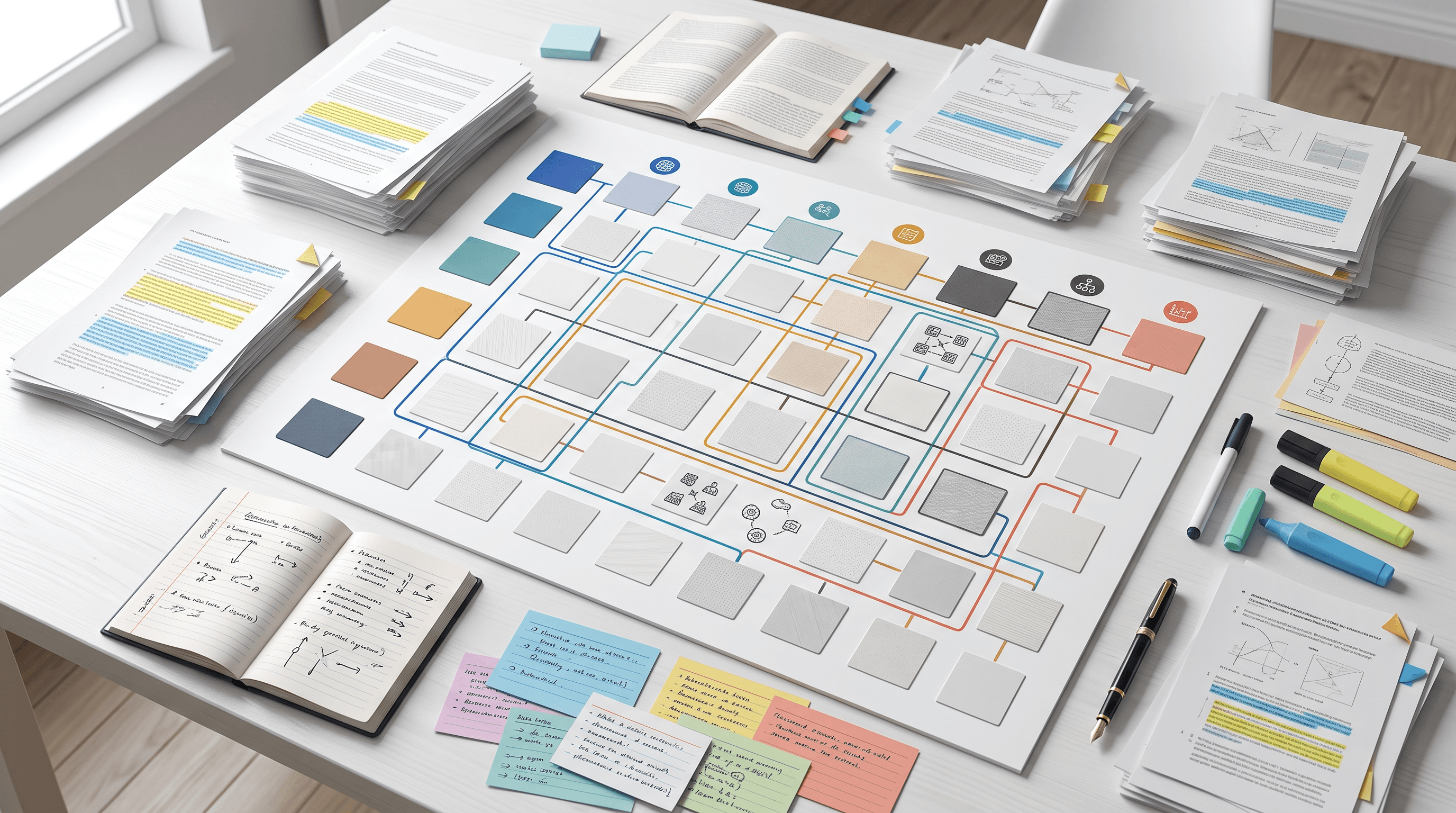
10. Systematic literature review report template
Use this for structured reviews with explicit search, screening, and eligibility procedures.
Sections
Review question
Databases and search strategy
Screening process
Eligibility criteria
Included studies
Data extraction method
Synthesis method
Findings
Bias or quality assessment
Limitations
Conclusion
Prompts to fill
What precise review question is being answered?
Which databases and search strings were used?
How were records screened?
What criteria determined inclusion?
How was information extracted from each study?
How were findings synthesized?
Adaptation notes
Make the review reproducible. A reader should understand enough about your search and screening process to see how the included evidence was produced.
11. Annotated literature report template
Use this when the assignment asks for source-by-source analysis, often before a larger paper.
Sections
Research question
Source citation
Source summary
Methodological notes
Credibility assessment
Relevance to research question
Connection to other sources
Emerging themes
Prompts to fill
What is the source’s main claim?
What evidence or method supports it?
Is the source peer-reviewed, current, authoritative, or contested?
How does it help answer your question?
Which other source does it support, challenge, or extend?
Adaptation notes
Keep summaries short. The value is in evaluation and connection, not retelling every section of each article.
12. Theoretical framework report template
Use this when the report needs to explain the concepts, assumptions, or models that guide a study.
Sections
Research problem
Central concepts
Definitions
Relationships among concepts
Supporting scholarship
Application to the study
Unresolved tensions
Implications for analysis
Prompts to fill
Which theory or conceptual model frames the report?
What terms need definition?
How do the concepts relate?
Why is this framework appropriate?
What does the framework help explain?
What does it leave out?
Adaptation notes
Do not add a theory section just to sound scholarly. Use theory when it changes how evidence is interpreted.
[[OTIO_INLINE_PROMO:%7B%22title%22%3A%22Need%20to%20connect%20sources%20across%20your%20literature%20review%3F%22%2C%22description%22%3A%22Add%20your%20PDFs%2C%20web%20links%2C%20and%20notes%20to%20Otio%2C%20then%20compare%20themes%2C%20disagreements%2C%20and%20gaps%20while%20shaping%20the%20review%20structure.%22%7D]]
Templates for qualitative, case, and field research
13. Qualitative research report template
Use this for interview, focus group, document, ethnographic, or open-ended response analysis.
Sections
Research context
Participants or materials
Data-collection method
Coding approach
Themes
Representative evidence
Reflexivity
Ethics
Limitations
Conclusion
Prompts to fill
What setting or social context matters?
Who or what was studied?
How was qualitative data collected?
How were codes or themes developed?
Which excerpts best represent each theme?
How might researcher position affect interpretation?
Adaptation notes
Do not treat a few quotations as proof by themselves. Explain why each excerpt represents a broader pattern in the data.
14. Case study report template
Use this for a single organization, event, patient scenario, legal dispute, historical episode, product, community, or policy case.
Sections
Case selection
Context
Central issue
Evidence sources
Analysis
Alternative explanations
Findings
Transferable lessons
Limitations
Prompts to fill
Why was this case selected?
What background does the reader need?
What issue or puzzle does the case reveal?
Which evidence sources support the analysis?
What alternative explanations must be considered?
What lessons apply beyond this case, if any?
Adaptation notes
A case study is not just a narrative. Make the analytical question visible early, then use the case to answer it.

15. Fieldwork or observation report template
Use this for classroom observations, ethnographic notes, site visits, clinical observations, or field-based assignments.
Sections
Setting
Observation purpose
Observation protocol
Field notes
Recurring patterns
Positionality
Ethical considerations
Interpretation
Unanswered questions
Prompts to fill
Where and when did observation occur?
What were you looking for?
How were notes recorded?
What repeated behaviors, interactions, or conditions appeared?
What might your presence or role have changed?
What cannot be concluded from observation alone?
Adaptation notes
Distinguish description from interpretation. “Three students left the room during group work” is observation. “The activity failed to engage students” is interpretation that needs support.
16. Interview-based research report template
Use this when interviews are the primary evidence source.
Sections
Research question
Participant selection
Interview design
Consent and ethics
Analytic method
Themes
Attributed or anonymized evidence
Interpretation
Limitations
Conclusion
Prompts to fill
Why were these participants selected?
What interview format was used?
How was consent obtained?
Were participants named, anonymized, or grouped?
How were responses coded or compared?
What themes emerged across interviews?
Adaptation notes
Use quotations carefully. Attribute according to your ethics protocol, avoid identifying details when confidentiality is required, and do not make broad claims from a narrow sample.
Templates for analytical, policy, and professional reports
17. Analytical report template
Use this when the assignment asks you to evaluate evidence and make an argument, not just summarize information.
Sections
Claim or analytical question
Criteria for analysis
Evidence base
Competing interpretations
Evaluation
Implications
Conclusion
Prompts to fill
What question or claim drives the analysis?
What criteria define a persuasive answer?
What evidence supports each interpretation?
Which interpretation is strongest?
What follows if the analysis is accepted?
Adaptation notes
State criteria before judgment. Otherwise the report can feel like opinion with citations attached.
18. Policy report template
Use this for public policy, institutional policy, health policy, education policy, or governance assignments.
Sections
Issue summary
Affected groups
Evidence base
Policy options
Evaluation criteria
Tradeoffs
Recommendation
Implementation risks
References
Prompts to fill
What issue requires action?
Who bears the costs and benefits?
What evidence defines the scale of the problem?
Which policy options are realistic?
What criteria matter: equity, cost, effectiveness, legality, feasibility, public acceptance?
What risks could undermine the recommendation?
Adaptation notes
A policy report should not hide tradeoffs. Strong recommendations acknowledge cost, feasibility, uncertainty, and opposition.
19. Technical report template
Use this for engineering, computer science, applied science, operations, design, or process reports.
Sections
Project scope
Requirements
System, process, or design description
Methods
Results
Constraints
Risks
Recommendations
Supporting documentation
Prompts to fill
What system, process, prototype, or technical problem is covered?
What requirements define success?
What method was used to test, build, or evaluate it?
What results were obtained?
What constraints affected performance?
What should be changed, maintained, or tested next?
Adaptation notes
Technical readers need traceability. Connect requirements to methods, methods to results, and results to recommendations. For more on this format, see these technical report writing tips.
20. Executive summary report template
Use this when the reader may not read the full report but needs the decision logic.
Sections
Decision or problem
Essential evidence
Key findings
Recommendation
Risks
Next actions
Prompts to fill
What decision does the reader need to make?
What evidence matters most?
What are the three to five findings they must know?
What do you recommend?
What risks or uncertainties remain?
What should happen next?
Adaptation notes
Write this last, even if it appears first. Do not include background that does not change the decision. If the report is long, keep the executive summary proportional: short enough to stand alone, specific enough to be useful.
How to adapt any template without weakening the report
Templates fail when students keep every heading and simply pour content into it. Adaptation is the work.
Use this checklist before drafting:
Replace the generic prompt with the exact assignment question.
Define the reader: instructor, disciplinary peer, committee, supervisor, client, or public audience.
Match headings to the rubric: if the rubric says “method,” “evidence,” or “critical evaluation,” use those terms where appropriate.
Remove dead sections: do not keep “methodology” if the report has no method beyond reading assigned texts, unless you explain source selection.
Name your evidence type: experiment, survey, interview, document set, literature sample, dataset, case, or mixed evidence.
State limits early enough: limitations should not appear as an apology at the end.
Check citation style: in-text citations, reference list, tables, figure captions, and appendices must follow the same style.
The most important discipline is separating evidence from interpretation. First show what the sources, data, or observations indicate. Then explain what those findings mean for the research question. Mixing the two makes the report harder to verify and easier to overstate.
A practical workflow looks like this:
Put the assignment brief and rubric at the top of your notes.
Choose one template and delete irrelevant sections.
Collect sources, PDFs, notes, datasets, or field materials.
Build an evidence map: question → evidence → finding → interpretation.
Draft headings first, then topic sentences.
Insert tables, figures, or quotations only where they support a claim.
Write the introduction after the structure is stable.
Write the conclusion and executive summary last.
Check every citation, number, quotation, and table reference.
Revise for flow, not just grammar.
If your research is scattered across PDFs, links, notes, and draft fragments, a workspace such as Otio’s AI text editor can help keep source material and drafting in one place. Its Library stores PDFs, DOCX files, web links, YouTube videos, CSVs, notes, and folders; the reader lets you highlight and ask questions inside PDFs; and the editor offers track-changes-style AI suggestions for improving wording without blindly replacing your draft.
That last part matters. AI can help restructure a paragraph or shorten a bloated section, but every claim still needs to be checked against the original source. For academic integrity guardrails, read Otio’s guide to the ethical use of AI in academic writing.
Before submission, run this final quality check:
Argument: Does every major section answer the research question?
Organization: Are headings in a logical order?
Evidence: Is each claim supported by data, sources, examples, or analysis?
Method: Can the reader see how evidence was collected or selected?
Tables and figures: Are they labeled, referenced, and interpreted?
Limitations: Are scope, uncertainty, and weaknesses stated honestly?
Citations: Are in-text citations and references complete and consistent?
Academic integrity: Are quotations marked, paraphrases cited, and AI assistance disclosed if required?
Style: Does the report use the required tone, format, and citation guide?
For a broader checklist, compare your draft against these characteristics of a good report.
FAQ
Q: What is the basic structure of an academic report?
A: Most academic reports include an introduction, evidence or background, methods when applicable, findings or analysis, discussion, conclusion, and references. The exact structure should follow the assignment brief, discipline, and report purpose.
Q: Can I use one template for every research report?
A: No. A lab report, literature review, case study, and executive summary require different evidence and reasoning structures. Start with a general framework, then adapt the sections to the research design and audience.
Q: What is the difference between a research paper and an academic report?
A: A research paper usually emphasizes an extended scholarly argument or original study, while an academic report often presents findings, procedures, analysis, or recommendations in a more structured format. The distinction varies by institution and discipline.
Q: How do I make an academic report template my own?
A: Replace each placeholder with your research question, evidence, method, findings, and required terminology. Then check the rubric, citation style, word limit, and formatting instructions before drafting the final version.
[[OTIO_FOOTER_PROMO:%7B%22title%22%3A%22Ready%20to%20apply%20a%20template%20to%20your%20sources%3F%22%2C%22description%22%3A%22Bring%20your%20assignment%20brief%2C%20sources%2C%20notes%2C%20and%20dataset%20into%20Otio%20to%20map%20evidence%20to%20findings%20before%20drafting%20the%20report.%22%7D]]