Biostatistics Study Resources
18 Best Biostatistics Books and Study Resources for Health-Science Learners
Compare 18 biostatistics textbooks, exam-review guides, clinical-reading resources, and free study aids by learner level, study goal, and practical tradeoffs.

The best biostatistics resource depends on what you need to do
Most health-science learners should not buy five textbooks. Build a small stack: one accessible core textbook, one practice or review resource, and one clinical-reading guide. That covers the three jobs biostatistics actually has in training: learning the concepts, doing problems under assessment conditions, and interpreting papers without overclaiming.
If you want a default stack, start with Essentials of Biostatistics in Public Health or Intuitive Biostatistics, add OpenIntro Statistics or your course question bank for practice, then use How to Read a Paper or Users’ Guides to the Medical Literature for clinical appraisal.
The right choice depends on six things: mathematical depth, health-science examples, practice questions, clinical interpretation, accessibility, and fit with your instructor’s syllabus. No single book wins every use case. A public-health MPH course, a medical-school exam block, and a research-methods seminar reward different books.

If your main goal is... | Start with... | Add... | Avoid relying only on... |
|---|---|---|---|
Intro biostatistics coursework | Sullivan, Rosner, Pagano & Gauvreau, or Daniel & Cross | Assigned problem sets | YouTube explanations alone |
Medical-school exam review | Norman & Streiner, Medical Statistics at a Glance, or a board-aligned review source | Practice questions | A dense graduate text |
Public-health training | Sullivan or Rosner | Epidemiology and methods readings | A generic stats book with no health examples |
Reading clinical papers | Greenhalgh, Users’ Guides, or Clinical Epidemiology | Real journal articles | Formula memorization |
Designing a study | Designing Clinical Research | Mentor feedback and protocol examples | Introductory biostatistics alone |
Before buying, compare the book’s table of contents with the syllabus. If the course spends three weeks on regression and survival analysis, a “friendly” conceptual book may help you understand the words but still leave you short on assessed methods.
Core biostatistics textbooks for building a strong foundation
1. Essentials of Biostatistics in Public Health by Lisa M. Sullivan
Best for: beginners in public health, nursing, pre-med, and health-science programs who want a manageable first pass.
Sullivan is the safest starting point for many learners because it teaches biostatistics through public-health applications rather than abstract math. The fourth edition is described as providing “a fundamental and engaging background” for students learning to apply and interpret biostatistics in public health, according to the Google Books listing for Essentials of Biostatistics in Public Health.
Use it when the goal is competence: data types, descriptive statistics, probability, confidence intervals, hypothesis tests, regression basics, and common health measures. It is not the deepest option for mathematically ambitious students, but that is also why it works well as a first book.
Watch out: if your course is statistics-heavy rather than public-health-focused, you may need a more formal companion for derivations and additional exercises.
2. Fundamentals of Biostatistics by Bernard Rosner
Best for: learners who want a broader and more formal treatment after the introductory layer.
Rosner is often used when a course expects more statistical maturity. It covers a wide range of methods and gives a more substantial quantitative foundation than many short medical-statistics books.
The tradeoff is density. Beginners can use it, but they should work selectively: match chapters to the syllabus, do the assigned problems, and avoid trying to read it like a narrative textbook.
Best use: keep it as the “course anchor” if your instructor assigns it, or as the second book after Sullivan or Motulsky when you want more rigor.
3. Principles of Biostatistics by Marcello Pagano and Kimberlee Gauvreau
Best for: learners who want a structured textbook with stronger quantitative development.
Pagano and Gauvreau sits between accessible health-science introductions and more advanced graduate statistics texts. It is a good fit when you need to understand why a method works, not just when to use it.
Choose it if your course includes probability, sampling distributions, estimation, hypothesis testing, categorical data, linear regression, logistic regression, and survival analysis in a coherent sequence.
Watch out: it may feel slower than a review guide. That is the point. It is for building the foundation, not cramming the night before an exam.
4. Biostatistics: A Foundation for Analysis in the Health Sciences by Wayne W. Daniel and Chad L. Cross
Best for: readers who want a traditional, comprehensive health-science reference.
Daniel and Cross is a classic “full textbook” choice. It fits learners who want a broad reference they can return to when a course or research project asks for a method they only half-remember.
It is especially useful if you prefer standard textbook sequencing, worked examples, and a reference-like feel. It is less ideal if you are looking for a compact medical-school review book.
Best use: pair it with active problem practice. Comprehensive books create false confidence if reading replaces calculation.
5. Medical Statistics at a Glance by Aviva Petrie and Caroline Sabin
Best for: visual revision and fast review before exams or journal clubs.
Medical Statistics at a Glance is the opposite of a heavy foundational text. It is concise, diagram-friendly, and easy to scan. That makes it valuable when you need to refresh p-values, confidence intervals, diagnostic test performance, regression, or survival analysis before applying them.
Do not use it as your only textbook for a full biostatistics course unless the course itself is light. It works better as a second pass: read the main textbook, then use this to organize the mental map.
Best use: revision weeks, clinical rotations, and quick checks while reading papers.
Readable books for medical students and applied health-science courses
6. Intuitive Biostatistics by Harvey Motulsky
Best for: learners who understand clinical language better than statistical notation.
Motulsky’s strength is interpretation. The third edition is described as retaining “a focus on how to interpret statistical results rather than on how to analyze data” with minimal mathematical emphasis, according to the AbeBooks description of Intuitive Biostatistics.
That makes it a strong choice for medical students, residents, and clinicians who need to understand results sections, not become statisticians. It explains concepts such as statistical significance, confidence intervals, multiple comparisons, correlation, regression, and study interpretation in plain language.
Watch out: it may not match every course’s full syllabus. If your exam requires calculations, formulas, or software output interpretation, pair it with a problem-heavy source.
7. Biostatistics: The Bare Essentials by Geoffrey R. Norman and David L. Streiner
Best for: a compact conceptual overview before tackling technical material.
Norman and Streiner is useful when the problem is intimidation. It gives learners a way into the subject without pretending biostatistics is just common sense.
Use it before a dense textbook or alongside medical-school lectures. It is especially good for sorting out what a test is trying to estimate, why assumptions matter, and what “significant” does not mean.
Watch out: compact books leave gaps. Treat it as a conceptual bridge, not the only resource for a course with graded calculations.
8. Statistics for the Behavioral Sciences by Frederick J. Gravetter and Larry B. Wallnau
Best for: learners who benefit from careful pedagogy and many worked examples, even if the examples are not mostly medical.
This is not a biostatistics book in the narrow sense. Its value is instructional structure: clear explanations, repeated examples, and a staged introduction to statistical reasoning.
Health-science learners sometimes do better with a general introductory statistics book when their main barrier is notation, probability, or hypothesis testing. The limitation is obvious: you will need to translate behavioral-science examples into clinical or public-health contexts.
Best use: as a support text when your assigned biostatistics book moves too quickly through core statistical ideas.
9. Statistics with Confidence by Martin Bland
Best for: understanding confidence intervals and communicating uncertainty.
Many learners can recite “95% confidence interval” without being able to explain it in clinical language. Bland’s work is useful because uncertainty is the center of medical evidence, not a side topic.
Use it when you are reading effect estimates, diagnostic accuracy studies, clinical trials, or observational studies and need to say what the interval means for decision-making.
Watch out: it is not a complete introductory biostatistics course. It is a targeted resource for estimation, precision, and interpretation.
10. How to Read a Paper by Trisha Greenhalgh
Best for: bridging statistical concepts and evidence-based clinical reading.
Greenhalgh is not a calculation textbook. It teaches the practical skill that many learners actually need: reading a paper without being fooled by design problems, bias, weak endpoints, or overstated conclusions.
Use it alongside real articles. For each paper, identify the question, design, population, exposure or intervention, outcome, effect estimate, confidence interval, and main limitation. That routine will do more for clinical interpretation than memorizing isolated definitions.
Best use: journal clubs, evidence-based medicine courses, research-methods modules, and clinical rotations.
If you are building a broader medical study shelf, Otio has related guides to physiology textbooks for medical students, biochemistry textbooks for med students, and biology textbooks for pre-med learners.
Practice-focused and exam-review resources
11. Statistics for Medical Professionals by Michael R. Chernick and Robert H. Friis
Best for: medical and health-professional learners who want practical framing.
This book is useful when biostatistics feels disconnected from clinical work. It keeps the focus on medical applications, which helps learners understand why they are studying sampling, inference, regression, and diagnostic accuracy in the first place.
Use it as a course-support resource rather than assuming it will replace the assigned text. If your class has a specific problem style, your practice source should match that style.
Best use: reinforcing lecture topics with medically framed explanations and examples.
12. Basic & Clinical Biostatistics by Darren R. Dahiru and colleagues
Best for: learners whose syllabus specifically assigns this title or whose program uses it for clinical examples.
This is a “verify before buying” recommendation. The title Basic & Clinical Biostatistics has appeared in different editions and author configurations over time, and course listings may not always match bookstore metadata cleanly. Before purchasing, confirm the exact author list, edition, ISBN, and whether your instructor expects that version.
Its value, when it fits the syllabus, is the connection between statistical methods and clinical examples. That matters because many students can calculate a test statistic but still struggle to interpret what it means for a patient population.
Watch out: do not buy a similarly titled edition on autopilot. Edition mismatches can mean different chapters, exercises, and answer keys.
13. The Cartoon Guide to Statistics by Larry Gonick and Woollcott Smith
Best for: a low-friction visual refresher when notation is the obstacle.
This book is not a health-science textbook, and it will not prepare you alone for a biostatistics exam. Its job is to lower the activation energy.
Use it for concepts that often become foggy: probability, distributions, sampling, correlation, regression, and hypothesis testing. Then return to your formal textbook and solve problems.
Best use: a weekend reset before starting a harder biostatistics course.
14. OpenIntro Statistics
Best for: a free or low-cost source of broad introductory coverage and exercises.
OpenIntro is a strong option when cost matters or when you need more practice than your assigned text provides. It covers the standard introductory statistics sequence: data, probability, distributions, inference, regression, and related topics.
The limitation is fit. Its examples are broad rather than narrowly health-science-focused. That is fine for learning the statistical machinery, but medical and public-health learners should still practice with clinical datasets and journal abstracts.
Best use: extra exercises, self-study, or pre-course preparation.
For an open health-science-specific option, the Open Textbook Library lists An Intuitive, Interactive Introduction to Biostatistics as an introductory statistics textbook “oriented towards undergraduate students in the health sciences” and covering material typical of a first-semester statistics course, according to the Open Textbook Library entry.
15. StatQuest with Josh Starmer
Best for: short explanations of individual concepts.
StatQuest works well when you are stuck on one thing: p-values, logistic regression, ROC curves, random forests, survival analysis, principal components, or another concept that lectures made too abstract.
Use it as a repair tool. Watch one topic, pause often, write the concept in your own words, then solve a related problem. Passive watching feels productive but does not build exam-ready recall.
Watch out: videos are not a syllabus. Keep a checklist of assigned topics so you do not confuse familiarity with coverage.
[[OTIO_INLINE_PROMO:%7B%22title%22%3A%22How%20do%20these%20resources%20fit%20your%20syllabus%3F%22%2C%22description%22%3A%22Save%20your%20textbook%2C%20lecture%20PDFs%2C%20and%20question%20bank%20together%2C%20then%20ask%20Otio%20to%20compare%20coverage%20and%20surface%20gaps%20before%20you%20choose%20a%20practice%20resource.%22%7D]]
Resources for interpreting medical studies and research papers
16. Users’ Guides to the Medical Literature by Gordon Guyatt and colleagues
Best for: interpreting evidence quality, treatment effects, diagnostic tests, harm, prognosis, and applicability.
This is one of the best resources once you move from “what is a confidence interval?” to “should this paper change practice?” It trains the reader to ask better questions about study design, validity, effect size, patient relevance, and certainty.
Use it when reading randomized trials, diagnostic studies, systematic reviews, guideline papers, and observational research. It pairs well with a biostatistics textbook because it puts statistical results back into clinical context.
Best use: journal clubs, evidence-based medicine curricula, residency, and clinical research training.
17. Clinical Epidemiology: The Essentials by Robert H. Fletcher, Suzanne W. Fletcher, and Grant S. Fletcher
Best for: connecting study design, bias, risk, prognosis, diagnosis, and clinical decision-making.
Clinical epidemiology is the bridge between biostatistics and patient care. This book helps you understand how study design shapes what a statistical result can mean.
It is especially useful for learners who keep mixing up association, causation, confounding, bias, absolute risk, relative risk, sensitivity, specificity, and predictive value. Those concepts show up constantly in medical literature, and they are easy to misuse.
Best use: alongside biostatistics when your goal is evidence interpretation rather than calculation alone.
18. Designing Clinical Research by Stephen B. Hulley and colleagues
Best for: learners moving from coursework to protocols, projects, theses, or clinical studies.
Hulley is the book to reach for when the question changes from “what test should I use?” to “how should this study be designed?” It helps with research questions, study designs, outcomes, measurement, sample-size thinking, and analysis planning.
This is not the best first book for a beginner who has never seen confidence intervals. It becomes valuable once you are planning a capstone, thesis, quality-improvement project, observational study, or clinical protocol.
Best use: research-methods courses, MPH projects, clinical research fellowships, and early protocol development.
How to build a practical biostatistics study stack
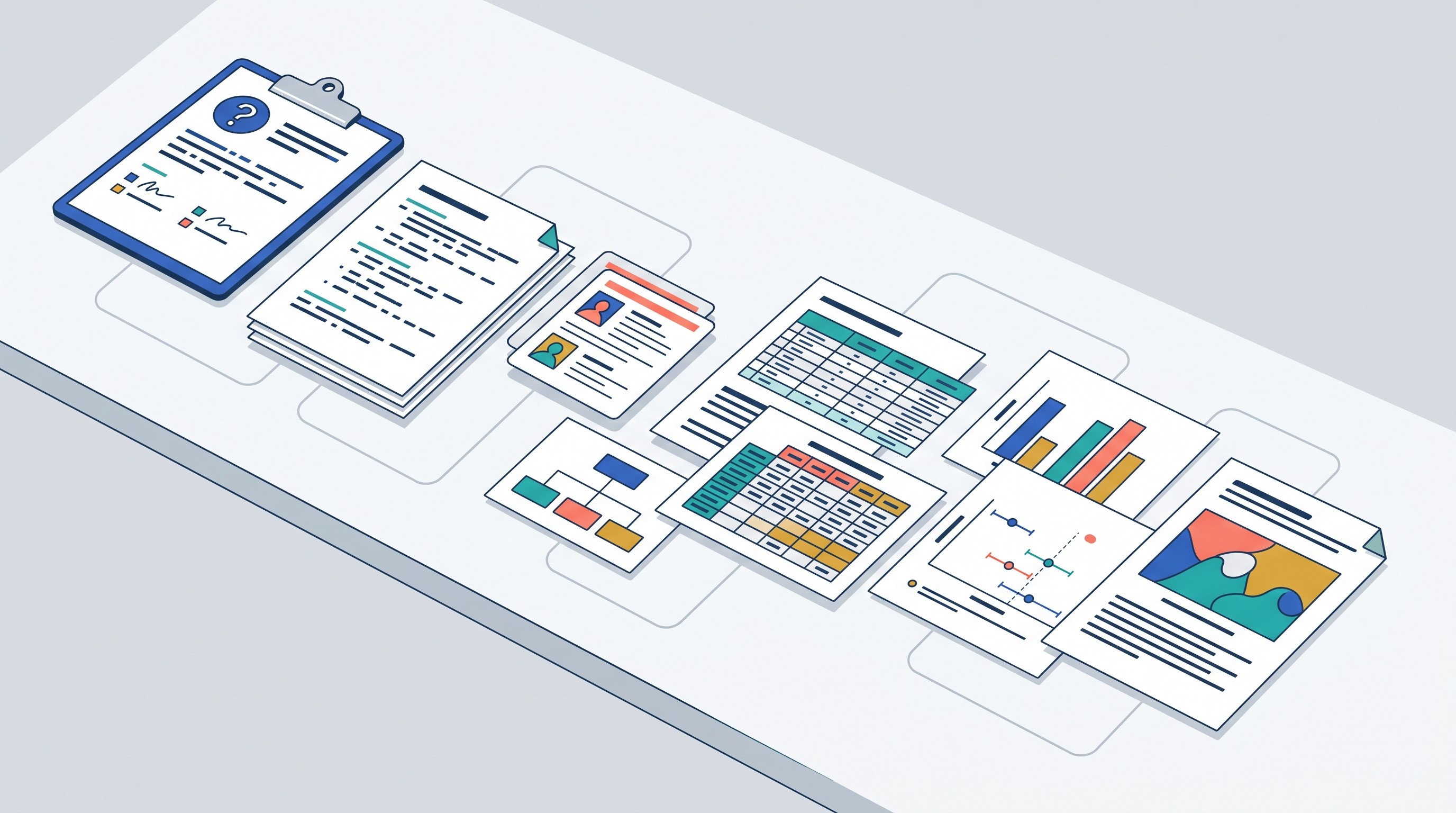
A strong study stack is small enough to use every week. The mistake is collecting resources instead of doing retrieval practice.
Use this structure:
Core textbook: one main source for concepts and chapter sequencing.
Practice source: assigned problems, OpenIntro exercises, review questions, or instructor-provided datasets.
Clinical-appraisal guide: Greenhalgh, Users’ Guides, or Clinical Epidemiology.
Repair resource: StatQuest, Medical Statistics at a Glance, or The Cartoon Guide to Statistics for quick clarification.
The weekly routine matters more than the perfect book. For each topic, do four things:
Solve problems before looking at the answer.
State why the method fits the data type and research question.
Interpret the result in plain language.
Identify one limitation or assumption.
For example, do not just calculate a chi-square test. Say: “The outcome and exposure are categorical, the question is whether the distribution differs between groups, and the result should be reported with the test statistic, p-value, and practical interpretation.” Then ask what the test does not tell you: causality, magnitude of effect, or whether confounding was handled.
Create a one-page reference sheet and keep revising it. Include:
Data types: continuous, binary, categorical, ordinal, count, time-to-event
Descriptive statistics: mean, median, SD, IQR, proportion, rate
Probability and distributions: normal, binomial, Poisson, t, chi-square
Standard error and sampling variability
Confidence intervals and hypothesis tests
t-tests, ANOVA, chi-square tests, nonparametric tests
Correlation and regression
Logistic regression and odds ratios
Diagnostic accuracy: sensitivity, specificity, predictive values, likelihood ratios
Survival analysis: Kaplan-Meier curves, hazard ratios, censoring
Study design terms: cohort, case-control, cross-sectional, randomized trial, confounding, bias, effect modification
If your course involves papers, keep chapters, lecture PDFs, journal articles, and notes in one place. Otio’s AI PDF reader can store PDFs and other study materials in a unified library, let you ask questions across saved documents, and preserve cited explanations for later review. That is useful for biostatistics because the same concept often appears in three forms: a textbook definition, a lecture slide, and a results table in a paper.
For textbook-heavy courses, a tool like Otio’s AI textbook summarizer can help turn long chapters into review notes, but do not outsource the hard part. You still need to work problems and explain the method yourself.
Before buying any resource, check five things:
Syllabus match: Are the same topics covered in roughly the same order?
Edition: Does your instructor require a specific edition or answer set?
Exercises: Are there enough problems, and are answers available?
Format: Do you need print for annotation, ebook for search, or both?
Clinical relevance: Are examples close enough to medicine, nursing, public health, epidemiology, or your program’s focus?
Health-science libraries often maintain subject-specific ebook guides for biostatistics and epidemiology, such as the UC Davis Health Sciences E-Books guide, Mount Sinai Levy Library statistics and biostatistics guide, and Belmont University Medical Library biostatistics and epidemiology guide. Check your own library before paying full price.
FAQ
Q: What is the best biostatistics book for a beginner?
A: Start with an accessible text such as Essentials of Biostatistics in Public Health or Intuitive Biostatistics. Choose the one whose examples, notation, and chapter order best match your course.
Q: Do medical students need a full biostatistics textbook?
A: Not always. A concise review book plus question practice may be enough for exam preparation, while a full textbook is more useful for a dedicated statistics or research-methods course.
Q: What should I study first in biostatistics?
A: Start with data types, descriptive statistics, probability, distributions, sampling, confidence intervals, and hypothesis testing. Then move to regression, diagnostic testing, survival analysis, and study-design interpretation.
Q: Can free resources replace a biostatistics textbook?
A: Sometimes, but only if they match your syllabus and include enough structured practice. Free resources are strongest for explanations and review; instructor-approved materials are safer for graded assessments.
[[OTIO_FOOTER_PROMO:%7B%22title%22%3A%22Turn%20your%20biostatistics%20shelf%20into%20a%20study%20plan%22%2C%22description%22%3A%22Add%20your%20course%20syllabus%2C%20textbook%20chapters%2C%20lecture%20slides%2C%20and%20journal%20articles%20to%20Otio%20to%20create%20cited%20review%20notes%20around%20the%20methods%20you%20need%20to%20master.%22%7D]]