
Document Review
20 Best USMLE Step 2 CK Study Resources for Medical Students
Compare 20 USMLE Step 2 CK study resources by purpose, format, cost, and study stage so you can build a focused prep stack instead of collecting materials.

Most students should not try to “use the best 20 resources.” The safest Step 2 CK stack is one primary question bank, official NBME/USMLE materials, one concise review source, one retention system, and a few targeted specialty references.
The 20 resources below are useful for different problems: learning clinical reasoning, testing exam readiness, repairing clerkship gaps, retaining algorithms, or getting a rapid explanation after a missed question. The mistake is treating them as interchangeable.
Use this guide to choose a small stack you can actually finish.
The best Step 2 CK resource stack for most medical students
For most medical students, the default stack looks like this:
Primary question bank: UWorld Step 2 CK or AMBOSS
Official alignment: NBME Comprehensive Clinical Science Self-Assessments plus USMLE sample materials
Concise review: First Aid for the USMLE Step 2 CK, Master the Boards, White Coat Companion, or Step-Up to Medicine
Retention: AnKing Step 2 CK tags or a small custom Anki deck built from missed questions
Targeted supplements: Divine Intervention, Case Files, Sketchy, Osmosis, Boards & Beyond, or specialty references only for weak areas
That structure matters because Step 2 CK is not mainly a memorization exam. The official USMLE description says Step 2 CK assesses whether an examinee can apply medical knowledge, skills, and understanding of clinical science needed for supervised patient care, with emphasis on health promotion and disease prevention, according to the USMLE Step 2 CK content outline.
Your ideal stack depends on five constraints: baseline knowledge, time until the exam, budget, clerkship schedule, and learning format. A student six months out during rotations needs different tools from a student four weeks out with weak biostatistics and inconsistent NBME scores.
A recent open-access article on medical education resource use reported UWorld, Anki, Divine Intervention, and AMBOSS among the most popular resources used by surveyed medical students, with UWorld reported by 97.7% of respondents and AMBOSS by 49.7% (PMC article). Popularity is useful context, not a selection rule. The right question is what problem each resource solves.
How to choose USMLE Step 2 CK study resources
Choose resources by function, not reputation.
A Step 2 CK resource should earn its place by doing at least one of these jobs well:
Clinical reasoning practice: Can it force diagnosis, next best step, risk factor, screening, ethics, and management sequencing decisions?
Question quality: Are the vignettes close enough to NBME-style clinical reasoning to improve test-taking judgment?
Explanation depth: Does it explain why the right answer is right and why tempting alternatives are wrong?
Coverage: Does it address internal medicine, surgery, pediatrics, OB/GYN, psychiatry, family medicine, emergency medicine, ethics, quality improvement, and biostatistics?
Self-assessment value: Does it help decide readiness, not just create more practice volume?
Portability: Can it be used during clerkship downtime, commutes, or fragmented rotation days?
Update frequency: Does the publisher revise recommendations as guidelines and exam emphasis change?
Total cost: Does the access period match your schedule, or will you pay twice?
Separate resources into roles:
Resource type | Use it for | Avoid using it for |
|---|---|---|
Question banks | Clinical reasoning, timing, explanation review | Passive content coverage |
Official materials | Exam alignment and readiness checks | Daily learning volume |
Review books | Rapid structure and weak-topic repair | Replacing question review |
Video courses | Rebuilding a topic from scratch | Watching without retrieval practice |
Flashcards | Retention and spaced repetition | Learning management reasoning alone |
Specialty references | Clerkship-specific gaps | Reading broadly without exam tie-in |
Supplemental tools | Notes, summaries, searchable review | Pretending organization equals studying |

The common failure mode is buying too many overlapping tools. A second question bank can help if the first one is exhausted or mismatched. A third review book usually just delays the hard work: answering questions, reviewing errors, and correcting the clinical rule you missed.
Before paying, check the official product page for current pricing, access duration, app support, offline availability, refund policies, and renewal terms. These details change often enough that any static article can go stale.
20 USMLE Step 2 CK resources, organized by study purpose
Question banks and practice
1. UWorld Step 2 CK
Best for: Primary question-bank learning and serious explanation review.
UWorld is the standard default for many students because it combines exam-style clinical vignettes with detailed explanations, answer-choice comparisons, tables, and performance tracking. UWorld describes its Step 2 CK question bank as a comprehensive Step 2 and shelf exam resource built for use during rotations (UWorld Step 2 CK).
Use it as your main question bank if you can commit to reviewing blocks carefully. It is strongest when treated as a curriculum: every missed question becomes a clinical rule, not just a score penalty.
Main limitation: It can become overwhelming if you try to copy every explanation into notes. Extract the decision rule, the diagnostic clue, or the management sequence.
Use when: Throughout clerkships, dedicated Step 2 CK prep, and final mixed-block practice.
Complements: NBME self-assessments, Anki, First Aid, White Coat Companion, Divine Intervention.
2. AMBOSS
Best for: A question bank plus a searchable clinical knowledge base.
AMBOSS is strong when explanations alone are not enough and you need fast access to related disease pages, management algorithms, risk factors, and ethics topics. AMBOSS says its Step 2 CK preparation includes more than 3,300 Qbank questions, high-yield study plans, and coverage of tricky topics such as ethics (AMBOSS Step 2 CK).
Use it as a primary alternative to UWorld or as a secondary bank for weak areas. It is especially useful during rotations because the reference library can answer “what is the management sequence?” faster than a textbook.
Main limitation: Students who chase every linked article can turn focused review into endless browsing.
Use when: During clerkships, as a first-pass bank, or as targeted reinforcement after NBME weaknesses.
Complements or replaces: Can replace UWorld for some students; complements NBME exams and Anki.
3. BoardVitals
Best for: Extra practice blocks and alternative explanations.
BoardVitals is a supplemental question bank option for students who want more questions after a primary bank or need additional timed practice. It can be useful for students who dislike a single explanation style and want exposure to another presentation format.
Main limitation: It should rarely be the first resource chosen over UWorld or AMBOSS unless access, pricing, school subscription, or personal fit makes it the better practical option.
Use when: After building a foundation with one primary bank, or when a school provides access.
Complements: UWorld, AMBOSS, NBME assessments.
Official assessment and exam-alignment resources
4. NBME Comprehensive Clinical Science Self-Assessments
Best for: Readiness checks and identifying broad weaknesses.
NBME self-assessments are not just practice tests. They are decision points. Use them to determine whether to move your exam, adjust your resource mix, or devote a week to specific disciplines such as OB/GYN, pediatrics, or ethics.
Main limitation: They are limited resources. Burning through them casually early in prep can leave you without reliable readiness checkpoints later.
Use when: At baseline if you have enough runway, midway through dedicated prep, and close enough to the exam to guide final decisions.
Complements: Any question bank; official USMLE materials.
5. NBME Clinical Science Subject Examinations
Best for: Clerkship planning and shelf-aligned preparation.
Subject exams are not the same as Step 2 CK, but they train the same habit: applying clinical knowledge in standardized vignettes. If your school uses NBME shelf exams, your clerkship performance can feed directly into Step 2 CK prep.
Main limitation: Studying only for each shelf can leave gaps in cross-specialty reasoning. Step 2 CK often asks you to choose among overlapping diagnoses and management steps across disciplines.
Use when: During M3 rotations and when reviewing old clerkship weaknesses.
Complements: Case Files, UWorld shelf mode, AMBOSS, Step-Up to Medicine.
6. USMLE Step 2 CK content outline and sample questions
Best for: Understanding what the exam can test and how questions are formatted.
The official USMLE Step 2 CK content outline and USMLE Step 2 CK question format materials should be read directly. They clarify content domains, physician tasks, question formats, and test-taking expectations.
This is not enough content to study from, but it prevents you from building a plan around rumor.
Main limitation: It will not teach you the medicine.
Use when: Before buying resources, before dedicated prep, and again during final review.
Complements: Everything.
Core review books
7. First Aid for the USMLE Step 2 CK
Best for: Concise topic review and quick orientation.
First Aid is useful when you need a compact map of common Step 2 CK topics. It works best as a companion to missed questions rather than a cover-to-cover primary curriculum.
Main limitation: Concision cuts both ways. If you do not understand a concept, First Aid may not provide enough explanation to rebuild it.
Use when: Reviewing weak areas, building checklists, or consolidating notes near the end.
Complements: UWorld, AMBOSS, Anki.
8. Step-Up to Medicine
Best for: Internal medicine depth.
Internal medicine drives a large share of clinical reasoning across Step 2 CK and shelf exams. Step-Up to Medicine is useful when cardiology, pulmonology, nephrology, gastroenterology, endocrine, rheumatology, or infectious disease gaps are pulling down performance.
Main limitation: It is not a full Step 2 CK plan. It is medicine-heavy and can be too dense if your exam is close.
Use when: During internal medicine clerkship, before medicine shelf, or early in Step 2 CK prep if medicine is weak.
Complements: UWorld IM blocks, AMBOSS articles, cardiology or infectious disease refreshers.
9. Master the Boards USMLE Step 2 CK
Best for: Management-focused rapid review.
Master the Boards is built around high-yield diagnosis and management points. It can help students who know many facts but miss “next best step” questions because their management sequence is messy.
Main limitation: It can feel too compressed for first-time learning. Use it to organize, not to discover everything from scratch.
Use when: Dedicated prep, especially after a diagnostic test identifies management gaps.
Complements: UWorld, NBME review, Divine Intervention.
10. Step 2 CK Lecture Notes series
Best for: Structured subject-by-subject review.
Lecture notes series are helpful for students who need organized chapters by discipline and prefer traditional text. They can provide more scaffolding than ultra-concise review books.
Main limitation: The volume can be hard to finish. If you have fewer than eight weeks, select chapters rather than committing to the full series.
Use when: Early prep, weak clerkship foundations, or a longer study schedule.
Complements: Question banks and NBME shelf planning.
Clinical reasoning and bedside-oriented references
11. White Coat Companion
Best for: Turning clinical presentations into exam-ready reasoning.
White Coat Companion is useful for students who want a portable clinical reference that links presentations, differentials, workups, and management. It sits between a review book and a ward reference.
Main limitation: It can become a comfort-read if not paired with questions.
Use when: During rotations, early Step 2 CK review, and when missed questions reveal weak illness scripts.
Complements: Boards & Beyond, UWorld, AMBOSS.
12. Case Files series
Best for: Clerkship-specific cases and oral-case style reasoning.
Case Files books are useful during rotations because they present common clinical scenarios with explanations and teaching points. They help students move from “I read about this disease” to “I can recognize how it presents.”
Main limitation: Cases are not a substitute for timed NBME-style blocks.
Use when: During clerkships, especially family medicine, pediatrics, surgery, psychiatry, OB/GYN, and internal medicine.
Complements: NBME subject exams, UWorld shelf questions.
Video and visual courses
13. Boards & Beyond Step 2 / clinical content
Best for: Structured explanations after missed questions.
Boards & Beyond is useful when a missed question exposes a concept you never properly learned. Its value is sequence: watch the relevant video, then immediately answer related questions.
Main limitation: Watching whole modules passively can consume days without improving retrieval.
Use when: Early or mid-prep, especially for students who need physician-led explanations.
Complements: White Coat Companion, UWorld, Anki.
14. OnlineMedEd
Best for: Frameworks, workflows, and clinical organization.
OnlineMedEd has long been used by students who need a clean clinical framework before entering questions. It is especially helpful for students who feel disorganized during clerkships.
Main limitation: It should not be your only Step 2 CK resource. The exam requires question practice and granular review of distractors.
Use when: Before or during rotations, or as a rapid primer before subject blocks.
Complements: Case Files, UWorld, NBME shelf prep.
15. Sketchy Medical
Best for: Visual memory aids, especially bugs, drugs, and selected clinical facts.
Sketchy is most useful when the problem is recall: organisms, antimicrobials, pharmacology, and visual hooks that support rapid recognition. It is less central for Step 2 CK than for Step 1, but still valuable for infectious disease and pharmacology gaps.
Main limitation: Visual memory does not automatically translate into next-best-step reasoning.
Use when: Targeting pharmacology, microbiology, infectious disease, and stubborn recall gaps.
Complements: UWorld, AMBOSS, Anki, pharmacology review. If pharmacology is the weak link, Otio’s guide to pharmacology textbooks and study resources can help choose a deeper companion.
16. Osmosis
Best for: Visual explanations and broad clinical reinforcement.
Osmosis works well for students who need short visual refreshers before practice questions. It is strongest as a reinforcement tool, not as the main engine of Step 2 CK prep.
Main limitation: Like any video platform, it can create a false sense of mastery if not paired with recall and questions.
Use when: Relearning a topic quickly, especially before a block or clerkship exam.
Complements: Anki, AMBOSS, UWorld.
Flashcards and spaced repetition
17. AnKing Step 2 CK materials
Best for: Large-scale spaced repetition with tags.
AnKing is the default high-volume Anki ecosystem for many medical students. It is useful when you want tagged cards connected to common third-party resources and clerkship subjects.
Main limitation: Card volume can become unsustainable. A giant deck is only useful if reviews fit real life.
Use when: Long runway, ongoing clerkship prep, and students already comfortable with Anki.
Complements: UWorld, AMBOSS, Boards & Beyond, Sketchy. For app-level alternatives and tradeoffs, see Otio’s guide to flashcard apps for medical students and USMLE prep.
18. Custom Anki cards from missed questions
Best for: Fixing recurring personal errors.
A small custom deck can outperform a massive shared deck if it captures your actual misses: screening intervals, contraindications, first-line management, diagnostic tests, vaccine rules, ethics steps, and “do not do this first” traps.
Good cards are short. They test one decision rule. They do not paste a whole explanation.
Main limitation: Writing cards can become procrastination. If a card takes five minutes to make, it is too complicated.
Use when: After every question block and after NBME review.
Complements: Any primary question bank.
Specialty and rapid-review supplements
19. Divine Intervention podcasts and notes
Best for: Audio review, risk factors, military topics, ethics, screening, and rapid weak-area repair.
Divine Intervention is useful for fragmented time: walks, commutes, chores, or post-call days when reading is unrealistic. It is popular partly because it maps well to the way Step 2 CK asks about risk factors, next steps, and clinical judgment.
Main limitation: Audio can become passive. Pair episodes with a short written list of rules to test later.
Use when: Mid-to-late prep, final targeted review, or weak topic reinforcement.
Complements: NBME self-assessments, UWorld incorrects, Anki.
20. High-Yield Med Reviews and targeted specialty refreshers
Best for: Closing narrow content gaps.
Targeted refreshers are useful when performance data points to a specific weakness: cardiology murmurs, pediatric milestones, obstetric complications, psychiatry drugs, emergency stabilization, infectious disease treatment, or biostatistics. These resources should be chosen because a diagnostic result exposed a gap, not because a list recommended them.
Main limitation: Specialty refreshers can fragment your study plan. Use them only when the weakness is real and repeated.
Use when: After NBME reports, question-bank analytics, or repeated misses in a subject.
Complements: Step-Up to Medicine, Case Files, AMBOSS, specialty books. If cardiology is a persistent weak area, Otio’s cardiology books for medical students guide can help narrow the reference choice.
A practical comparison of the 20 resources
Use the table as a buying filter, not a shopping list.
Resource | Category | Best use | Format | Ideal stage | Major strength | Main limitation | Essential? |
|---|---|---|---|---|---|---|---|
UWorld Step 2 CK | Qbank | Primary practice | Questions + explanations | Clerkships to dedicated | Deep explanations | Time-intensive review | Usually essential |
AMBOSS | Qbank/reference | Practice plus lookup | Qbank + knowledge base | Clerkships to dedicated | Fast clinical reference | Easy to over-browse | Essential or strong alternative |
BoardVitals | Qbank | Extra practice | Questions | Later prep | More question volume | Usually not first choice | Optional |
NBME CCSSA | Official assessment | Readiness checks | Practice exams | Baseline, mid, final | Exam-aligned signal | Limited attempts | Essential |
NBME subject exams | Official/clerkship | Shelf planning | Subject exams | Rotations | Clerkship alignment | Not full Step 2 simulation | Optional but useful |
USMLE content/sample | Official | Exam orientation | Outline + sample questions | Before and final prep | Official scope | Not a curriculum | Essential |
First Aid Step 2 CK | Review book | Concise review | Text | Mid-to-final | Compact coverage | Limited depth | Optional core review |
Step-Up to Medicine | Review book | Internal medicine | Text | IM clerkship/early prep | Medicine depth | Not all specialties | Optional |
Master the Boards | Review book | Management review | Text | Dedicated | Next-step focus | Compressed | Optional core review |
Lecture Notes series | Review book | Structured subjects | Text | Long runway | Organized depth | Hard to finish | Optional |
White Coat Companion | Clinical reference | Illness scripts | Text/reference | Rotations/early prep | Presentation-to-plan reasoning | Needs questions | Optional core review |
Case Files | Case-based review | Clerkship cases | Cases | Rotations | Clinical scenarios | Not timed practice | Optional |
Boards & Beyond | Video | Relearning topics | Video | Early/mid | Structured teaching | Passive-use risk | Optional |
OnlineMedEd | Video/framework | Clinical frameworks | Video/notes | Rotations/early | Simple organization | Needs Qbank pairing | Optional |
Sketchy Medical | Visual memory | Bugs/drugs | Visual videos/cards | Targeted | Strong recall hooks | Less management reasoning | Optional |
Osmosis | Visual review | Rapid refreshers | Video | Early/targeted | Short explanations | Passive-use risk | Optional |
AnKing Step 2 | Flashcards | Tagged retention | Anki deck | Long runway | Scalable spaced repetition | High review burden | Optional but powerful |
Custom Anki cards | Flashcards | Personal misses | Self-made cards | All stages | Focuses real errors | Can waste time | Highly recommended |
Divine Intervention | Audio/notes | Rapid review | Podcasts + notes | Mid/final | High-yield framing | Passive listening risk | Optional |
High-Yield Med Reviews / targeted specialty refreshers | Specialty supplement | Narrow gaps | Varies | After diagnostics | Focused repair | Fragmentation risk | Optional |
If you have six or more months
Use rotations as Step 2 CK prep. Pick UWorld or AMBOSS, use shelf-specific blocks, keep a small error log, and maintain Anki only if the review load is sustainable.
Add Case Files, White Coat Companion, OnlineMedEd, or Boards & Beyond around the clerkship you are in. Do not start five parallel systems.
If you have three to five months
Choose one primary Qbank and schedule NBME self-assessments as checkpoints. Use one review source for recurring weaknesses.
This is enough time for AnKing if you already use Anki. If you are new to spaced repetition, start with custom cards from missed questions instead of adopting a huge deck.
If you have six to eleven weeks
Shift toward timed mixed blocks, official self-assessments, and targeted repair. Review books should answer specific questions: “Why do I keep missing nephrotic syndromes?” or “What is the next step in abnormal uterine bleeding?”
This is not the time to start a full lecture-note series.
If you have less than six weeks
Use a narrow stack: one Qbank, official assessments, one rapid review source, and an error log. Add Divine Intervention or targeted videos only for repeated misses.
The enemy is not lack of resources. It is unfinished review.
A low-cost path
A lower-cost plan can still be coherent:
Official USMLE materials
One paid Qbank for the minimum access period that fits your schedule
Library copies or used copies of one review book
Free or school-provided resources where available
Custom Anki cards from missed questions
Selective podcasts for weak areas
Do not save money by skipping official readiness checks if you have uncertainty about exam timing.
A comprehensive path
A more complete stack makes sense if you need structure:
UWorld or AMBOSS as the primary bank
NBME self-assessments
First Aid, Master the Boards, or White Coat Companion
Boards & Beyond or OnlineMedEd for weak concepts
AnKing or custom Anki
Divine Intervention for final review
Specialty references for documented gaps
Comprehensive should mean “covered by function,” not “everything available.”
How to use a question bank without wasting review time
A question bank only works if the review cycle is disciplined.
Use this loop:
Complete a block. Early on, tutor mode is fine for learning. Later, use timed mixed blocks.
Classify each question.
- Correct and confident
- Correct but uncertain
- Incorrect
Review the explanation. Focus on the governing rule, not every paragraph.
Write the rule. Example: “In suspected ectopic pregnancy with hemodynamic instability, do not wait for serial β-hCG.”
Tag the error. Diagnosis, management, risk factor, screening, ethics, drug effect, or test interpretation.
Create one retention item. A flashcard, short note, or error-log entry.
Revisit it. If the same error recurs, add a targeted resource.
Tutor mode is useful when foundational knowledge is weak or you are learning a specialty during clerkship. Timed mixed blocks are better once you need exam conditioning, stamina, and differential sorting across disciplines.
Students with weak foundations should not force mixed timed blocks immediately. Start with subject-specific blocks plus a concise reference, then move toward mixed blocks once accuracy and confidence improve.
Self-assessments should be treated differently from Qbank blocks. They are checkpoints for plan adjustment: keep the date, move the date, change the topic mix, or change the review method.
How to build a Step 2 CK study plan from these resources
A good weekly plan has fewer moving parts than most students expect.
A workable week during dedicated prep might look like this:
Four to five days: Timed Qbank blocks plus deep review
Two to four short sessions: Flashcard or error-log review
One to two targeted content sessions: Video, book chapter, or specialty reference tied to repeated misses
One half-day: NBME or longer simulation when scheduled
One recovery block: Sleep, exercise, errands, and no guilt
Daily clinical rule capture: Keep only the rules that changed your answer choice
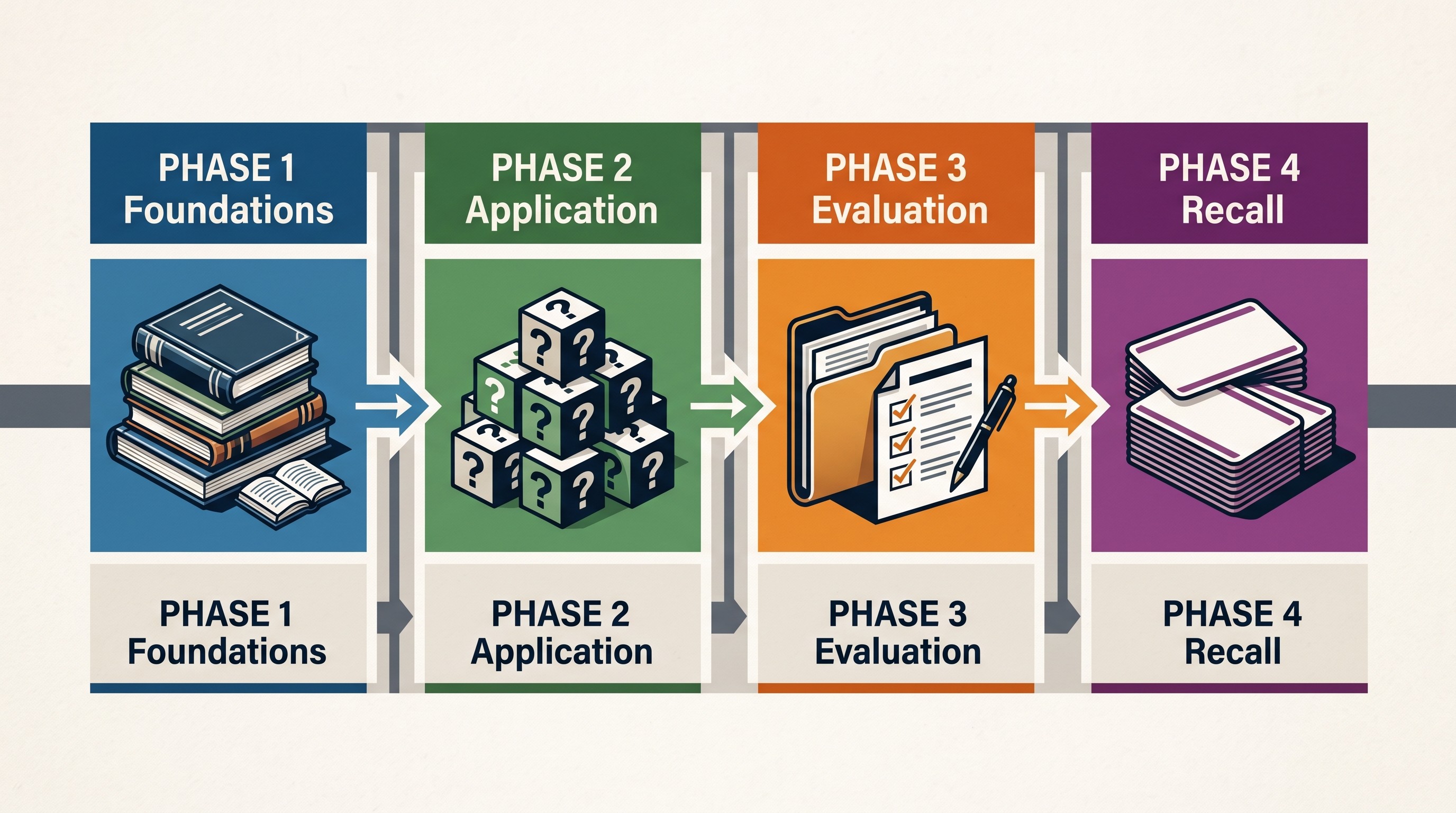
Map resources to phases:
Phase | Main task | Best-fit resources |
|---|---|---|
Foundation and subject review | Repair weak clerkship knowledge | OnlineMedEd, Boards & Beyond, Case Files, Step-Up, White Coat Companion |
Question practice | Build clinical reasoning | UWorld or AMBOSS |
Mixed blocks | Train exam switching | UWorld/AMBOSS timed random, BoardVitals if extra volume needed |
Exam simulation | Check readiness | NBME CCSSA, USMLE sample materials |
Final cleanup | Fix repeated misses | Divine Intervention, Anki, First Aid, Master the Boards, targeted specialty refreshers |
The rule is one primary resource per function. One main Qbank. One main review source. One retention system. Official assessments. Then supplements only when a weakness is documented.
Switch resources only when the current resource has a real mismatch:
The explanations do not answer why you missed questions.
The question style is not helping with NBME-style reasoning.
The platform is inaccessible during your real schedule.
The coverage misses a repeated weakness.
The resource creates too much review burden to sustain.
Do not switch because progress feels uncomfortable. Feeling slow during question review is normal. That is where the learning happens.
For organization, keep PDFs, lecture notes, missed-question rules, screenshots of algorithms, and specialty references in one searchable workspace. Otio’s AI PDF reader can be useful if you are collecting review PDFs, school handouts, and notes in one place and want to ask questions across them. For longer review books or dense handouts, an AI textbook summarizer can help turn chapters into shorter study notes, but it should not replace question-based practice.
The next action is simple: choose your primary question bank, schedule your first diagnostic or self-assessment, and set a resource limit before buying anything else.
[[OTIO_INLINE_PROMO:%7B%22title%22%3A%22Need%20one%20place%20for%20your%20Step%202%20CK%20review%20PDFs%3F%22%2C%22description%22%3A%22Add%20review%20PDFs%2C%20lecture%20notes%2C%20and%20missed-question%20rules%20to%20Otio%2C%20then%20ask%20questions%20across%20them%20while%20turning%20weak%20topics%20into%20a%20focused%20study%20plan.%22%7D]]
Common mistakes when choosing Step 2 CK prep materials
Choosing popularity over fit. UWorld, Anki, AMBOSS, and Divine Intervention are popular for good reasons, but popularity does not tell you whether you need more questions, better explanations, better recall, or better structure.
Using multiple question banks superficially. Completing 40% of three banks is usually worse than completing and reviewing one bank well.
Replacing reasoning with flashcards. Flashcards help retention. They do not fully train diagnosis, management sequence, and “next best step” judgment.
Ignoring official guidance. The official USMLE outline and question-format materials are boring but valuable. Read them before trusting forum folklore.
Making an impossible schedule. A plan with no time for reviewing incorrects, sleep, clinical work, meals, and recovery is not rigorous. It is fiction.
Confusing more material with better preparation. The best Step 2 CK resource stack is usually the one that gets completed: one primary Qbank, official assessments, one review source, and targeted fixes.
FAQ
Q: How many Step 2 CK study resources should I use?
A: Most students need one primary question bank, official self-assessments, one concise review source, and a focused retention method such as flashcards. Add another resource only when it addresses a specific weakness the core stack does not cover.
Q: Are question banks or review books more important for Step 2 CK?
A: Question banks are central because Step 2 CK requires applying clinical knowledge to patient scenarios. A review book can fill knowledge gaps, but it should support careful question and explanation review, not replace it.
Q: Should I use the same resources for Step 1 and Step 2 CK?
A: Some foundational resources overlap, especially pharmacology and microbiology tools. Step 2 CK preparation should prioritize clinical reasoning, diagnosis, management, and patient-care decisions.
Q: When should I take a Step 2 CK self-assessment?
A: Use an official self-assessment early enough to identify weaknesses and later to evaluate readiness. Treat the result as one input alongside Qbank performance, content gaps, and your test-day timeline.
[[OTIO_FOOTER_PROMO:%7B%22title%22%3A%22Ready%20to%20organize%20your%20actual%20Step%202%20CK%20stack%3F%22%2C%22description%22%3A%22Bring%20your%20Qbank%20notes%2C%20NBME%20results%2C%20handouts%2C%20and%20review%20chapters%20into%20Otio%20to%20ask%20focused%20questions%20and%20create%20shorter%20study%20notes%20for%20targeted%20review.%22%7D]]