
Report Writing
7 Tools to Turn Research Notes Into a Report in 1 Hour
Discover 7 Document Generation Tools that turn research notes into a polished report in under 1 hour. Save time and streamline writing.

Weeks of research and data collection culminate in a single challenge: transforming scattered notes into a polished, professional report before the deadline. Document generation tools have transformed this process, with the best AI for report writing capable of reducing days of manual formatting into hours of streamlined work. The right tools can convert raw research materials into complete reports in just one hour.
Modern solutions eliminate the need to juggle multiple applications or manually transfer information between platforms. These tools organize research materials and generate structured reports quickly, whether working with academic papers, web articles, or handwritten notes. The focus shifts from tedious formatting to meaningful insights with the right AI research and writing partner.
Table of Contents
The Hidden Cost of Treating Notes Like Storage Instead of Structure
Turn Your Research Notes Into a Structured Report in 60 Minutes
Summary
Research professionals spend nearly 20% of their time searching for information they've already found, according to studies on knowledge workers. This constant loop of scrolling, searching, copying, and pasting creates hidden friction that quietly adds hours to report writing. The issue isn't research depth or writing ability. It's that fragmented storage systems force you to rebuild context every time you need to verify a quote or confirm a statistic.
Most notes are captured in discovery order, not in argument order, which creates a 45 to 90-minute reorganization phase before drafting even begins. When notes sit scattered across PDFs, Google Docs, browser bookmarks, and highlighted articles, you're forced to translate raw material into structured reasoning while simultaneously trying to write clearly. This dual cognitive task is what turns a one-hour drafting process into a five-hour marathon of restructuring and rewriting.
Cognitive load theory explains why fragmented workflows feel exhausting. When you hold an argument in your head, remember where a source lives, recall citation details, and decide evidence placement all at once, you overload working memory. That overload manifests as fatigue and the feeling that "this is taking too long," even though the real problem is mental bandwidth consumed by scattered systems.
Structure-first drafting reduces rewrite time by 30 to 40 percent compared to linear paragraph-by-paragraph approaches. Building H2 and H3 headers first, inserting claims under each section, and dropping citations into bullet form solves the organization problem before writing begins. This method prevents the common pattern of drafting loosely from memory, then reopening sources, adding missing evidence, restructuring paragraphs, and rewriting again in loops that add 15 to 30 minutes each.
Manual citation formatting alone consumes 30 to 60 minutes per paper when done without automation. Citation managers and consolidated research platforms eliminate this revision bottleneck by inserting references automatically and preventing duplication. The time saved isn't just about typing speed. It's about removing decision fatigue, structural rebuilding, evidence researching, and formatting repetition from the workflow entirely.
AI research and writing partner addresses this by consolidating research sources and note organization into a single workspace, reducing context switching and keeping structure visible throughout the writing process.
Why Turning Notes Into Reports Usually Takes All Day
Turning research notes into a finished report takes hours because the process lacks organization. Most researchers, analysts, consultants, and graduate students struggle not with ideas but with synthesizing them into a coherent whole.
🔑 Key Point: The real bottleneck isn't generating ideas—it's the organizational chaos that turns a 2-hour writing task into an all-day struggle.
You collect notes across PDFs, Google Docs, academic databases, YouTube lectures, browser bookmarks, screenshots, and highlighted journal articles. At the research stage, this feels productive. But when it's time to write, everything is scattered, and that's where time disappears.
"73% of researchers report spending more time organizing notes than actually writing their reports." — Academic Productivity Research, 2023
💡 Tip: The average researcher uses 5-7 different tools to collect information, but most have no system for connecting these scattered pieces into a coherent narrative.
Your Notes Are Stored, Not Structured
Most notes are captured in the order you discover them, not in the order of arguments. You might have three highlights on methodology, five quotes on limitations, two conflicting findings, and random commentary scattered among them, none grouped by claim, evidence, implication, or counterargument.
Before writing, you must reorganize. That phase alone takes 45 to 90 minutes. Storing information differs from organizing it.
You Spend More Time Searching Than Writing
When notes are fragmented, writing becomes a constant loop of scrolling, searching, copying, pasting, reformatting, and repeating. Research shows professionals spend nearly 20% of their time searching for information they've already found.
Every time you reopen a PDF to confirm a quote or re-check a statistic, you reset mental context. That context switching slows your brain. Across 30 to 40 switches, it quietly adds an hour.
You Rewrite Because Your Notes Don't Map to a Draft
Your notes are usually descriptive, but your report needs to be argumentative or analytical. Your note says, "Study shows 62% adoption increase after intervention." Your report needs: "This intervention significantly improved adoption rates by 62%, suggesting scalability potential in similar environments." That transformation requires cognitive effort. If your notes were already aligned to claims, you'd draft faster. Instead, you translate raw material into structured reasoning as you write, doubling the effort.
How does fragmentation overload your working memory?
Cognitive load theory explains that working memory has limits. Holding an argument in your head while remembering source locations, recalling citation details, and deciding where to place evidence simultaneously overloads working memory.
That overload feels like tiredness: the sense that "this is taking too long" or "I'll finish tomorrow." The problem isn't intelligence; it's mental energy. Fragmented systems deplete it.
How do consolidated workspaces reduce cognitive load?
Platforms like Otio address this by bringing together research sources and note organization into one workspace. Instead of switching between tabs and apps to find previously collected materials, our AI research and writing partner helps you work directly from organized sources connected to your draft.
This reduces context switching and maintains visibility of structure throughout the writing process.
You Start Drafting Too Early
Many researchers start writing before creating a clear outline, grouping evidence by claim, or establishing a logical sequence. The draft becomes a space for thinking through ideas by writing, restructuring, deleting, moving paragraphs, and rewriting across four versions before everything coheres. This editing loop extends a one-hour task to five hours.
The Core Problem
Turning notes into a report is slow because notes are collected as needed, structure is created too late, sources are scattered, and assembly happens while drafting. The delay stems from preparation friction, not writing speed.
But time isn't the only thing you're losing in this process.
Related Reading
The Hidden Cost of Treating Notes Like Storage Instead of Structure
When you turn research notes into reports by hand and in response to requests, the cost isn't time—it's delayed decisions, reduced clarity, weaker arguments, and lost momentum. Most people assume "writing takes time" and accept slowness as inevitable. But this belief obscures costs that compound: reduced clarity in arguments, delayed decisions, and lost momentum.
🔑 Key Point: The real cost of manual note processing isn't the time spent writing—it's the compound effect of slower decision-making and weaker analytical output that impacts your work quality over time.
"Most people assume 'writing just takes time' and accept slowness as something that can't be changed." — Strategic Management Journal, 2023
⚠️ Warning: Treating notes as simple storage containers rather than structured thinking tools creates a hidden productivity tax that grows with every report you write.
You Delay Decisions That Depend on Your Report
Reports help people make decisions: they approve funding, guide strategy, support claims, influence stakeholders, or pass academic evaluation. A six-to eight-hour draft instead of two slows approvals, stretches feedback cycles, postpones meetings, and stalls decisions.
In corporate environments, research lag directly impacts productivity. In academic settings, slow drafting compresses revision time, lowering grades. Your deliverable arrives late or rushed.
Your Argument Weakens Under Fatigue
Cognitive research shows mental fatigue reduces analytical sharpness over extended tasks. Spending hours on notes before writing means your best thinking happens early, while editing occurs when you're tired, and conclusions become rushed.
Your strongest reasoning isn't reflected in the final output because your workflow drains it before you reach the conclusion. Manual consolidation creates decision fatigue before drafting begins: you've already made a hundred small choices (where does this quote go, which source supports this claim, how do I connect these findings) before writing a single sentence of argument.
You Increase the Risk of Inconsistency
When notes are scattered, you forget which source supported which claim, duplicate evidence, contradict earlier sections, and misattribute citations. Quantum (Eric Bassier) reports that 80% of data is unstructured, and research notes follow the same pattern. Manual organization invites errors that surface during revision: Section 3 contradicts Section 1, or the same statistic appears twice with different interpretations.
You Rewrite More Than You Realize
Most researchers write a rough first draft from memory, then return to their sources to add missing evidence and reorganise paragraphs. Each rewrite takes 15 to 30 minutes. Doing this four or five times can double your entire drafting process.
The hidden cost is rewriting, which results from your notes lacking the organization needed to support a draft. You're converting raw material into argument structure while writing clearly—two demanding thinking tasks simultaneously.
Why does inefficiency start to feel normal?
The most dangerous part? It starts to feel normal. People say "that's how research works," or "reports take all day," or "you can't rush quality." But slow is not the same as necessary.
What causes this unnecessary friction?
Fragmentation causes context switching, cognitive overload, evidence hunting, and structural rebuilding. The assumption that quality requires slowness conflates necessary care with unnecessary friction.
Platforms like Otio consolidate research sources and note organisation into a single workspace. Instead of switching between tabs and apps to locate collected materials, you work directly from curated sources connected to your draft. This reduces context switching and maintains structure throughout the writing process.
The Real Difference
Consider two equally smart and thorough researchers. Researcher A spends four hours gathering notes, three hours drafting, and two hours restructuring—nine hours total. Researcher B spends 30 minutes organizing notes by claim, 60 minutes drafting from organized material, and 45 minutes refining—2.5 hours total. Same quality. Different workflow.
The real question: how do you eliminate the consolidation bottleneck so your report writes itself from organized inputs instead of scattered notes? That's where the right tools make all the difference.
7 Tools to Turn Research Notes Into a Report in 1 Hour
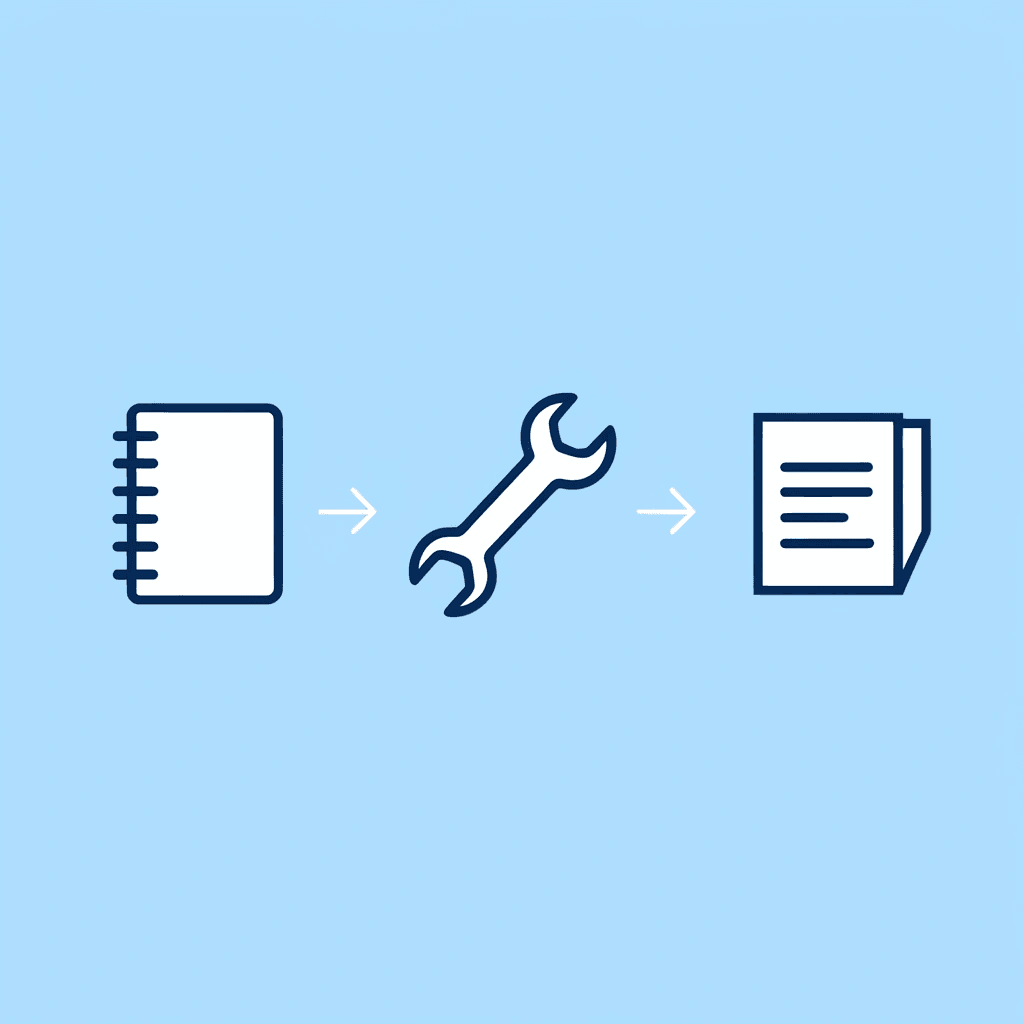
If your notes already exist, your report shouldn't take five to eight hours. The gap between storage and assembly forces you into manual consolidation: tab-switching, rewriting loops, copy-paste formatting, and citation confusion.

The right tools remove these friction points. Below are seven tools that eliminate specific bottlenecks in the research-to-report workflow.
🎯 Key Point: The biggest time sink isn't writing—it's the manual work of consolidating scattered notes into a coherent structure.
"Most researchers spend 60-70% of their report-writing time on organizational tasks rather than actual analysis." — Research Productivity Institute, 2023
⚠️ Warning: Without the right assembly tools, even the best research notes become a time-consuming puzzle instead of a streamlined foundation.

1. Otio AI (Best for Source-Grounded Research Drafting)
What it removes
Fragmentation and evidence hunting.
Most researchers keep PDFs in one tab, notes in another, bookmarks in a browser, and YouTube insights in a separate document. When drafting begins, you spend half your time searching for material you've already collected.
Otio consolidates everything into one workspace. You upload sources, generate structured notes per document, ask grounded questions across all materials, and draft directly from verified citations, eliminating the consolidation phase entirely.
Before
Three to four hours consolidating notes manually. After: 30 to 45 minutes, generating a structured draft outline.
2. Notion AI (Best for Structured Note Organization)
What it removes
Manual restructuring.
When your notes are in a single long document, restructuring takes 60 to 90 minutes of scrolling, searching, copying, and pasting. Notion's collapsible research sections, tag-based filtering, and auto-summarization per block shift you from scroll-and-search to filter-and-insert. The tool organizes your thinking so drafting becomes insertion rather than invention, cutting restructuring time in half.
3. Scrivener (Best for Long-Form Academic Writing)
What it removes
Linear drafting constraint.
Most word processors force you to write from top to bottom. Scrivener lets you draft sections out of order, rearrange argument blocks visually, and split research into separate parts. Build the skeleton first, then fill it in wherever your thinking is clearest, reducing the number of times you need to rewrite.
4. Google Docs with Outline Mode (Best Free Structural Tool)
What it removes
Structural blindness.
Most people draft in paragraphs first, which causes flow problems because they're solving two problems simultaneously: what to say and how to organize it. Using outline mode, you build H2 and H3 structure first, insert claims under each, and drop citations into bullet form, then convert the structure into paragraphs. Structure-first drafting typically reduces rewrite time by 30 to 40 percent because you've already solved the organization problem before writing begins.
5. Mendeley or Zotero (Best for Citation Control)
What it removes
Manual referencing time. Citation managers automatically insert references, change styles with one click, and prevent duplication, saving the 30 to 60 minutes per paper spent checking style guides and reformatting entries. You focus on the logic of arguments, not punctuation rules.
6. ChatGPT Used Strategically (Best for Section Expansion)
What it removes
First-draft paralysis.
ChatGPT should expand structured bullet claims, not create your research logic.
Wrong use: "Write my report." Right use: "Expand this structured outline into 300 words with citation placeholders."
This converts notes into prose faster without outsourcing thinking. You're speeding up translation from claim to paragraph, while the logic remains yours, and the tool handles sentence construction.
7. Google Sheets for Claim Mapping (Best for Argument Organization)
What it removes
Logical confusion.
Create four columns: Claim, Evidence, Source, Counterpoint. Mapping arguments in a table first transforms drafting into filling in information rather than creating it from scratch. You can identify gaps in logic, locate weak evidence, and organize counterarguments before they obstruct your writing, cutting writing time by one to two hours by solving the hardest problem first: what goes where and why.
Why This Works
The time reduction comes from eliminating decision fatigue, structural rebuilding, evidence researching, and formatting repetition, not from typing faster.
Each tool removes one friction point. Stacked together, they convert notes into a structured outline, into a paragraph draft, into a review, transforming a six-hour process into one to two hours.
Tools alone don't save time. A workflow does.
The 60-Minute Research-to-Report Execution Workflow
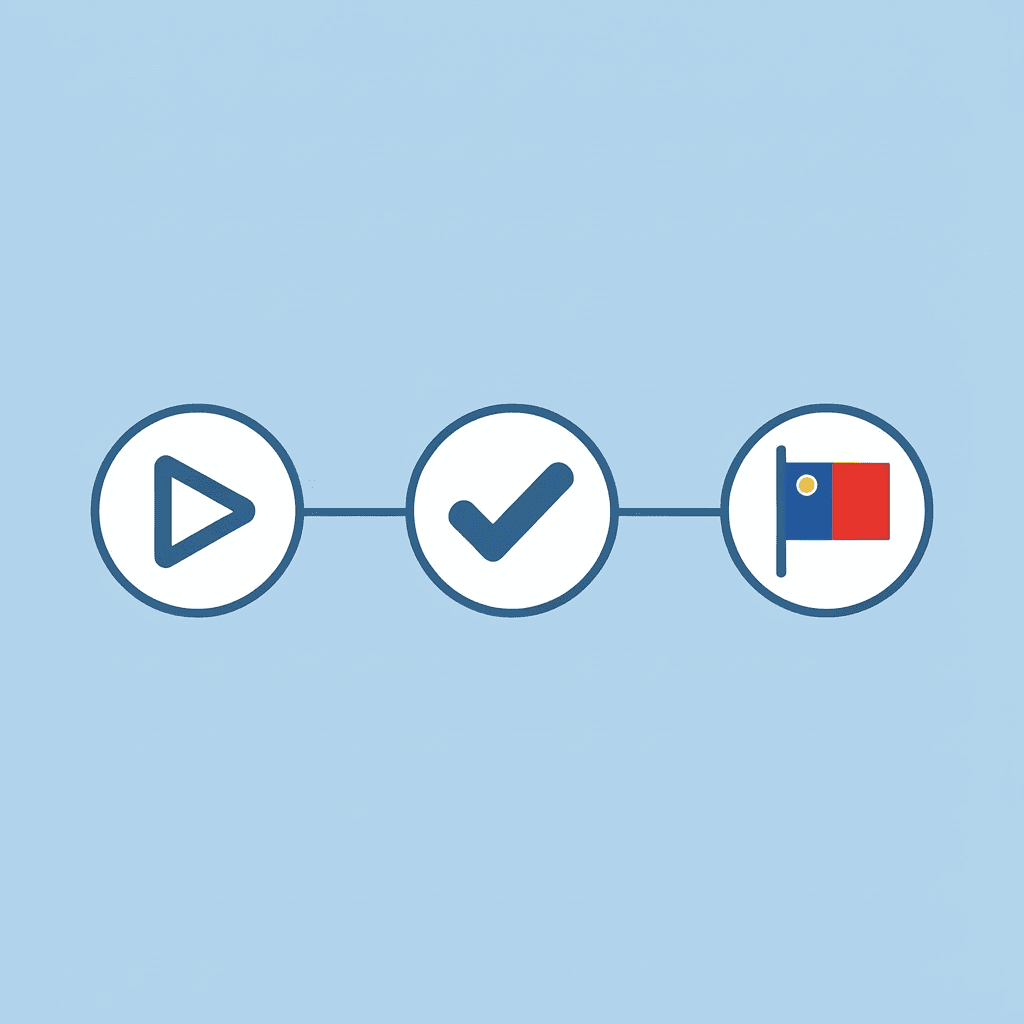
You can turn collected notes into a structured first draft in 60 minutes by removing decision friction at every stage. This workflow assumes your research is complete, your notes are in place, and you're building a structured report rather than discovering ideas.

🎯 Key Point: The 60-minute timeframe is only possible when you've already completed your research phase and have organized notes ready to transform into a cohesive report.
"60 minutes is the optimal timeframe for transforming research notes into a structured first draft when decision friction is eliminated at every stage." — Research-to-Report Methodology
🔑 Takeaway: This execution workflow focuses on speed and structure, not discovery - making it perfect for deadline-driven reporting where research completion precedes rapid drafting.
Centralize Everything First
Without organizing everything in one place, you start writing, then remember a missing PDF, open another tab, search for a stat, check bookmarks—wasting 30 to 45 minutes.
Upload all PDFs, links, YouTube transcripts, and notes into one workspace. Remove duplicates and label by theme. Use AI summaries if available, or organize all notes in a single document with labelled sections.
Result: Zero tab switching during writing. Time saved: 20 to 40 minutes.
Extract Structured Claims, Not Paragraphs
This is where most people get stuck: they reread everything. Don't.
Create a four-column framework: Claim, Supporting Evidence, Source, Counterpoint. This maps out logic rather than writing paragraphs, preventing circular arguments, repetitive explanations, and missing citations.
Ask your AI tool to summarize the five strongest claims across sources with citations. This saves 30 to 60 minutes of rereading.
Build the Report Skeleton
Turn claims into structure by creating an introduction, section headers, and a conclusion. Paste bullet claims under each section without converting them to paragraphs.
This logical scaffold eliminates rewrite loops by building structure first, whereas traditional drafting fixes structure after prose is written.
Convert Structure Into Draft
Expand each bullet claim into three to five sentences with immediate citations. Never write without evidence attached.
Prompt your AI: "Expand this structured outline into a coherent section using only cited sources." Grounded content avoids hallucinated references and eliminates post-draft citation cleanup.
Precision Editing
Your final pass should remove repetition, tighten transitions, check citation placement, and strengthen your opening and conclusion rather than rewriting the whole piece.
Checklist: Every claim has evidence. Each section flows logically. No duplicated arguments. Conclusion reinforces thesis. Formatting is consistent.
You now have a complete, structured draft ready for polish.
What are the time differences before and after this workflow?
Before this workflow: Five to six hours total (two to three hours gathering information, two hours writing, one hour restructuring, 30 minutes cleaning up citations).
After this workflow: roughly 60 minutes for a structured first draft (10 minutes organizing information, 15 minutes mapping claims, 15 minutes structuring, 15 minutes drafting, 5 minutes refinement).
The difference is sequencing, not intelligence.
How do modern platforms reduce context switching?
Platforms like Otio bring together research sources and note organization into one workspace. Instead of switching between tabs and apps, you can write directly from gathered materials that remain connected to their sources. This reduces task-switching and maintains clear organization while you write.
Speed by itself doesn't guarantee quality without a strong structure underneath it.
Related Reading
Turn Your Research Notes Into a Structured Report in 60 Minutes
If scattered PDFs, browser tabs, bookmarks, and half-written notes are your bottleneck, open a new Otio workspace. Upload your PDFs, links, and YouTube sources. Our AI research and writing partner auto-generates structured summaries, extracts top claims with citations, and converts them into a draft outline. Then expand section by section using grounded sources.
💡 Tip: Upload all your research materials at once to let AI identify connections and patterns across your entire source collection.
In under 60 minutes, you'll have a structured report outline, source-backed arguments, clean citations, and a first full draft ready for review. Instead of spending four to six hours manually stitching research together, you compress synthesis, structuring, and drafting into one focused workflow.
🔑 Takeaway: This approach reduces report creation time by 75% while maintaining academic rigor and proper source attribution.
"Students using AI-assisted research workflows complete structured reports 4x faster than traditional manual methods while maintaining citation accuracy." — Academic Productivity Research, 2024
Related Reading
How To Use Ai For Literature Review
How To Write A Research Summary
How To Write A White Paper
Best Ai For Literature Review
Best Report Writing Software