
Legal and Professional Research
How to Brief a Case: A Step-by-Step Legal Research and Case-Reading Method
Learn how to brief a case by extracting the procedural posture, facts, issue, rule, reasoning, holding, and implications from a judicial opinion.

To learn how to brief a case, treat the judicial opinion as evidence and turn it into a structured record: who sued whom, how the case reached this court, which facts mattered, what legal question the court answered, what rule it applied, why it reasoned that way, and what judgment it entered.
A good case brief is not a shortened opinion. It is a working legal-research note that lets another reader understand what happened, what the court decided, why it mattered, and how safely the decision can be used later.
The method below works for law-school reading, litigation research, paralegal work, and any project where a case needs to become usable authority rather than a highlighted PDF.
What a case brief should capture
A case brief should capture the opinion’s legal function, not every interesting detail. The standard is simple: after reading the brief, someone should know the dispute, the legal issue, the governing rule, the court’s reasoning, the result, and the limits of the decision.
Use these core fields:
Field | What to capture |
|---|---|
Case name and citation | Full case name, reporter or database citation, court, and date |
Opinion type | Majority, concurrence, dissent, memorandum, order, or other form |
Procedural posture | How the case reached this court and what ruling is under review |
Material facts | Facts that affect the legal issue, rule, remedy, or reasoning |
Issue | The question the court actually answered |
Rule | The legal standard, statute, constitutional provision, precedent, or test applied |
Reasoning | Why the court applied the rule the way it did |
Holding | The court’s answer to the issue |
Disposition | Affirmed, reversed, vacated, remanded, dismissed, granted, denied, or similar result |
Implications | What the case clarifies, limits, leaves open, or requires you to research next |
The biggest mistake is treating a brief as a case summary. A summary says what happened. A brief connects what happened to a legal question, a rule, and a usable conclusion.
The second mistake is over-briefing. If the court mentions five background facts but relies on two, the brief should foreground the two. If a dramatic fact does not affect the legal analysis, it belongs in a footnote or nowhere.
Step 1: Identify the case and read it in context
Start with the identifying information before you interpret anything:
Full case name
Citation
Court
Date
Authoring judge or justice, if relevant
Opinion type
Parties’ roles at this stage, such as appellant/appellee or petitioner/respondent
Then read the opinion once without trying to fill every field. The first pass is for orientation: who won below, who is asking for relief now, what question the court thinks matters, and where the final judgment appears.
Pay close attention to headings, opening paragraphs, and the final section. Courts often tell you the structure before they tell you the doctrine. The disposition at the end also prevents a common error: writing a strong issue-rule analysis but misstating what the court actually did.
Do not confuse case briefing with legal research. Briefing starts after you have an opinion worth reading closely. Finding cases, checking whether they remain good law, comparing authority across jurisdictions, and choosing which cases matter are separate research tasks. If that is where you are, start with methods of legal research or the broader guide on how to do legal research.
One more context check: identify whether the document is the controlling opinion or a later opinion applying an earlier decision. A case that quotes famous language from another case may not itself stand for that broader proposition.
Step 2: Reconstruct the procedural posture
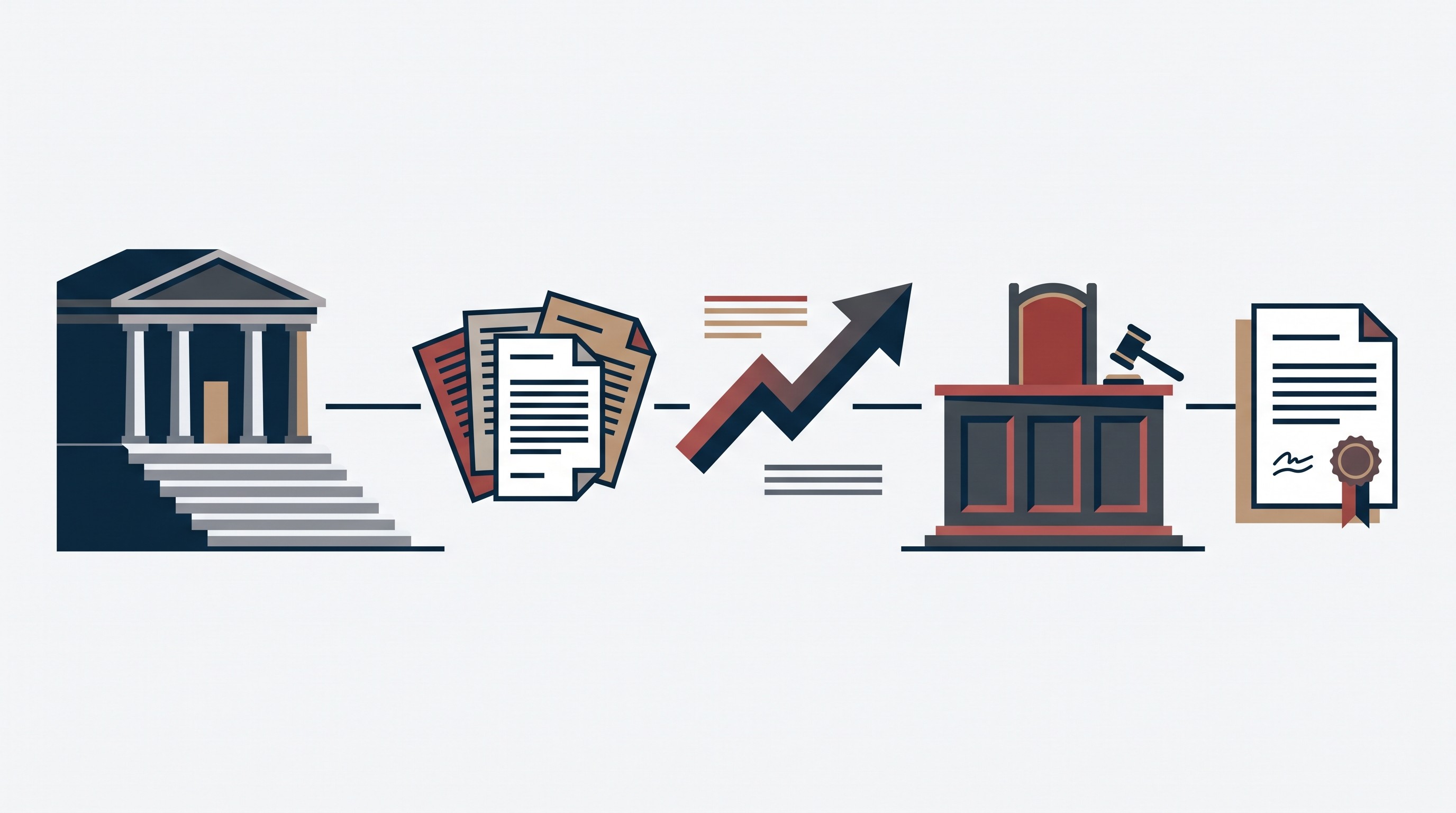
Procedural posture answers this question: what happened before the present court, and what decision is this court reviewing or making?
This is where many weak briefs fail. They jump from facts to holding and leave out the procedural mechanism that defines the court’s job.
Write the posture in a short sequence:
Who filed the case or initiated the proceeding?
What happened in the lower court, agency, or earlier stage?
Who appealed, petitioned, moved, or sought relief?
What specific order, judgment, or ruling is now before the court?
What did the present court do with it?
For example, the procedural posture might be: “The trial court granted the defendant’s motion to dismiss. The plaintiff appealed. The appellate court reviewed whether the complaint stated a claim under the statute and reversed.”
That is different from: “The defendant violated the statute and the plaintiff won.” The former explains the legal posture. The latter may overstate both the facts and the judgment.
Separate procedural facts from substantive facts. Procedural facts explain why the court had authority to decide the question and what it was allowed to decide. Substantive facts explain the underlying dispute.
Also record the disposition precisely. These terms are not interchangeable:
Affirmed: the lower decision stands.
Reversed: the lower decision is overturned.
Vacated: the lower decision is set aside.
Remanded: the case is sent back for further proceedings.
Dismissed: the court ends the matter or appeal without the requested merits relief.
Granted in part / denied in part: the court splits the requested relief.
If the court does not reach an issue, say so. A brief that says “the court held X” when the court expressly declined to decide X is worse than incomplete; it is misleading.
Step 3: Extract only the material facts
Material facts are the facts that affect the rule, disputed element, jurisdiction, remedy, or reasoning. They are not all the facts in the opinion.
A practical test: if this fact changed, could the result or reasoning change? If yes, it probably belongs. If no, it may be background.
Include facts that bear on:
The legal element in dispute
Timing, deadlines, notice, or sequence
Party status or relationship
Jurisdiction or venue
Contract terms, statutory language, policy text, or documents
Conduct the court treats as decisive
Exceptions, defenses, or limiting conditions
Remedy or relief
Identify parties by litigation role and practical role. “Plaintiff” and “defendant” may be enough for a simple tort case. In a regulatory, employment, constitutional, or commercial dispute, add short labels: “employee,” “agency,” “license holder,” “landlord,” “insurer,” “platform,” or “purchaser.”
Be careful with fact status. A court may describe:
Allegations in a complaint
Facts found after trial
Facts assumed true for a motion
Undisputed record facts
Disputed assertions
Background information not relied on
Those differences matter. A fact assumed true at the motion-to-dismiss stage is not the same thing as a fact proven after trial.
Do not sanitize uncertainty out of the case. If the court says the record was unclear, the parties disputed a point, or a fact was assumed without deciding it, preserve that qualification.
Step 4: Write the issue as a question the court answered
The issue is the legal question the court resolved. It should be written as a question, not as a topic.
Weak issue: “Whether the statute applies.”
Better issue: “Does the statute apply to a defendant who did X when the plaintiff’s claim arose before Y?”
The better version includes legal context and decisive facts without writing the holding into the question.
A good issue statement is:
Narrow enough to match the decision
Broad enough to reveal the legal rule
Tied to the procedural posture
Free of unnecessary background facts
Separate from questions the court declined to decide
If the case has multiple issues, split them. Do not force a statutory interpretation question, an evidentiary question, and a remedy question into one paragraph. Each may have a different rule, standard of review, and holding.
A useful workflow is to draft the issue twice. First, write the version that seems obvious after orientation. Then, after writing the holding, compare them. The issue and holding should answer each other.
Example structure:
Issue: Does [legal rule] permit or prohibit [action] when [decisive facts]?
Holding: Yes/No. The court held that [legal conclusion] because [core reason tied to facts].
If the holding does not answer the issue, one of them is too broad, too narrow, or aimed at the wrong question.
Step 5: Separate the rule, reasoning, and holding
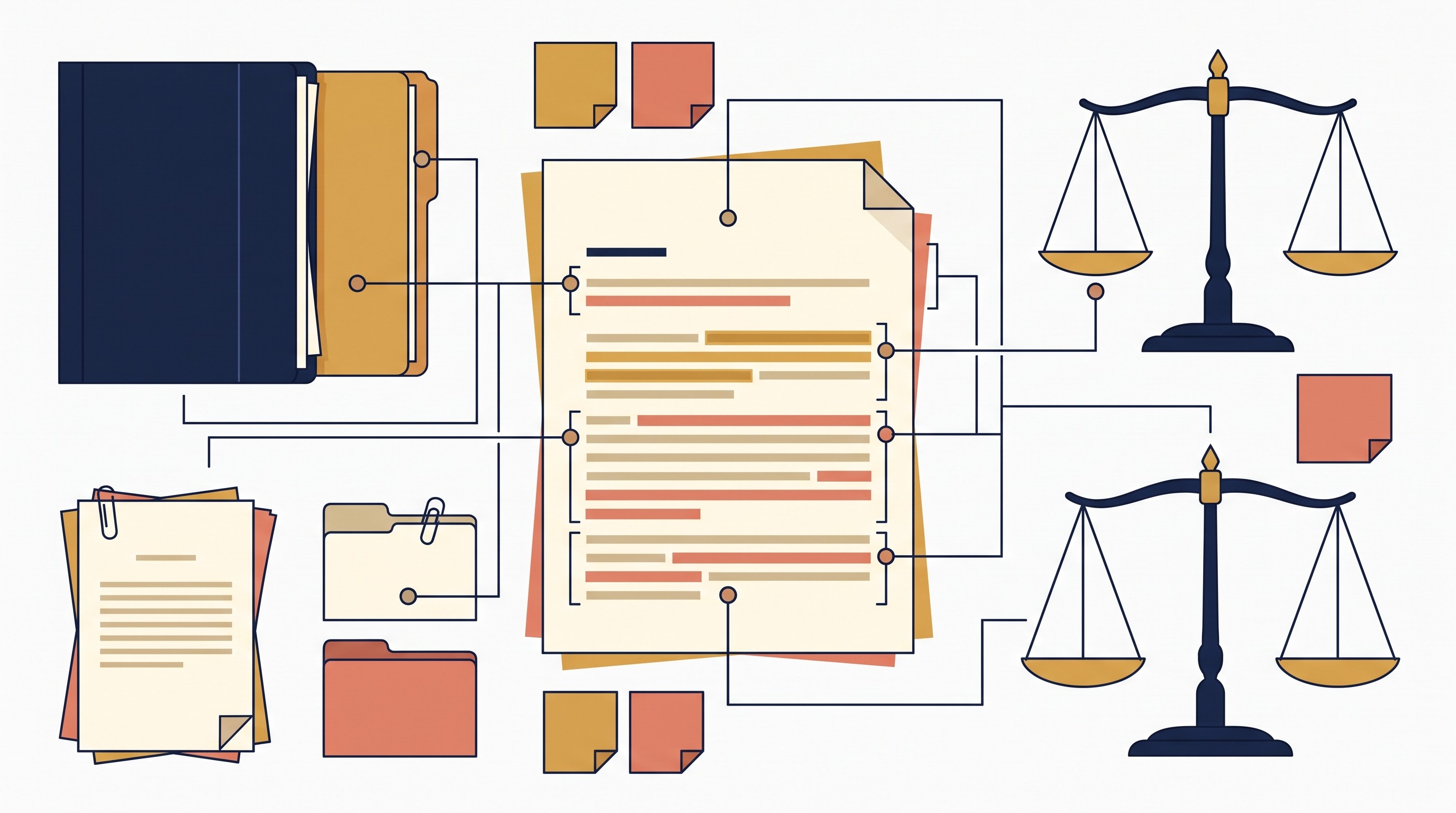
This is the heart of the brief. The rule, reasoning, and holding often sit near each other in the opinion, but they do different jobs.
Rule means the governing legal standard. It may come from a statute, regulation, constitutional provision, common-law doctrine, prior case, or multi-factor test.
Capture the rule with its working parts:
Elements
Exceptions
Burdens
Presumptions
Standards of review
Definitions
Threshold requirements
Limiting language
Reasoning means the path the court takes from rule to result. It is not just “the court applied the rule.” Trace the actual moves:
How the court interprets the authority
Which facts it treats as decisive
How it answers counterarguments
How it distinguishes or follows precedent
Why the result follows
Holding means the court’s answer to the issue necessary to resolve the case. It should not become a broad slogan.
Bad holding: “Free speech always protects workplace complaints.”
Better holding: “The court held that the employee’s complaint was protected under the statute because it addressed a matter covered by the statute and followed the required reporting channel.”
The better holding stays tied to the facts and rule the court actually decided.
Holding vs. dicta
Dicta are statements in an opinion that are not necessary to the result. Dicta may still be persuasive, helpful, or revealing, but it should not be treated as the holding.
Label these separately:
Hypotheticals
Broad policy observations
Background doctrine not applied
Alternative arguments not necessary to the judgment
Comments on issues not before the court
Concurrences and dissents
Illustrative examples
Alternative reasoning deserves special care. Sometimes a court gives two independent grounds for the same result. Sometimes it discusses an issue only because the parties argued it. Your brief should not flatten those differences.
When unsure, ask: could the court have reached the same judgment without this statement? If yes, do not call it the holding without more analysis.
Watch for limiting language
Limiting language is often the most valuable part of the case. Words like “on this record,” “under these circumstances,” “for purposes of this motion,” “we do not decide,” and “assuming without deciding” can determine whether the case helps or hurts later.
Preserve those qualifications in the rule, reasoning, or holding. Removing them may make the case sound more useful, but it also makes the brief less accurate.
[[OTIO_INLINE_PROMO:%7B%22title%22%3A%22Can%20you%20separate%20the%20rule%20from%20the%20holding%3F%22%2C%22description%22%3A%22Ask%20Otio%20about%20selected%20passages%20in%20the%20opinion%2C%20then%20save%20the%20rule%2C%20reasoning%2C%20holding%2C%20and%20source%20location%20into%20your%20case%20brief.%22%7D]]
Step 6: Add implications and authorities for future research
A case brief should end with what the decision means for the next research step. This is not the same as speculating beyond the opinion.
Good implication notes sound like this:
“Clarifies that the notice requirement applies before termination, not merely before final administrative review.”
“Limits prior precedent to cases involving written notice.”
“Leaves open whether the same rule applies to independent contractors.”
“Turns heavily on procedural posture; court assumed allegations true.”
“Useful for defendant’s argument on element two, but weak on remedy because the court remanded.”
Also record the authorities the opinion relies on and the proposition attached to each authority. Do not just paste a string cite. Write what each authority did in the opinion.
Example:
Authority cited in opinion | Proposition in this case |
|---|---|
Statute or rule | Defines the required element |
Prior case A | Supplies the test |
Prior case B | Distinguished because the facts were different |
Regulation | Supports agency authority |
Constitutional provision | Sets the governing constraint |
Source locations matter. Add page numbers, paragraph numbers, slip-opinion pages, or pin cites for the facts, rule, reasoning, and judgment. A brief without source locations becomes hard to audit later.
This is where an evidence-linked workspace helps. In Otio’s AI for legal research workflow, you can keep the opinion, extracted notes, and follow-up questions in one research space. If you use AI summaries or chat with a PDF, verify every generated statement against the opinion before relying on it.
For dense PDFs, Otio’s AI PDF reader can help you ask targeted questions about selected passages, save useful excerpts into notes, and keep the source attached to the brief. The key discipline stays the same: the brief is only as good as its source checking.
A practical case-brief template and quality check
Use this template as a working form. Keep it short, but do not delete the qualifications that control the result.
Case brief template
Case name and citation:
Full case name, citation, court, and date.
Opinion type:
Majority, concurrence, dissent, memorandum, order, or other form. Note authoring judge or justice if relevant.
Procedural posture:
How the case reached this court. Identify the lower-court or agency ruling, who sought review, and what ruling is now before the court.
Material facts:
Only the facts that affect the legal issue, rule, reasoning, jurisdiction, or remedy. Distinguish allegations, assumptions, findings, and undisputed facts.
Issue:
Write the legal question the court answered.
Rule:
State the governing law, test, standard, elements, exceptions, burdens, and limiting language.
Reasoning:
Explain how the court interpreted the authority, applied it to the material facts, addressed counterarguments, and reached the result.
Holding:
State the court’s answer to the issue. Keep it tied to the facts and posture.
Disposition:
Affirmed, reversed, vacated, remanded, dismissed, granted, denied, or mixed disposition.
Separate opinions:
Summarize concurrences and dissents only if they affect interpretation, future use, or class discussion.
Dicta / non-controlling discussion:
Label broader language, hypotheticals, and issues not necessary to the judgment.
Implications for future research:
What the case clarifies, limits, leaves open, or requires you to check next.
Authorities to follow up:
List key cases, statutes, regulations, or secondary authorities cited by the court and why each matters.
Source locations:
Pinpoint pages, paragraphs, or sections for important facts, rules, reasoning, holding, and disposition.
How to compress a long opinion
Long opinions do not require long briefs. They require sharper selection.
Use this compression rule:
Opinion material | Brief treatment |
|---|---|
Background facts not used in analysis | Omit or mention in one sentence |
Facts tied to disputed element | Include |
Procedural history affecting review | Include |
Long quotations of precedent | Convert into rule elements with pin cite |
Party arguments rejected by court | Include only if they explain the reasoning |
Separate opinions | Summarize if they clarify disagreement or future risk |
Broad policy discussion | Label as reasoning or dicta, not holding |
A one-page working brief might be enough for a routine case. A central authority in a memo, motion, seminar paper, or appellate argument may need two to four pages, especially if the procedural history or reasoning is complex.
Storage matters too. A brief is useful only if it can be retrieved when the issue returns three weeks later. For organizing briefs, class notes, and research notes by source and legal issue, see these note-taking templates for law students and legal researchers.
Final quality check
Before you call the brief done, ask six questions:
Can I state the exact judgment?
If not, reread the final section.
Can I explain how the case reached this court?
If not, rebuild the procedural posture.
Did I separate material facts from background facts?
If not, remove facts that do not affect the rule or reasoning.
Does the holding answer the issue?
If not, rewrite one or both.
Did I mark dicta, concurrences, and dissents separately?
If not, the brief may overstate the decision.
Can I point back to the opinion for every important statement?
If not, add source locations.
Update the brief when later cases narrow, distinguish, criticize, or supersede the decision. A case brief is a research record, not a permanent guarantee that the case remains usable authority.
FAQ
Q: How long should a case brief be?
A: It should be long enough to preserve the issue, governing rule, decisive facts, reasoning, holding, and disposition. For routine study or research, a concise one- to two-page brief is often more useful than a transcript of the opinion.
Q: What is the difference between a case brief and a case summary?
A: A case summary mainly recounts what happened and what the court decided. A case brief uses a structured method to connect procedural posture, material facts, issue, rule, reasoning, holding, and implications for later analysis.
Q: How do I avoid confusing dicta with the holding?
A: Tie the holding directly to the issue the court had to resolve and the judgment it entered. Label broader hypotheticals, background observations, alternative arguments, and statements unnecessary to the result as dicta or separate analysis.
Q: Should I brief every case I read for legal research?
A: No. Create full briefs for authorities central to the question, difficult to distinguish, or likely to be cited later. For peripheral authorities, a shorter note with the proposition, citation, and source location may be sufficient.
[[OTIO_FOOTER_PROMO:%7B%22title%22%3A%22Apply%20this%20method%20to%20your%20own%20opinions%22%2C%22description%22%3A%22Add%20your%20case%20PDFs%20or%20links%20to%20Otio%2C%20keep%20the%20source%20attached%20to%20your%20notes%2C%20and%20verify%20each%20extracted%20fact%2C%20rule%2C%20and%20holding%20against%20the%20opinion.%22%7D]]