
Academic Discovery and Research Workflows
Scopus vs Web of Science for Literature Review: Which Database Fits Your Workflow?
Compare Scopus and Web of Science for literature reviews, including coverage, search tools, citation analysis, exports, access, and when using both makes sense.

Updated November 2, 2026.
Scopus vs Web of Science: the short answer
For scopus vs web of science, there is no universal winner. Scopus and Web of Science are both multidisciplinary scholarly indexing and citation databases, but they differ in provider, source-selection rules, coverage patterns, search syntax, citation links, subject classification, exports, and institutional access.
Choose Scopus when its coverage, interface, author or affiliation tools, and citation-analysis workflow fit your discipline and question. Choose Web of Science when its Core Collection, historical citation links, subject structure, or institutional workflow better fits the project.
The right database is the one that retrieves the literature you need, lets you document a reproducible search, and produces records you can export, screen, verify, and preserve. If you are still designing the review itself, start with the broader literature review workflow, then come back to the database decision.

How Scopus and Web of Science differ in coverage and indexing
Scopus is Elsevier’s abstract and citation database. Elsevier describes Scopus as a source-neutral abstract and citation database curated by independent subject matter experts, and its coverage includes journals, books, conference papers, and other indexed scholarly records (Elsevier Scopus).
Web of Science Core Collection is Clarivate’s citation-indexing platform. Clarivate describes it as a collection for searching journal, conference, and book content across 250+ research areas, connected through citations, with sixty years of indexing and citation connections in the backfile product description (Clarivate Web of Science Core Collection backfiles).
The important point is not “which one is bigger.” The important point is that their source lists are not identical.
As of the official Scopus Content Coverage Guide checked on November 2, 2026, the March 2023 guide reports 27,950 active titles, including 26,591 active peer-reviewed journals, 192 trade journals, and 1,167 book series. It also reports 11.7+ million conference papers and 292,000+ stand-alone books (Scopus Content Coverage Guide).
For Web of Science Core Collection, Clarivate’s official page checked on November 2, 2026 supports a different kind of coverage claim: journal, conference, and book content across 250+ research areas, connected through citations, with long historical indexing through its backfiles (Clarivate Web of Science Core Collection backfiles).
Those statements do not prove that one database is more comprehensive for your review. Coverage varies by field, region, publication type, language, and time period. A public-health review, a computer-science bibliometric study, a management review, and a humanities-adjacent policy review can all hit different coverage problems.
Apparent disagreements between Scopus and Web of Science can be legitimate. Common causes include:
Different source lists: one database may index a journal, proceedings series, or book series that the other does not.
Different document-type rules: “article,” “review,” “conference paper,” “early access,” and “book chapter” may not map cleanly.
Different indexing dates: a record may appear earlier, later, or only for selected years.
Different regional representation: some regional journals, national journals, and non-English sources may be handled differently.
Different author and affiliation handling: author profiles, organization names, and affiliation variants may not resolve the same way.
Different citation-linking practices: cited-reference matching depends on what the platform indexes and how it links records.
Before searching deeply, inspect the active title lists, database documentation, and sample records for the journals, conferences, regions, and years that matter to your question.

Which database has the better search and citation-analysis workflow?
The better search workflow is the one you can translate, test, and document. Scopus and Web of Science both support structured scholarly searching, but the practical experience differs because each platform has its own fields, filters, operators, subject categories, and record structure.
Do not copy a query from one platform into the other and assume equivalence. Translate the research question into each database’s syntax.
For a real review, compare these capabilities in the interface you can access:
Keyword and field searching: Can you search title, abstract, author keywords, indexed terms, source title, affiliation, funding, and identifiers in the way your protocol requires?
Boolean logic: Are your AND, OR, and NOT blocks behaving as expected?
Phrase and proximity searching: Can the platform capture terms that appear near one another without making the query too broad?
Filters and limits: Can you reliably restrict by date, document type, language, subject area, access type, and source?
Subject classification: Do the database categories match your discipline closely enough to help, or do they introduce false confidence?
Author and affiliation search: Can you identify the relevant researcher, institution, or collaboration network without merging unrelated people?
Citation tracking: Can you move backward to references and forward to citing papers in a way that supports your review question?
The University of North Carolina’s systematic-review guidance gives the right general discipline: choose databases, list terms for each concept, add controlled vocabulary where relevant, and use field tags to tell the database where to search (UNC Libraries systematic review search guidance). That advice applies even when the review is not a formal systematic review.
For citation analysis, separate retrieval from interpretation. Backward references, forward citations, related records, author analysis, affiliation analysis, citation reports, subject categories, and source-level indicators can all help map a field. They do not tell you whether a paper is good evidence.
A highly cited paper may be foundational, controversial, methodologically weak, or simply old. A newer, lower-cited paper may be the one that changes the current state of evidence. Citation counts also differ because database coverage differs.
A useful pilot search starts with a small set of known relevant papers. For each database, test whether it retrieves:
The seed papers themselves.
Their most important references.
Later papers that cite them.
The authors and labs you expect to see.
The journals, proceedings, or book series central to the field.
A manageable level of irrelevant results.
If citation context matters, use Scopus or Web of Science for retrieval and citation networks, then add a citation-context tool as a second layer. For example, scite ai can help inspect how later papers cite a claim, but citation-context analysis does not replace database searching.
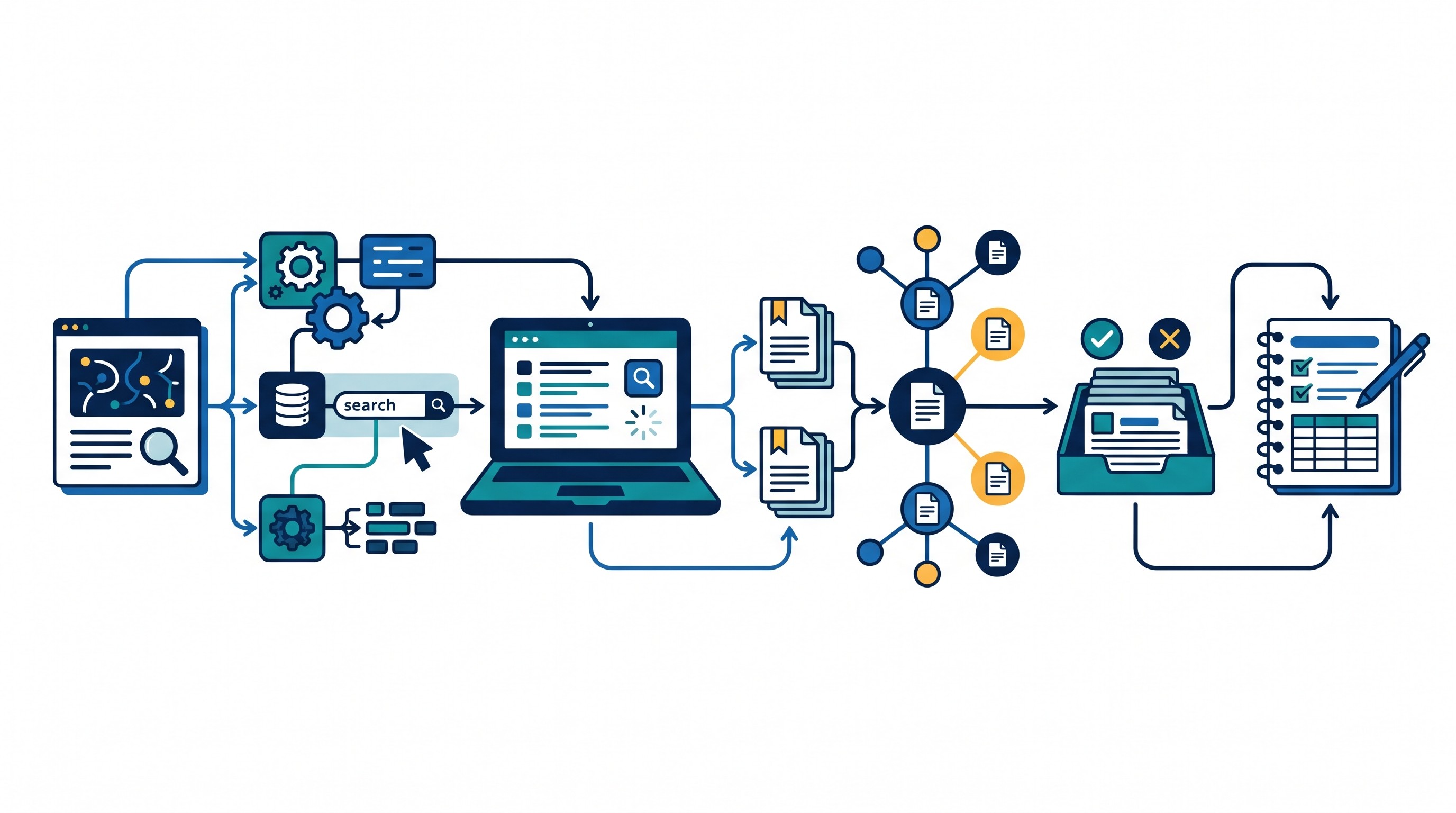
Exports, reference managers, and reproducibility: what to check before searching deeply
The export is not an administrative afterthought. It determines what you can deduplicate, screen, cite, audit, and preserve after the database session ends.
Before committing to a large search, check whether your available access supports the record fields you need:
Title
Abstract
Authors
Author identifiers
Affiliations
Keywords and indexed terms
Source title
Publication date
Document type
DOI and other identifiers
Cited references
Citation counts
Funding information, if relevant
Database-specific metadata
Links to full text, if available through your institution
Also check current export formats, export quotas, download limits, citation-report behavior, and access-level differences in the official Scopus and Web of Science help documentation. These limits can vary by product, subscription, institution, interface, and export path, so do not build a review workflow around a number from an old blog post.
Most literature-review workflows send database records into a reference manager such as Zotero, Mendeley, EndNote, or another institutional tool. The practical work then becomes deduplication and metadata repair.
Deduplicate by DOI first, but do not rely on DOI alone. Some records lack DOIs, some DOIs are mistyped, and some conference or book records create near-duplicates with slightly different titles. Use a combination of DOI, title, authors, year, source title, and manual checking for ambiguous cases.
Keep the original exports. A cleaned reference-manager library is useful, but it is not a perfect copy of the database search. An export may not preserve every search-history detail, every citation relationship, every entitlement, or every full-text link.
For reproducibility, maintain a separate search log with:
Database name and interface.
Database edition or collection, where relevant.
Date searched.
Complete query exactly as run.
Field definitions or field tags used.
Filters and limits applied.
Date range searched.
Result count before export.
Export format.
Number of records exported.
Deduplication method.
Manual additions.
Manual exclusions and reasons.
Supplementary sources searched.
If your next question is which citation manager should hold the reference library, see the separate comparison of Mendeley vs Zotero for citation workflows. This database comparison should stay focused on retrieval, documentation, and export quality.
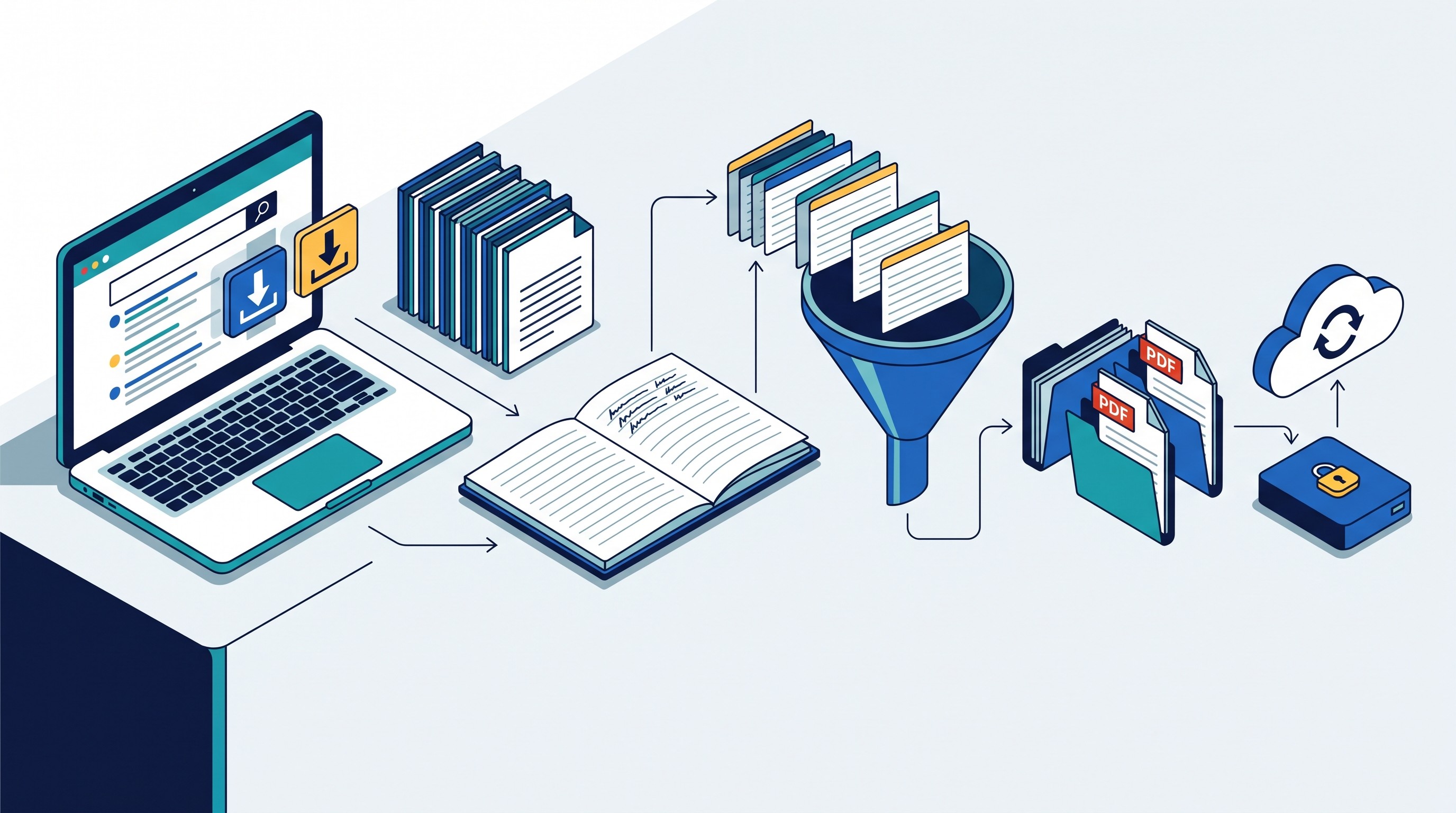
[[OTIO_INLINE_PROMO:%7B%22title%22%3A%22How%20will%20you%20preserve%20your%20database%20search%3F%22%2C%22description%22%3A%22Bring%20exported%20records%2C%20full%20texts%2C%20and%20search%20notes%20into%20Otio%20so%20you%20can%20compare%20sources%20while%20keeping%20the%20original%20evidence%20available.%22%7D]]
When Scopus may fit your literature-review workflow better
Scopus may fit better when its indexed sources, citation tools, interface, and export workflow line up with the actual project.
That usually starts with coverage. If conference papers, book series, trade publications, or particular regional journals matter to the field, check whether Scopus indexes them for the relevant years. Do not assume from discipline reputation alone. Run the pilot.
Scopus can also be a strong operational fit when author, institution, collaboration, and citation-landscape analysis matter. If the review includes questions such as “which institutions are producing this research?” or “how has this topic clustered across fields?”, inspect whether the available Scopus records contain the author, affiliation, and citation fields you need.
A database can be the right choice without being the largest possible corpus. In a review, operational clarity matters. A clear interface, stable search strategy, usable exports, and documented filters can reduce errors more than a theoretically broader but poorly controlled search.
Scopus may be the better fit when:
The pilot search retrieves the known relevant records with fewer missing sources.
The source list better matches your field, region, or publication type.
Conference proceedings or book-series coverage is important to the question.
Author and affiliation analysis are part of the project.
Your institution’s Scopus access supports the exports and citation reports you need.
The search interface makes it easier to document and rerun the strategy.
The test is simple: choose five to ten seed papers, two to three expected journals or conference series, and a few known authors. If Scopus consistently finds the expected material and exports usable records, it may be the better working database for that review.
When Web of Science may fit, and when using both is justified
Web of Science may fit better when the Core Collection’s coverage, long citation history, subject structure, source evaluation, or institutional workflow matches the question.
This often matters in bibliometric work, historical citation tracing, and lab environments where methods sections, funder expectations, or prior reviews already use Web of Science. If the project needs to compare current results with older studies or reproduce an established strategy, changing databases can change the evidence base.
Use Web of Science when:
The Core Collection retrieves the seed records and central sources more reliably.
Historical citation links are important to the question.
Your discipline relies on Web of Science categories or established institutional reporting.
Your lab, funder, or protocol expects Web of Science records.
The citation reports and export paths available through your institution fit the analysis.
You need consistency with prior bibliometric work that used Web of Science.
Using both Scopus and Web of Science is justified when the difference could change the review or the bibliometric conclusion. That is the real threshold. “More databases” sounds rigorous, but it can create noise if the second source adds little relevant evidence and a lot of reconciliation work.
Dual searching can help when the project needs:
Broader retrieval coverage across disciplines or regions.
Validation of citation or bibliometric findings.
Comparison of source representation across indexing systems.
A defensible search strategy for a high-stakes review.
Capture of database-specific records likely to affect conclusions.
It also adds work. You must translate queries, preserve provenance, deduplicate records, reconcile conflicting metadata, explain database-specific result counts, and document how disagreements were resolved.
Set boundaries before searching both. Define the purpose of the second database. Run equivalent concepts, not blindly identical strings. Export all records with database provenance. Deduplicate systematically. Report what each database contributed.
Neither Scopus nor Web of Science is a complete literature corpus. Depending on the protocol, you may also need grey literature, preprints, dissertations, trial registries, government reports, professional publications, full-text hand searching, or discipline-specific databases. For broader source discovery beyond these two commercial indexes, use a guide to good research websites and academic databases.
The stakes are especially high for systematic reviews. Gusenbauer and Haddaway note that rigorous evidence identification is essential for systematic reviews and meta-analyses because the selected sample shapes the evidence synthesis (Research Synthesis Methods article via PubMed Central). The database choice is part of that sampling decision.

A practical decision framework for choosing one or both databases
Start with the research question, not the database brand. Define the evidence you are trying to capture, then test which database can capture it with the least distortion.
Use these seven criteria.
1. Discipline and source coverage
List the journals, conferences, book series, professional sources, and regional outlets that matter. Check whether each database indexes them for the relevant years.
Do not stop at “health,” “business,” “computer science,” or “social science.” Coverage problems often appear at the subfield level.
2. Research question and study design
A scoping review, narrative literature review, systematic review, rapid evidence assessment, and bibliometric analysis do not have the same database needs.
A bibliometric analysis may care more about citation links, source consistency, and exportable metadata. A qualitative literature review may care more about retrieving the right conceptual papers and preserving full texts for close reading.
3. Citation-analysis needs
If the project depends on forward citations, backward references, co-authorship, institutional analysis, or citation reports, test those features directly.
Do not choose based on a feature name. Choose based on whether the platform gives you the citation relationships and fields required for the analysis.
4. Regional and language coverage
If the topic has strong regional literatures, check representation explicitly. This matters in public policy, education, public health, environmental research, development studies, law-adjacent fields, and national professional literatures.
English-language database comfort can hide relevant non-English or regional work.
5. Date range and historical depth
Older literature is unevenly represented across databases and collections. If the review spans decades, test older known records and their citation links.
A database that works well for recent literature may be weaker for a historical question.
6. Institutional access
Your actual subscription matters. Institutions may license different collections, export rights, and full-text link resolvers.
The practical question is not “what can the platform do?” It is “what can my team access, export, and reproduce under our institution’s license?”
7. Reproducibility requirements
A defensible review needs a documented search. That means exact queries, dates, filters, result counts, exported records, deduplication decisions, and supplementary searches.
If a platform makes the search hard to document, that is a real workflow cost.
After scoring both options, run the pilot:
Pick known relevant records.
Translate the query into each platform’s syntax.
Record the exact query and filters.
Compare recall of seed papers.
Check irrelevant-result load.
Inspect missing abstracts and weak metadata.
Test author disambiguation.
Test citation links.
Export a sample and import it into your reference manager.
Deduplicate a small combined set if using both.
Choose one database when it meets the project’s coverage and documentation requirements and the second adds little value. Choose both when their differences could change the included evidence or materially affect a bibliometric conclusion.
Document the decision in the methods record. A short note is often enough: why Scopus, why Web of Science, or why both; what supplementary sources were searched; and how duplicates and disagreements were handled.
What to do with Scopus or Web of Science results after discovery
Discovery is not the end of the literature review. It is the point where the evidence becomes fragile.
After exporting or collecting relevant records, the workflow should look like this:
Preserve the original search log and exports.
Import records into a reference manager or screening workflow.
Deduplicate carefully.
Verify titles, authors, DOIs, dates, and source metadata.
Obtain permitted full texts through your institution, publisher access, open repositories, or legal document delivery.
Separate discovery records from the final included evidence corpus.
Tag inclusion and exclusion decisions.
Keep notes tied to source records.
Compare methods, findings, limitations, and claims across papers.
Draft only from verifiable sources.
This is where Otio for academics fits: after discovery, not instead of Scopus or Web of Science. Otio is a permanent multi-source research workspace for bringing PDFs, web pages, notes, and other source formats into one library, organizing them in project spaces, comparing sources, asking questions across a corpus, and creating cited answers while keeping the underlying sources available for review.
For the full-text stage, Otio’s AI PDF reader helps work through collected papers without splitting reading, notes, and source questions across separate apps. Its multiple AI models can support cross-checking and synthesis, but model choice does not guarantee citation accuracy, complete retrieval, or systematic-review compliance.
Keep the boundary clear. Scopus and Web of Science help you discover and analyze indexed scholarly records. Reference managers help maintain citation libraries. Screening platforms may be needed for formal systematic-review workflows. Institutional access determines what full text you can legally obtain. Otio is the workspace for preserving, reading, comparing, and synthesizing the sources after discovery.
Bring the papers, web sources, notes, and evidence from your chosen database into Otio and start a cited literature synthesis in one permanent research workspace.
FAQ
Q: Is Scopus better than Web of Science for a literature review?
A: Neither is universally better. Choose based on discipline and regional coverage, citation-analysis needs, institutional access, search reproducibility, and a pilot search using known relevant sources.
Q: Should I use both Scopus and Web of Science?
A: Use both when differences in coverage or citation data could change the review or bibliometric findings. Document equivalent searches, preserve database provenance, deduplicate records, and account for the added reconciliation work.
Q: Are Scopus and Web of Science complete databases of the literature?
A: No. Both are curated indexing and citation databases with different coverage. You may also need discipline-specific indexes, grey literature, preprints, dissertations, registries, government sources, or professional publications.
Q: Can Otio replace Scopus or Web of Science after I export papers?
A: No. Otio is a workspace for organizing, reading, comparing, synthesizing, and citing sources discovered through those databases; it does not replace database access, exhaustive retrieval, or a systematic-review protocol.
[[OTIO_FOOTER_PROMO:%7B%22title%22%3A%22Apply%20your%20database%20choice%20to%20your%20own%20sources%22%2C%22description%22%3A%22Add%20your%20Scopus%20or%20Web%20of%20Science%20records%2C%20papers%2C%20web%20sources%2C%20and%20notes%20to%20Otio%20to%20organize%20findings%20and%20draft%20a%20cited%20synthesis.%22%7D]]