
Academic Writing
24 Abstract Examples for Academic Papers: Strong, Weak, and Improved
Compare 24 weak, strong, and improved academic paper abstracts across quantitative, qualitative, review, and applied research, with annotations you can adapt.

A strong abstract tells a reader what was studied, how it was studied, what was found, and why the finding matters. A weak abstract usually hides one of those parts: no research purpose, vague methods, no results, or a conclusion that claims more than the paper can support.
The 24 examples below are illustrative, not real studies. Use them as editing models, then check your own journal, conference, department, or style guide for required headings, word count, and structure.
What a strong academic abstract does differently
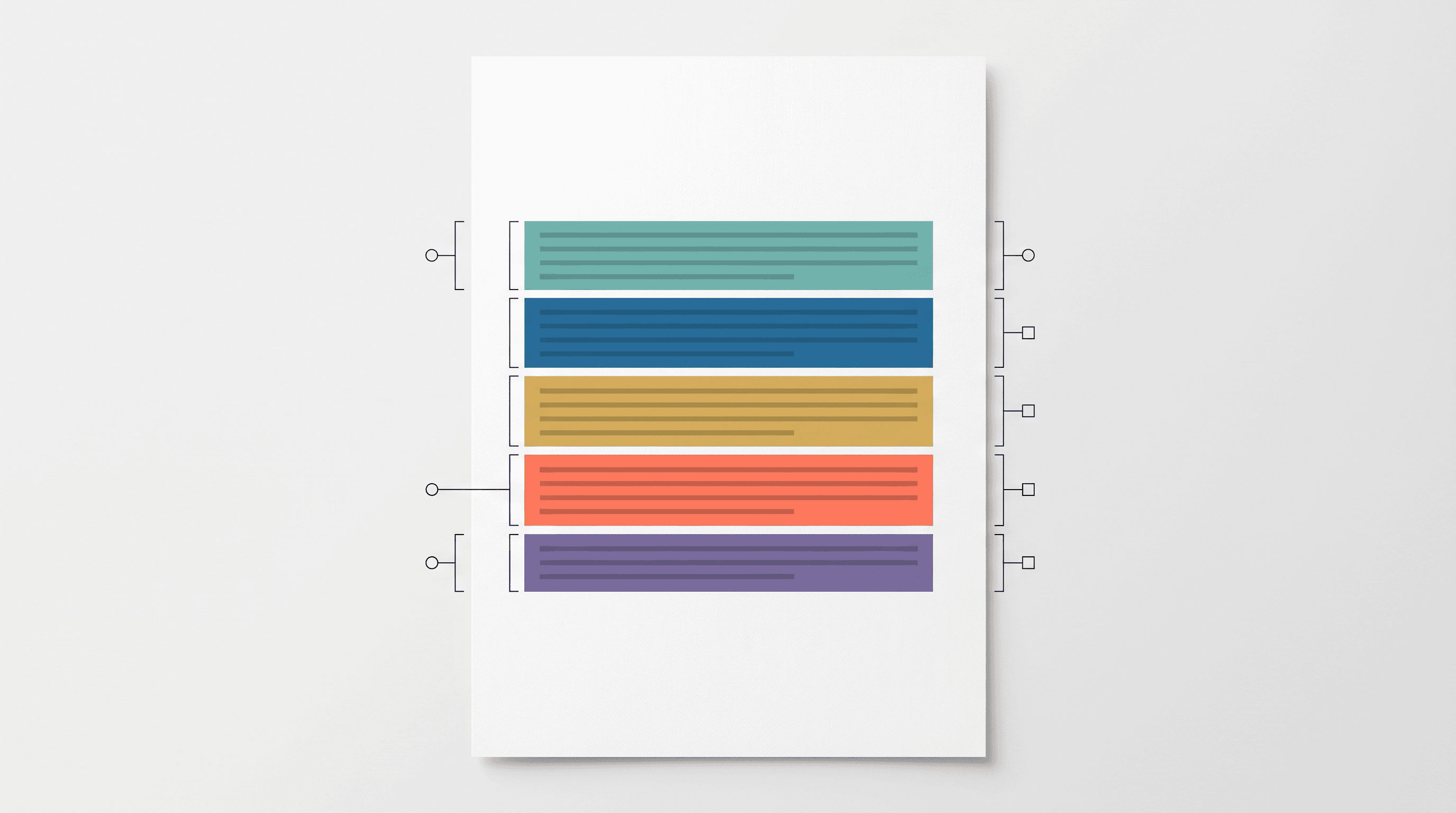
A useful academic abstract does five jobs in a small space:
Background/problem: What issue or gap motivated the study?
Objective: What question did the paper answer?
Methods: What design, data, sample, or materials were used?
Results: What was found?
Implication: What should readers understand or do differently because of the finding?
Weak abstracts often sound polished but fail this test. They describe a topic rather than a paper.
Before using any example below, run this quick editing test:
Cut background that does not lead directly to the research question.
Replace vague claims such as “important results are discussed” with the actual finding.
Check claim strength against the study design. A survey can show association; an experiment may support causal language if designed well.
Make the ending earn its space. The conclusion should not repeat the first sentence or introduce a new research question.
If you are still deciding what an abstract should include, start with this guide to research paper abstract examples. If the confusion is between the abstract and opening section, the distinction is covered in abstract vs introduction in a research paper.
Examples 1–4: Fixing the basic abstract structure
Example 1 — Missing research purpose
Weak abstract
Climate anxiety is an increasingly visible concern among young people. Many students report worries about environmental decline, extreme weather, and the future. This paper discusses climate anxiety and its relationship to student life.
Improved abstract
Climate anxiety has been linked to student wellbeing, but less is known about how it relates to academic engagement among undergraduates. This study examined whether self-reported climate anxiety differed between first-year and final-year students and how those differences related to course participation. Using survey responses from undergraduate students at one university, the analysis compared anxiety scores and participation indicators across year groups. The findings suggest that final-year students reported higher climate-related worry and described more frequent difficulty concentrating on coursework. These results indicate that climate-related distress may shape academic experience, especially for students approaching graduation.
Why it works: The improved version names the population, objective, comparison, method, finding, and implication. It stops being “about climate anxiety” and becomes a summary of a specific study.
Example 2 — Vague methods
Weak abstract
This study explores how remote work affects collaboration. Data were analyzed to understand employee experiences and identify important patterns. The results show that remote work has both benefits and challenges.
Improved abstract
This study examined how remote work shaped collaboration among employees in hybrid software teams. It analyzed interview transcripts and project communication records from three product teams, using thematic coding to compare reported collaboration practices with observed communication patterns. The analysis found that remote work improved documentation habits but increased delays in resolving ambiguous technical decisions. The findings suggest that hybrid teams may benefit less from more meetings than from clearer decision ownership and written escalation norms.
Why it works: “Data were analyzed” becomes a clear but compact methods sentence. The abstract does not turn into a full methods section; it gives enough detail to judge the evidence.
Example 3 — Results-free abstract
Weak abstract
This paper investigates the relationship between sleep quality and academic performance among university students. The study uses a survey design and presents findings about student health and learning. Implications for student support services are discussed.
Improved abstract
This paper investigates the relationship between sleep quality and academic performance among university students. Using a cross-sectional survey, the study compared self-reported sleep quality with students’ reported grade ranges and study habits. Students who reported poorer sleep quality also reported lower academic performance and more frequent difficulty maintaining study routines. Because the design is cross-sectional, the findings do not establish whether sleep problems reduce performance or whether academic stress disrupts sleep. The study suggests that student support services should treat sleep quality as part of academic advising rather than only as a wellness issue.
Why it works: The improved abstract reports the direction of the result without inventing unsupported statistics. If the paper has exact coefficients, confidence intervals, or p-values, include the most important one.
Example 4 — Conclusion repeats the introduction
Weak abstract
Online misinformation is a major issue in public communication. This study examines how people evaluate misinformation on social media. The paper concludes that misinformation remains a major issue in public communication.
Improved abstract
Online misinformation is a major issue in public communication, but less is known about which cues non-experts use when judging disputed posts. This study examined how social media users evaluated posts that included conflicting source signals, such as high engagement but low source credibility. In a survey experiment, participants reviewed mock posts and rated their perceived accuracy. Participants placed more weight on visible engagement cues than on source descriptions when the two conflicted. The findings suggest that platform design choices may shape credibility judgments by making popularity cues more salient than source quality.
Why it works: The conclusion now follows from the result. It does not introduce a new research question, and it does not merely restate the topic.
Examples 5–8: Quantitative research paper abstracts
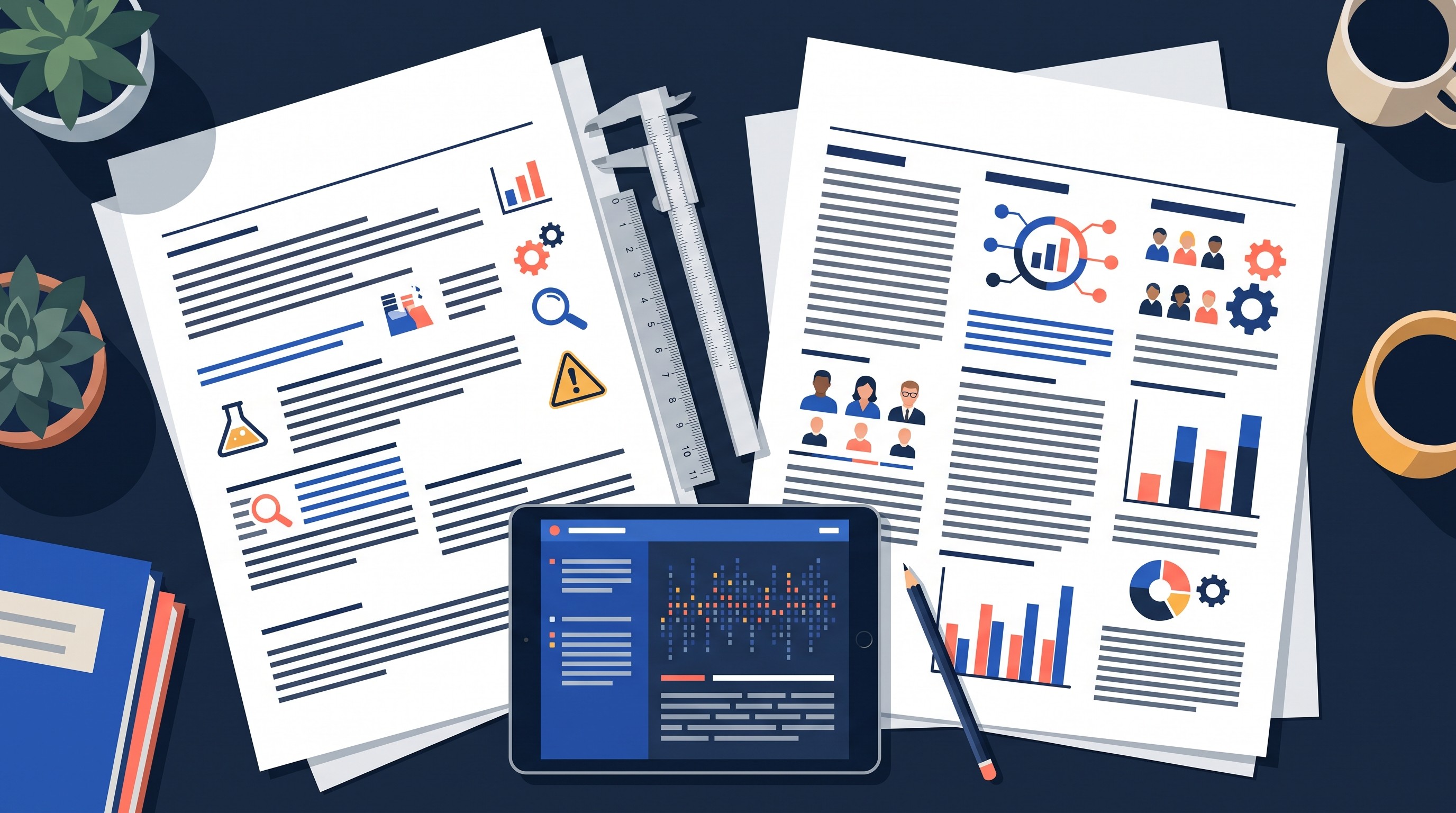
Quantitative abstracts need precision. The reader should be able to identify the variables, sample or data source, design, key result, and limitation.
Example 5 — Correlational study
Weak abstract
This study looks at the relationship between social media use and loneliness. The results show that the two variables are related. The paper discusses implications for young adults.
Improved abstract
This correlational study examined the association between daily social media use and loneliness among young adults. Participants completed a survey measuring average platform use, perceived social connectedness, and loneliness symptoms. Higher reported daily use was associated with higher loneliness scores, especially among participants who described mostly passive browsing. The design does not show that social media use causes loneliness, but it suggests that the type of use may matter when studying digital behavior and wellbeing.
Why it works: The abstract identifies the variables and avoids causal overreach. “Associated with” is doing important work here.
Example 6 — Experimental study
Weak abstract
This paper tests a new writing intervention for students. The intervention was successful and improved writing. The results have implications for teaching.
Improved abstract
This experimental study tested whether a structured peer-feedback activity improved argumentative writing among first-year composition students. Students were assigned to either a peer-feedback workshop or a standard revision session before submitting a revised essay. Essays were assessed with a rubric measuring claim clarity, evidence use, and organization. Students in the peer-feedback condition showed stronger improvement in evidence integration, while changes in organization were smaller. The findings suggest that targeted peer feedback may improve specific writing skills, but the intervention should not be treated as a general solution for all writing outcomes.
Why it works: It names the intervention, comparison group, outcome measure, and result. The final sentence limits the scope.
Example 7 — Survey research
Weak abstract
This survey examines student attitudes toward artificial intelligence in higher education. Many interesting findings are presented about use, trust, and classroom policy. The study provides insight into student perspectives.
Improved abstract
This survey examined how undergraduate students perceive the use of artificial intelligence tools in coursework. Respondents answered questions about frequency of use, trust in AI-generated explanations, and preferences for course policy. The most important pattern was a gap between use and trust: many students reported using AI tools for drafting or clarification while expressing low confidence in their accuracy. The findings suggest that institutional policy should address verification practices rather than focusing only on whether students use AI.
Why it works: The improved version does not list every descriptive result. It selects the result that changes how readers understand the problem.
Example 8 — Secondary-data analysis
Weak abstract
This study analyzes national education data to understand graduation outcomes. Statistical methods were used to examine trends. The paper contributes to education policy.
Improved abstract
This study used national education data to examine graduation outcomes among public high school students across urban, suburban, and rural districts. The analysis compared district-level graduation trends over the study period and modeled differences by location, school resources, and student demographic composition. Graduation outcomes improved across all district types, but rural districts showed larger variation linked to resource availability. The findings suggest that policy discussions about graduation rates should account for within-category differences rather than treating rural or urban districts as uniform groups.
Why it works: A good secondary-data abstract names the data source as specifically as the paper allows, the population, the time frame when relevant, and the group to which the result can reasonably apply.
Examples 9–12: Qualitative research paper abstracts
Qualitative abstracts should not hide behind “explores experiences.” They need the participant group, research focus, analytic approach, and interpretive contribution.
Example 9 — Interview study
Weak abstract
This study explores the experiences of nurses during organizational change. Interviews were conducted and themes were identified. The study helps explain workplace challenges.
Improved abstract
This interview study examined how hospital nurses described their work during a transition to a new electronic health record system. Semi-structured interviews focused on workflow disruption, patient communication, and perceived support during implementation. Thematic analysis showed that nurses did not frame the change only as a technical burden; they described it as a shift in professional attention, with documentation demands competing against bedside care. The findings suggest that implementation planning should address how new systems alter clinical priorities, not only whether staff can operate the software.
Why it works: The improved abstract reports a central theme, not just the existence of themes.
Example 10 — Case study
Weak abstract
This case study examines a community organization that improved food access. The case shows that local organizations can solve food insecurity. Lessons are discussed.
Improved abstract
This case study examined how one community organization coordinated food distribution during a period of rising local demand. The analysis drew on organizational documents, staff interviews, and meeting observations to understand how volunteers, local agencies, and donors shared responsibilities. The case shows that the organization’s effectiveness depended less on a single program model than on its ability to broker relationships across existing services. Because the study examines one organization, the findings should be read as an analytical account of coordination practices rather than universal proof of how to solve food insecurity.
Why it works: It distinguishes the case, setting, evidence, and analytical insight. It also prevents one case from becoming an overgeneralized claim.
Example 11 — Ethnographic research
Weak abstract
This ethnographic study examines everyday practices in a makerspace. Observations revealed important insights about learning and technology. The paper contributes to research on informal education.
Improved abstract
This ethnographic study examined everyday learning practices in a community makerspace serving teenagers and adult hobbyists. Field observations and informal conversations focused on how participants asked for help, shared tools, and judged successful projects. The analysis found that learning occurred through brief acts of public troubleshooting rather than through formal instruction alone. This interpretation suggests that informal technical education depends on visible problem-solving routines that allow newcomers to participate before they have specialized expertise.
Why it works: The abstract gives the field site, participants, evidence type, and interpretation. It does not use “ethnographic” as decoration.
Example 12 — Thematic analysis
Weak abstract
This study uses thematic analysis to examine graduate student stress. Themes included workload, supervision, finances, and uncertainty. The paper discusses implications for graduate education.
Improved abstract
This study used thematic analysis to examine how graduate students described stress during the dissertation stage. Rather than treating workload, supervision, finances, and uncertainty as separate concerns, the analysis found that students connected them through a broader pattern of stalled progress. Participants described stress as most intense when they could not tell whether effort was moving the project forward. The findings suggest that graduate support should focus not only on reducing workload but also on creating clearer feedback points and milestones.
Why it works: The improved abstract turns a list into an argument. The themes now answer the research question.
Examples 13–16: Literature review and synthesis abstracts
Review abstracts must tell readers what kind of review they are reading. A narrative review, systematic review, scoping review, and conceptual paper do different jobs.
Example 13 — Narrative literature review
Weak abstract
Teacher burnout has been studied for many years and is an important issue in education. This review discusses the literature on teacher burnout and identifies several important topics. Future research is needed.
Improved abstract
This narrative review examines how recent education research explains teacher burnout in relation to workload, administrative demands, and professional autonomy. The review organizes the literature around three recurring explanations: individual coping, school-level working conditions, and policy-driven accountability pressures. Across the literature, burnout is most persuasively explained when individual stress is connected to institutional conditions rather than treated as a personal resilience problem. The review identifies a remaining gap in studies that compare burnout across school types while accounting for differences in staffing and leadership.
Why it works: The improved version states the organizing question, evidence pattern, and remaining gap.
Example 14 — Systematic review
Weak abstract
This systematic review examines mobile health interventions for diabetes management. Many studies were reviewed, and the results show that mobile health is promising.
Improved abstract
This systematic review examined studies of mobile health interventions designed to support diabetes self-management. The review used predefined search terms, inclusion criteria, and screening procedures to identify intervention studies that measured outcomes such as medication adherence, glucose monitoring, or self-management behavior. The included studies varied substantially in intervention design, follow-up duration, and outcome measurement. Evidence was strongest for short-term improvements in self-monitoring behavior, while conclusions about long-term clinical outcomes were limited by inconsistent reporting. The review suggests that future trials should use more comparable outcome measures and longer follow-up periods.
Why it works: It reports a reproducible search and screening approach without pretending the evidence is stronger than it is.
Example 15 — Scoping review
Weak abstract
This scoping review investigates research on virtual reality in medical training. It shows that virtual reality is effective and should be used more widely.
Improved abstract
This scoping review mapped the range of research on virtual reality in medical training. It examined published studies by training context, learner group, simulated task, and type of outcome measured. The available evidence was concentrated in procedural skills training, with fewer studies addressing communication, diagnosis, or team-based clinical practice. Because the review was designed to characterize the evidence base rather than test effectiveness, the findings identify where research is abundant and where it remains sparse. The review suggests that future studies should expand beyond procedural performance and examine transfer to clinical settings.
Why it works: A scoping review maps evidence. It should not present itself as a definitive effectiveness test.
Example 16 — Theoretical or conceptual paper
Weak abstract
This paper presents a new theory of digital academic identity. The theory is explained and connected to existing scholarship. It will be useful for future research.
Improved abstract
This conceptual paper addresses a problem in research on digital academic identity: existing accounts often separate platform behavior from institutional evaluation. The paper proposes a framework that links scholars’ online self-presentation, platform metrics, and career incentives. Its central proposition is that digital academic identity is produced through both individual communication choices and institutional systems that reward visibility. The framework can guide future studies of scholarly communication by distinguishing identity work, platform affordances, and evaluation pressures as related but analytically separate dimensions.
Why it works: The abstract states the problem, conceptual contribution, main proposition, and use of the framework.
[[OTIO_INLINE_PROMO:%7B%22title%22%3A%22Does%20your%20synthesis%20abstract%20name%20its%20evidence%3F%22%2C%22description%22%3A%22Add%20your%20source%20papers%20and%20draft%20to%20Otio%2C%20then%20ask%20it%20to%20check%20whether%20the%20abstract%20states%20the%20synthesis%20method%2C%20evidence%20base%2C%20findings%2C%20and%20limits.%22%7D]]
Examples 17–20: Applied and discipline-specific abstracts
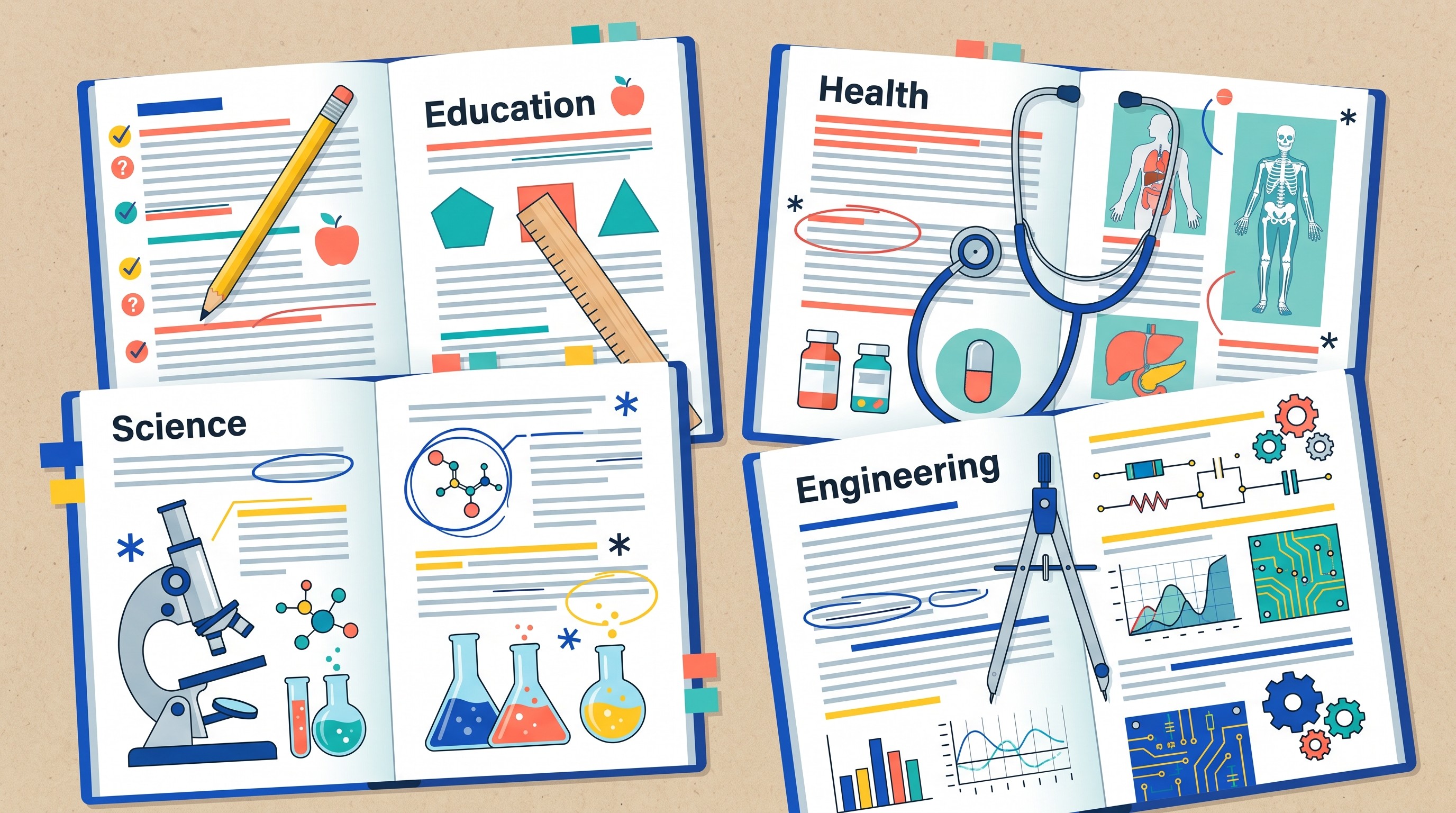
The structure stays the same across fields, but the emphasis changes. Scientific papers often need the decisive experimental finding. Clinical abstracts must avoid unsupported recommendations. Engineering abstracts need the evaluation basis and constraint.
Example 17 — Laboratory or scientific study
Weak abstract
This study investigates the properties of a new polymer material. Several tests were performed and the material showed good performance. The findings are important for materials science.
Improved abstract
This laboratory study examined whether a modified polymer coating could improve moisture resistance in biodegradable packaging films. Film samples were prepared with and without the coating and tested under controlled humidity exposure. Coated samples retained structural integrity longer than uncoated samples and showed less visible surface degradation after exposure. The findings suggest that the coating may improve moisture tolerance in biodegradable packaging applications, although further testing is needed under real storage and transport conditions.
Why it works: The improved version defines the research problem and experimental comparison without burying the reader in specialized terms.
Example 18 — Education research
Weak abstract
This study looks at an innovative classroom strategy for improving mathematics learning. Students responded positively, and the strategy improved outcomes. Implications for teachers are discussed.
Improved abstract
This education study examined whether worked-example discussions supported algebra problem solving in middle school classrooms. Students participated in small-group discussions comparing correct and incorrect solution paths before completing independent practice problems. The analysis found that students more often identified procedural errors after the discussions, though gains were weaker on problems requiring transfer to unfamiliar formats. The findings suggest that worked-example discussion may help students recognize common errors, but teachers may need additional activities to support flexible problem solving.
Why it works: It identifies learners, intervention, outcome, and practical implication. The limitation is part of the value.
Example 19 — Clinical or health research
Weak abstract
This study examines a new approach to managing chronic pain. The approach was effective and should be adopted in clinical practice. The paper discusses patient outcomes.
Improved abstract
This health research study examined whether a group-based pain education program was associated with changes in self-reported pain management among adults with chronic non-cancer pain. Participants completed measures of pain coping, daily functioning, and perceived confidence before and after the program. Participants reported improved confidence in managing pain-related activities, while changes in daily functioning were more modest. Because the study did not include random assignment, the findings support cautious use of the program as a promising support strategy rather than a standalone clinical recommendation.
Why it works: It states the population, design, outcome, and implication while avoiding a recommendation broader than the evidence supports.
Example 20 — Engineering or applied technology paper
Weak abstract
This paper presents a new algorithm for traffic prediction. The algorithm performs well and improves accuracy. The system could be useful in smart cities.
Improved abstract
This engineering paper presents a traffic prediction method designed for short-term congestion forecasting on urban road networks. The method combines recent sensor readings with temporal traffic patterns and was evaluated against baseline prediction models using historical traffic data. The proposed method improved prediction accuracy during recurring congestion periods but performed less consistently during irregular events such as road closures. The results suggest that the method is useful for routine traffic forecasting, while incident-sensitive prediction remains a constraint for deployment in real-time traffic management systems.
Why it works: The improved abstract explains the problem, proposed method, evaluation basis, performance finding, and constraint.
Examples 21–24: Common weak-to-improved abstract revisions
These final examples target the four abstract problems that survive even after the basic structure is present: overclaiming, jargon, excess background, and mismatch with the paper.
Example 21 — Overclaiming causation
Weak abstract
This study proves that flexible scheduling increases employee productivity. Survey results show that employees with flexible schedules are more productive. Therefore, companies should adopt flexible scheduling policies.
Improved abstract
This study examined the association between flexible scheduling and self-reported productivity among employees in office-based roles. Survey responses compared scheduling arrangements, perceived autonomy, and reported productivity. Employees with flexible schedules reported higher productivity and greater perceived control over their workday. Because the study is observational, the findings do not prove that flexible scheduling causes productivity gains. They suggest that schedule flexibility may be one factor associated with employees’ perceptions of productive work.
Why it works: “Proves” becomes “examined the association.” The conclusion now fits the design.
Example 22 — Excessive jargon
Weak abstract
This paper operationalizes a multi-scalar socio-technical affordance framework to interrogate digitally mediated epistemic practices in post-bureaucratic knowledge ecologies.
Improved abstract
This paper develops a framework for studying how digital tools shape knowledge-sharing in organizations with less formal hierarchy. It argues that researchers should examine three levels together: the features of the tool, the everyday practices of workers, and the organizational rules that define whose knowledge counts. The framework helps explain why the same tool can support collaboration in one setting but reinforce information bottlenecks in another.
Why it works: The improved version keeps the conceptual argument but removes unexplained specialist language. Precision beats density.
For broader help with this kind of revision, see these academic writing examples and the guide to improving academic tone.
Example 23 — Background takes over
Weak abstract
The history of public libraries reflects long-standing debates about democracy, citizenship, literacy, social reform, and public access to knowledge. Since the nineteenth century, libraries have served many social functions and have been shaped by changing technologies, economic conditions, and political priorities. In the digital age, libraries continue to face important challenges as communities change.
Improved abstract
This paper examines how public libraries define their role in digital inclusion programs. Drawing on policy documents and staff interviews from urban library systems, the study analyzed how libraries described technology access, skills training, and community support. The findings show that libraries framed digital inclusion not only as access to devices but also as ongoing assistance with forms, services, and job-related tasks. The paper argues that digital inclusion research should treat libraries as active service mediators rather than passive access points.
Why it works: The improved abstract cuts the history lesson and gives space to the paper’s question, method, finding, and argument.
Example 24 — Abstract does not match the paper
Weak abstract
This paper examines how first-generation college students experience financial stress. Interviews show that students face many challenges. The paper argues that universities should expand financial aid programs.
What the paper actually does
The manuscript analyzes advising interviews with first-generation students, but the strongest findings concern confusion about administrative deadlines, unclear eligibility rules, and difficulty locating support offices. It does not evaluate financial aid policy.
Improved abstract
This paper examines how first-generation college students navigate financial support systems at a public university. Using interviews with students who had sought advising, the study analyzed how participants described deadlines, eligibility rules, and interactions with support offices. Students framed financial stress not only as lack of money but also as uncertainty about how to access available resources. The findings suggest that universities should improve the clarity and coordination of financial support communication before treating unmet need as only a funding question.
Why it works: The revised abstract matches the actual paper. It aligns the research question, sample, method, results, terminology, and conclusion.
How to revise your own abstract after using the examples
Write the final abstract after the paper’s main argument and results are stable. A provisional abstract is useful for planning, but the final version should summarize the completed paper, not the project you hoped to write.
Use this revision sequence:
Write one sentence for each abstract part. Problem, objective, method, result, implication.
Compress the background. Keep only what the reader needs to understand the research question.
Make the method concrete. Name the design, data, participants, documents, field site, experiment, or analytic approach.
Report the main result. Do not say “findings are discussed.”
Check claim strength. Match verbs to evidence: “shows,” “suggests,” “was associated with,” “indicates,” “supports.”
Audit every factual detail. Sample size, time period, dataset, intervention, measures, and terminology must match the manuscript.
Check the target guidelines. Some journals require structured headings; some assignments do not. Some allow 150 words; others allow more.
A useful abstract is not a miniature introduction. It is a compressed version of the whole paper.
If your draft is too long, cut in this order:
General field importance
Historical background
Literature names and citations, unless required
Secondary findings
Methods detail that does not affect interpretation
Implications not directly supported by the result
For a document-based workflow, keep the manuscript, target guidelines, and abstract draft in one place. In Otio’s AI text editor, you can shorten, simplify, or improve wording with a track-changes-style preview, then accept only the edits that still match the evidence in the paper.
FAQ
Q: How long should an academic paper abstract be?
A: The required length depends on the journal, instructor, conference, or citation style. Check the submission or assignment guidelines first, then prioritize the research purpose, method, main result, and implication within that limit.
Q: Should an abstract include citations?
A: Usually, abstracts do not include citations unless the target publication or assignment specifically requires them. The abstract should normally stand on its own and focus on the paper’s research rather than its wider literature.
Q: Can I write an abstract before completing the research?
A: You can create a provisional abstract to clarify the research plan, but the final abstract should be revised after the results and conclusion are established. Do not report expected findings as completed findings.
Q: What is the difference between an abstract and an introduction?
A: An abstract summarizes the entire paper, including its method and main result, in a compact form. An introduction develops the background, literature gap, research question, and rationale in much greater detail.
[[OTIO_FOOTER_PROMO:%7B%22title%22%3A%22Ready%20to%20audit%20your%20own%20abstract%3F%22%2C%22description%22%3A%22Put%20your%20manuscript%2C%20target%20guidelines%2C%20and%20abstract%20draft%20in%20Otio%2C%20then%20compare%20each%20claim%20against%20the%20evidence%20before%20submission.%22%7D]]