Biology Study Resources
24 Best Biology Textbooks for College Students and Pre-Med Learners
Compare 24 biology textbooks by course level, learning goal, depth, visuals, and pre-med usefulness so you can choose a core text, review resource, or specialist reference without buying the wrong book.

If you need one safe pick for a broad college biology course, start with Campbell Biology unless your syllabus assigns something else. If cost matters, OpenStax Biology 2e is the best free starting point; if the course leans molecular, use Essential Cell Biology before moving to Molecular Biology of the Cell.
The mistake is buying the “most advanced” book too early. Biology courses split quickly: intro survey, cell biology, genetics, ecology, physiology, biochemistry, immunology, and cancer biology all ask different things from a textbook.
Use this list as a matching guide, not a universal ranking. Check your syllabus, assigned chapter sequence, problem sets, edition requirements, and online-access rules before buying anything.
The best biology textbook depends on your course and study goal
A good biology textbook is the one that matches the exam you are actually taking. Reputation helps, but course fit matters more.
For most college students, the decision looks like this:
Textbook or resource | Best for | Level | Major strength | Limitation | Role |
|---|---|---|---|---|---|
Campbell Biology | Standard intro biology sequence | Intro college / AP bridge | Broad, visual, comprehensive | Large and detailed | Primary |
Biology 2e by OpenStax | Low-cost intro biology | Intro college | Free, open, broad | May need extra practice | Primary or supplement |
Biology: How Life Works | Mechanism-first intro biology | Intro college | Connects concepts well | Less traditional as a reference | Primary |
Life: The Science of Biology | Comprehensive life-science survey | Intro to intermediate | Strong breadth | Slow for quick review | Primary |
Raven Biology | Accessible general biology | Intro college | Clear coverage of diversity and core ideas | Chapter order may differ by course | Primary |
Campbell Biology in Focus | Streamlined intro biology | Intro college | Shorter than full Campbell | Less depth for later courses | Primary |
Essential Cell Biology | Cell and molecular foundation | Intro to intermediate | Clear explanations | Not a full molecular reference | Primary or supplement |
Molecular Biology of the Cell | Deep cell biology | Advanced undergrad | Mechanistic depth | Dense for beginners | Primary or reference |
Molecular Biology by Robert Weaver | Molecular biology course | Intermediate | Structured DNA/RNA/protein coverage | Needs active problem work | Primary |
Molecular Biology: Principles of Genome Function | Genome regulation | Intermediate to advanced | Genome-centered mechanisms | Specialized | Primary or supplement |
Genetics: A Conceptual Approach | Genetics problem solving | Intro to intermediate | Strong conceptual genetics | Not a general biology text | Primary |
Lehninger Principles of Biochemistry | Biochem and pre-med depth | Upper-level | Mechanisms, enzymes, metabolism | Biochemistry, not general biology | Primary for biochem |
Evolution by Futuyma and Kirkpatrick | Evolution course | Upper-level | Rigorous evolutionary theory | Too deep for first course | Primary |
Evolutionary Analysis | Quantitative evolution | Intermediate to advanced | Analytical framing | Assumes genetics/statistics comfort | Primary |
The Economy of Nature | Ecology course | Intro to intermediate | Real ecological systems | Not a survey biology text | Primary |
Ecology: From Individuals to Ecosystems | Deeper ecology | Intermediate to advanced | Organism-to-global scale | Too long for survey use | Primary |
Animal Physiology by Hill, Wyse, and Anderson | Animal physiology | Intermediate to advanced | Adaptation and systems function | Specialized | Primary |
Plant Physiology and Development | Plant biology depth | Advanced | Plant function and development | Not useful for most first-year pre-med learners | Primary or reference |
Human Biology by Sylvia Mader | Human-focused biology | Intro | Accessible anatomy, physiology, genetics | Less depth than specialist texts | Primary or supplement |
Human Physiology: An Integrated Approach | Physiology mechanisms | Intermediate / pre-med | Homeostasis and systems integration | Does not cover ecology/evolution | Primary or supplement |
Molecular Biology of the Cell: Problems Book | Cell-biology problem solving | Intermediate to advanced | Mechanism-based questions | Companion, not main text | Supplement |
Biology: The Unity and Diversity of Life | Broad survey review | Intro college | Coverage across scales | Organization may not match syllabus | Primary or supplement |
The Immune System by Peter Parham | Immunology foundation | Intermediate / pre-med | Focused immune mechanisms | Specialist supplement | Supplement |
The Biology of Cancer by Robert Weinberg | Cancer biology | Advanced undergrad | Disease mechanisms and cell regulation | Not introductory | Primary or reference |
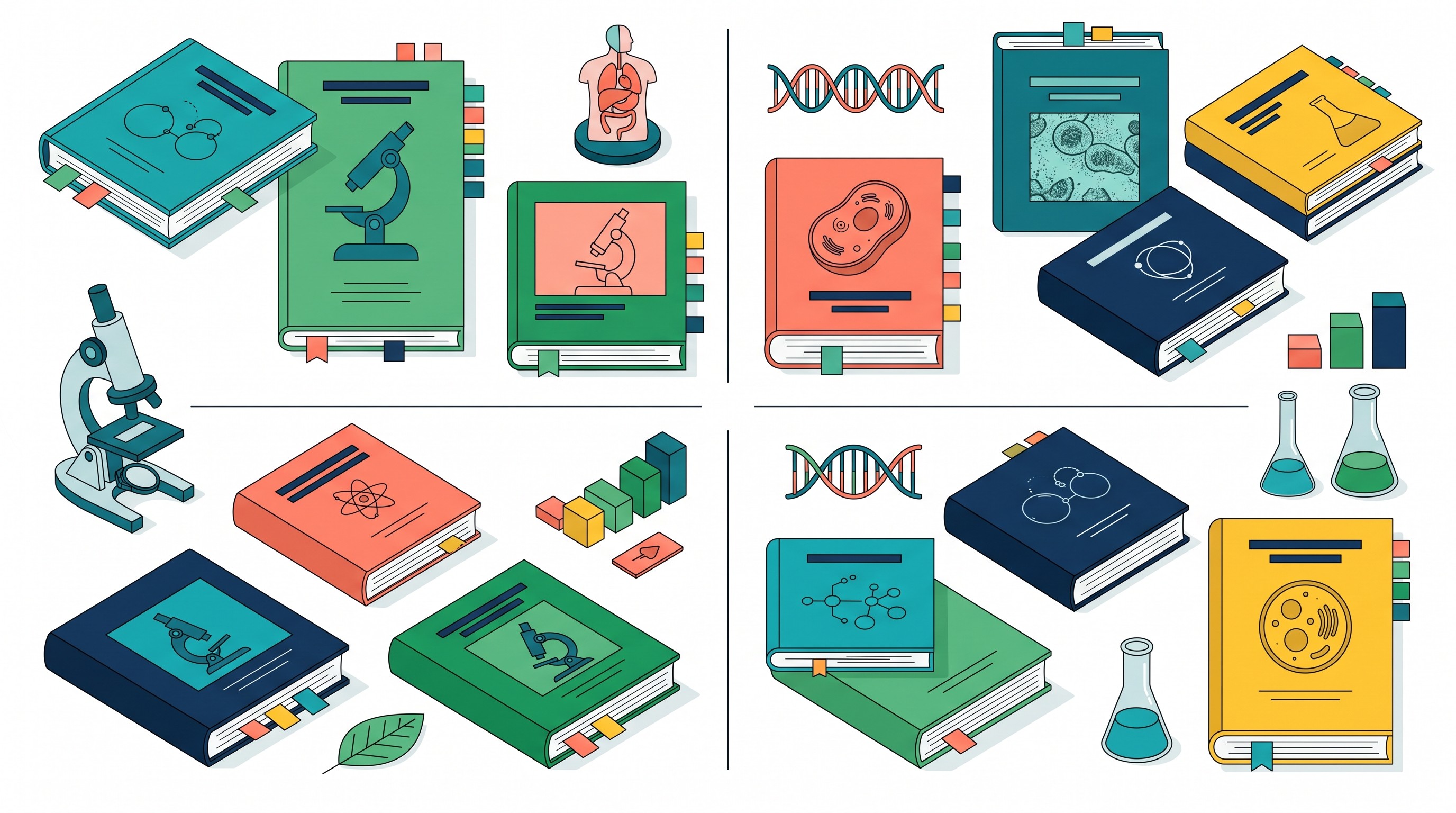
Before buying, check five things:
Required edition: older editions often work for reading, but not when homework uses exact page numbers or online problem sets.
Access codes: if the course uses publisher homework, a used copy without a valid code may be a false economy.
Chapter sequence: professors often skip, reorder, or supplement chapters.
Problem style: some exams test mechanisms and data interpretation; others test terminology and pathways.
Used-book availability: a recent used hardcover can be a better value than a new loose-leaf edition.
Open educational resources can be a legitimate option, not a shortcut. The Open Textbook Library maintains a biology textbook category, and university library guides such as the University of Michigan-Dearborn’s biology OER guide and Monmouth University’s biology OER guide list open biology materials for students and instructors (Open Textbook Library, University of Michigan-Dearborn, Monmouth University).
Best introductory biology textbooks for college courses
1. Campbell Biology
Best for: a full introductory biology sequence for biology majors, pre-med students, and strong AP Biology students moving into college work.
Campbell Biology is the default reference many students think of when they hear “college biology textbook.” Its strength is breadth: cells, genetics, evolution, biodiversity, plant biology, animal systems, and ecology all sit in one coherent survey.
The visual explanations are a major reason it works. Processes like transcription, membrane transport, signal transduction, photosynthesis, and phylogenetic relationships are easier to learn when the figure sequence is clear.
The downside is size. If your class is a one-semester non-majors survey, Campbell can be more book than you need. Use the syllabus as a filter; do not try to read every sidebar and figure legend if your instructor only tests selected mechanisms.
2. Biology 2e by OpenStax
Best for: students who need a free, broad introductory biology text.
OpenStax Biology 2e is the budget-friendly choice for a general biology course. It covers the standard intro sequence and works well when paired with lecture slides, instructor problem sets, and practice exams.
Its biggest advantage is access. You can start reading immediately, search digitally, and avoid paying for a book before you know how closely your instructor follows it. The Open Textbook Library lists open biology titles by Clark, Choi, and Douglas, reflecting the kind of OER ecosystem that has made free biology texts more practical for college courses (Open Textbook Library).
Its limitation is alignment. Some instructors build exams around a commercial textbook’s exact figures, end-of-chapter questions, or terminology. If your class uses OpenStax officially, it can be enough; if not, treat it as a secondary explanation source.
3. Biology: How Life Works
Best for: students who want biology explained through mechanisms rather than isolated facts.
Biology: How Life Works is useful when the course emphasizes why biological systems behave as they do. It connects molecules, cells, organisms, and evolution instead of treating each topic as a separate vocabulary list.
That makes it strong for students who struggle with “memorizing biology.” If you can explain how a protein, cell, or organism responds to a constraint, you retain more than if you only label parts.
The tradeoff is reference style. Students who want a traditional encyclopedic chapter structure may prefer Campbell or Life: The Science of Biology.
4. Life: The Science of Biology
Best for: students who want a comprehensive life-science survey with serious breadth.
Life: The Science of Biology covers the full terrain: evolution, ecology, cells, genetics, organisms, and systems biology. It is especially useful when a course wants students to move across biological scales.
Its breadth is also its weakness for exam review. When you have two days before a midterm on mitosis, meiosis, and Mendelian genetics, a more focused review source may be faster.
Use it as a primary text if assigned. If not assigned, buy it only when you want a long-term biology reference.
5. Raven Biology
Best for: students who want accessible treatment of core biology and organismal diversity.
Raven Biology is a solid general biology textbook for college survey courses. It tends to be readable and gives enough attention to both molecular topics and biological diversity.
It can work well for students who find Campbell too dense but still need a majors-level foundation. The key is checking chapter order. If your instructor uses Campbell terminology or figure numbers, Raven may require translation during exam prep.
6. Campbell Biology in Focus
Best for: students who want a streamlined introduction without the full weight of Campbell Biology.
Campbell Biology in Focus narrows the survey. It is useful for one-semester courses, accelerated review, or students who need the major concepts without carrying a massive reference volume.
It is not the best choice if you expect to reuse the same book for advanced work in cell biology, ecology, evolution, or physiology. Think of it as a tighter course text, not a lifetime biology reference.
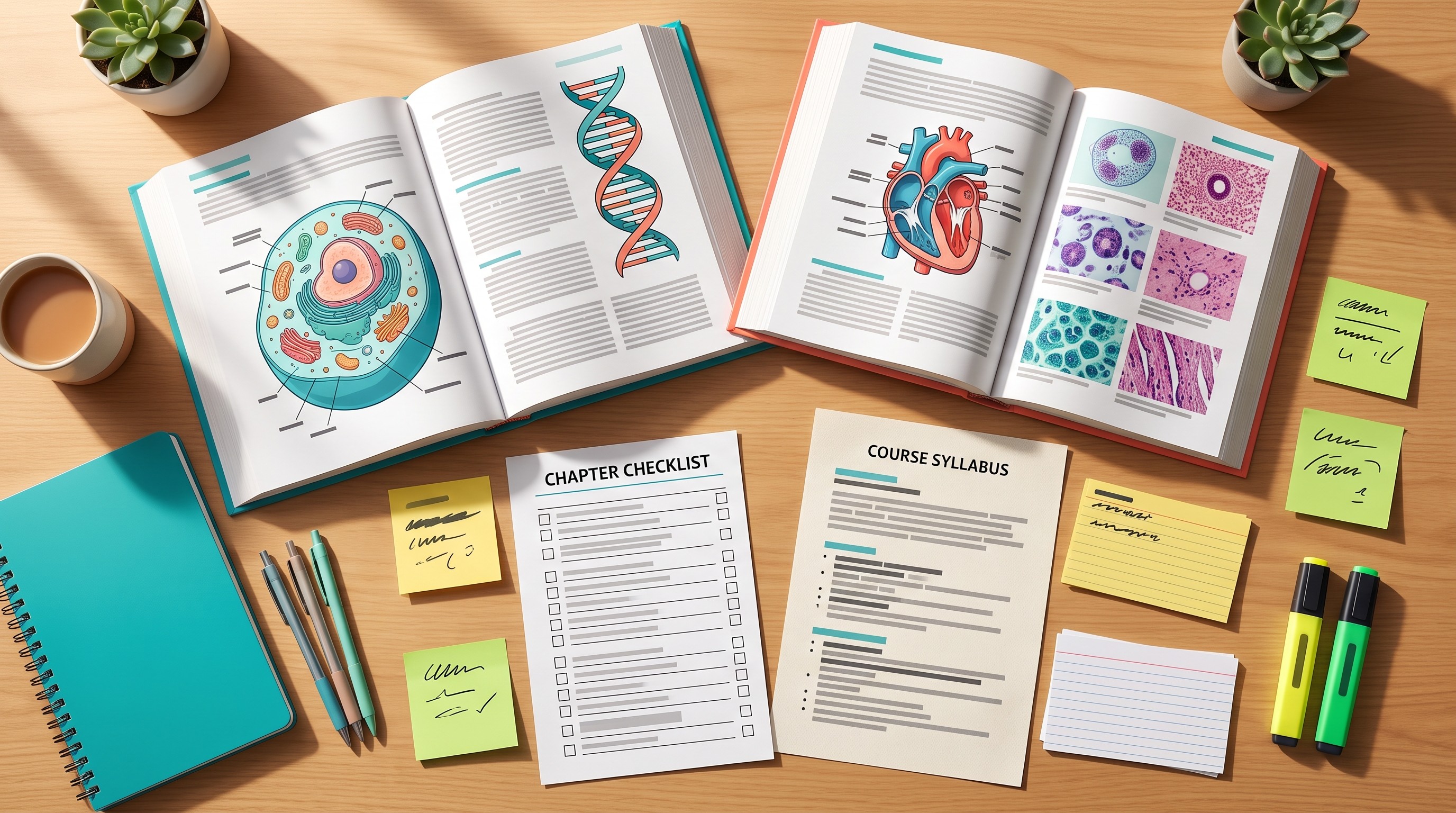
Best cell, molecular biology, and genetics textbooks
7. Essential Cell Biology
Best for: students building a foundation in cells, membranes, signaling, gene expression, and cell division.
Essential Cell Biology is the right first step for many pre-med and biology-major students who find molecular biology abstract. It explains cell biology without assuming that the reader already thinks like a molecular biologist.
Use it when lecture slides move too fast through membrane proteins, vesicle trafficking, cytoskeleton, transcription, translation, or intracellular signaling. It is less comprehensive than Molecular Biology of the Cell, but that is partly the point.
8. Molecular Biology of the Cell
Best for: advanced undergraduates, research-oriented students, and anyone who wants mechanistic depth.
Molecular Biology of the Cell is not just a harder version of an intro book. It is a deep treatment of how cells work: protein machines, gene regulation, signaling circuits, membranes, organelles, and experimental reasoning.
It is excellent for students preparing for research, graduate-level biology, or advanced pre-med understanding. It is also easy to misuse. Reading it passively is slow and often unproductive; focus on figures, mechanisms, and questions.
If you are new to college biology, start with Essential Cell Biology first.
9. Molecular Biology by Robert Weaver
Best for: a structured course in DNA replication, transcription, translation, and regulation.
Weaver’s Molecular Biology is a useful bridge between general biology and advanced molecular mechanisms. It is especially good for students who need the central dogma in detail rather than as a one-week intro-biology unit.
The book rewards active use. Redraw transcription and translation diagrams, explain experiments aloud, and work through end-of-chapter questions. If you only read paragraphs, the details blur together.
10. Molecular Biology: Principles of Genome Function
Best for: students interested in genome organization, gene regulation, and how genome structure shapes cell behavior.
This is more specialized than a general molecular biology text. It is a good fit for courses that focus on genomes, regulatory networks, chromatin, and functional genomics.
Pre-med students usually do not need it as an early purchase. It becomes useful when your course or research project asks not only “what gene is involved?” but “how is this gene controlled in a cellular context?”
11. Genetics: A Conceptual Approach
Best for: inheritance, linkage, population genetics, molecular genetics, and genetics problem solving.
Genetics is a problem discipline. You cannot learn it by rereading definitions of recombination, penetrance, or Hardy-Weinberg equilibrium. Genetics: A Conceptual Approach works because it keeps the focus on reasoning.
Use it alongside practice problems. Track what kind of error you are making: probability setup, pedigree interpretation, linkage mapping, gene regulation, or molecular mechanism.
You will still need a general biology textbook for evolution, ecology, organismal biology, and cell structure.
12. Lehninger Principles of Biochemistry
Best for: upper-level biology, pre-med biochemistry, metabolism, enzymes, proteins, and molecular mechanisms.
Lehninger is a biochemistry textbook, not an introductory biology replacement. It becomes valuable when general biology starts pointing toward chemical mechanisms: enzyme kinetics, protein structure, oxidative phosphorylation, glycolysis, gluconeogenesis, lipid metabolism, and nucleotide metabolism.
For pre-med learners, this is where biology and chemistry start to merge. If you are also choosing chemistry resources, compare your biology needs with the companion guide to chemistry textbooks and study resources for college students.
[[OTIO_INLINE_PROMO:%7B%22title%22%3A%22Need%20to%20connect%20a%20chapter%20to%20your%20lecture%20notes%3F%22%2C%22description%22%3A%22Add%20the%20textbook%20chapter%20and%20lecture%20slides%20to%20compare%20mechanisms%2C%20clarify%20confusing%20passages%2C%20and%20save%20page-linked%20explanations%20for%20exam%20review.%22%7D]]
Best evolution, ecology, organismal, and plant biology textbooks
13. Evolution by Douglas Futuyma and Mark Kirkpatrick
Best for: upper-level students who want rigorous evolutionary theory and evidence.
Futuyma and Kirkpatrick’s Evolution is for a real evolution course, not for a first pass through natural selection. It covers the evidence, theory, and mechanisms behind evolutionary change in much more depth than an intro textbook.
Use it when your course includes selection, drift, speciation, phylogenetics, adaptation, and macroevolution. If you are still learning basic genetics, pair it with a genetics text or lecture notes.
14. Evolutionary Analysis
Best for: students who want a quantitative, concept-driven approach to evolution.
Evolutionary Analysis is a strong fit when evolution is taught through problems, evidence, and models. It is useful for students who need to connect population genetics, phylogenetics, adaptation, and comparative reasoning.
The limitation is preparation. Students weak in genetics or statistics may find the pace demanding. Do not use it as your first-ever biology textbook.
15. The Economy of Nature
Best for: ecology students who want population, community, ecosystem, and conservation concepts connected to real systems.
The Economy of Nature is a good ecology text for students who need more than a short ecology unit at the end of general biology. It helps connect ecological models to organisms, environments, and conservation questions.
It is not a general biology survey. If your exam covers mitosis, DNA replication, animal physiology, and ecology in one course, this is a supplement only.
16. Ecology: From Individuals to Ecosystems
Best for: deeper ecology courses that move from organismal ecology to global processes.
This book is useful when an ecology course asks students to think across scales: individuals, populations, communities, ecosystems, landscapes, and global change.
Its length is unnecessary for introductory biology students who only need a few ecology chapters. It is better as a primary text for a dedicated ecology course.
17. Animal Physiology by Hill, Wyse, and Anderson
Best for: students studying how animal systems function, adapt, and maintain internal balance.
Animal Physiology is a specialist text. It covers topics like respiration, circulation, osmoregulation, thermoregulation, locomotion, sensory systems, and endocrine control through the lens of animal function.
Pre-med students may find parts of it useful, but it is not the same job as human physiology. If your goal is medical physiology, see the separate guide to physiology textbooks for medical students and USMLE prep.
18. Plant Physiology and Development by Taiz and colleagues
Best for: plant biology, plant physiology, and plant development courses.
This is the specialist option for students studying how plants grow, signal, transport water and nutrients, respond to light, regulate hormones, and develop.
Most pre-med students should not buy it unless assigned. Biology majors with plant science, ecology, agriculture, or research interests will get much more value from it.
Best biology resources for pre-med depth and review
19. Human Biology by Sylvia Mader
Best for: students who want a human-focused foundation without jumping into medical-school-level depth.
Human Biology is approachable and useful for anatomy, physiology, genetics, reproduction, disease, and human systems context. It is a good fit for non-majors, allied health students, or pre-med learners who want a readable human-centered overview.
It does not replace a majors-level biology textbook if your course includes evolution, ecology, plants, or broad molecular biology.
20. Human Physiology: An Integrated Approach by Dee Unglaub Silverthorn
Best for: understanding body systems through homeostasis and integrated mechanisms.
Silverthorn is one of the more useful physiology texts for students who need to understand how systems interact. It emphasizes control loops, homeostasis, and integration across organs.
Use it after or alongside general biology. It will not cover the full ecology, evolution, genetics, and cell-biology scope of an introductory sequence.
21. Molecular Biology of the Cell: Problems Book
Best for: students who need mechanism-based cell biology practice.
If Molecular Biology of the Cell explains the machinery, its problem companion helps test whether you can reason with that machinery. This is especially useful for students who understand the lecture but freeze when asked to interpret an experiment.
Verify the exact title, edition, and access format before buying. Some courses provide instructor-written problem sets instead, and those should take priority because they match the exam style.
22. Biology: The Unity and Diversity of Life
Best for: learners who want a broad biology survey across biological scales.
Biology: The Unity and Diversity of Life is another broad survey option covering cells, genetics, evolution, diversity, organisms, and ecology. It can be helpful for students who want an alternate explanation when Campbell or OpenStax does not click.
As always, compare organization against your institution’s required text. Broad survey books can cover the same topics in a different order, which matters during a fast-moving semester.
23. The Immune System by Peter Parham
Best for: pre-med and biology students who want a focused introduction to immune recognition and response.
Immunology is easy to underestimate because the vocabulary looks like memorization: MHC, TCR, BCR, cytokines, complement, tolerance, class switching. The real work is understanding how recognition, signaling, selection, and response fit together.
Parham’s The Immune System is a strong specialist supplement. It is not a first-year general biology purchase unless your course has a serious immunology unit. For more focused options, compare the guide to immunology textbooks for medical trainees and board prep.
24. The Biology of Cancer by Robert Weinberg
Best for: advanced students exploring cell regulation, mutations, signaling, oncogenes, tumor suppressors, metastasis, and disease mechanisms.
The Biology of Cancer is one of the best choices when you want to see cell biology applied to disease. It connects molecular mechanisms to cancer progression in a way that can make signaling pathways and cell-cycle regulation feel less abstract.
It is not suitable as an introductory biology textbook. Read it after you have a working foundation in genetics, cell biology, and molecular biology.
If your pre-med plan also includes anatomy, biochemistry, microbiology, and pharmacology, use textbooks selectively rather than stacking everything at once. The better strategy is a small core library plus targeted supplements for weak areas, such as biochemistry textbooks for med students or microbiology textbooks for med students.

How to choose and study from a biology textbook
The best buying rule is simple: match the book to the course before matching it to reputation. A famous textbook that does not match your instructor’s sequence, problem style, or terminology can waste time.
Start with the syllabus, not the bookstore page
Before buying, compare:
Weekly units
Assigned chapters
Learning objectives
Required end-of-chapter questions
Lab topics
Exam format
Required online homework platform
Whether figures from the book appear in lecture
If the syllabus says your exam emphasizes experimental design, data interpretation, and mechanism explanation, choose a book with strong figures and problems. If the course is mostly a broad survey, a dense specialist text will slow you down.
Use one primary textbook and one supplement
Do not try to read Campbell, OpenStax, Essential Cell Biology, Lehninger, and Silverthorn in parallel. That feels productive for one week and then collapses.
A better stack looks like this:
Course problem | Primary text | Supplement |
|---|---|---|
Intro biology survey | Assigned intro textbook | OpenStax or Campbell Biology in Focus |
Cell biology feels abstract | Assigned text | Essential Cell Biology |
Molecular mechanisms are weak | Molecular biology course text | Molecular Biology of the Cell sections |
Genetics problems are hard | Genetics text | Extra problem sets |
Pre-med physiology gap | General biology text | Silverthorn |
Biochemistry gap | Course biochem text | Lehninger chapters |
The supplement should solve a narrow problem. If it becomes a second full course, it is too much.
Read biology actively
Biology punishes passive reading. A clean highlight on a page does not mean you can explain oxidative phosphorylation, operon regulation, or T-cell activation under exam pressure.
Use this workflow:
Preview the chapter headings and figures. Get the structure before the details.
Turn learning objectives into questions. “Understand transcription” becomes “How does RNA polymerase know where to start?”
Read figures before paragraphs. Many biology concepts are process diagrams.
Explain mechanisms from memory. Close the book and narrate the steps.
Work problems early. Do not save them for the night before the exam.
Make an error log. Separate vocabulary mistakes from reasoning mistakes.
Revisit missed concepts after lecture. Your professor’s framing beats the textbook’s completeness.
For pre-med preparation, connect biology to chemistry, biochemistry, physiology, genetics, and experimental interpretation. The point is not just to know that a membrane protein exists; it is to understand how structure, concentration gradients, energy, signaling, and disease mechanisms interact.
Build a searchable study library
A semester’s biology materials scatter quickly: syllabus, textbook chapters, lecture slides, lab handouts, practice exams, review sheets, diagrams, and notes. If those live in separate folders and browser tabs, review becomes slower than it needs to be.
One practical workflow is:
Save the syllabus and reading list.
Collect textbook PDFs, EPUBs, slides, and lab documents in one place.
Tag materials by unit: cells, genetics, evolution, physiology, ecology.
Ask narrow questions about confusing passages.
Save page references for anything likely to appear on an exam.
Turn missed questions into a review note.
Otio’s AI textbook summarizer can help organize long textbook readings into searchable study material, and its PDF reader supports summaries, highlights, search, and source-linked chat over uploaded documents. Treat AI summaries as a map, not an authority: verify every mechanism against the original chapter, your lecture notes, and assigned problems.
Buying checklist before you pay
Use this before buying a new, used, rental, or digital copy:
Is this the required edition, or just a recommended title?
Does the course require an online access code?
Are assigned problems tied to exact chapter and question numbers?
Is a used copy missing answer keys, appendices, or companion materials?
Does the rental period cover finals?
Can you search the digital edition quickly?
Are diagrams readable on your device?
Will you keep this book for later courses, or only one semester?
Is a free OER text enough for the course?
Would a library reserve copy cover occasional use?
The cheapest option is not always the lowest-cost option. A used book is great when reading is the main requirement. It is a problem when the grade depends on a one-time access code or assigned problems that changed between editions.
FAQ
Q: What is the best biology textbook for a college introductory course?
A: Campbell Biology is the strongest comprehensive choice for many college intro sequences, while Biology 2e by OpenStax is a useful free alternative. The best fit still depends on your syllabus, instructor, and required chapter sequence.
Q: Do pre-med students need a separate biology textbook?
A: Usually not at the beginning. Start with the textbook required by your biology course, then add focused resources for cell biology, genetics, physiology, biochemistry, or exam review only when they address a specific gap.
Q: Is OpenStax Biology enough for pre-med preparation?
A: OpenStax Biology can provide a solid introductory foundation, but pre-med students often need additional depth in biochemistry, physiology, genetics, and experimental reasoning as courses advance.
Q: Should I buy the newest edition of a biology textbook?
A: Buy the newest edition when your course requires its chapter numbering, online assignments, or updated content. Otherwise, a recent used edition may be sufficient, but compare the table of contents and assigned questions first.
[[OTIO_FOOTER_PROMO:%7B%22title%22%3A%22Turn%20your%20biology%20sources%20into%20a%20study%20guide%22%2C%22description%22%3A%22Bring%20together%20your%20syllabus%2C%20textbook%20chapters%2C%20lab%20handouts%2C%20and%20practice%20exams%20to%20build%20a%20searchable%20review%20library%20for%20your%20course.%22%7D]]