
Publication Decisions
15 Journal Metrics Beyond Impact Factor: What Authors Should Check Before Submission
Compare 15 journal metrics and submission checks—including CiteScore, SJR, JCI, indexing, acceptance rate, review time, and fees—before choosing where to submit your paper.

The best journal is rarely the one with the biggest Impact Factor. Before submission, compare field-normalized citation evidence, indexing, editorial transparency, review speed, publication cost, and reader fit.
Use citation metrics to estimate visibility, normalized metrics to compare across fields, and practical checks to avoid wasting months on the wrong venue. A journal-level score describes the journal’s recent citation environment; it does not predict whether a specific manuscript will be accepted, cited, reviewed quickly, or read by the right people.
Start with field-normalized evidence, not the highest impact factor
No single journal metric identifies the right destination for every paper. A clinical case report, a methods paper, a theoretical article, and a systematic review can all belong in different journals even when they share a discipline.
The practical rule is simple:
Question | Best evidence to check |
|---|---|
Will the journal be visible in my field? | Impact Factor, CiteScore, subject category, indexing |
Is the comparison fair across fields? | SNIP, JCI, category rank, percentiles |
Is the journal credible? | Indexing status, editorial board, peer-review policy, ethics record |
Can I afford and tolerate the process? | Fees, access model, review time, publication timeline |
Will the right readers see it? | Aims and scope, recent articles, society links, audience |
Journal metrics are journal-level indicators. They summarize citation behavior across a venue’s published content, usually over a defined window and database. They are useful for comparing publication environments, not for judging the worth of one article.
University library guides make the same point in practice: journal metrics are one set of tools among citation analysis, rankings, altmetrics, and field-specific context, not a standalone decision system. The University of Illinois guide to Impact Factor and research metrics frames these tools as aids for identifying journals in a field, while the University of Florida research metrics guide places journal rankings alongside other measures of scholarly influence.
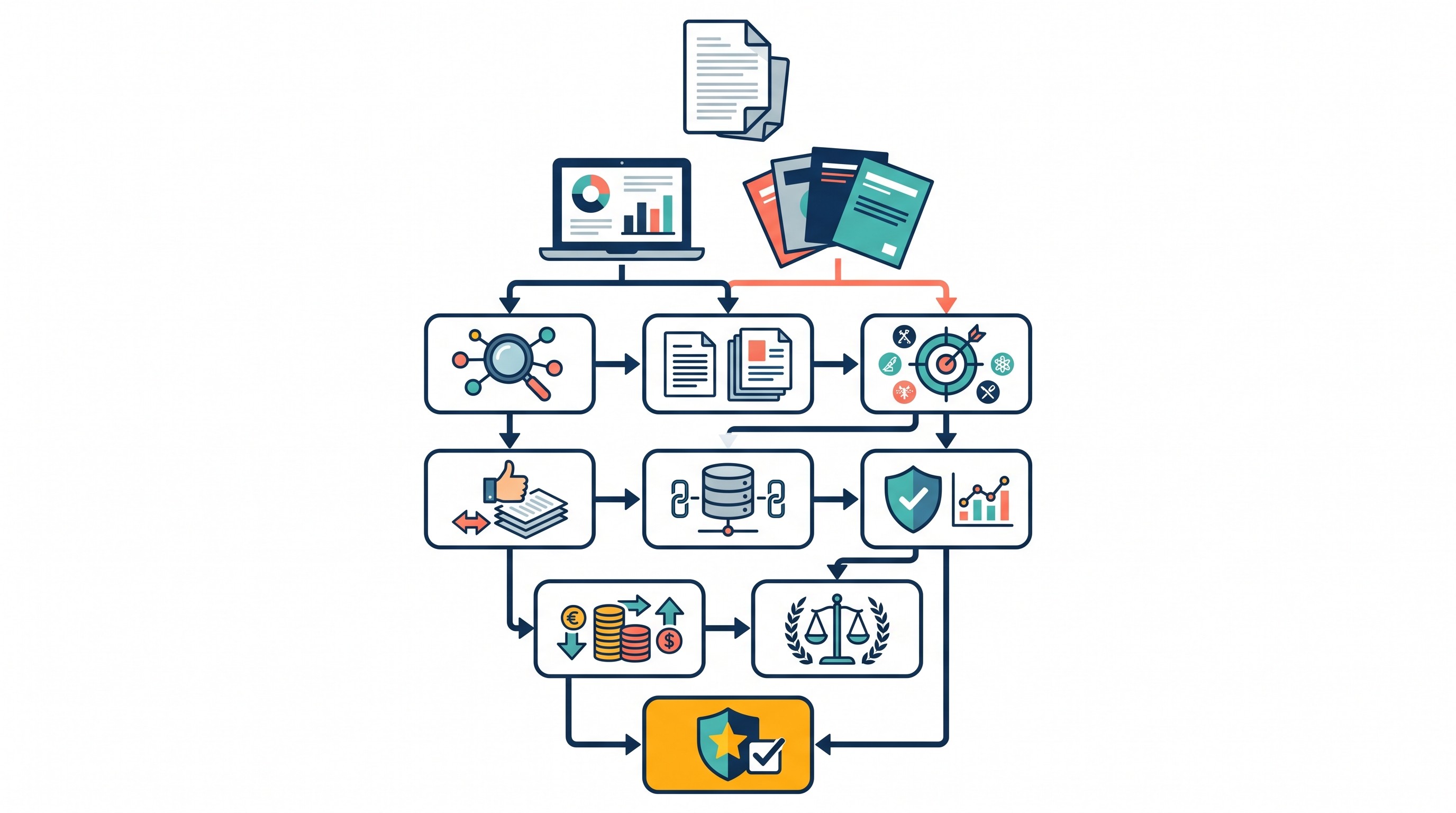
The safest workflow is to verify each value at the source: the journal’s own metrics page, Clarivate Journal Citation Reports, Scopus, SCImago, Web of Science, PubMed/MEDLINE, DOAJ, your institution’s recognized lists, or the databases your funder names. Third-party metric pages can be useful for discovery, but they are not enough for a submission decision.
If you are still using Impact Factor as the main filter, read it as one signal. For a fuller explanation of when Impact Factor is meaningful, see Otio’s guide to what counts as a good Impact Factor for a journal. For the mechanics behind the number, see how to calculate a journal Impact Factor.
Citation and influence metrics to compare alongside Impact Factor
Impact Factor is only one way to summarize citations. The six metrics below answer different questions, use different databases, and can rank the same journal differently.
Use them comparatively, not cosmetically. A metric that is impressive in one subject category may be ordinary in another.
Metric | Main source or system | What it helps answer | Main caution |
|---|---|---|---|
1. CiteScore | Scopus | How often Scopus-indexed publications cite the journal’s recent output | Database coverage and document types differ from Journal Impact Factor |
2. SJR | SCImago / Scopus data | Whether citations come from influential journals | Compare within discipline and quartile |
3. SNIP | Scopus-based | How citation impact looks after adjusting for field citation practices | Depends on database coverage and reporting year |
4. JCI | Web of Science / Clarivate | Field-normalized citation impact across Web of Science categories | Not an absolute quality score |
5. Eigenfactor Score | Eigenfactor-style network measure | Journal-level influence in the citation network | Scale favors larger overall influence, not average article value |
6. Article Influence Score | Eigenfactor-derived | Estimated influence of the average article | Needs context from output volume and field |
The University of Michigan Library guide to alternative journal ranking sources is a useful reminder that “journal ranking” is plural. Different systems produce different views of citation influence.
1. CiteScore
CiteScore is a Scopus-based citation average. It is useful when a field relies heavily on Scopus-indexed journals or when you want a broader source-level view than a single Journal Impact Factor comparison.
Check four things before using it:
The journal’s Scopus source record
The subject category
The reporting year
The publication types included in the calculation
Do not compare a CiteScore value directly with a Journal Impact Factor as if both were calculated from the same universe. They use different databases, source coverage, and calculation rules.
For a more direct comparison, see Otio’s guide to CiteScore vs Impact Factor.
2. SCImago Journal Rank, or SJR
SJR weights citations by the prestige of the citing sources. A citation from a highly ranked journal contributes differently than a citation from a less influential source.
This makes SJR useful when two journals have similar raw citation averages but different positions in the citation network. It is especially helpful when paired with SCImago quartiles, such as Q1 to Q4, within a discipline.
The mistake is to compare SJR across unrelated fields. A Q1 journal in a niche field and a Q1 journal in a fast-citing biomedical field may have different absolute values, but both may be strong venues within their own communities.
3. Source Normalized Impact per Paper, or SNIP
SNIP adjusts for differences in citation practices across fields. That matters because some disciplines cite heavily and quickly, while others cite fewer sources or accumulate citations more slowly.
A journal in mathematics, humanities-adjacent social science, or certain engineering subfields should not be judged against a high-citation biomedical review journal using raw citation averages alone. SNIP helps make the comparison less distorted.
Still, SNIP is not magic. Verify the current reporting year and confirm that the journal’s database coverage matches the field where the paper will be evaluated.
4. Journal Citation Indicator, or JCI
JCI is a field-normalized indicator associated with Web of Science categories. It is useful for asking whether a journal’s citation impact is above, near, or below expectation for its category.
Use JCI with category position. A journal assigned to multiple categories may look different depending on which category matters to your department, funder, or target readers.
Treat JCI as a normalized comparison tool, not a moral ranking of quality. A specialized journal can have a modest JCI and still be the best home for a specialized article.
5. Eigenfactor Score
Eigenfactor Score is a journal-level influence indicator based on network-weighted citations. It asks a different question from per-article averages: how influential is the journal in the broader citation network?
This tends to favor journals with substantial citation presence and larger overall influence. That can be helpful if the goal is broad scholarly visibility.
But it should not be read as “the average article here is more influential.” That is what per-article indicators attempt to estimate.
6. Article Influence Score
Article Influence Score estimates the influence of the average article in a journal. It is often considered alongside Eigenfactor because one reflects total network influence and the other moves closer to per-article influence.
Use it with three context checks:
Total output: a small journal and a large journal can behave differently.
Subject category: citation expectations vary by field.
Publishing model: review-heavy or broad-scope journals may not resemble specialist original-research venues.

Publication volume, attention, and performance signals
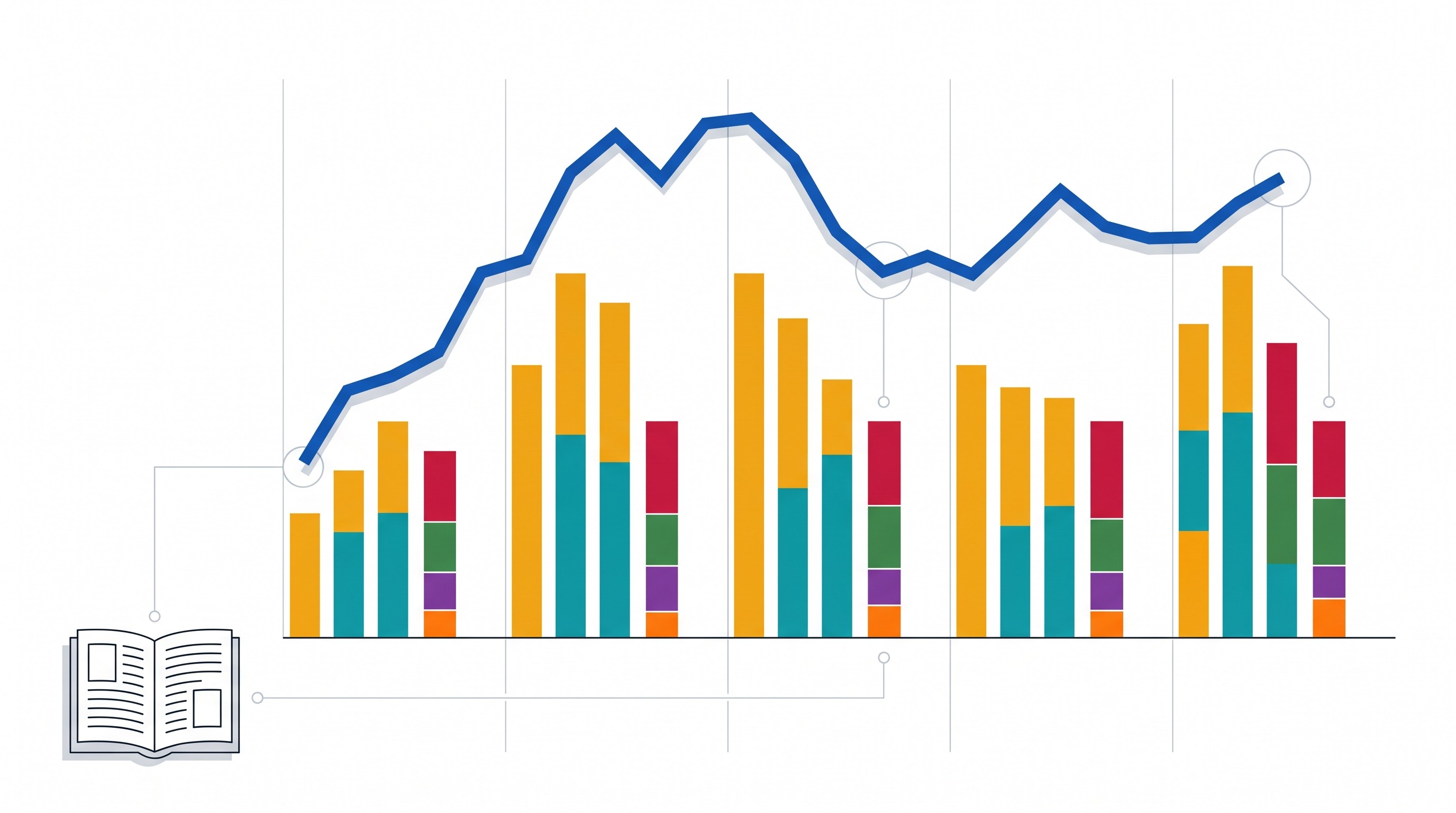
Citation metrics compress a lot of editorial behavior into one number. Before submitting, look at the time series and the article mix behind the score.
A journal can look attractive because of a few highly cited reviews, a special issue, a change in publishing volume, or a temporary citation spike. None of those automatically makes it a bad journal. They simply change what the metric means.
7. Five-year citation trend
Do not react to one unusually high or low metric year. Look at several reporting years and ask whether the journal’s influence is stable, rising, falling, or volatile.
For example, if evaluating a journal such as Science Advances, a year-by-year view is more useful than a copied headline number. Otio’s analysis of Science Advances Impact Factor trends shows the kind of question authors should ask: what changed, which source reports the value, and how should the trend affect submission strategy?
When recording a trend, label each value with:
Metric name
Provider
Reporting year
Access date
Calculation method, if available
Whether the figure is official or third-party
Do not mix values from different editions or databases in one line chart unless the chart explicitly says so.
8. Citation distribution and article-level attention
Averages hide distribution. A journal’s score may be driven by a small share of papers, especially reviews, guidelines, consensus statements, or hot-topic articles.
When possible, inspect recent articles that resemble your manuscript. Look at citations, downloads, online attention, or repository visibility only where the source is reliable and clearly defined.
This matters most when the manuscript is not the type of article that usually drives the journal’s headline metric. A short technical note in a review-heavy journal may not benefit from the journal average in the way an author expects.
9. Publication volume and article mix
A journal that publishes many reviews, editorials, letters, methods papers, or large thematic collections may produce citation averages that are hard to compare with a journal publishing mostly original research.
Check the journal’s recent table of contents. Count what it actually publishes.
Look for:
Number of articles per year
Share of review articles
Share of editorials, commentaries, and letters
Special issues or collections
Recent expansion or contraction in output
Whether article types match your manuscript
The University of Missouri Libraries guide to journal rankings is useful here because it treats journal ranking as part of a broader assessment of research impact and quality, not as a single-score exercise.
Indexing, transparency, and legitimacy checks before submission
A high metric is not enough. Before submission, confirm that the journal is real, properly indexed, transparent about peer review, and aligned with the manuscript.
This is where authors prevent the most expensive mistakes: submitting to a journal that is not recognized by an institution, has unclear editorial ownership, hides fees, or makes metric claims that cannot be verified.
10. Indexing and database coverage
Indexing means the journal is covered by a database. It does not mean every database covers it, and it does not automatically prove editorial quality.
Check the databases that matter in your field. Depending on the discipline, that may include Web of Science, Scopus, PubMed/MEDLINE, PubMed Central, DOAJ, IEEE Xplore, ERIC, PsycINFO, EconLit, HeinOnline, or other specialist indexes.
Verify the details, not just the logo on the journal website:
Exact journal title
ISSN and eISSN
Publisher
Coverage start and end dates
Whether coverage is current
Whether the journal title has changed
Whether the indexed title is the same journal you are viewing
If an institutional policy says publications must be indexed in a specific database, check that database directly.
11. Editorial and peer-review transparency
A legitimate journal should make its editorial structure and review process inspectable.
Check:
Editor-in-chief name and affiliation
Editorial-board members and institutional affiliations
Peer-review model: single-anonymized, double-anonymized, open, post-publication, or editorial review
Ethics policies
Conflict-of-interest policy
Corrections and retractions policy
Data availability policy
Contact information
Publisher ownership
Author instructions that match the journal’s actual practices
A serious journal can still have a slow website or imperfect instructions. The red flag is not ugliness; it is unverifiability.
12. Retraction, correction, and publishing-ethics record
Look for a clear correction and retraction policy. Then check whether the journal or publisher has unusual patterns: unexplained editorial-board turnover, repeated expressions of concern, mass retractions, or sudden scope changes.
Do not treat a high metric as a reputational shield. Metrics can lag behind editorial problems.
Also check fit. A journal can be indexed, transparent, and reputable, yet still be wrong for the paper. Read the aims and scope, then review several recent papers that resemble yours in method, article type, sample, geography, or theoretical approach.
Warning signs include:
Guaranteed acceptance
Unrealistically fast peer review promises
Unverifiable editorial-board members
Journal names that closely mimic established titles
Hidden article processing charges
Unclear publisher ownership
Fake or unverifiable metric claims
Indexing logos without database records
Aggressive solicitation emails unrelated to your field
The Ohio State University Health Sciences Library guide to journal metrics is a useful starting point for authors who want to document journal-level evidence rather than rely on marketing language.

[[OTIO_INLINE_PROMO:%7B%22title%22%3A%22Have%20you%20verified%20a%20journal%E2%80%99s%20indexing%20claims%3F%22%2C%22description%22%3A%22Collect%20each%20journal%E2%80%99s%20website%2C%20indexing%20record%2C%20ethics%20policy%2C%20and%20author%20guidelines%2C%20then%20compare%20the%20evidence%20before%20adding%20it%20to%20your%20shortlist.%22%7D]]
Submission and author-experience indicators that affect your decision
The best venue on paper can still be the wrong venue for a dissertation deadline, grant report, clinical promotion packet, or time-sensitive result.
These indicators are not prestige metrics. They are decision metrics.
13. Acceptance rate
Acceptance rate is only useful when the journal publishes a recent, clearly defined figure.
Ask what the rate includes:
All submitted manuscripts?
Only manuscripts sent to peer review?
Only research articles?
Desk rejections?
Special issues?
Transfers from related journals?
Invited content?
A 15% acceptance rate and a 40% acceptance rate may be incomparable if one includes all desk rejections and the other reports only peer-reviewed manuscripts. If the journal does not define the number, treat it cautiously.
For broader selection criteria beyond acceptance probability, see Otio’s guide to journal selection criteria for choosing a high-impact journal.
14. Review and publication timeline
Authors often ask, “How long will peer review take?” The better question is: which part of the process is being measured?
Separate:
Time to editorial screening
Time to first decision
Time to peer-review decision
Time from revision submission to decision
Time from acceptance to online publication
Time from online publication to issue assignment, if relevant
Also check whether the journal reports averages, medians, ranges, or author-reported estimates. A mean can be distorted by a few very long cases. A median is often more useful, but not every journal publishes it.
Speed matters most when the work is tied to a defense, tenure file, grant deliverable, policy window, patent timeline, or fast-moving empirical result. Otherwise, a slightly slower journal with better reader fit may be worth the wait.
15. Total publication cost and access model
Record the full cost before submission, not after acceptance.
Check:
Article processing charge, or APC
Submission fee
Page charges
Color figure charges
Supplementary-material charges
Taxes
Waiver eligibility
Institutional publishing agreements
Open-access license options
Copyright transfer terms
Subscription-only access implications
Funder open-access requirements
Open access can increase accessibility, but cost and licensing terms vary. Subscription journals can still be appropriate if the intended readers have access and the funder permits it. Hybrid journals need extra attention because the same title may publish both open and paywalled articles under different terms.
Before sending the manuscript, also check manuscript length limits, figure limits, data and code requirements, reporting checklists, trial registration rules, preprint policy, repository requirements, copyright terms, and AI-use disclosure instructions.
A lower-metric journal may be the better choice when it has stronger topical fit, faster realistic review, lower cost, better indexing for your audience, or clearer funder compliance.

Turn the 15 checks into a defensible journal shortlist
Start with several plausible journals, not one dream title and a fallback chosen in panic.
Build the first list from:
Journals cited heavily in your manuscript
Journals that recently published similar methods or questions
Society journals in the field
Advisor, collaborator, or librarian recommendations
Indexing databases
Reference lists from recent reviews
Calls for papers, only if the scope truly fits
Then separate must-have criteria from ranking criteria. If a journal fails a must-have, remove it before debating metrics.
Criterion type | Examples | Decision rule |
|---|---|---|
Must-have | Scope, article type, legitimate indexing, ethics policies, funder compliance | Exclude if failed |
Strong preference | Relevant readership, field-normalized citation position, review transparency | Compare across shortlist |
Practical tradeoff | Review speed, publication cost, open-access route, formatting burden | Weight by deadline and budget |
Secondary signal | Headline metric, social attention, brand familiarity | Use only after fit and legitimacy |
For each shortlisted journal, record:
Metric name
Value
Provider
Reporting year
Source URL
Access date
Subject category
Notes on definition
Whether the value is official, database-derived, or third-party
Do not average conflicting figures. Investigate why they differ. One may be CiteScore, another Journal Impact Factor, another an outdated estimate, and another a value for a similarly named journal.
A simple scoring table is enough:
Journal | Must-have status | Normalized impact | Reader fit | Speed | Cost | Main risk |
|---|---|---|---|---|---|---|
Journal A | Pass | Strong in category | Excellent | Slow | High | Deadline risk |
Journal B | Pass | Moderate | Excellent | Moderate | Low | Lower prestige signal |
Journal C | Fail | Strong | Weak | Unknown | Hidden | Exclude |
This is also where a research workspace helps. In Otio, authors can keep journal websites, author guidelines, PDFs, notes, and metric pages in one library, then ask citation-backed questions across the collected sources. If the manuscript sources already live in Zotero, Otio’s Zotero integration can pull research papers into the same workspace for comparison.
The final check happens immediately before submission. Reopen the journal’s current author instructions, fee page, editorial-board page, indexing records, and review-time disclosures. These details change, and an old note can become an expensive mistake.
FAQ
Q: What is the best alternative to Impact Factor for comparing journals?
A: There is no universal replacement. CiteScore, SJR, SNIP, and JCI answer different questions, so use the metric that fits your field and pair it with indexing, scope, review time, cost, and editorial-transparency checks.
Q: Is the journal with the highest Impact Factor always the best place to submit?
A: No. A high Impact Factor does not guarantee subject fit, acceptance, rapid review, ethical publishing, or visibility for your specific article. A well-matched, reputable journal with suitable readership may be the stronger choice.
Q: How can authors verify a journal’s metrics before submission?
A: Check the journal’s official metric pages and verify database-specific values in sources such as Journal Citation Reports, Scopus, SCImago, or Web of Science. Record the provider and reporting year, and treat unexplained third-party claims cautiously.
[[OTIO_FOOTER_PROMO:%7B%22title%22%3A%22Build%20your%20shortlist%20from%20your%20own%20sources%22%2C%22description%22%3A%22Keep%20metric%20pages%2C%20journal%20guidelines%2C%20publisher%20policies%2C%20and%20notes%20in%20one%20library%2C%20then%20ask%20citation-backed%20questions%20across%20them.%22%7D]]